
A Celtic diehard meets Henrik Larsson at the pub

Image courtesy of adidas
The Swedish football legend (and accidental style icon) returned to Glasgow to model the new Celts strip. This lucky fan met his hero.
In partnership with adidas
Words: Calum Gordon
A midweek afternoon in May near Glasgow’s city centre, inside a pub called McChuills, the scene is my own fever dream: former Celtic and Fulham footballer John Collins wears a pair of 1994 Predator boots around his neck, a host of current Celtic players (Kasper Schmeichel, Callum McGregor and Alistair Johnston, to name a few) look on, and Primal Scream’s frontman Bobby Gillespie is at the DJ booth. It is, in fact, part of the campaign for Celtic’s 25/26 away kit designed by adidas – an homage to a late ’90s strip, fondly remembered for its aesthetic rather than any associated sporting success. The man holding the pool cue can attest to this. While wearing the shirt at an away match in Lyon, he broke his leg in an “all is lost” moment. Later, he went on to write a story that for Celtic fans of my generation feels akin to sacred scripture.
It was also around a pool table that Henrik Larsson first got to grips with the nuances of Scottish jargon, after joining Celtic from Feyenoord in July 1997. Primal Scream had just released Vanishing Point, and Rangers’ era of domestic domination looked like it might never end. Each morning, he would play with Paul Lambert, the Scot who had returned to Glasgow having won a Champions League with Borussia Dortmund. “Paul was much better than me; I made a lot of coffees for him. That was the bet, every morning. He always had a wry smile on his face when he won,” says Larsson, switching into his impression of Lambert’s accent, “‘Wee splash of milk, please.’”


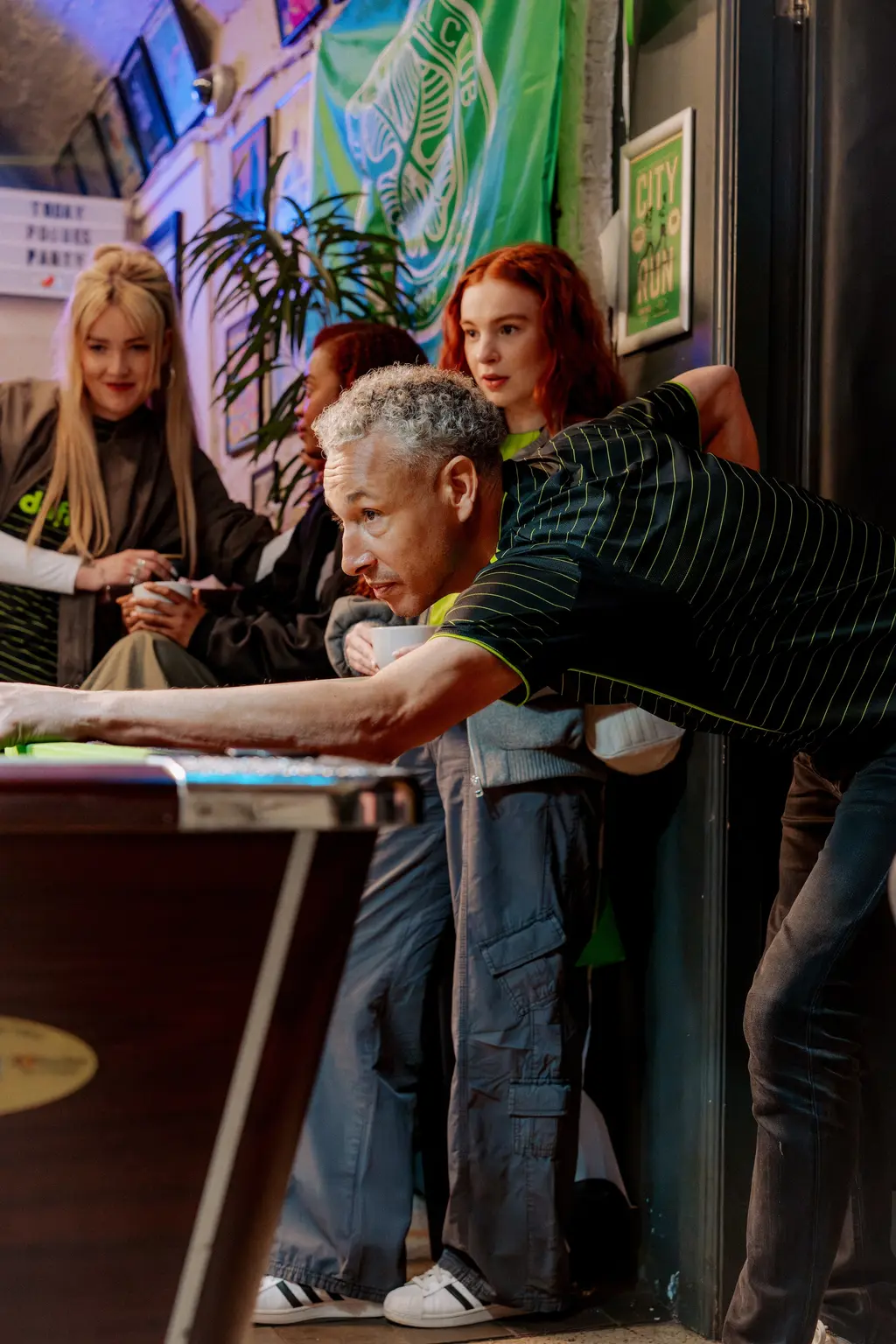
Image courtesy of adidas
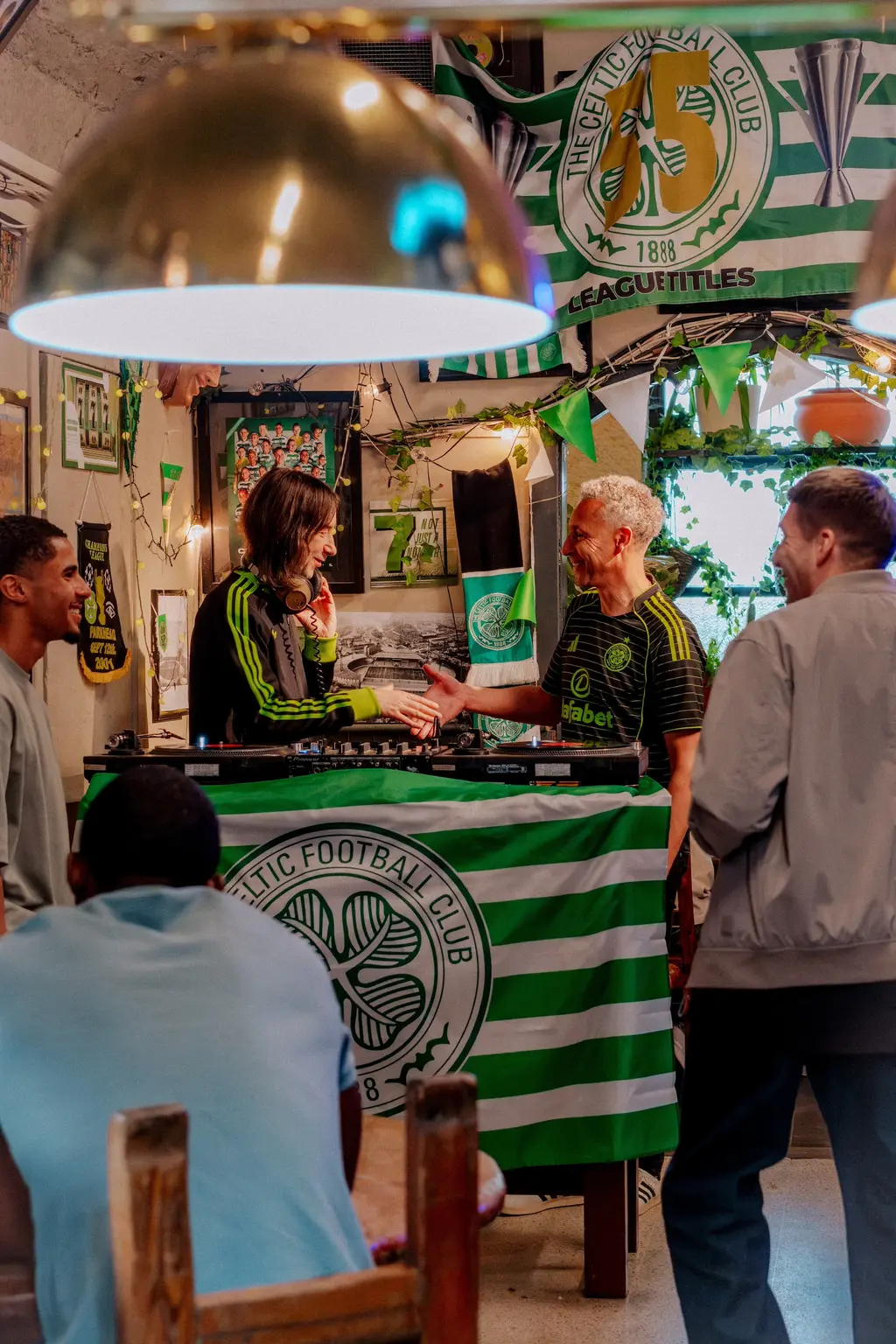
Image courtesy of adidas
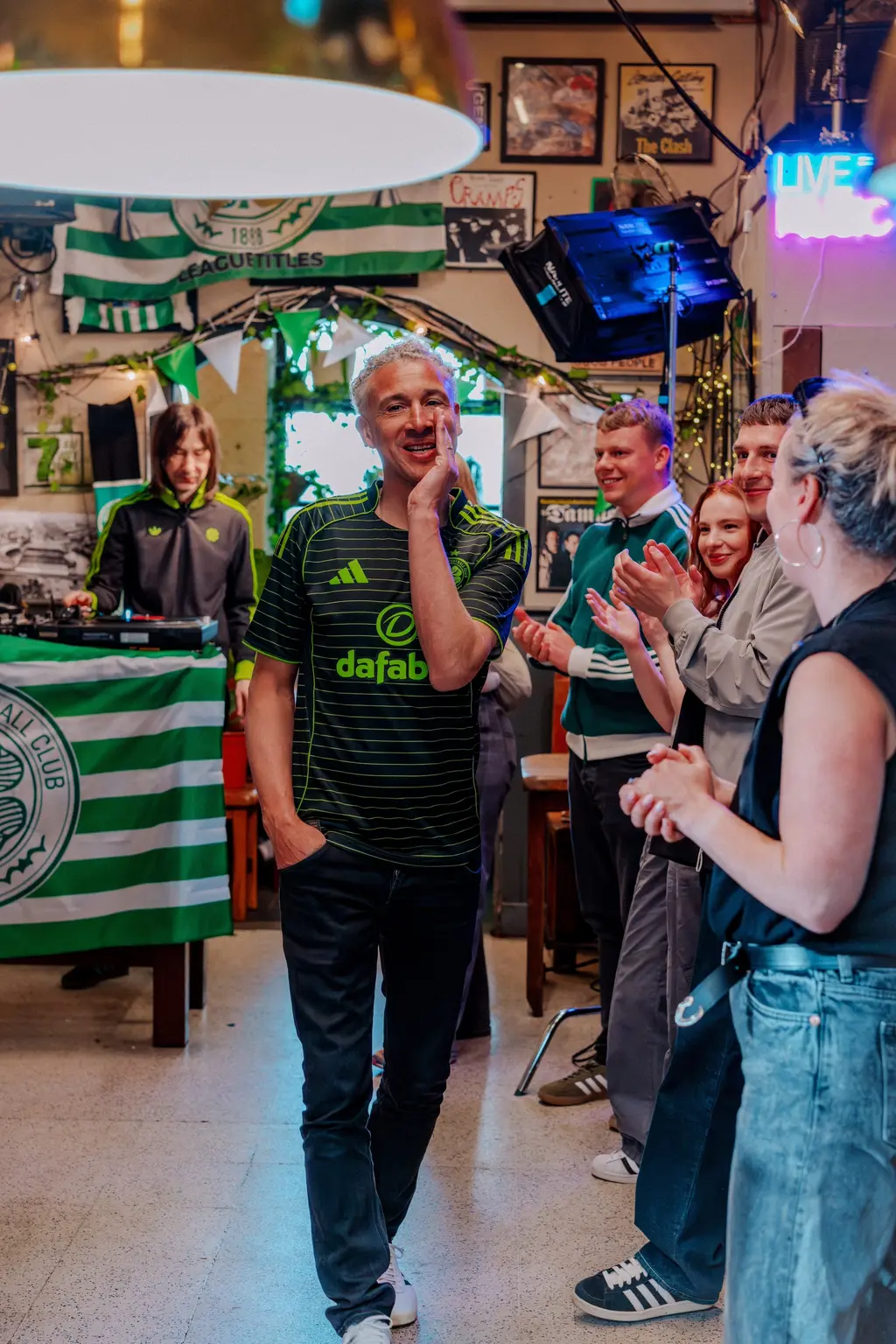
Image courtesy of adidas
After seven years in Glasgow, Larsson left Celtic not only with a better command of the local dialect, but a legacy that lives on 21 years later. Even in the twilight of his career, he continued to build on it, capable of changing the direction of a Champions League final with two assists against Arsenal in 2006, and an EPL title race in 2007, during a short loan stint at Manchester United. Ask Thierry Henry – Larsson changed that final.
Still, in my mind, beyond the pitch and the goals – so, so many goals – there was always something unique about Larsson, a certain aesthetic quality. The dreads and baggy yellow adidas Sweden kit, turned golden by the Californian sun at the ’94 World Cup. The way he’d stick his tongue out after scoring, evoking the Rolling Stones’ logo. Even the way he wore his ClimaCool trainers after a match, laces undone.
“Fashion and things like that have never been important to me. When I was younger, I didn’t have the money to buy what I wanted. My mum bought me my clothes. That’s how it was,” says Larsson, reluctant to accept his style icon status. “When [you] start earning money, you want [certain] things – not for other people, but so that you feel comfortable. I’ve always been striving for that…To feel good. I’m not the best dresser, but I like to look good.”
For anyone who has watched interviews with the Swede, this kind of demure answer is not uncommon. Beyond football, he has always maintained a relatively low profile. A question of musical tastes is met with a similarly diplomatic answer: “I listen to everything. I’m an old man now. When I hear a song, the first thing that catches me is the beat. If it’s something good, and I want to start moving, my interest starts.” Films? Another long silence. He admits to enjoying House of the Dragon, the Game of Thrones prequel series, and also Luther. “I love that one,” he says. And of course, The Last Dance – perhaps not a surprise, when his son (who currently plays for FC Copenhagen) is named Jordan after the basketball player.

Image courtesy of adidas
Larsson is reliably low-key. Normal even, for someone labelled the “King of Kings” during his time in Glasgow. So, what does a typical day look like for him? “I’ll work out with my personal trainer, for my hip, to be able to play my golf or paddle tennis. It can be spending time with the grandkids or travelling. I’m lucky that I can do it,” he says. And if people ask whether he gets bored? “I tell them, ‘If you have to work all week, that’s boring anyway.’ So I try to fill my week with fun stuff.”
To many, Larsson feels emblematic of an era when money hadn’t totally reshaped football as it has today. Yes, it was there, in abundance, but it didn’t define every outcome. If it had, Larsson might not have stayed seven years in Glasgow. There’s also a certain romance to the career arc of Larsson, even if he doesn’t see it himself. His era, of the late ’90s to mid ’00s, is enjoying a moment of renewed cultural relevance. You see it on X with “The streets will never forget” compilation videos of underappreciated mavericks, with vintage kits worn in street-style images, and the resurgence of Predators – now for fashion as well as five-a-sides. There is also an admission that maybe football was, in some respects, purer. “Characters” and legends seemed more abundant compared to the current era of vigilantly media-trained 24-hour athletes. And talent was spread more evenly across European leagues. Today, I’d guess, Larsson would spend two seasons at Celtic, before being poached by Brighton or Bournemouth with a sum too good to turn down. But his legacy in Glasgow is something which endures – something that feels more relevant than his bank balance.
In McChuills, that feeling is affirmed once more. “Bobby Gillespie is arriving early,” I overhear someone say, slightly panicked by a sudden change in schedule. “I know he was supposed to come later, but he’s coming now. He said he wants to meet Henrik.”


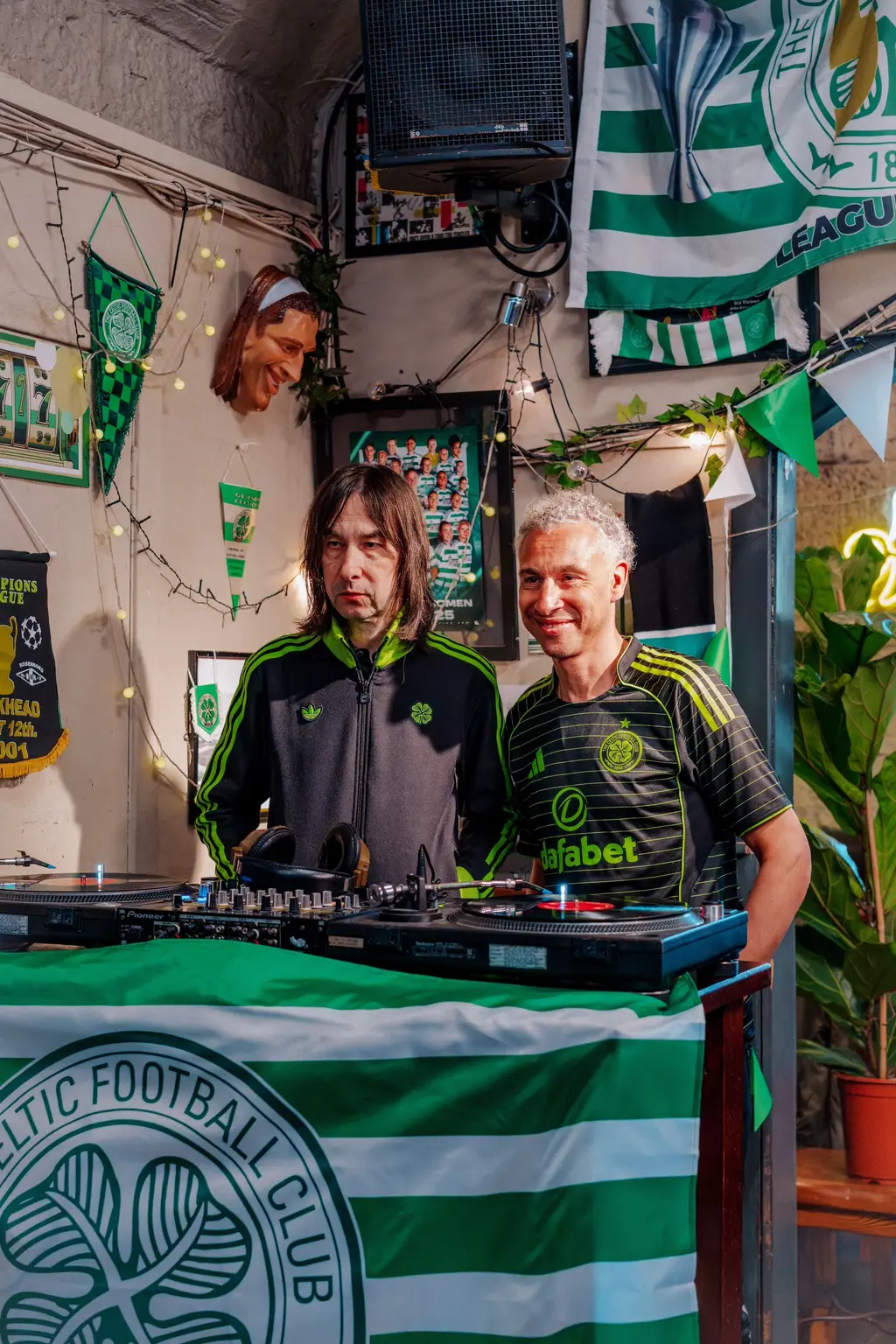
Image courtesy of adidas
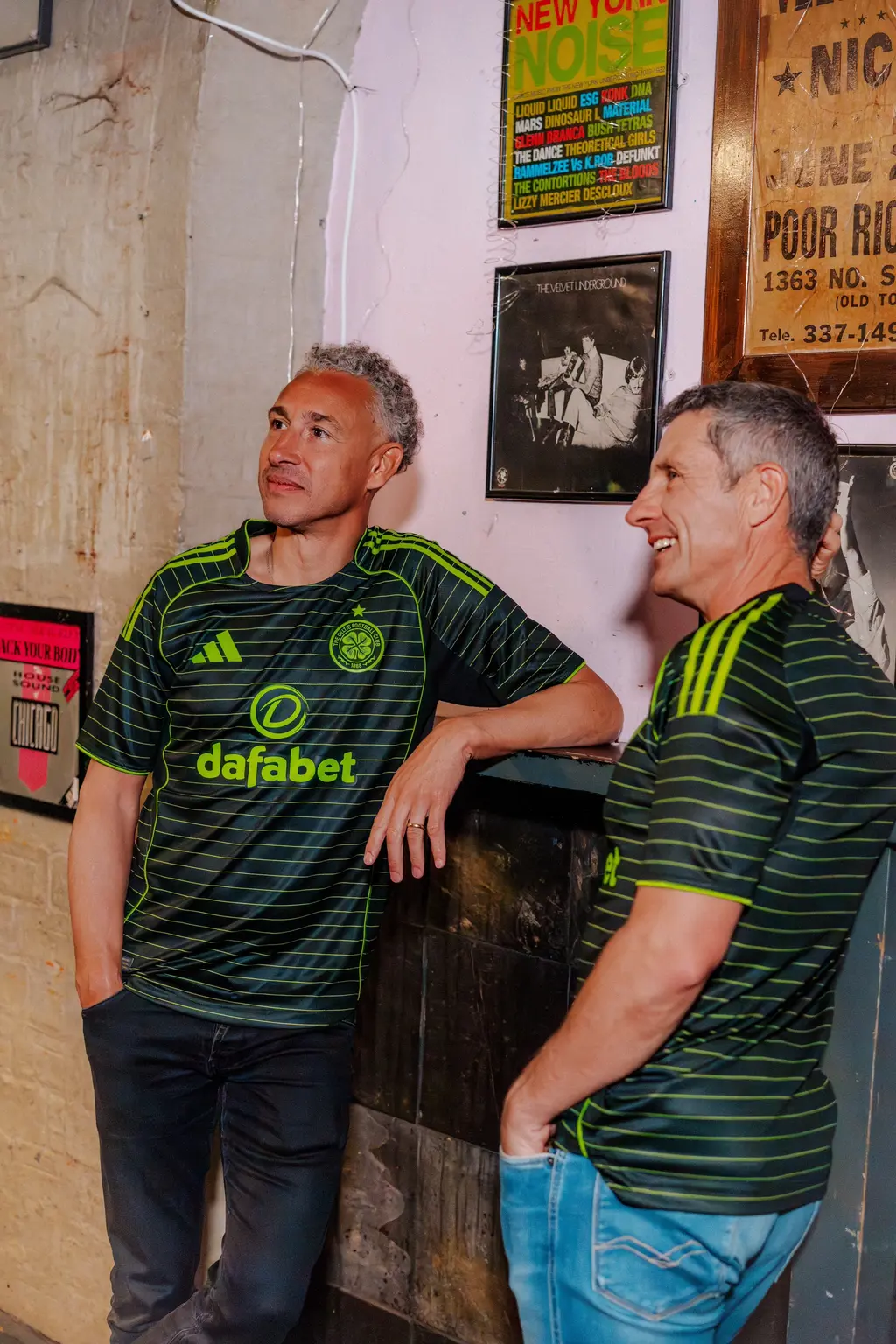
Image courtesy of adidas
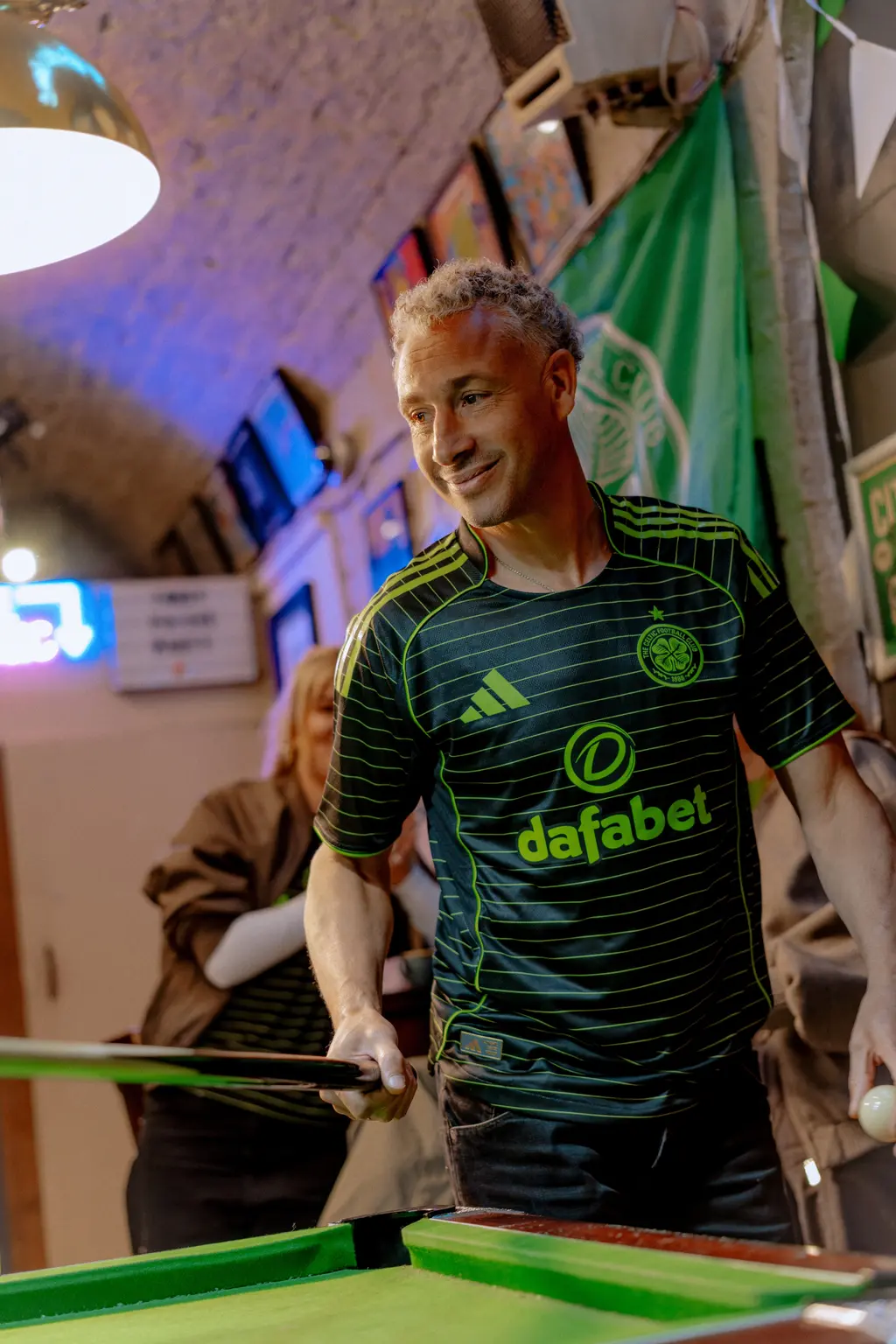
Image courtesy of adidas
Image courtesy of adidas
Image courtesy of adidas
