
A Frieze feast for friends cooked up by Jago Rackham

During Frieze week in London, Jago Rackham had eight models, friends and artists eat food for six hours, all clad in McQueen. Gluttony has never tasted – or looked – so good.
Culture
Words: Sofia Hallström
Photography: Adrianna Glaviano
Last Saturday afternoon in East London, among the chaos of the popular art fair Frieze, eight people sat down to eat and didn’t leave the table for six hours. This was Greed, a performance-slash-dinner by London-based cook and writer Jago Rackham, staged in collaboration with creative studio NA Service’s Joana Kohen and Luke Griffiths. It was all about indulgence as an art form, a kind of culinary séance or lavish mukbang where appetite and hunger became a theatrical performance. Greed marked Jago’s first performance work on such scale, though its concept had been evolving organically in his life and work, on Instagram and in writing for some time through his Substack, also titled Greed. At a moment when society seems obsessed with performative appearance yet is largely unaware of its own absurdity, Jago’s work serves as an examination of the contradictions of desire, wealth and ritual through food.
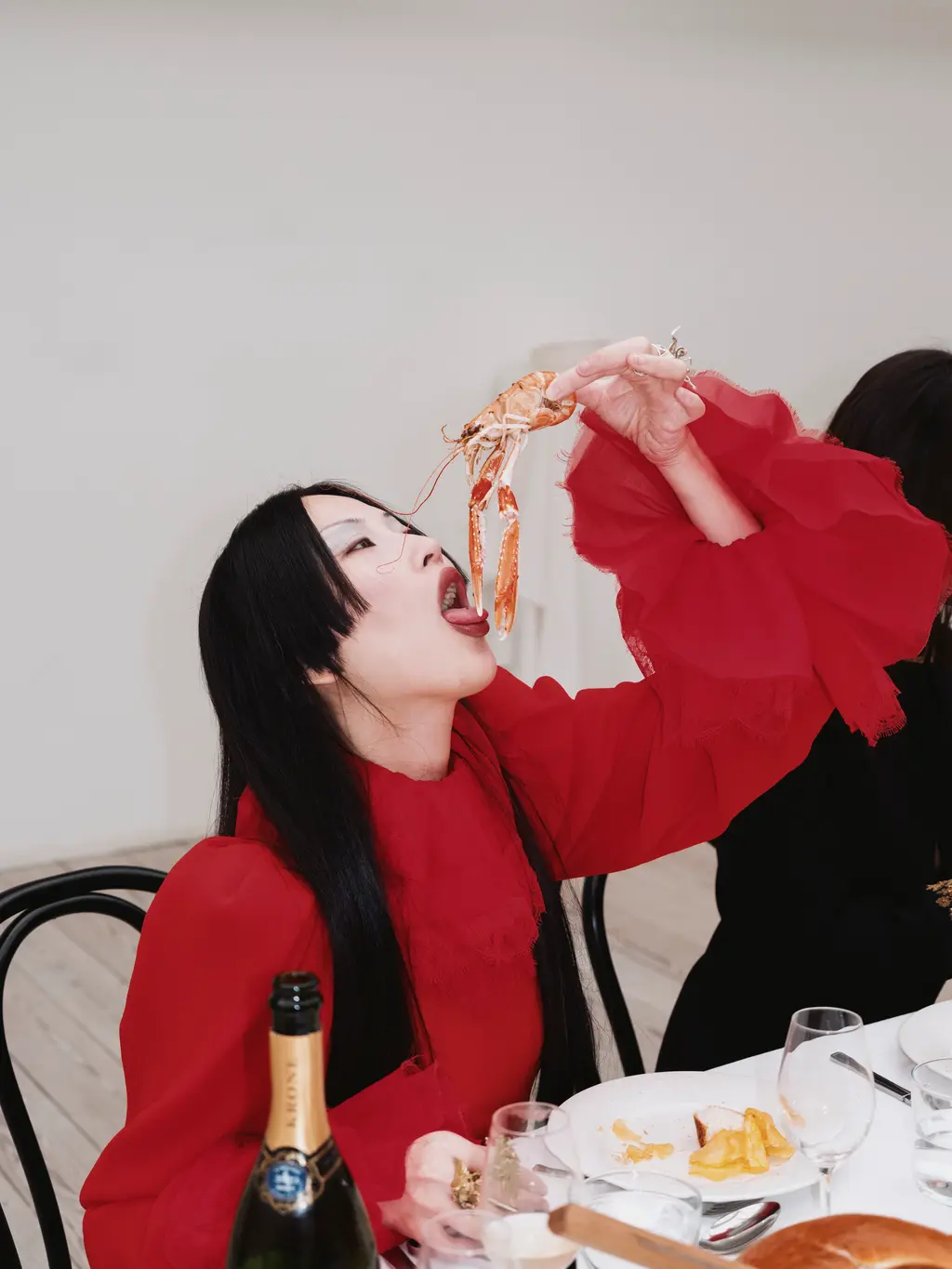
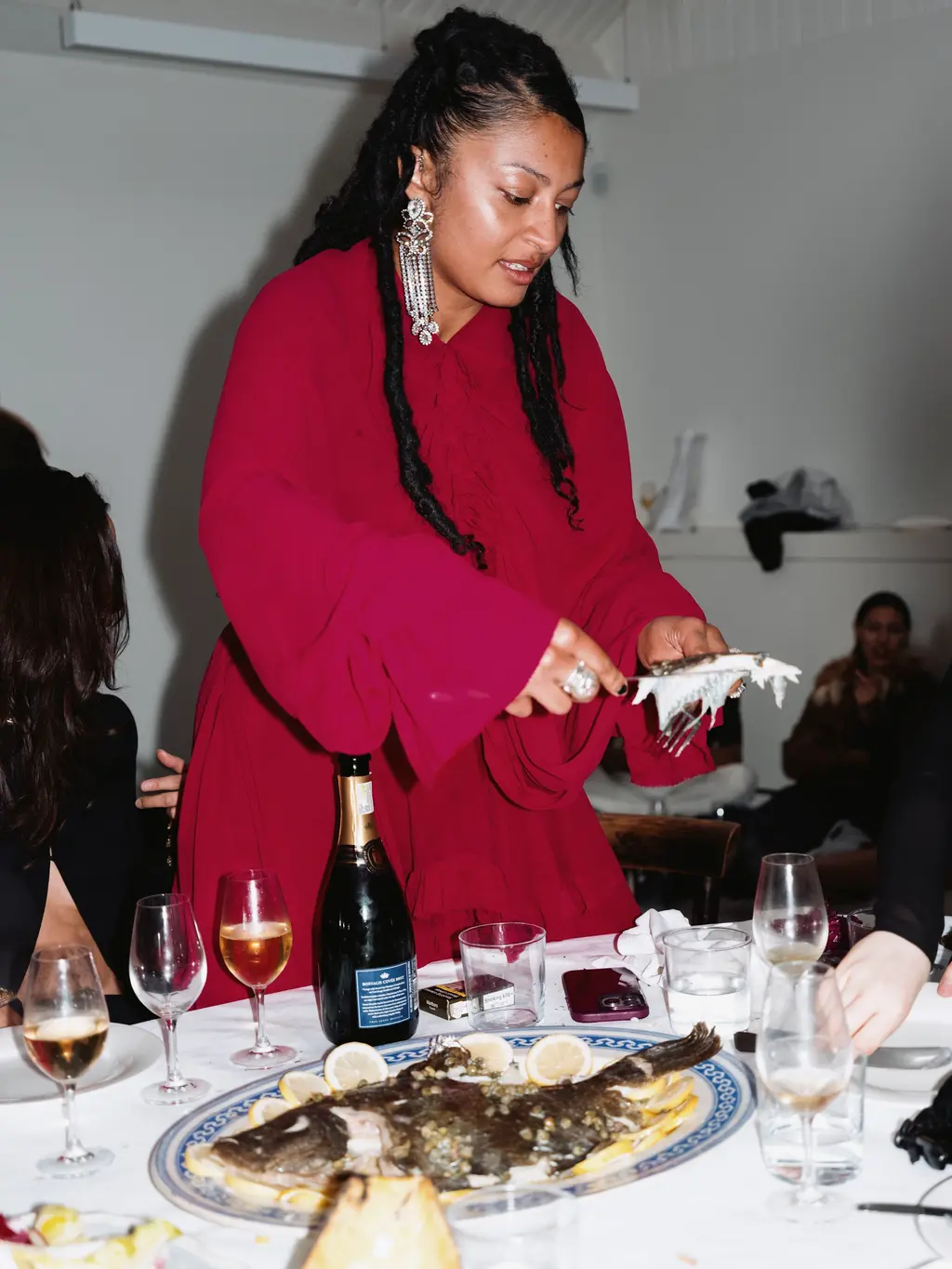
Greed is excess. It’s the spillover that is rejected by polite society. It’s also one of the seven deadly sins, but at Greed, that was the point. Think da Vinci’s The Last Supper meets a McQueen runway presentation, filtered through a medieval fever dream. At Greed, the eight performers, or “greedies”, as Jago calls them, are dressed head to toe in Alexander McQueen AW25 ready-to-wear collection, wearing chiffon gowns that drifted like smoke, black lace and structured suits paired with needle-sharp, pointed toe leather boots, also courtesy of McQueen. Sat together around a white-clothed table, the greedies (Danielle Goldman, Lowena Hearn, Alex Loveless, Lea Ogunlami, Song‑I Saba, Vassou Vu, Xiaoqiao and Yasmin El Yassini, all artists, models and friends) look like an elegant cult, waiting for either dessert or judgement day. The act of feasting, indulging, while wearing couture borders on the absurd and the magnificent.


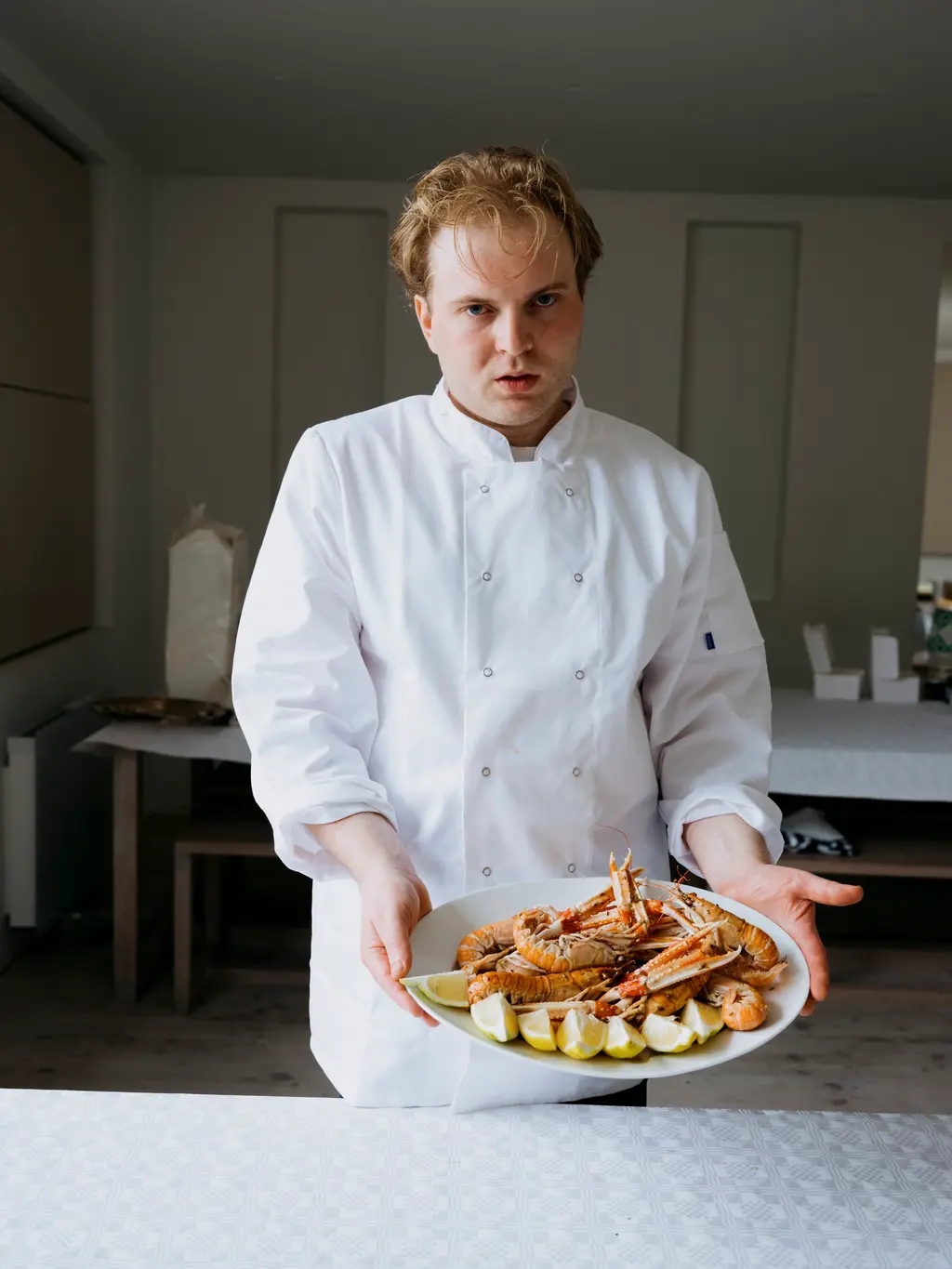
“I’m greedy,” Jago tells me ahead of the performance at London Fields Farmers Market, balancing a basket of fennel bulbs and frilled lettuce in his arms. “But not for money or anything. I’m greedy for generosity and connection.” Greed isn’t about consumption for its own sake. Rather, it’s about a sense of fullness, not just from food, but from that very rare, very human feeling of true nourishment in a fractured world, where connection can feel scarce.
Inside the room, the air feels decadent. A bespoke scent, called Eau de Greed, created in collaboration with perfumer Jouissance, is thick with the scent of birch tar, plum, crushed bell pepper, tobacco and fig leaf. It smells how I’d imagine an 18th-century tavern would, perhaps painted by a Dutch master, heavy with velvet shadows and laced with leathery wine.


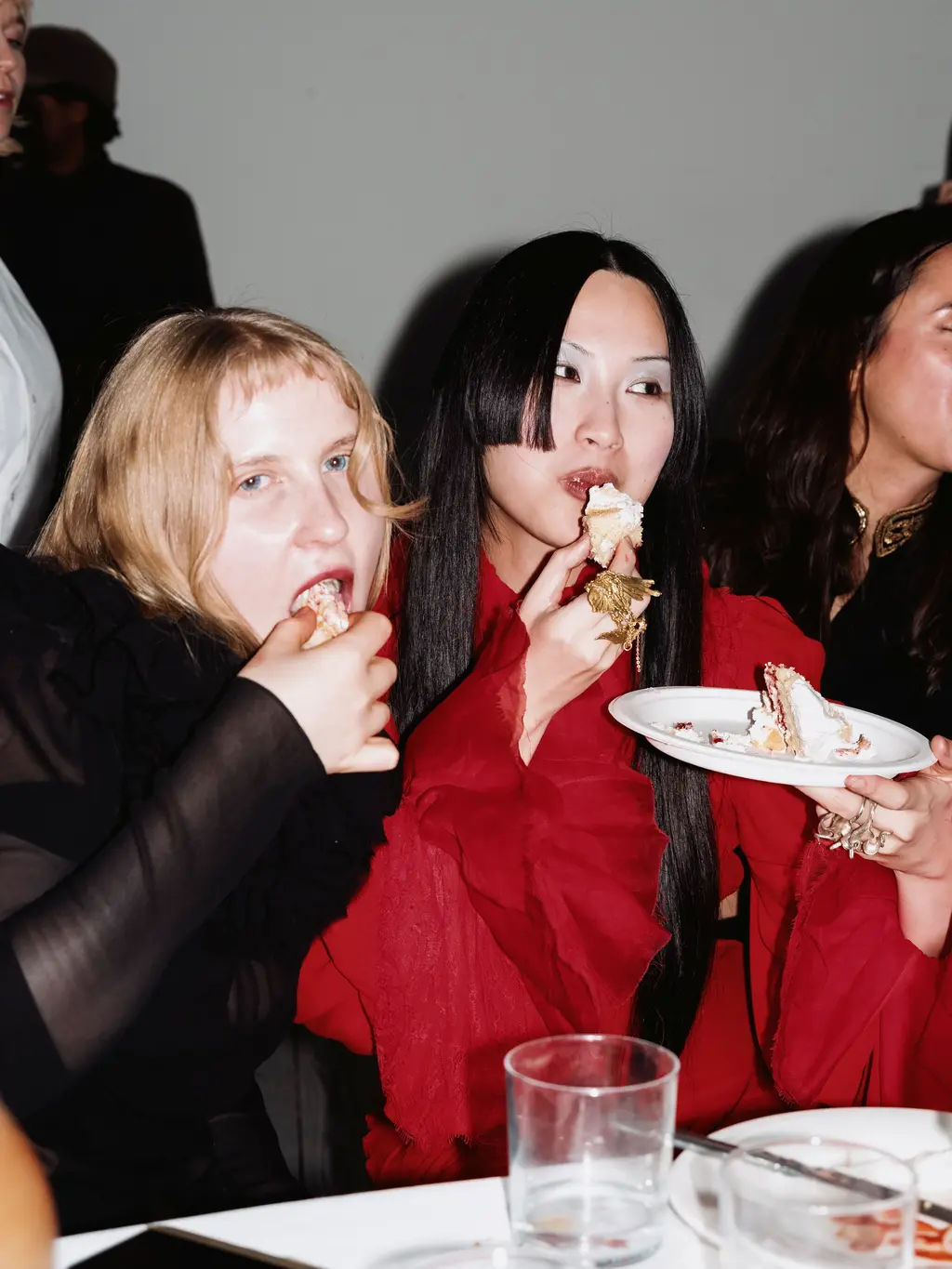
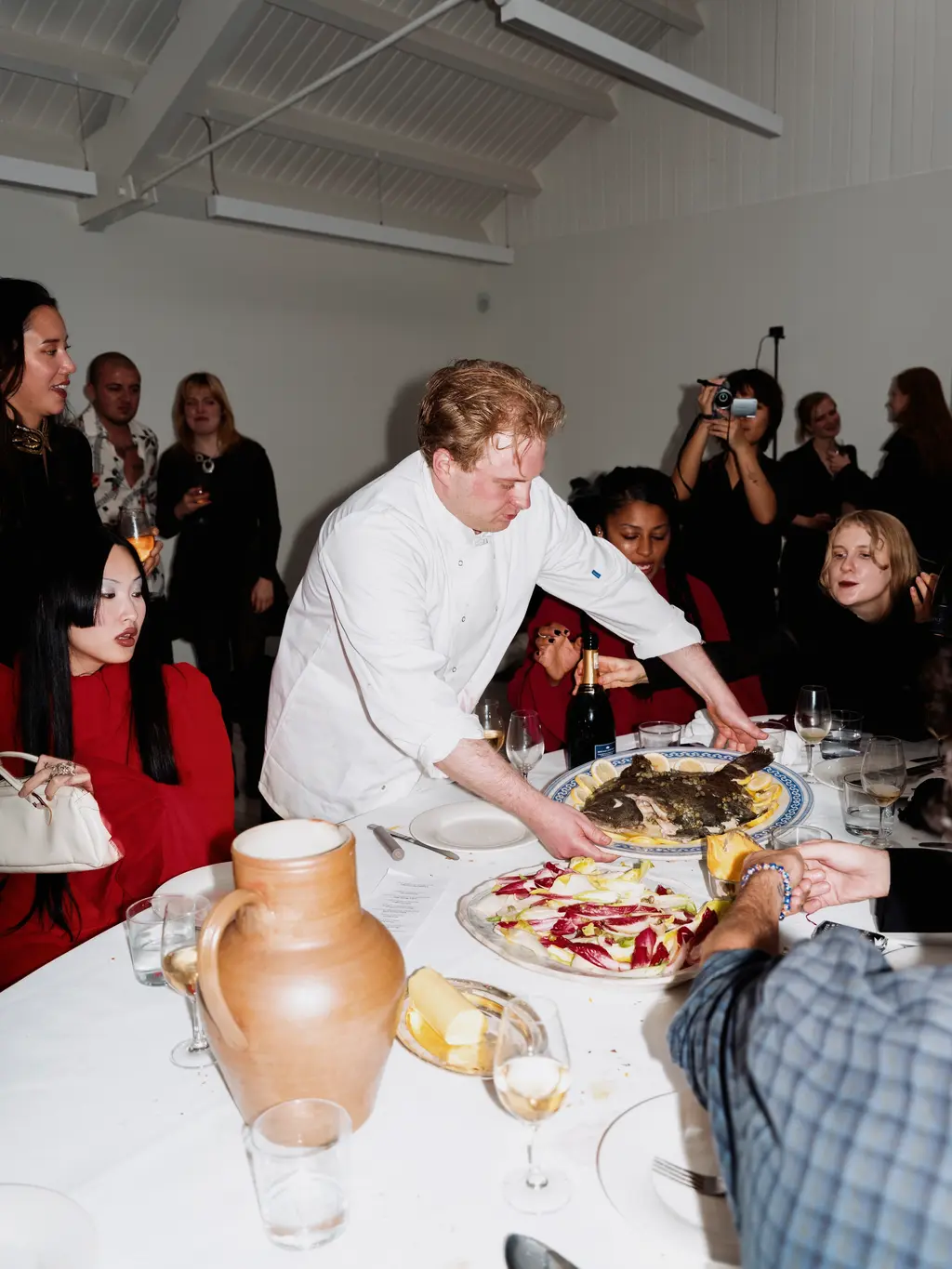
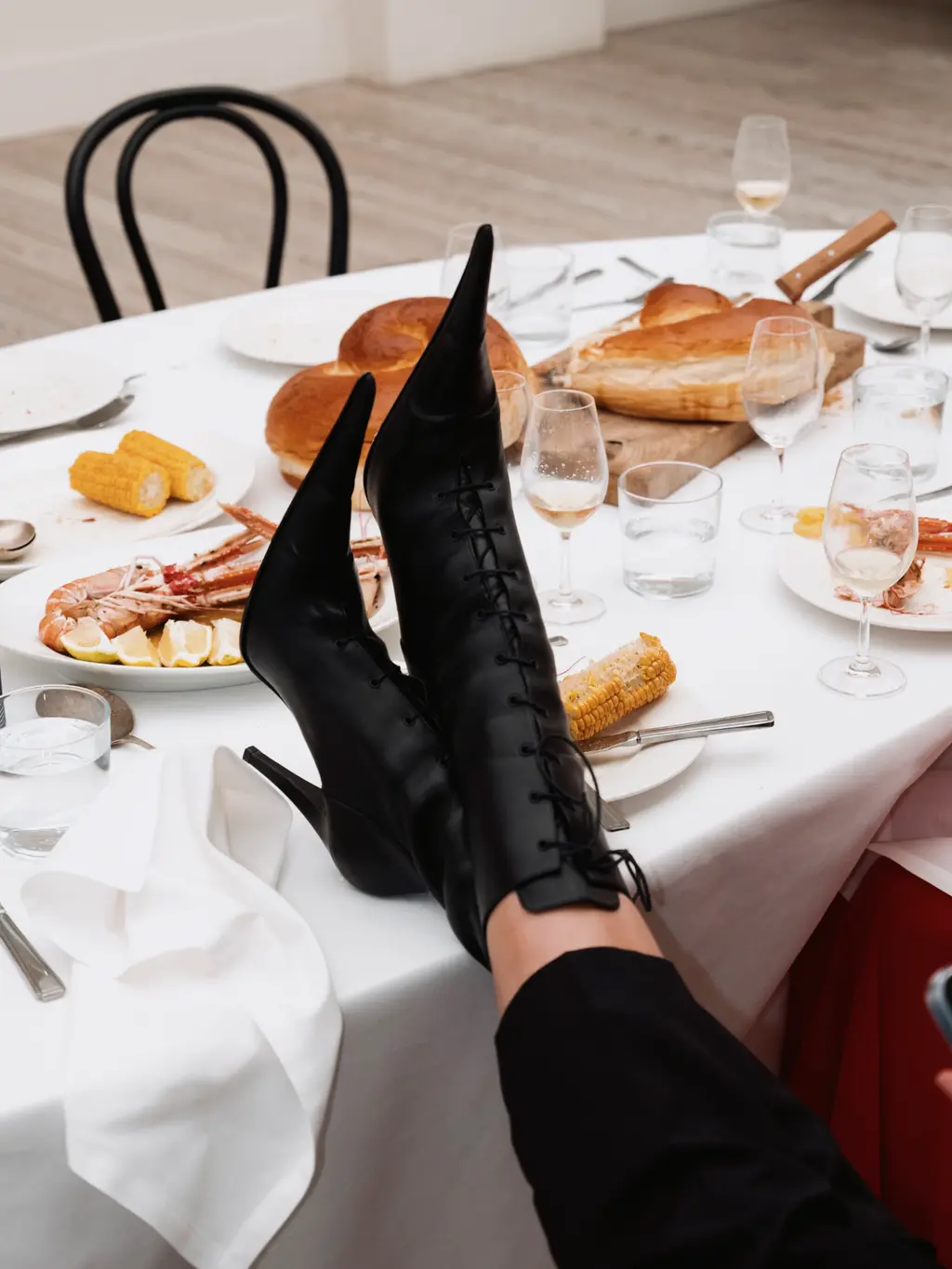
Greed conjures up its structure from tableaux vivants, “living pictures”, i.e. paintings beloved in 19th-century salons, where people froze in exaggerated gestures to recreate famous paintings. But Jago’s version refuses stillness, as the greedies chew, laugh, stare and sigh, while silver trolleys glide into the room with dishes up for grabs. “Everyone at the table is a close friend, and all of the greedies have eaten at my house before.” Jago explains, as his brother serves as waiter, his sister pours the drinks and a friend helps him in the kitchen. “It’s a family thing, really.”
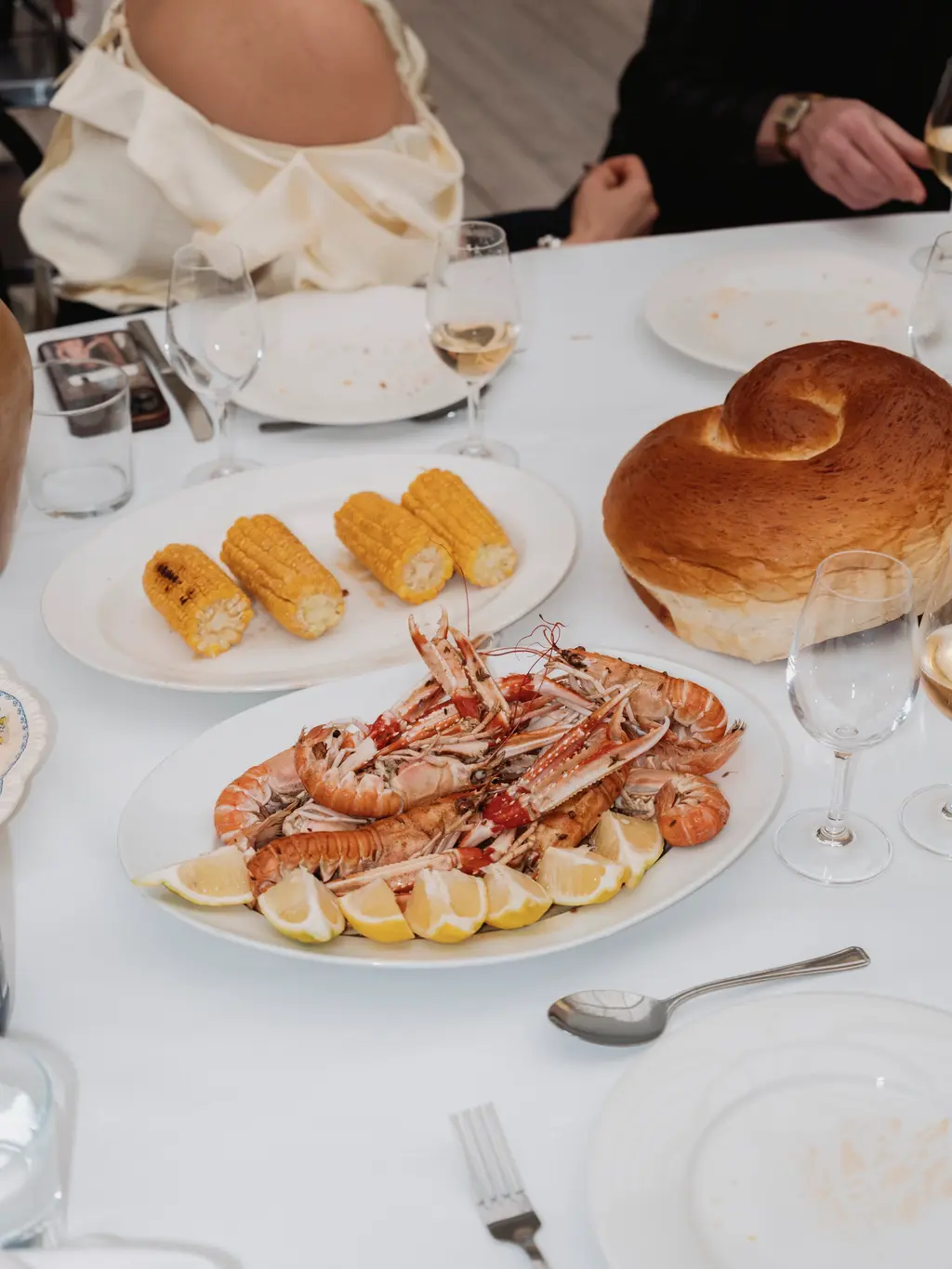
During each course, the room falls into momentary silence, as roast chicken and partridge with bread sauce are served up, alongside a grilled T‑bone bistecca, bleeding politely, and Estonian horseradish. Langoustines and scallops are cracked open with nutcrackers, while the mayo glints like jewels; plus there are two types of risotto: one black, made with squid ink, the other golden, made with saffron. Side dishes of veg appear intermittently, labelled “afterthoughts” on the menu. “Six hours is the longest dinner you can have before it becomes unbearable,” Jago says with a grin. “Slightly unbearable is good.”
“Eating together cuts through loneliness. It’s the start of any real [sense of] community. You just have to break bread first”
“I thought I’d be so full by the end,” said Yasmin, a model and actress, after Greed wraps up. “But it felt weirdly familiar. You’re just catching up, chatting, being human. It’s comforting, in this madly theatrical way.” For Alex, an artist and founder of the East London lesbian bar La Camionera, the performance felt “surreal, but intimate. Like being inside a Flemish still-life, but someone’s topping up your wine.” Their favourite course? The langoustines. “Beautifully arranged like a museum display… It’s baroque and a bit absurd.”
While conceptualising the performance, Jago didn’t want to over-theorise. Marrying art and cooking has always come naturally to him, and this piece felt like the culmination of those two passions. “I told myself to just make something beautiful.” Beauty can be political, too: Greed’s real experiment lies not in recipes, but structure – and in forcing guests, politely, to stay. To eat, talk and look at one another for longer than convenience allows. Greed is opulent, and yes, faintly ridiculous. But it’s an act of collective endurance, and if the tableaux vivants once froze people and culture in place, Rackham’s version thaws them back to life. “Eating together cuts through loneliness,” he says. “It’s the start of any real [sense of] community. You just have to break bread first.”
“Cooking is love,” he continues. “It started as a way for me to be with friends, and show love to Lowena [an artist and his partner and creative collaborator]. Everyone was so grateful. That feeling, of giving pleasure through food, stuck with me.” Greed is about communion, and about what happens when you slow down long enough to feed, be fed and spend time with people that you love. And in a fractured world, that might be one the most radical appetites of all.

