
The community stations reshaping radio

Courtesy of Kindred
Across the globe, independent broadcasters are providing a platform for rising talent and homegrown heroes. Here, we meet the founding hosts from a half a dozen of the best in internet-cast stations.
In partnership with Carhartt WIP
Words: Francis Blagburn
Tightly stocked with rare dubstep EPs, zines – Sports Banger’s UK Crisp Packets 1970 – 2000, for example – and an adapter-grinder hybrid, Kindred Radio looks a bit like your friend’s front room, except chicer and beaming actually brilliant sets into the world though a discreet camera squirrelled behind the DJ booth. There’s normally a small crowd inside. It’s unique, yes, but it’s also one of many community radio stations across the globe that have, on their own terms, shifted the musical and cultural landscape.
Indeed, community radio is the home of unexpected listening, beloved by first-time visitors and chatroom devotees alike. Together, the world’s network of stations act like nerve centres for a global underground, rewarding audience, resident and guest contributions in a positive feedback loop. Best of all, the format offers an antidote to AI-skewed streaming, encouraging active engagement with scenes and the discovery of new sounds. Still, rather than existing in a silo, stations are connected to the digital sphere – broadcast online but experienced in real time – turning otherwise mythical, on-air moments into high-octane snapshots of a scene on the cusp of greatness. TikTok, Instagram and YouTube Shorts lap it up.
Carhartt WIP knows this well. After all, the label has run its own internet based radio series since 2008, beginning with a simple concept – an artist or label doing an interview and playing their music. In the years since it began, radio has shifted from an FM format to internet shows and in that time, Carhartt WIP has hosted selectors and label founders from Helena Hauff to Alchemist, making itself another example of the medium’s success. So, to celebrate its journey and that of the ecosystem that has helped it thrive for over a decade and a half, the station presents “Audio Archives”, a giant collaboration calling on 17 independent community radios spanning London, Palestine, Shanghai and beyond.
The project is the first to unite this number of stations together under one banner and though many have written about the rise of internet radio and the global network, no one has managed to join this many stations together until now.
On the program? A series of one-off international parties and airings unfolding across March and April. Plus, the launch of bespoke station merch for each participating radio and a limited-edition book – complete with interviews and artwork from 15 years’ worth of shows, as well as interviews with all the stations involved in Audio Archives. The goal is to uplift and profile this ever growing global community.
To see in the project, we spoke to six stations about what makes them unique: bizarro programming, unheard-of collabs and impeccable selections. All that, and why community radio is forever.
Kindred, London


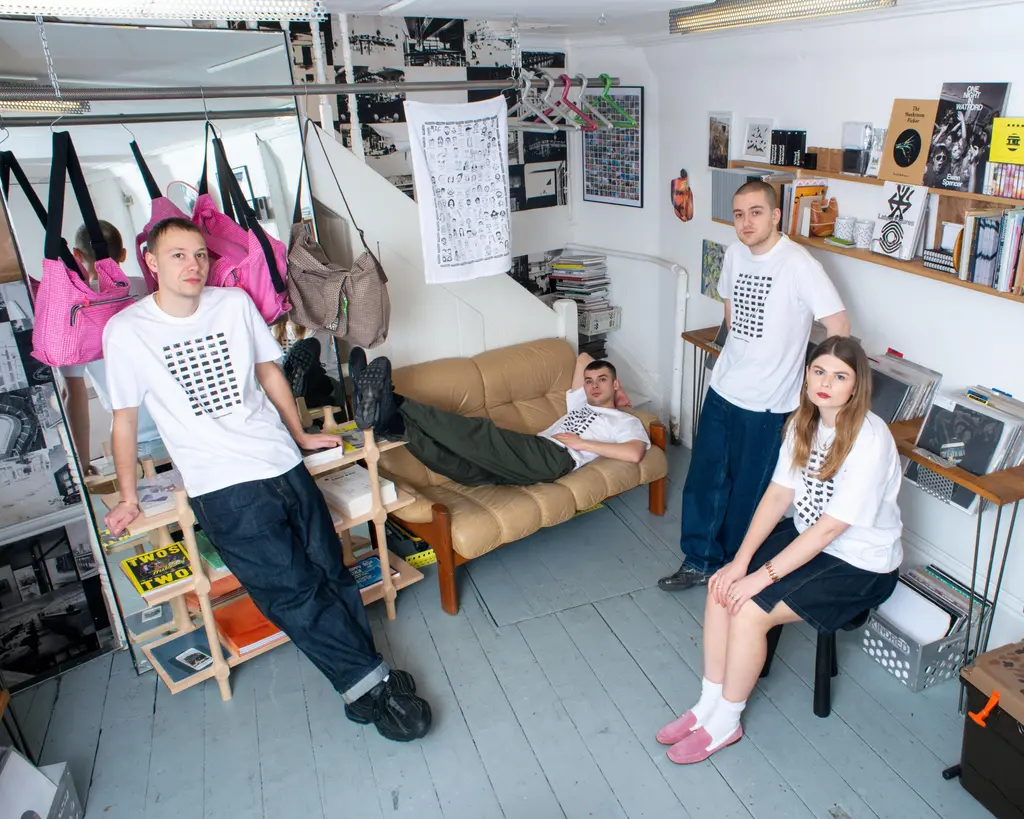
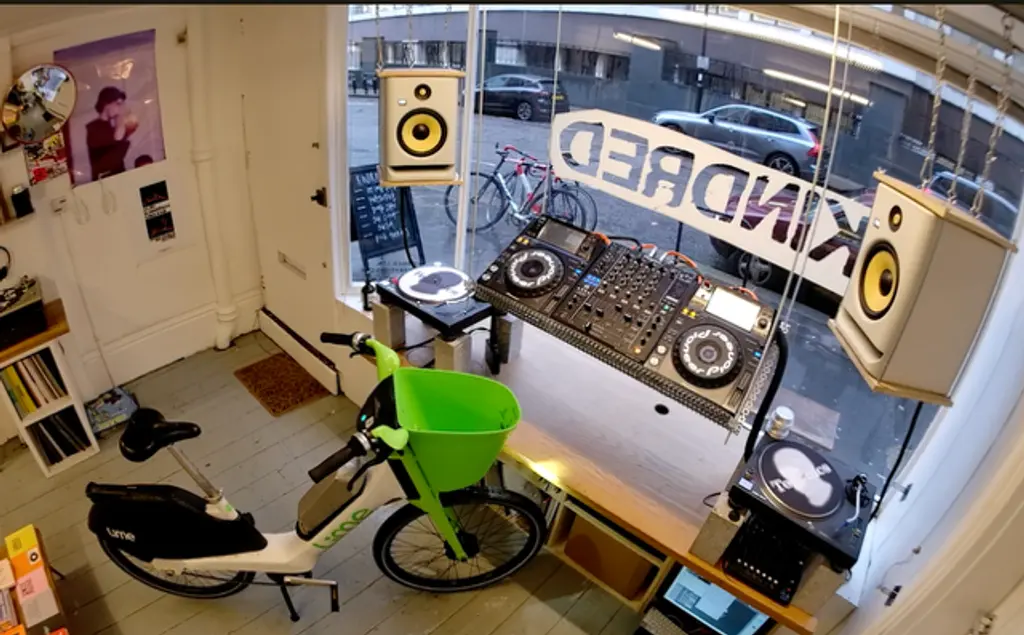
DJ Lime Bike, courtesy of Kindred, Ethan Bucher
The Farringdon shop-cum-radio station was set up by Slade fine art graduate Scarlet Griffiths, partner Jojo Mathiszig-Lee, Louis Nelson and Noah Tucker. Originally, it began life as clubnight in 2018 but soon developed. The space hosted shows with everyone from Boy Better Know’s Shorty through to Night Slugs’ imprint founder Bok Bok, as well as Blutoof and Preditah. It’s also responsible for major moments, like this one with Skrillex and Flowdan.
What is it about community radio that lends itself to collective creativity and collaboration?
Scarlet Griffiths: Through Kindred, artists aren’t just “content”, they’re contributors to our space and sound. That creates an environment where collaboration happens organically: artists listen to each other, meet through line-ups, trade ideas and support each other’s projects. Many relationships have formed around our small shop – artistic, romantic and ones that I reckon will last a long time.
Can you tell us about a time that a major artist returned to Kindred for a homecoming?
SG: We wouldn’t want to take ownership of where anyone started. We hosted a collaborative Halloween grime cypher in 2020 with Travs – featuring Jawnino, Renz, Jpntn, Teddy Bones and Chamber.45 – which in some ways turned into the collective Travs Presents [the legendary grime collective]. We’re hosting Jawnino for a live performance at a chapel in Stoke Newington with Carhartt on the 26th March – a nice 360-degree moment.
Is Kindred an antidote to algorithmic streaming and socials?
SG: People can exist in our world purely in the physical, having experiences within the space beyond scroll[ing]. Our signature camera angle, shot from behind the DJ CCTV-esque allows artists to enjoy their sets without a camera in their face. Sure, some might say social engagement isn’t as strong, but what matters more: the music, the DJ enjoying themselves or the likes?
What’s one thing you’d only see (or hear) at Kindred?
SG: DJ Lime Bike.
Oroko Radio, Accra


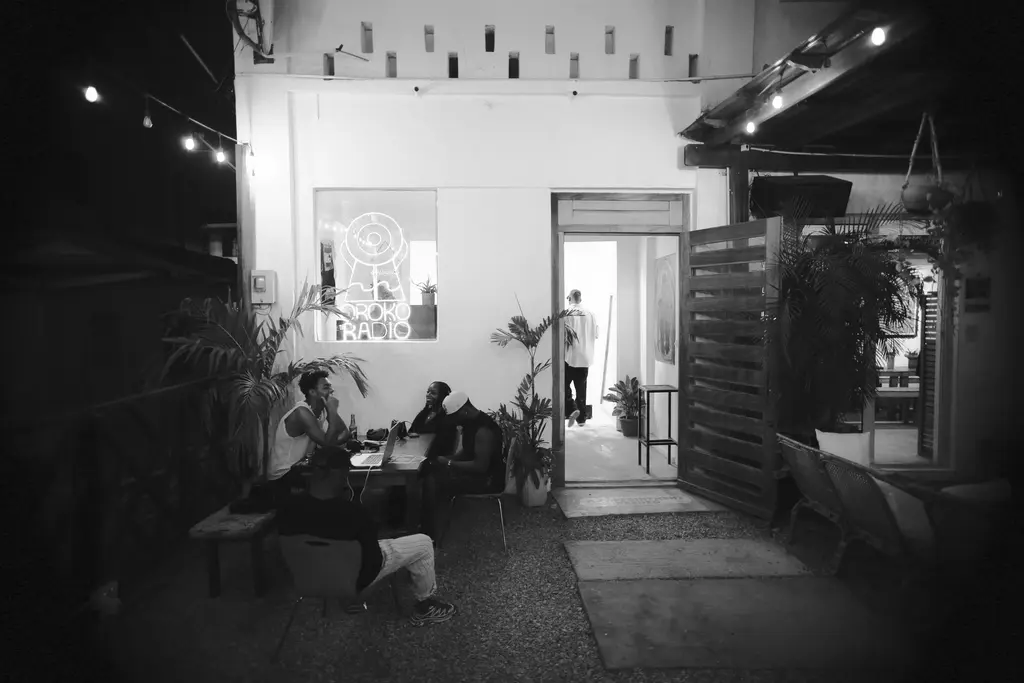
Oroko Radio, photo by Erica Aryee
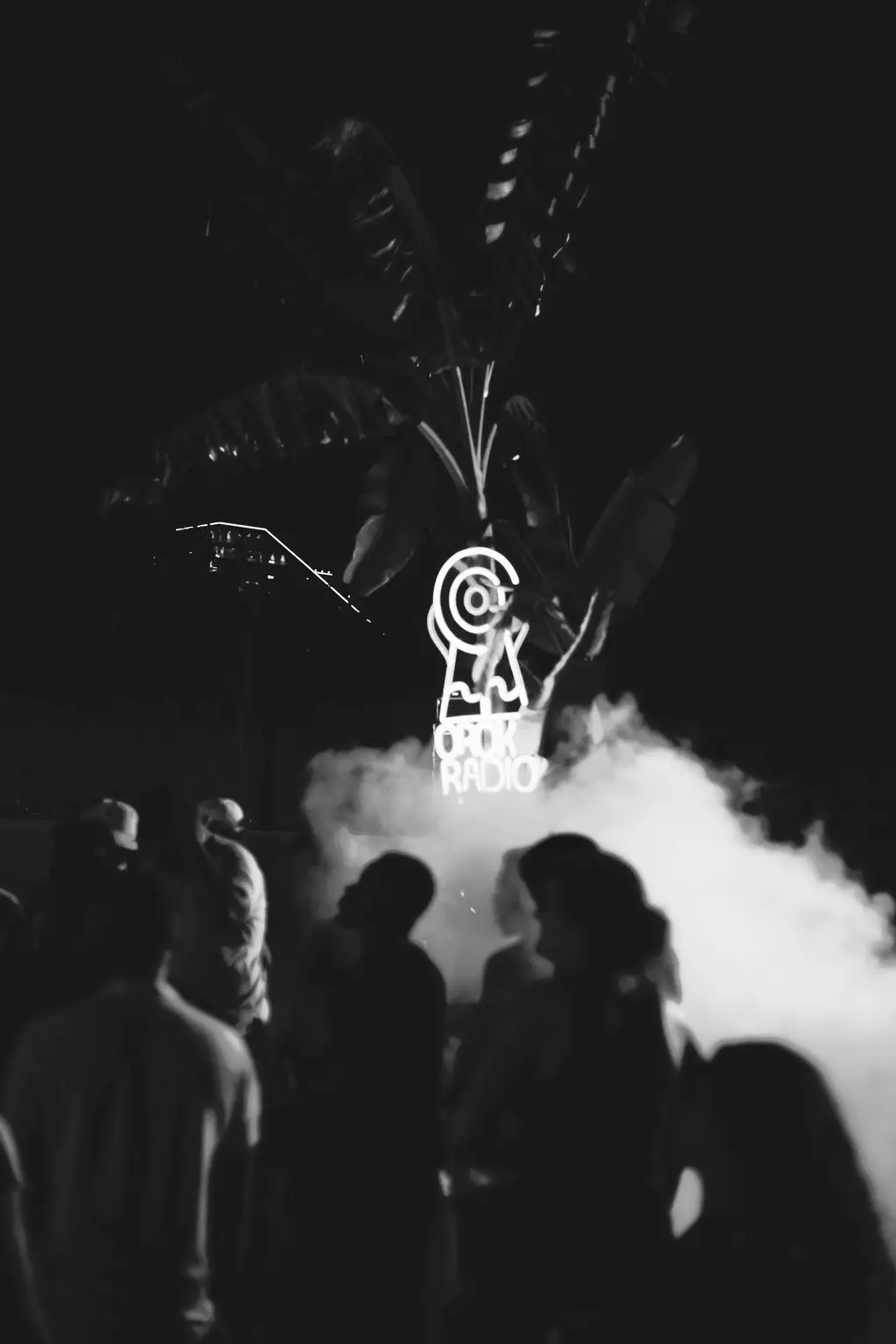
Oroko Radio, photo by Komla Darku
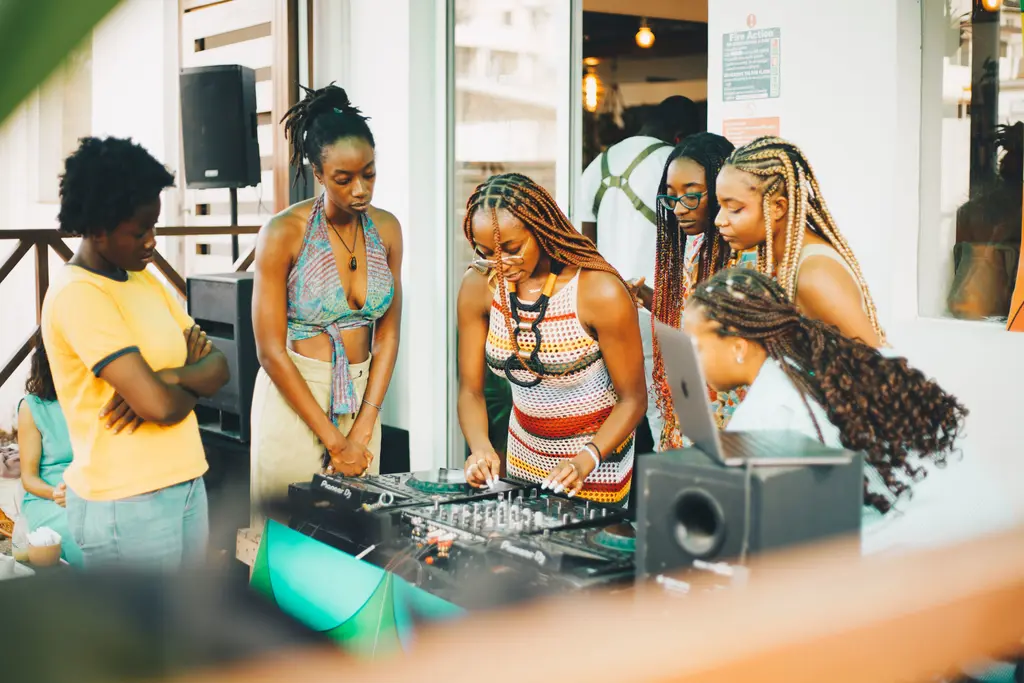
DJ workshop with Oroko Radio, photo by Komla S Darku
The non-profit radio set up in early 2021 by co-founders Truseye, Kikelomo, Nico Adomako and Naëmi Ada has become a ground zero for West African and African diasporic music.
What’s one thing you’d only hear at Oroko?
Nico Adomako: It’s not just about a genre, [but] the exchange happening in real time between Africa’s creatives of tomorrow and those building across global hubs. You can hear that tension and curiosity in the sets – artists testing ideas, referencing home, reframing influences.
Community radio is a launchpad. Have you had any artists return for a homecoming?
NA: Through the workshops [British-Nigerian DJ and presenter] Kikelomo hosted, some artists touched CDJs for the first time. A few months later, they were playing across Accra and beyond. What came after is inspiring: new collectives forming, underground raves, a visible shift in confidence and experimentation within the city.
What’s a typical day like on Oroko?
NA: You might move from experimental sound structures and field recordings into heavy, percussive club rhythms. Some shows lean into research and sonic experimentation, others into high-pressure dancefloor energy.
If you had to pick one show to point a first-time listener to, which would it be?
NA: If you [were to] force me, I’d point you to a recent discovery of mine: the latest instalment from BoogzBrown. It’s a deep, patient journey through traditional maloya [the traditional music of Réunion], tracing it from the seventies to the present day.
Radio Al Hara


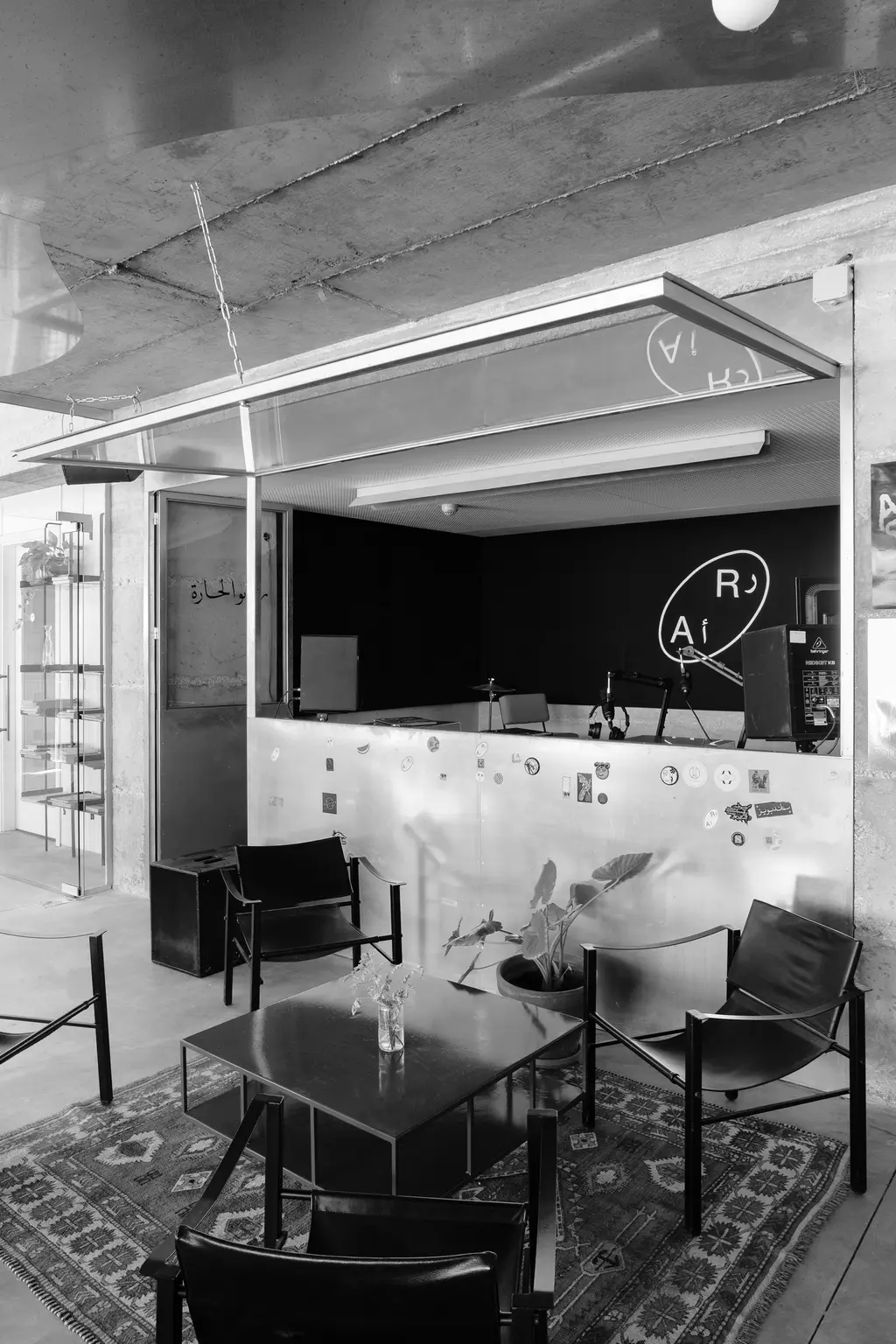
Radio Al Hara, photo by Mikela Burstow
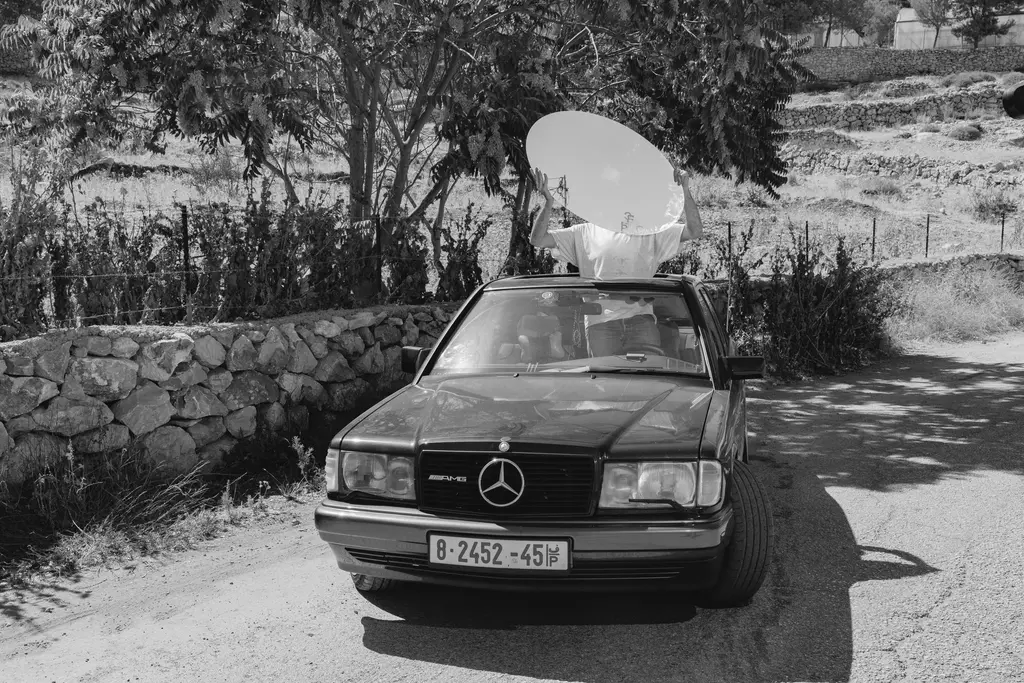
Radio Al Hara, photo by Maen Hammad
In 2020, five individuals – Yazan Khalili, Yousef and Elias Anastas, and Saeed Abu-Jaber and Mothanna Hussein – set up Al Hara. This initial core team has grown to seven members who together divvy up radio programming, communications and technical duties across Bethlehem, Amman, Beirut and Amsterdam.
How has radio allowed you to collaborate with others?
Elias Anastas: Being based in Bethlehem, under occupation, it’s difficult for Palestinian artists to travel or [work together] freely. The radio has enabled [projects] that would otherwise have been impossible.
What’s one thing you’d only hear on Al Hara?
EA: In one day, you might hear socio-political transmissions from different parts of the world, followed by Palestinian grime and hip-hop from young artists in Jericho. That fluidity between experimental sound, politics and emerging local voices is something specific to the station.
What can a first-time listener expect?
EA: We really push the radio to function as a public space. In that spirit, we accept most of what we receive. The only thing we usually ask contributors is not to send club-oriented mixes. So, [one] might encounter experimental sound pieces, spoken word, archival material, ambient sets, traditional music or live recordings.
How do your listeners shape your programming?
EA: Since the beginning of the radio, one of our strongest principles has been that listeners can become contributors the next day.
VISLA FM, Seoul


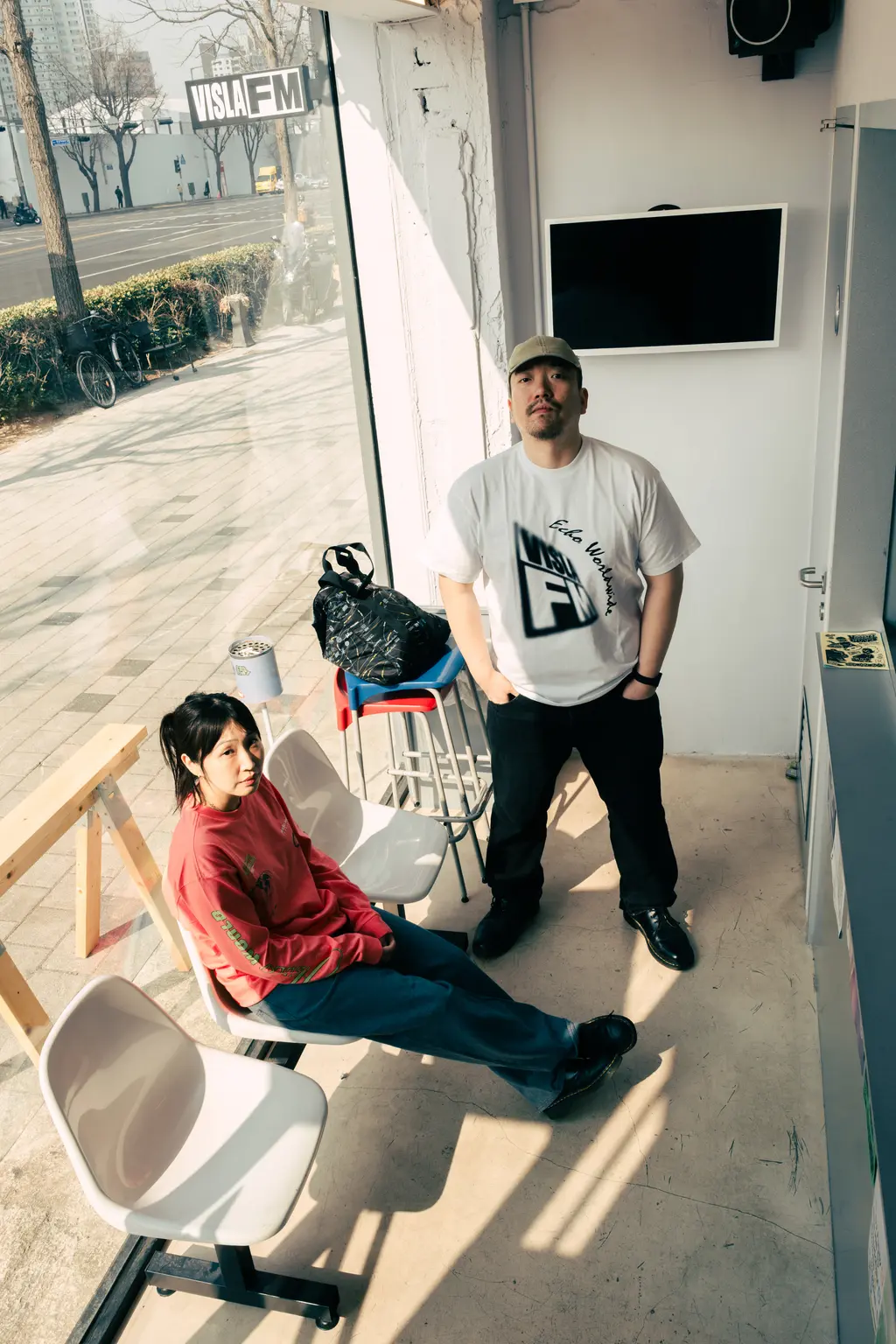
Hyuk-in Kwon and Hyejin Jin, photo by Jo Hoseok
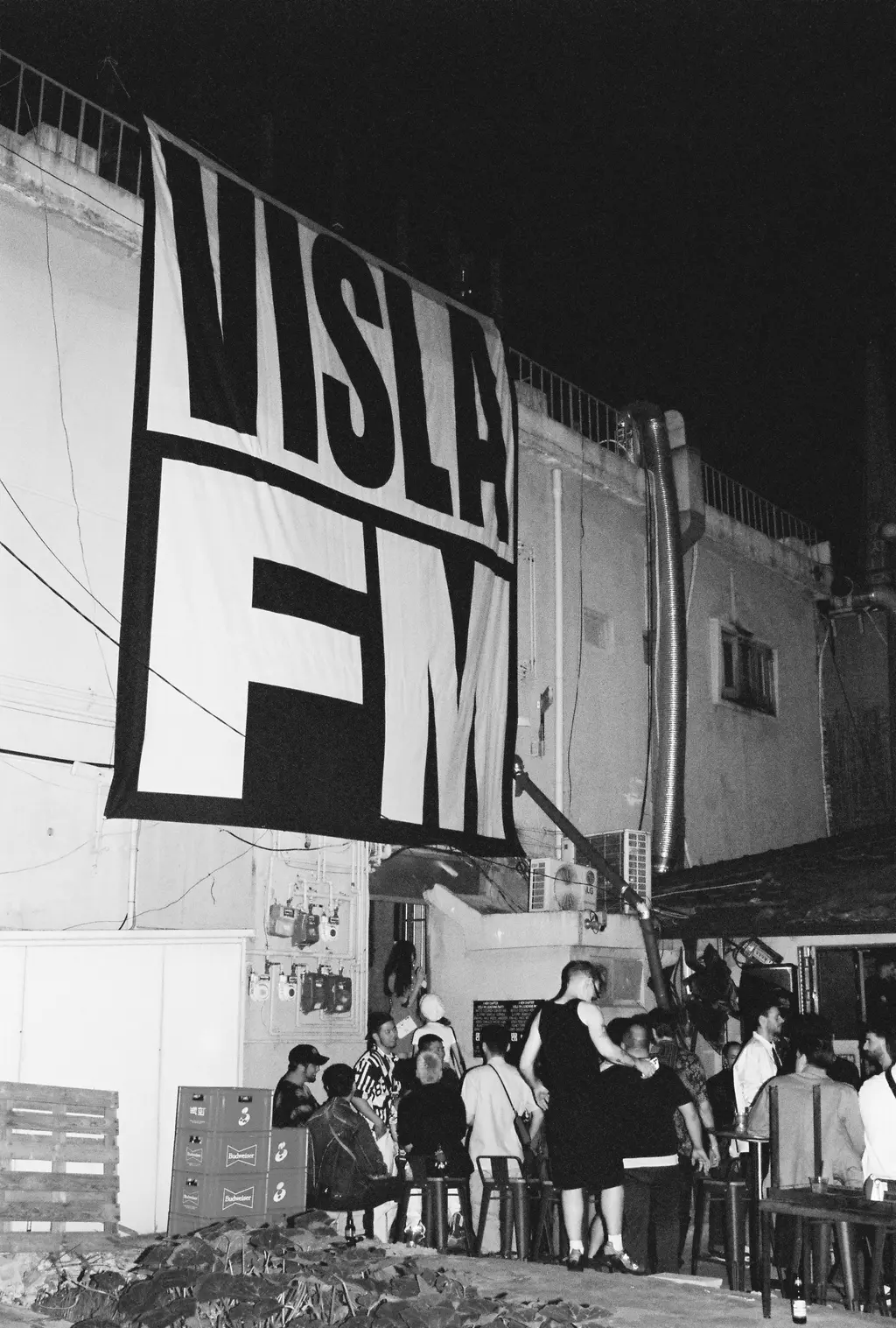
Courtesy Visla FM, photo by Jo hoseok
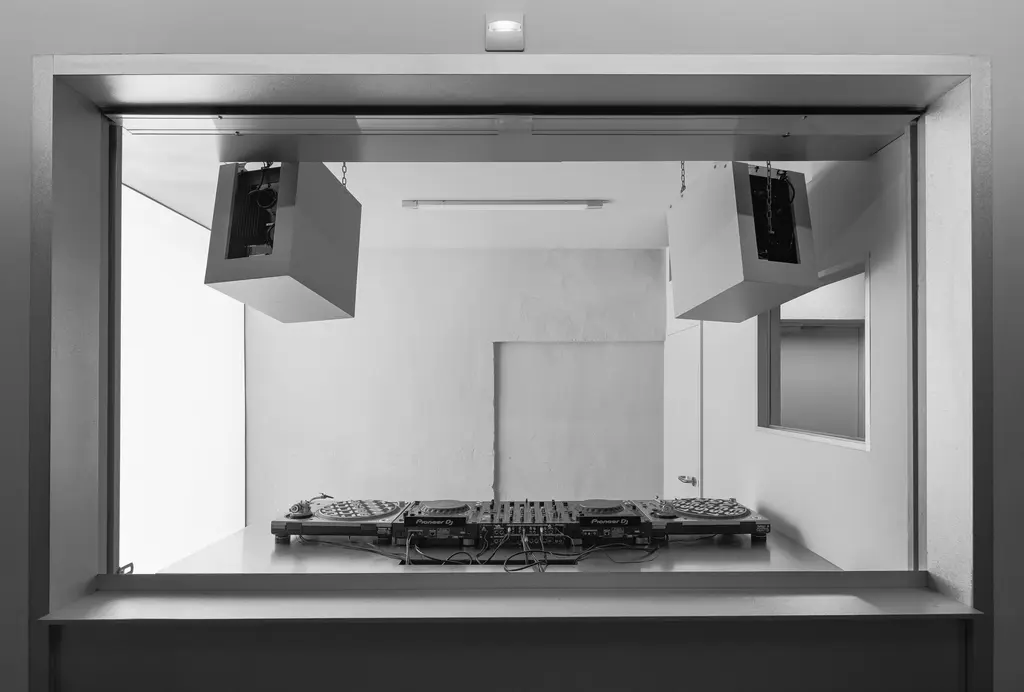
Courtesy Visla FM, photo by Jo hoseok
The Seoul-based indie station was born as an offshoot of the subculture magazine, Visla. With a small-room set-up, the radio got underway in 2023 and has quickly built its reputation as a hotbed for rising Korean talents and an instantly accessible real-time broadcaster. Hyuk-in Kwon, Visla Magazine and VISLA FM founder, and Hyejin Jin, VISLA FM radio manager, hold the fort.
Can you boil VISLA FM down into a few words?
Hyejin Jin: It’s a radio station where people with different textures and edges come together and roll forward as one. Rather than being shaped into something smooth and polished, it keeps moving with everyone’s individuality intact.
What role does VISLA FM play in Seoul’s underground scene?
HJ: [It] creates a space where new artists can present their own music libraries. Artists who might never have crossed paths elsewhere meet and create new scenes. In the end, I think consistency is what keeps the scene rolling.
Hyuk-in Kwon: Whether you’re a well-known musician, an amateur, a promising new name or someone older, if you’re truly obsessed with music, you’re given equal time to fully immerse yourself.
What’s your favourite memory of a VISLA FM show?
HJ: Although it wasn’t a good memory, there was a time during a live broadcast when a neighbour came into the studio to complain, asking us to turn the volume down. The whole thing went out live [with the neighbour’s visit becoming part of the broadcast]. A moment I’ll never forget.
Tell us something you’d only see (or hear) at VISLA FM.
HJ: When you watch the broadcast, you’ll often see the host speaking while looking straight ahead. There’s a window in front of the DJ booth, so friends who drop by – or even people passing – wave or react from outside. Independent radio still isn’t very familiar to many people in Seoul, so sometimes someone will ask, “What is this place?” Those moments naturally become part of the broadcast.
Kiosk Radio, Brussels


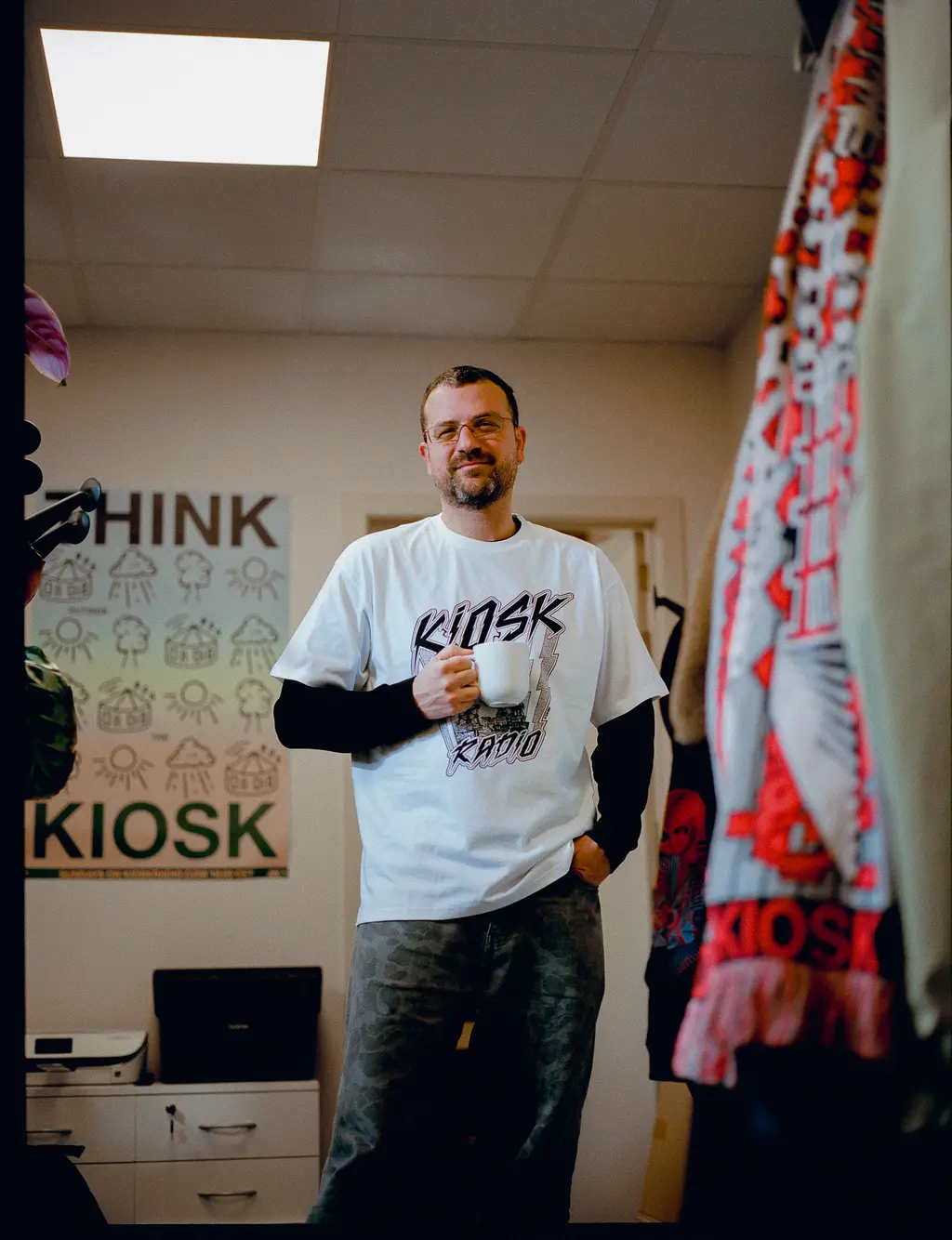
Mickaël Bursztejn wears CARHARTT WIP “AUDIO ARCHIVES”, photo by Jules Emile
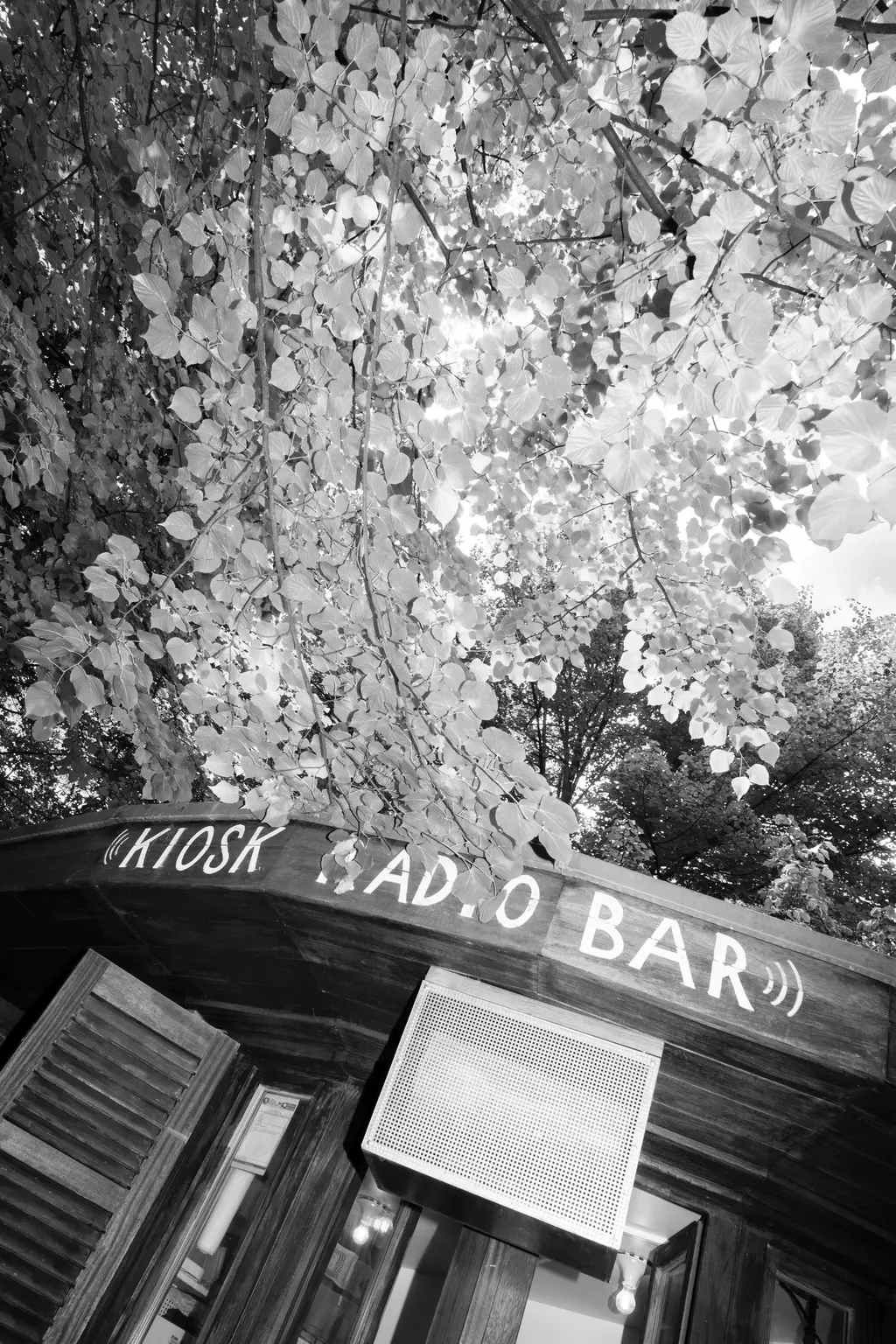
Kiosk Radio, photo by Jente Waerzeggerskiosk
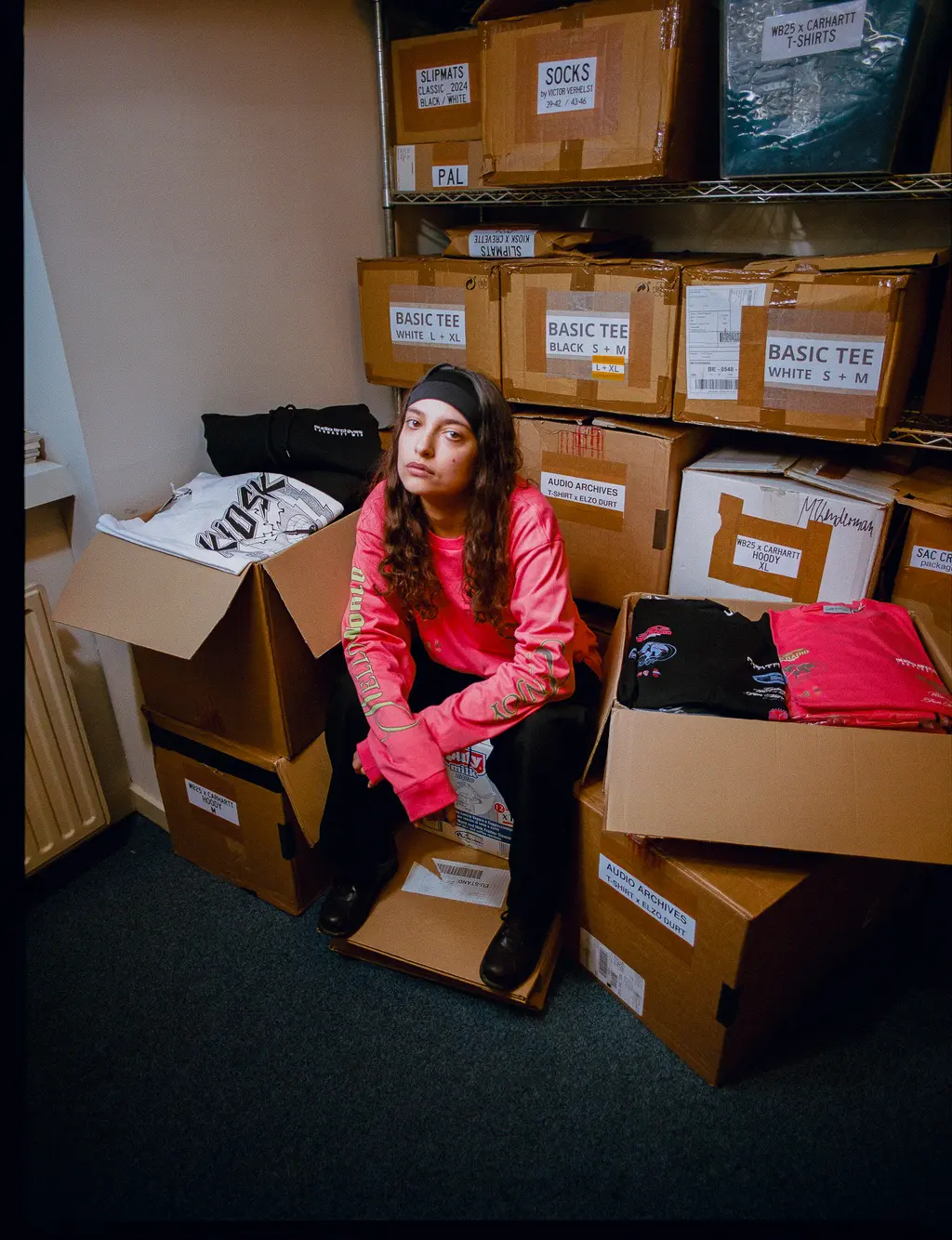
Bia de Souza wears CARHARTT WIP “AUDIO ARCHIVES”, photo by Jules Emile
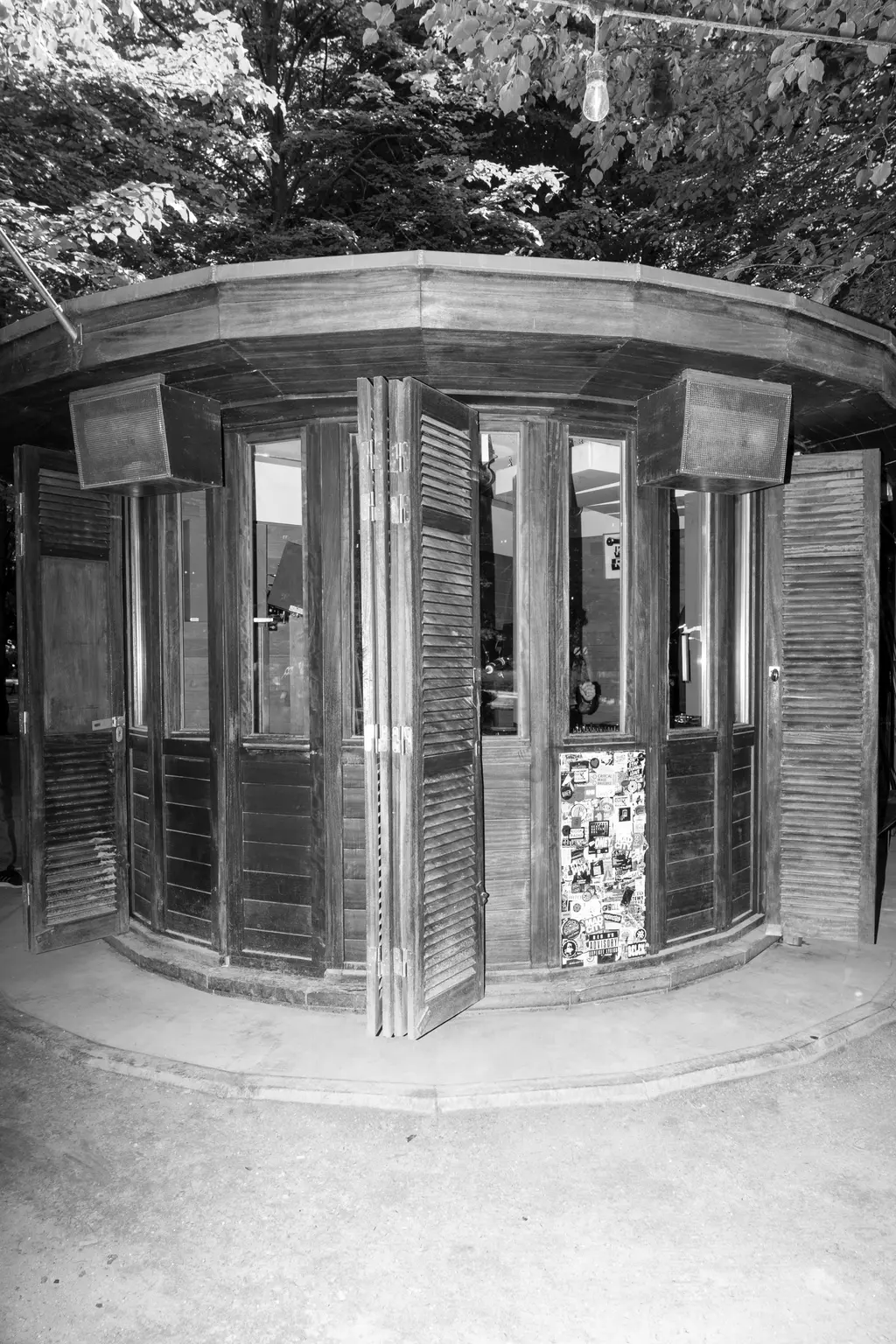
Kiosk Radio, photo byJente Waerzeggerskiosk
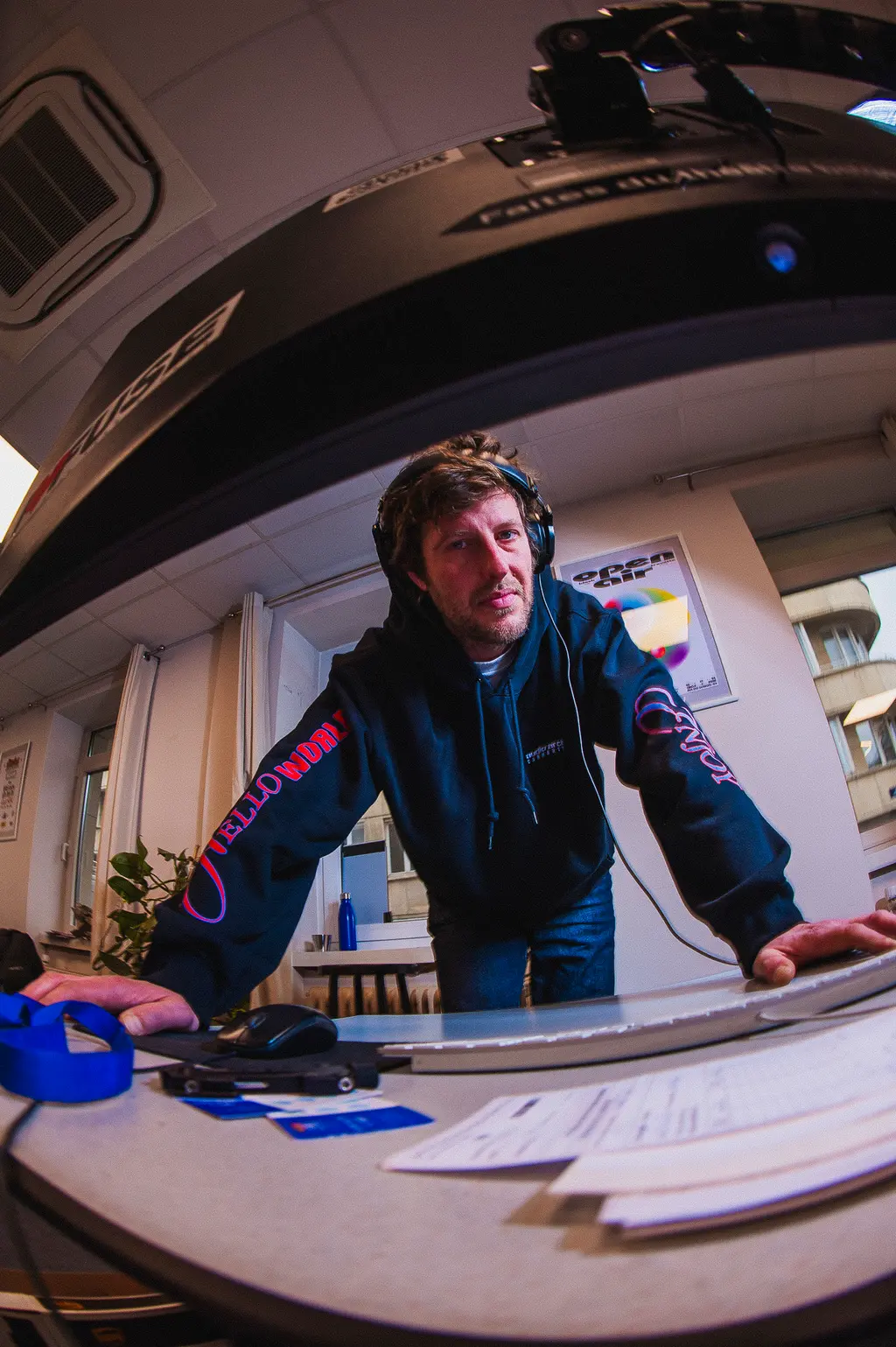
Jim Becker wears CARHARTT WIP “AUDIO ARCHIVES”, photo by Jules Emile
Broadcasting from Brussels’ Parc Royal, Kiosk Radio serves as a hub for artists, DJs and experimental musicians. It’s also behind the Woodblocks festival. The team? Mickael Bursztejn, Jim Becker, Nicolas Bucci and Bia de Souza.
Tell us about your studio, AKA the sauna.
Jim Becker: Given our limited space, our setup is as compact as possible: the usual two CDJs, one DJM, two turntables and a mic. In terms of sound, we proudly house a big system, which was gifted to us by Adam Audio (shouts to them!). It sounds amazing. We’ve had the room fully treated for acoustic quality. Since most walls are covered in wood, and it is quite warm inside and cold outside – thanks Belgium – we were quick to nickname it the “sauna”.
Steamy! How do you find new talent to grow your roster?
Bia de Souza: We don’t really believe in “discovering” talent in a traditional gate-keeping sense. What interests us is perspective. Are they bringing something personal? Something intentional? Something that contributes to the broader conversation?
What does a Kiosk homecoming look like?
Mickael Bursztejn: Kiosk has always focused on alternative and emerging artists rather than major artists in the popular sense, so we’re not necessarily a launchpad for mainstream superstardom. That said, we’ve definitely witnessed artists grow alongside us. A great example is Paul Seul. He was a Kiosk regular from the early days, long before wider recognition. Seeing him break through internationally as part of Ascendant Vierge with Mathilde Fernandez and then return to Kiosk felt like a genuine homecoming.
What’s one thing you’d only see (or hear) at Kiosk?
Bia de Souza: XOGN turning our very tiny studio into a full-blown stage performance. Within minutes, the lights are up, the fog is rolling, and the studio is no longer a radio booth but his stage. All of this, of course, while delivering a seriously powerful vinyl-only set.
Montez Press Radio, New York City

Max Ludlow, Stacy Skolnik, Anna Clark and Tom Laprade, photo by Laura Brunisholz
Montez Press is the New York city-based radio renowned for its off-kilter, art-focused programming. It’s headed up by Stacy Skolnik, Tom Laprade, Anna Clark and Max Ludlow, and the coverage is esoteric. Think: interviews with legends such as Cosey Fanni Tutti, readings from Rhea Dillon, sound art from Mark Leckey, reporting from Sofia Hallström, or, say, a Women’s History Museum playlist.
Tell us a secret.
Stacy Skolnik: We only know what ten per cent of the buttons on our mixer do.
What can we expect when we lock in to Montez Press Radio?
Max Ludlow: Translators talking about translating, plays performed from the windows of three-floor walk-ups, rockstars reading their poetry, the sound of people balancing motorcycles on their heads, dead air, walks foraging mushrooms on the outlying islands of Hong Kong, ambient party sounds, Three Six Mafia affiliates, gallerists prank calling their famous friends, advice columns by noise musicians and their mums, music you never heard before and will never hear again.
How do you support the underground in NYC and beyond?
SS: Honorariums to artists, a smile, time, technical and editorial support, grant money, space, free beer and refuge from a hostile and competitive world that wants you to do everything except chill and think.
What’s one thing you’d only hear on Montez Press Radio?
Tom Laprade: Reviews of art reviews.
