
Nothing Compares 2 Robyn
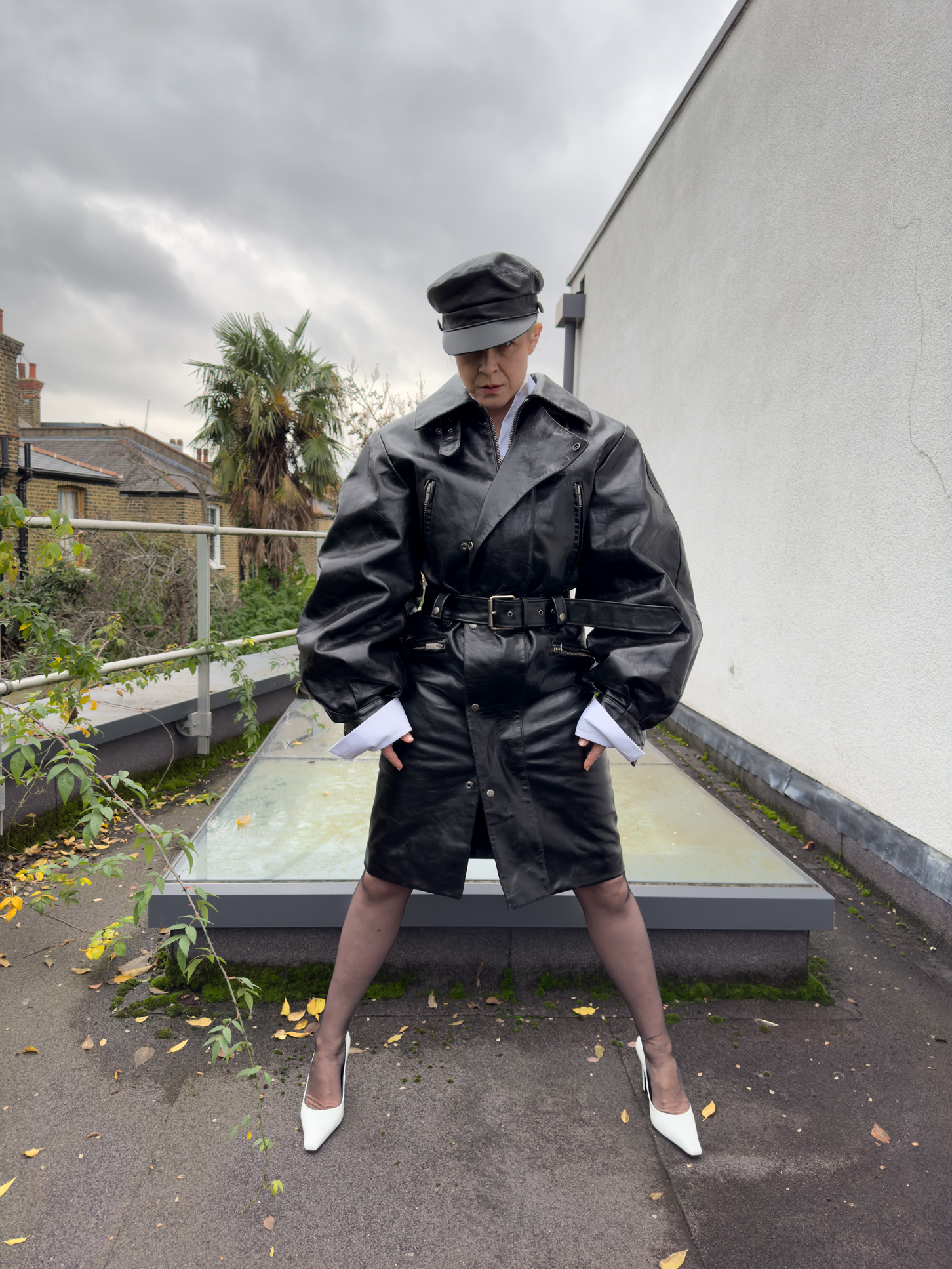
Robyn wears coat, shirt, hat, belt and tights SAINT LAURENT BY ANTHONY VACCARELLO shoes JUDE
After escaping major label hell, the Swedish star delivered some of the greatest anthems of the 21st century. Now, she’s embracing radical attitudes – to love, parenthood and horniness.
Music
Words: Shaad D'Souza
Photography: Juergen Teller
Creative partner: Dovile Drizyte
Styling: Danny Reed
Taken from the spring 26 issue of THE FACE. Get your copy here.
If you’ve ever cried on the dancefloor, chances are you’re a Robyn fan. At some point in the early 2010s, around the time her song Dancing on My Own was soundtracking a cathartic and pivotal scene in the first season of Lena Dunham’s Girls, Robyn became colloquially known as Pop’s Patron Saint of Heartbreak. For a while, the label fit. After all, the 46-year-old Swede is a top-tier artist because she, like you, has been hurt before. And she’s turned that hurt into some of the most indelible pop songs of all time.
She has also, like you, had to trawl through the diabolical swamp of modern dating apps. Sitting across from me in the backyard of an Airbnb in Silver Lake, Los Angeles, she smiles sheepishly as she talks through her journey with digital dating. She was on the apps “before the pandemic a little bit, and then during, and after”. She mostly uses Raya because “Tinder is just too…” – Robyn scrunches up her face – “insane.” And, naturally, there are some she won’t touch, such as: “Feeld. It’s like… It’s kind of exposing to be kinky on an app when you’re a famous person!”
Kinky on the apps, then: no. In song, though? Emphatically yes. The goofy and beatifically horny title track of Robyn’s ninth album Sexistential is a bloopy club-rap song with lyrics about IVF, one night stands and “juicy hentai”. (Which is, apparently, a very real subgenre; don’t look it up.) Sexistential is key to understanding the past 10 or so years in Robyn’s life, a period in which she did a lot of therapy, had a son as a single mum – Tyko, born in 2022 – and realised that all the love she was searching for on her old records might not actually be her destiny.
“A lot of artists have that moment where you really have to absorb the heartbreak. I did that so much – on every album. I was so tired of it!”
Robyn has lived more lives than any of her contemporaries. As a young pop star, she had a fractious relationship with her major label in part due to a song on her 1999 second album My Truth containing lyrics about having an abortion, which led to it not being released outside Sweden. And so, she went independent and started making club beats with subversive duo The Knife. She eventually strong-armed her way back into the mainstream with her 2010 album Body Talk – home to canonical singles Dancing On My Own and Hang With Me – which helped set the tone for both pop and indie music for the decade to come. Her spiritual daughters, artists such as Lorde, Charli xcx and Carly Rae Jepsen, are exalted figures in contemporary pop, barrelling down a path that she cleared for them. Harry Styles says he’s honoured to have Robyn join him for six Amsterdam shows on this year’s Together, Together tour. “As a songwriter and performer, she’s undeniable,” Styles tells me via email. “She captures these moments of intense pain and transformation and uses the energy to create pure joy. All of a sudden, lots of my friends feel like travelling to Amsterdam to see me play. I wonder why.”
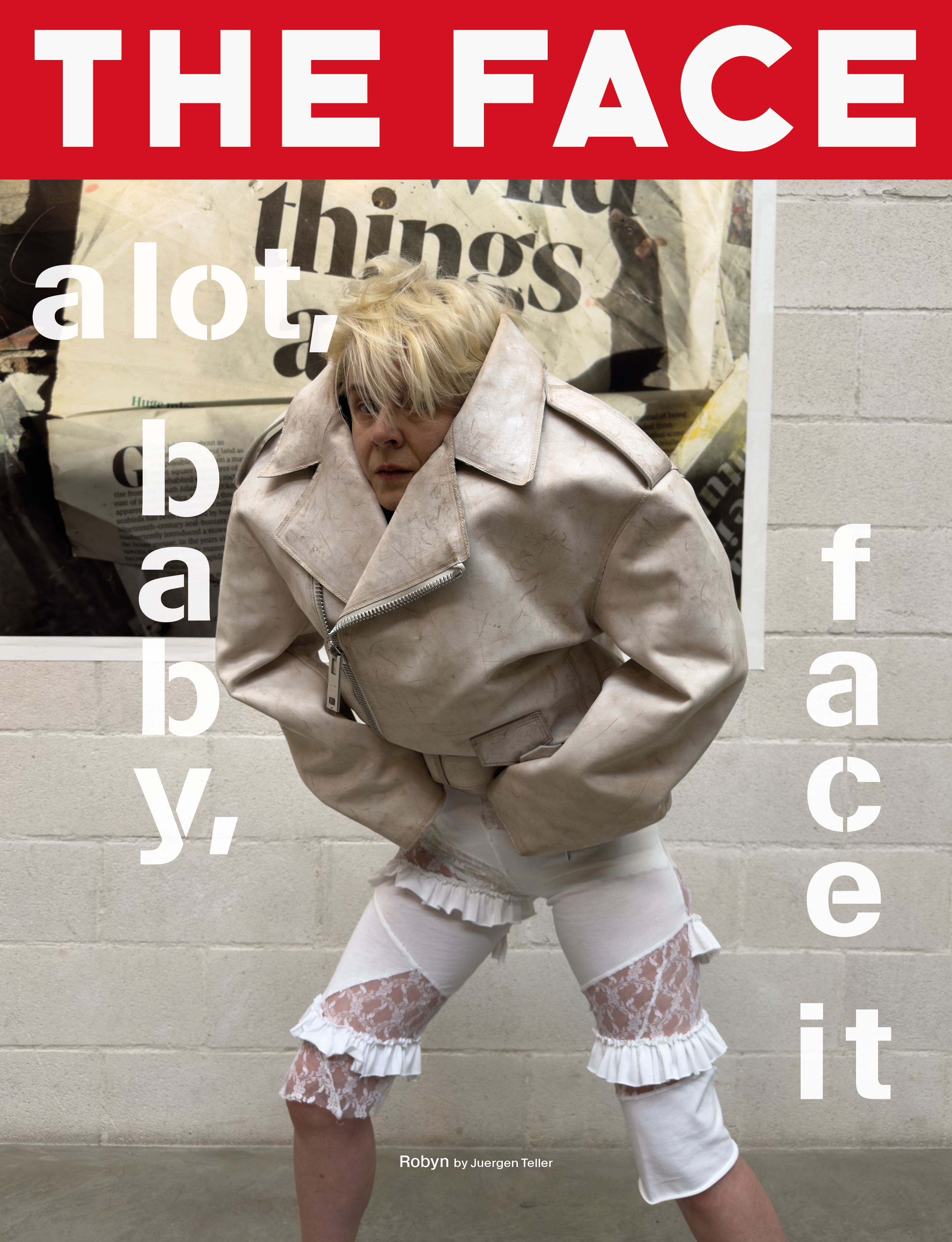
Robyn wears ACNE STUDIOS
Given all this, she could have legitimately chilled out – retired, even – safe in the knowledge that she had changed pop multiple times over two decades. But on Sexistential, her first album in eight years, she chooses not to retrench, instead deconstructing her own ideas about who she thought she’d be in her forties. “I think a lot of artists, at one point in their lives, have that moment where you really have to absorb the heartbreak,” she says with a mixture of matter-of-factness and weariness. “I did that so much – on every album, it’s what I kept doing, kept doing. I was so tired of it! I was like: ‘I can’t believe I’m this person again on [2018 album] Honey.’ I thought: ‘I don’t ever want to write about that again.’”
Working with longtime collaborator Klas Åhlund, mega-hitmaker Max Martin (for the first time in more than a decade) and Martin’s protege Elvira – one of the architects of Addison Rae’s album Addison – Robyn rebuilt herself from the ground up. Over the phone from LA, Åhlund comments on the lyrical shift: “It’s such a go-to theme, writing a Robyn song: ‘Let’s do some heartbreak.’ It didn’t feel as true this time, because she’s been experiencing so much other stuff in her life that felt more interesting.”
Robyn 9.0, forged over the better part of a decade, is silly and sensual and still best-in-class, a model of what pop can be, and for anyone looking to stay primal and real at a time when they could become closed-off or jaded. It’s only February, but Sexistential is a strong contender for the album of the year. Perhaps that goes without saying. Does she ever deliver anything less?

Sleeves BLESS bodysuit ERES hat SAINT LAURENT BY ANTHONY VACCARELLO tights CALZEDONIA
When we meet it is, unofficially, Robyn Week in LA. Two days before our interview, I attended her surprise show, sponsored by Acne Studios and Spotify, at the Fonda Theatre. Hundreds of fans jostled outside, attempting to get in. Inside, dozens of celebrities including Anya Taylor-Joy, Sky Ferreira and Kyle MacLachlan hung out on the VIP balcony, gabbing feverishly about Robyn’s first full live set since before the pandemic. Waiters passed around champagne, the only appropriate beverage for this grand return.
A couple of days later, This Party Is Killing You, an almost-15-year-old Robyn-centric club night usually based in New York, holds an LA party where a few hundred loyal fans gather to scream their hearts out as they slick the walls and the floor of El Cid, a flamenco bar and de facto gay bar, with sweat and tequila. As soon as I enter – behind a girl who screams “Let’s go, sluts!” to nobody in particular – I spot the superstar drag queens Symone and Detox, both card-carrying Robyn stans.
Detox, who followed Robyn around on the tour for Body Talk, explains the buzz of her comeback. “In the times we’re living in right now, when people want to feel seen and heard, Robyn resonates,” she says. “There’s a freedom in letting yourself just go into your emotions and allow yourself some joy. She creates a space for people to do that. She may not be queer, but she’s always been a queer icon. Faggots want to dance. And faggots love serious women!”

Shirt, hat and tights SAINT LAURENT BY ANTHONY VACCARELLO
Robyn, who is diminutive, inquisitive – and, yes, sometimes quite serious – carries that fame, and enduring adoration, lightly. When she arrives at the Airbnb where her assistants Rocco (tall and thin in a Yung Lean hoodie and Brazil cap) and Aila (head-to-toe burgundy adidas tracksuit) have been staying, she gives me a bone-crushing handshake and asks, politely: “Is it OK if I do five minutes of Uber Eats before the interview?” She proceeds to trawl through the menu of legendary Eastside breakfast spot Sqirl, letting out a periodic “Oh my gawwwd!” as she selects her sorrel rice bowl and some snacks for Tyko.
Her small frame is engulfed by a chunky Acne Studios bomber jacket, a chunky crossbody bag and chunky black and white Jordans. As we walk outside, she pulls from the bag two packets of Vogue cigarettes and a container of Zyns and places them on the table. “I kind of stopped [smoking]. I was just doing the patches and then I stopped in summer fully,” she explains, sliding out a Vogue that remains unlit for the duration of our conversation. “Now I’m back on the patches, and then I smoke when I party. But my plan is to only do the patches when I party, because I do love nicotine when I drink.”
“When you let go of the idea that love is gonna always work out, it’s like coming out of a sect, or something. It’s a big thing for me to let that go”
The most pop-starry thing about Robyn might be her nails, which are pointy and cream-coloured and feature gold symbols that decode the world of Sexistential. There’s a sun and a sword, symbols of Into the Sun, the first song she wrote for the album that’s now its cathartic closing power ballad; a Venn diagram, like the one superimposed on the album cover; and, on one thumb, Prince’s Love Symbol. Prince is the clearest antecedent to Sexistential. Discerning fans might have detected the influence of His Royal Badness’s Cream in the video for the single Talk to Me.
For Prince, his Love Symbol – a combination of the symbols for male and female – represented total freedom from the corporate music industry while also pointing towards broader ideas of ambiguity, androgyny and sexual liberation. In addition to channelling Prince’s lithe, sensual funkiness, the Robyn of Sexistential has similar ideas on her mind. In the near-decade since making Honey, she realised that love didn’t have to be tied up with sex. That sex didn’t have to be tied up with “babymaking”. And that she didn’t have to be in love in order to have a kid.
She credits her ability to unhook from a cultural force as dominant as capital‑R romance to the years of psychoanalysis she completed in 2016. “[I realised] how much I had wished for a certain type of love to happen in this relationship I was in and how hard I was holding onto it,” she recalls, still sounding a little in awe of the realisation. As she puts it: “It’s like coming out of a sect, or something, when you let go of the idea that love is gonna always work out. It’s a big thing for me to let that go.”
The final piece of the puzzle clicked into place when, during the pandemic, she began IVF. She became hyperaware of her own body – or, as she puts it, “I felt like I knew every screw in this spaceship.” That, in turn, unlocked a new understanding of her wants and needs. “It was very freeing to be able to be present in my desire and love life in a totally different way that didn’t have that context [of a relationship] at all.” Comeback single Dopamine and follow-up Talk to Me tap into this new level of engagement she had with her physical form, these new questions she was asking herself: “What is happening right here and now in my body? What’s pleasurable to me now?”


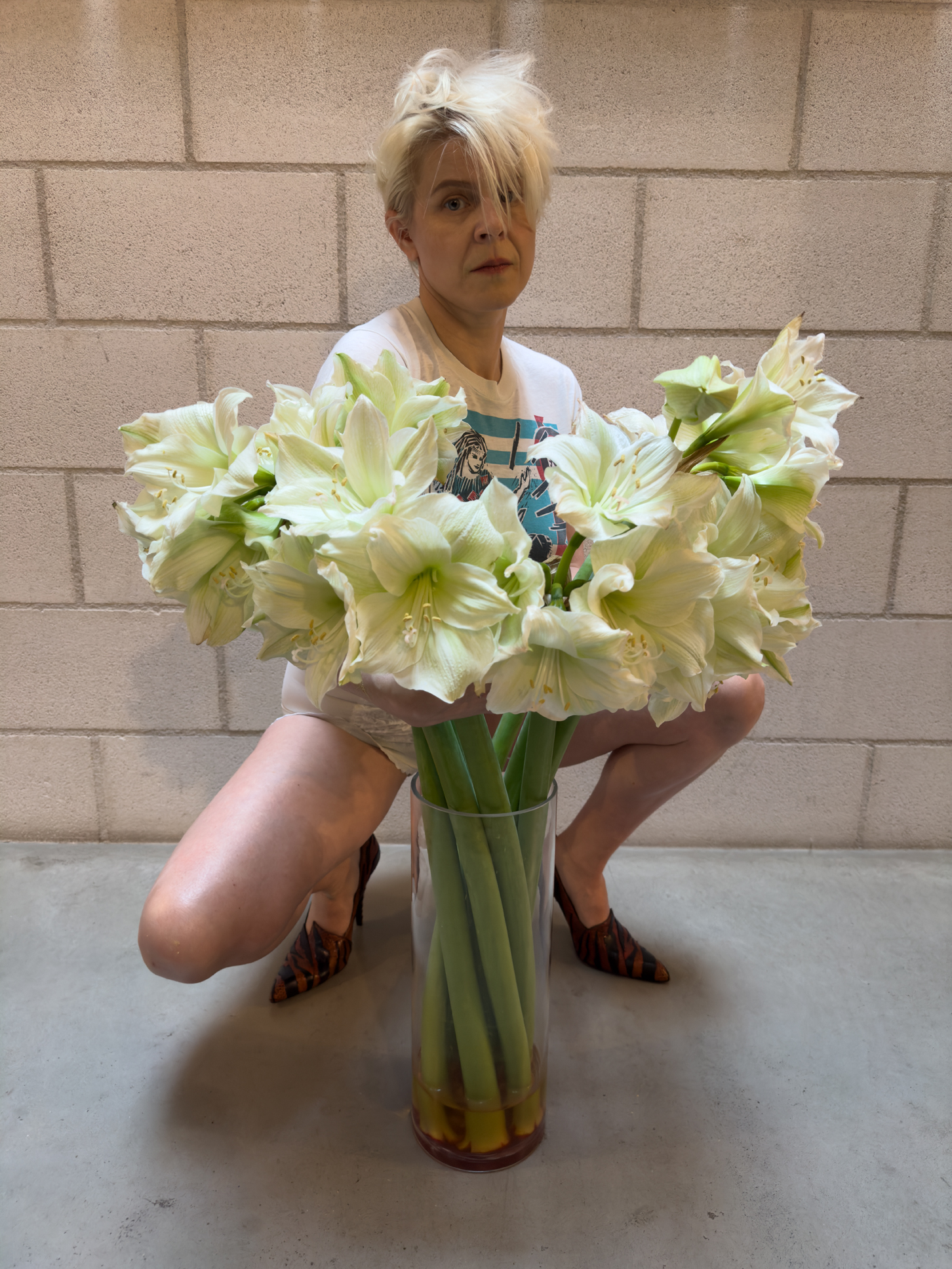
Robyn wears T‑shirt archive THE FACE courtesy of Rellik briefs courtesy of DISORDER ARCHIVE shoes VERSACE
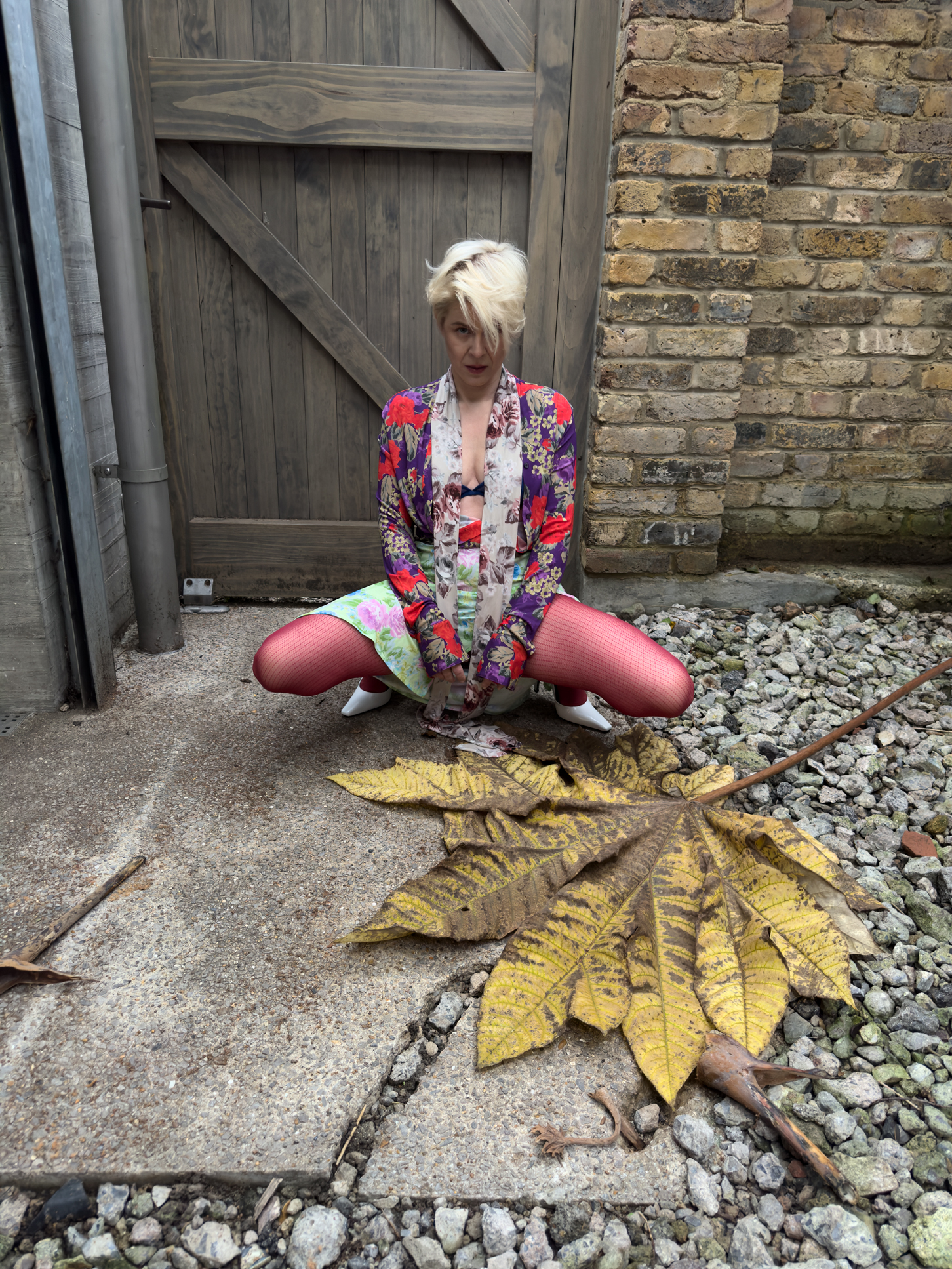
Dress ACNE STUDIOS tights stylist’s own shoes JUDE
Robin Miriam Carlsson was born in the bohemian Stockholm borough of Södermalm in 1979, to a director father and a ballet dancer-turned-actor mother. Her parents were the founders of Teater Scheherazade, an experimental theatre troupe. When Robyn was a child, Scheherazade spent months at a time touring, albeit in a “punk, DIY” way that was miles removed from how their daughter would eventually tour. “I think it made me a little bit of an outsider. When you’re little, it’s hard to explain this other world that exists in your life,” she recalls, adding: “The double-sided perspective is that if my parents hadn’t done that, if they’d lived a more ‘normal’ way, then my life would have been pretty homogenic.”
At the age of 13, she was discovered by Swedish musician Meja Kullersten, who heard her perform a song she’d written about her parents’ divorce. Over the next couple of years, she toiled away as a major label development artist before, at 16, dropping out of high school to pursue music full-time. “My dad was just really excited and hyped, like: ‘Don’t finish school, just do this thing.’ [But] it took a long time for my mother to have an opinion about what I was doing. Maybe she did, but she didn’t tell me. Which was also sometimes painful, because I wanted her to like it. But she has a lot of integrity, especially when it comes to what kind of music and art she likes. She doesn’t want to judge, or impose herself, on what I do.”
Robyn’s success came quickly. Her first two singles, 1994’s You’ve Got That Somethin’ and 1995’s Do You Really Want Me (Show Respect), were peppy and soulful tracks that were hits in Sweden. Robyn Is Here (1995) broke through in the States thanks to wholesomely cheesy R&B tracks Do You Know (What It Takes) and Show Me Love, which reached the top 10 of the US charts and were co-written and co-produced by future pop icon Max Martin. (After Robyn declined to sign with Jive in the mid-’90s, the label began a search for an “American Robyn” type, eventually finding Britney Spears. They paired Spears with Martin on the strength of his work with Robyn.)
Those early US singles married the sweetness of ’80s teen pop with the rhythmic complexity of R&B artists who dominated the early ’90s, like TLC and Boyz II Men. But Robyn never wanted to be Just Another Teen Star. Not least because, when she was younger, she hated being photographed. “If you don’t know yourself enough, it’s very, very difficult to leave that interpretation up to other people, instead of having it to yourself,” she says. “That was the hard thing for me,” Robyn continues, “about being someone that other people know: accepting that there basically is no control.”
She was taught that lesson early on. Despite the success of Robyn Is Here, her American label, RCA, declined to release My Truth in the States because of the songs about abortion, which caused plans to release it elsewhere outside Sweden to be cancelled. In 2002 she dropped her third album Don’t Stop the Music via BMG on, ironically, its newly acquired subsidiary Jive. But that record also never saw a US release, and Robyn rejected Jive again, frustrated that they didn’t respect her creative vision.


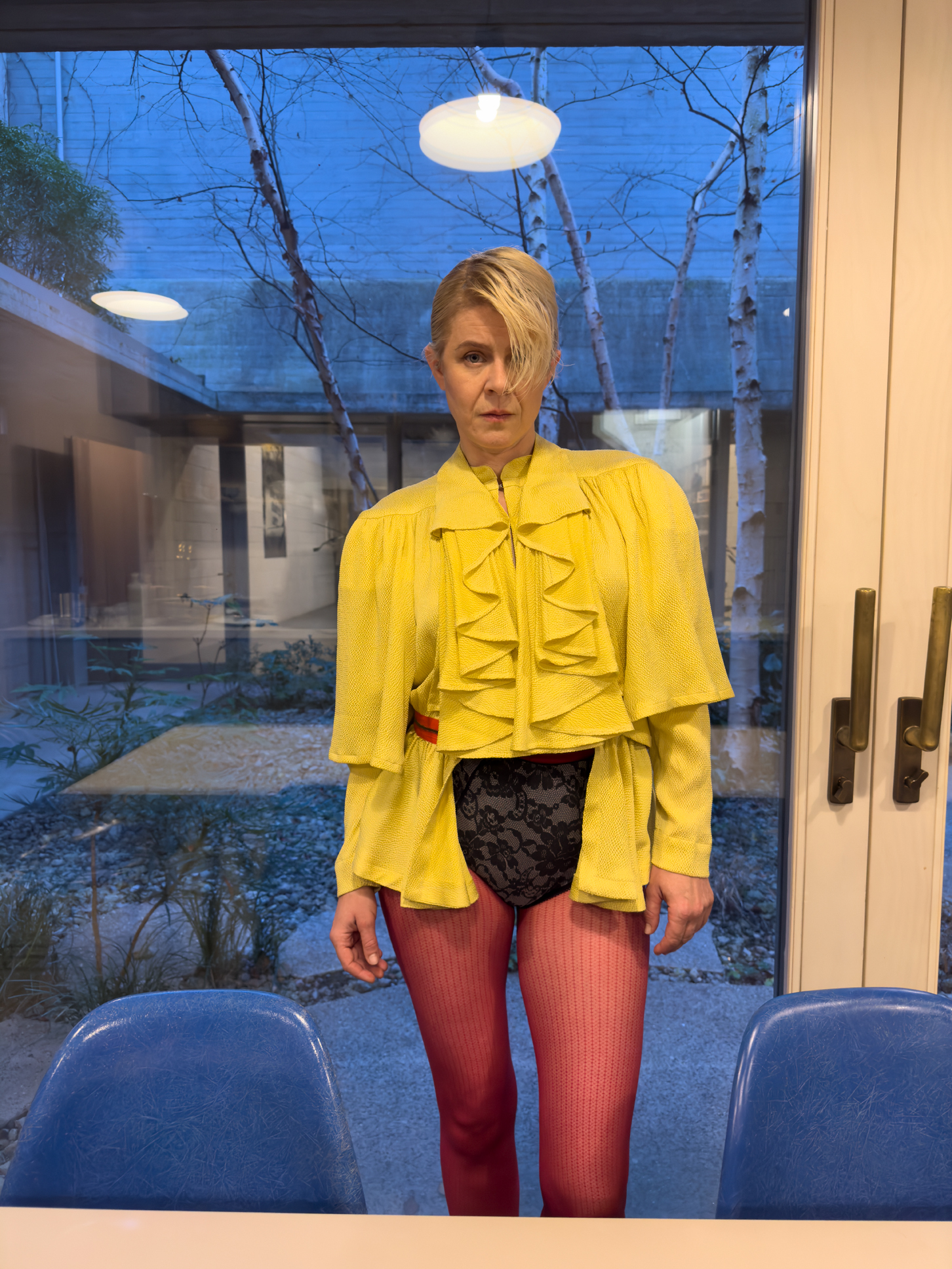
Robyn wears shirt STEFAN COOKE briefs FRUITY BOOTY tights FALKE
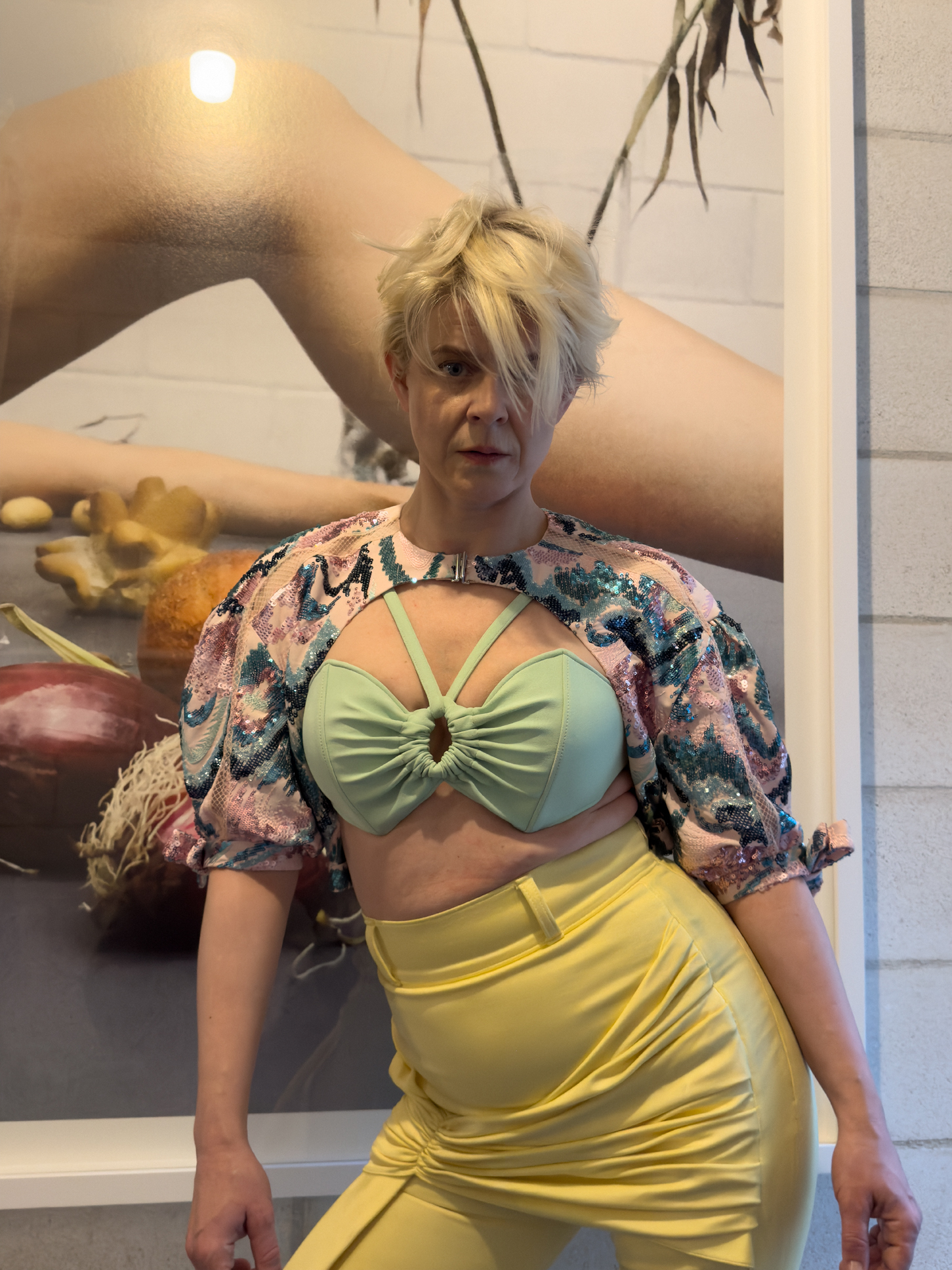
Jacket, bra and trousers RABANNE
So, Robyn did what any self-respecting Prince acolyte would do: she turned her back on the mainstream machine and started her own label, Konichiwa Records. Her first album on the imprint, 2005’s Robyn, introduced the artist the world knows today: a brash, funny iconoclast as comfortable rapping the lines “Cumming in your mouth/Make you say ‘Yum, yum!’” on 2007’s Konichiwa Bitches as she was belting out a song like Be Mine!, a skeletal D’n’B power ballad on which she says an emphatic goodbye to a crush. “You never were and you never will be mine,” she sings, sounding both hurt and healed at the same time.
Robyn paved the way for Body Talk, 2010’s trilogy of mini-albums that set the gold standard for pop music in the 2010s thanks to Hang With Me, Call Your Girlfriend, Indestructible, Time Machine and, obviously, obviously, Dancing On My Own. Dancing On My Own is one of the few hits of that era that still feels universal, unifying and totally durable. It’s a song with a blend of melancholy and euphoria that’s so potent it could probably convince Roadrunner and Wile E. Coyote to lay down their arms and dance together, if only for four or so minutes.
Gracie Abrams, the 26-year-old chart-topping songwriter, was only 11 when Dancing On My Own was released. But she loved Robyn from the moment she heard Konichiwa Bitches when she was eight, and she thinks of her life in terms of “BR” and “AR” – Before Robyn and After Robyn. Abrams has covered Dancing On My Own twice – once at her debut Lollapalooza in 2022 and again at the same festival last year, when she brought Robyn out to perform the track with her in front of tens of thousands, introducing it as her favourite song of all time. “It’s in that crazy rare bucket of songs where the second the intro comes on, it’s as if it’s been plugged directly into your body, as if there’s literally no choice but to stop everything and become the song,” Abrams says via email. “It’s pure euphoria and it’s devastating and it has always made me want to cry and kiss and dance hard enough to break bones. Anthem.”
“I’m communicating with my fans on this spiritual, eternal level that has nothing to do with time on earth”
Robyn says Dancing On My Own – which is certified platinum in the US and UK, has 500 million streams between Spotify and YouTube (and inspired a dogshit Calum Scott cover with 1.5 billion Spotify streams) – was the result of “10 years of just working, touring, being in it”. She compares it to her good friend Charli xcx storming to the centre of culture on 2024’s Brat. “I think it takes 10 years – you reach this point when you’re just fluent in the culture. You could tell when [Charli] was releasing that album, she was not thinking. She was just doing it right from the gut, with this confidence of knowing she had all this knowledge that was archived in her being.”
Body Talk crystallised the cultural image of Robyn: heartbroken warrior, relatable powerhouse, diva who cries in the club, yada yada. She says that being forever identified with a song about heartbreak used to feel a little dissociative, but that it doesn’t anymore. This is partly thanks to Body Talk’s 2018 follow-up Honey. That album – Robyn’s masterpiece, at least until Sexistential – dealt with profound depression and the dissolution of a long-term relationship, and swapped the chunky, driving synthpop of Body Talk for sensual, practically subliminal house music. It was also the first record she made after finishing psychoanalysis. She’d learned to embrace life’s complexities and it helped her see that no single part of her art defines her. “I’m not so focused on the end destination anymore – I want to be in the moment,” she says. “And if the moment is Dancing On My Own, that’s amazing, too.”
At the Fonda, it felt like something had shifted in Robyn’s outlook, at least when it came to her legacy. She performed Cobrastyle, a deep cut from 2006’s The Rakamonie EP, and Monument from the 2014 Röyksopp collab EP Do It Again, for the first time in a decade, and reworked Hang With Me into a rich, spare power ballad. She debuted a new version of Blow My Mind, from Don’t Stop the Music, rewritten for Sexistential in tribute to her son. A month later, performing at New York’s Brooklyn Paramount on New Year’s Eve, she even played 29-year-old single Show Me Love, stripping it down to its bare bones and letting the crowd reflect it back to her.
The love you see radiating out of Robyn’s eyes at shows comes from deep within her: “I’m communicating with my fans on this spiritual, eternal level that has nothing to do with time on earth,” she says slowly, trying her best to put something purely ineffable into words. “It has to do with… almost how the brain works in your dreams or in your unconscious. That realm is really real to me.”


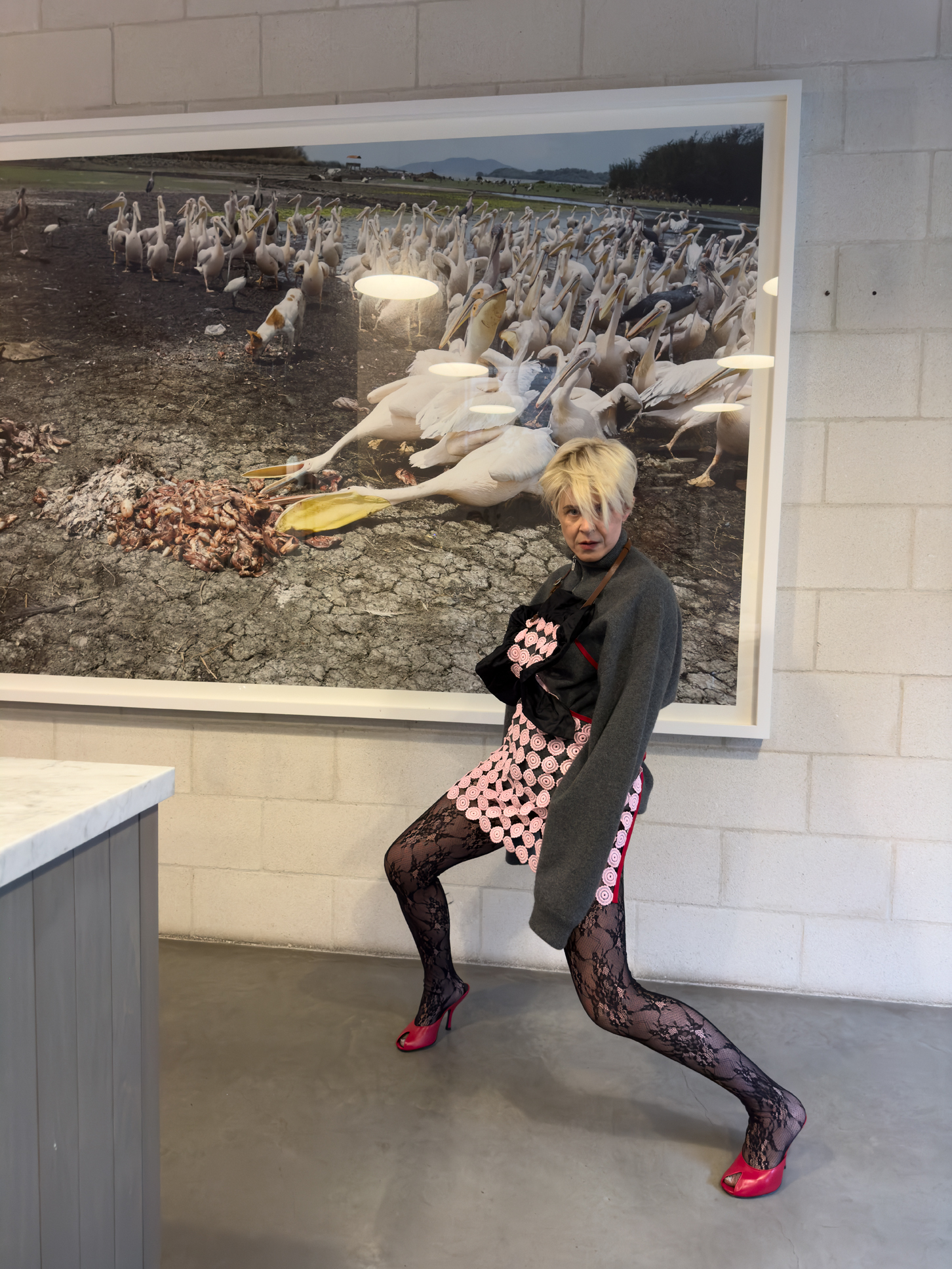
Robyn wears apron and jumper MIU MIU tights CALZEDONIA shoes JUDE
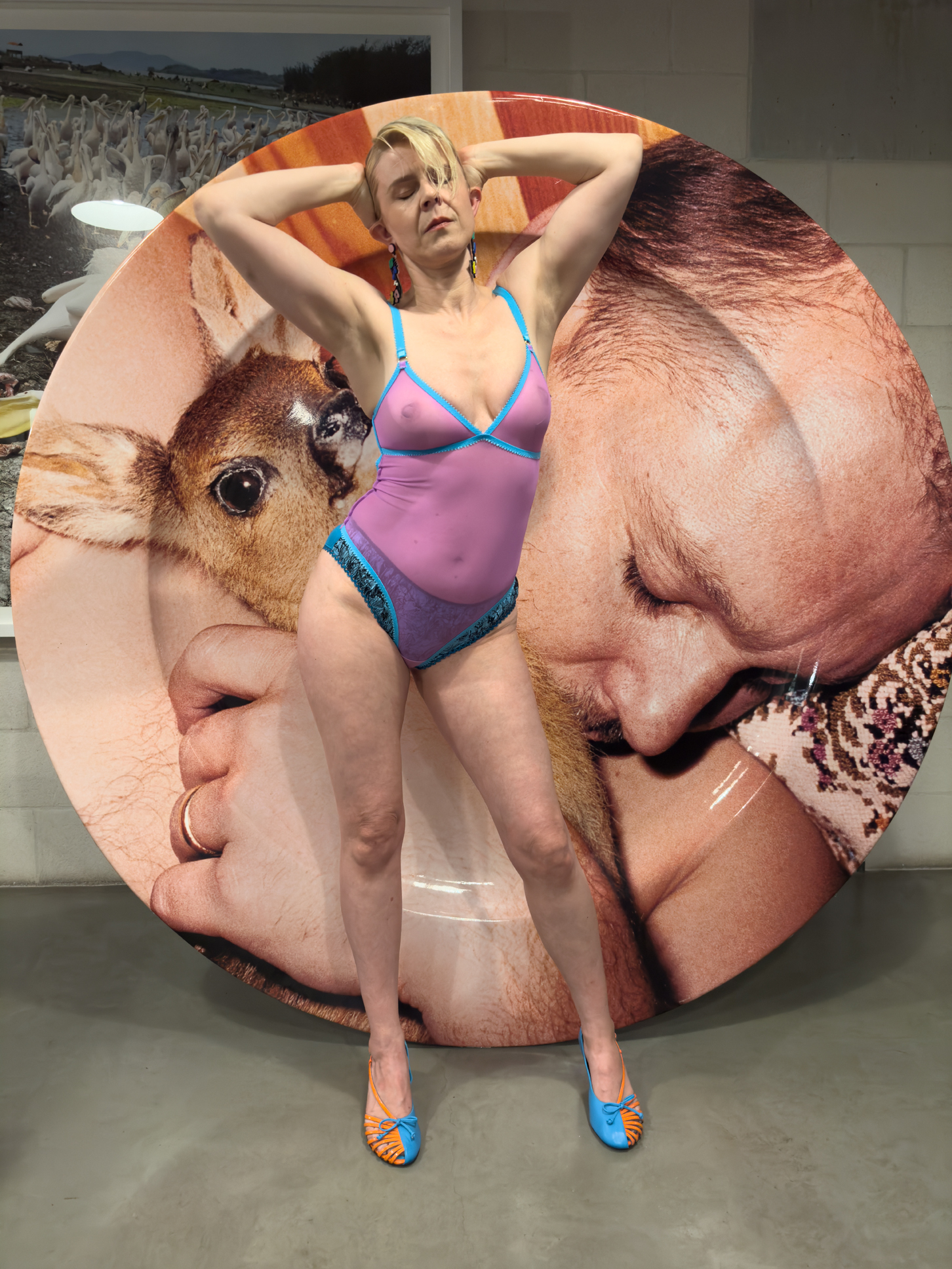
Bodysuit DORA LARSEN briefs KATYA ZELENTSOVA earrings stylist’s own shoes ABRA
Russ Marshalek, the organiser of This Party Is Killing You, says die-hard fans “did not think that we would ever hear anything from those first three albums again. I think she is realising that she’s done it – pop is finally starting to be where she was several years ago. I think she might be casting a look back and saying: ‘These songs were the blueprint.’ When Martians land in 50 years, they’ll be listening to stuff that sounds like Sexistential.”
The trawl through the archive makes sense: Robyn says Sexistential is about “coming into a new part of my life as a human being”. In the period after Honey, she began “giving up a lot of ideas about where my life was going to be,” she says, toying with the unlit cigarette in her hand, occasionally picking up a lighter – it’s in a silver case, engraved with the words “Robyn Live at the Fonda” – and flicking it without lighting the cigarette.
“When you have to make the decision of, like, ‘am I going to try to be a parent or not?’, it’s like a small death. You have to face the idea that it might not happen for you. But I’d also come out of a really long relationship. I just came back to myself and what I needed to do for me.”
In Robyn’s vision of parenthood that she held throughout her life, it was never just her in the picture. From her teenage years, “my mum was a single mum. I mean, I have my dad as well. But I was afraid of being a single mum and that was the big fear I worked through. The time and strain that I could see on my mother, just not being able to always be there and be present. She was really present,” she clarifies, “but seeing her under a lot of weight and pressure was painful. I always hoped I could mend that in my life. That was a big failure, at first, that I was also [single]. And that I was putting [motherhood] off because of that.”


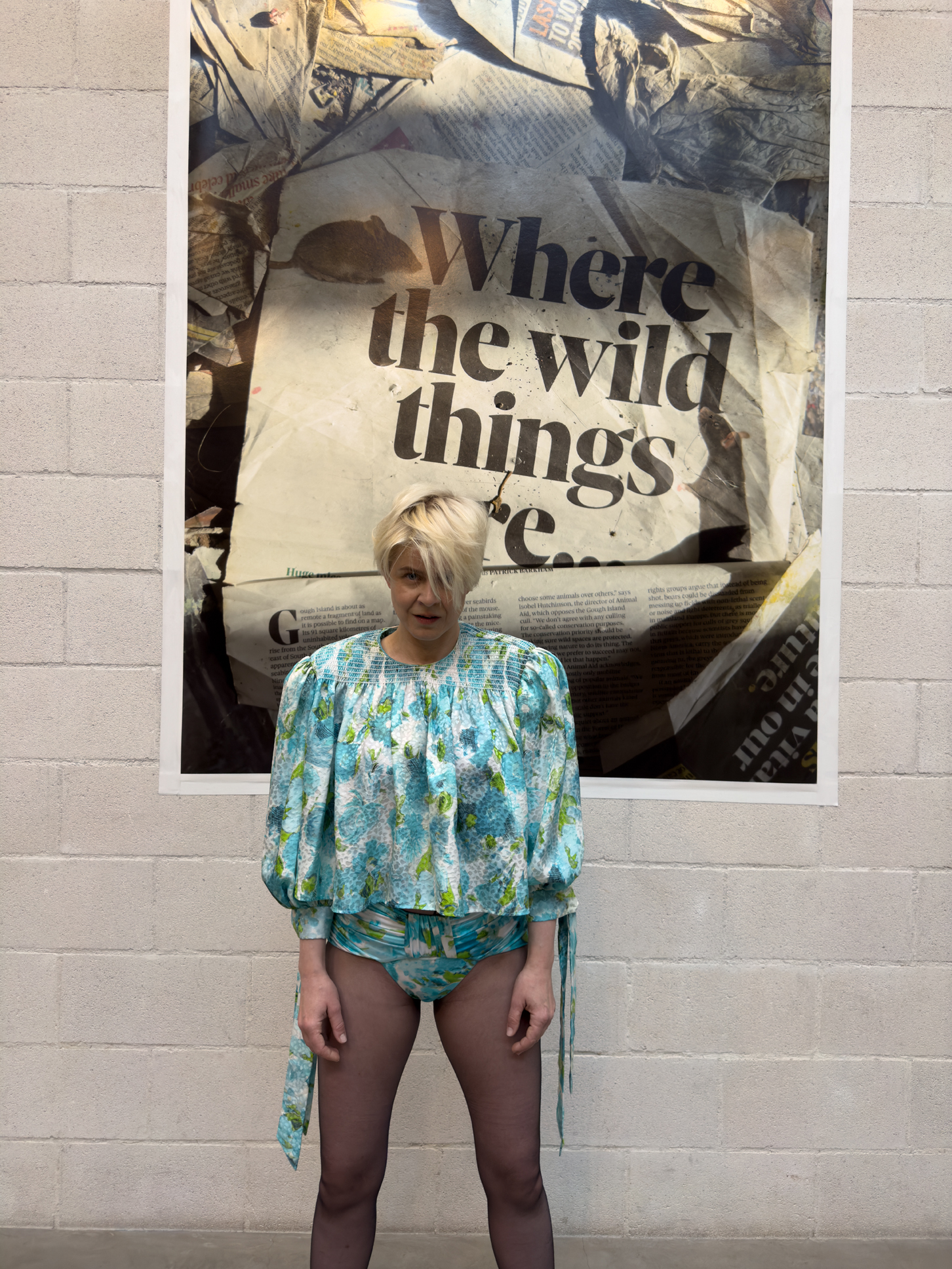
Robyn wears top and briefs CHLOÉ tights FALKE
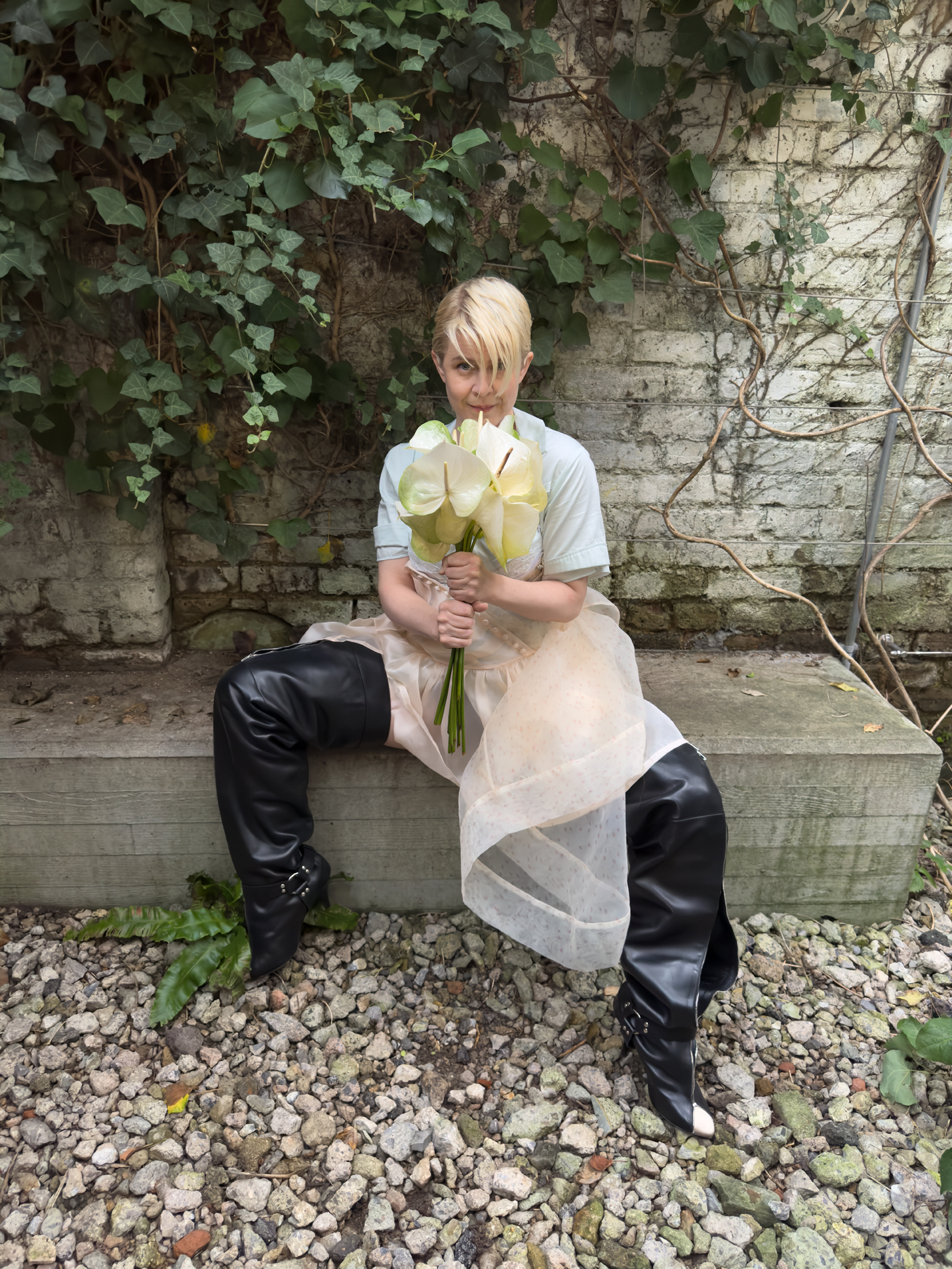
Dresses and shoes AUGUST BARRON
Talking through her fears with friends and loved ones “just really helped me find the self-confidence and courage to do it”. So Robyn began the gruelling process of IVF – an endurance test of injections and scans and appointments – as a single mother. The experience was mind-blowing.
“My body really became this cyborg [when I was] shooting myself up with hormones. There’s no mystery left in the process when you do that. I know every screw in this spaceship, I know what it does. And [each screw] is either a possibility or it’s what’s gonna make [pregnancy] not happen. Like, anything that doesn’t click at this point will have a direct effect on the rest of my life. There’s something very scary about that,” she says. That said: “Once you’ve mapped it, you’re also freed, because you’ve discovered the unknown in yourself. And it’s not just happening to you. It’s something you’re submitting yourself to.”
“Robyn has no fear in expressing the vulnerable parts while simultaneously standing in her very singular strength”
Gracie Abrams
On Sexistential, Robyn makes navigating these existential concerns sound fun by soundtracking her forties with retro chiptune ballads and glittery club bangers. The album’s best song, the ascending, gut-wrenching Into The Sun, is about leaving behind that Saint of Heartbreak persona and moving into a place that’s happier, more free. It’s not to say she resents the artist she once was – she still feels a connection with those old hits. “The energy [of Body Talk] created a way out of so many lonely points in my life. It was a vehicle to shoot myself out of stuff I didn’t want to stay in,” she says resolutely. “I call it the fuck-you feeling – when you don’t feel like you have anything to lose and you put yourself on the edge of your experience, and it’s amazing to be there and own it. But it’s a lonely place.” Sexistential is an expression of the joy that’s replaced that loneliness. Robyn no longer needs the armour of that fuck-you feeling.
Gracie Abrams says the album feels even more revealing than usual. “She has no fear in expressing the vulnerable parts while simultaneously standing in her very singular strength,” she tells me. “It seems like wherever she’s coming from artistically she’s carrying a megaphone and commanding us to get out there. Thank God.”
Robyn is glad that, even after eight years away, she still gets to share such a raw, subconscious space with her fans — the zoomers who want to scream along at Lollapalooza, the day-ones that congregate in kitschy gay clubs and the huge crowds that will congregate for this year’s Sexistential arena tour. “I get to have this part of my life where my inner world is reflected into reality. That’s insane, and it could make you crazy. It could make you a fucking idiot. It could make you very self-absorbed.”
She pauses for a long while. “But that space is the thing that connects us. It’s holy to me.”
CREDITS
PHOTOGRAPHER’S ASSISTANT Felipe Chaves POST-PRODUCTION Louwre Erasmus at Quickfix HAIR Kei Terada at Julian Watson Agency MAKEUP Lauren Reynolds at Bryant Artists NAIL ARTIST Adam Slee at Streeters STYLIST’S ASSISTANT Amilia Howells

