
Hodakova finds purpose in repurposing

Luiza wears dress and shoes SERGIO ROSSI x HODAKOVA
Cate Blanchett and Saoirse Ronan are just some of the A-listers that flock to Hodakova. But for its designer-founder, Ellen Hodakova Larsson, upcycling is just part of her upbringing.
Style
Words: Eni Subair
Photography: Senta Simond
Styling: Danielle Emerson
Taken from the summer 25 print issue of THE FACE. Get your copy here.
Ellen Hodakova Larsson’s boundless vision was on display in March when the designer transformed her muses into a literal fashion orchestra for the Hodokova AW25 show at Paris Fashion Week. As the 33-year-old tells us, her inciting thought was “the noisiness of creation”. And she imagined it with a surrealist flourish that stayed true to her upcycling roots: one model paraded down the runway encased in the body of an actual double bass, her head in place of the handle. Another strutted towards the wind machine with a violin atop her head. On another, a drum was turned into a makeshift skirt.
Social media lapped it up. Indeed, it was quite the encore, considering that SS25 was equally quirky: a twinkling zipper dress, literal wearable art (she turned a framed picture into a dress) and a strapless number crafted from riding boots all made the cut. Last year, Hodakova won the LVMH Prize for Young Fashion Designers, consisting of €400,000 and a year’s worth of support from LVMH experts. With her most ambitious show “still to come”, Ellen is surely on track to make good on that. Even if she is slacking off by walking her dog, Kotte, when THE FACE calls…

Dress HODAKOVA and shoes SERGIO ROSSI x HODAKOVA
Hej Ellen! You’re coming to us from the woods near where you grew up, an hour outside of Stockholm. How much of a role did nature play in the formation of your creativity?
It’s been really important. In the beginning, when I moved into the city, I found it a bit hard. There was too much noise, too much going on. You become quite grounded in yourself because you have the support of nature. It feels like home.
Your mother was a seamstress who made clothes for you and your brother. Is that how you picked up your love for garment-making?
My mum’s upbringing was tougher than mine. Her father wasn’t present and they moved a lot. Her reaction to that was a kind of creative flow. She has a very effective way of using things to create the life she wants. She would alter clothes to fit her, do carpentry, upholster furniture… I’ve been searching for different ways of exploring that, in a sense.
You took your grandmother’s surname as your middle name, and also the name of your brand. What was your relationship with her like?
She was very proper and extremely organised, [she would] make sure everything [at home] was made for viewing. Her approach to homemaking was similar to my mum’s: buy a house and renovate it yourself. She didn’t have the money to hire a plumber, so she just did it herself. I have this photo series of her that’s so fun. It’s her in our country house: fixing the garden, painting the house, repairing the roof, chopping wood – in her underwear! She was totally focused on creating her own survival.


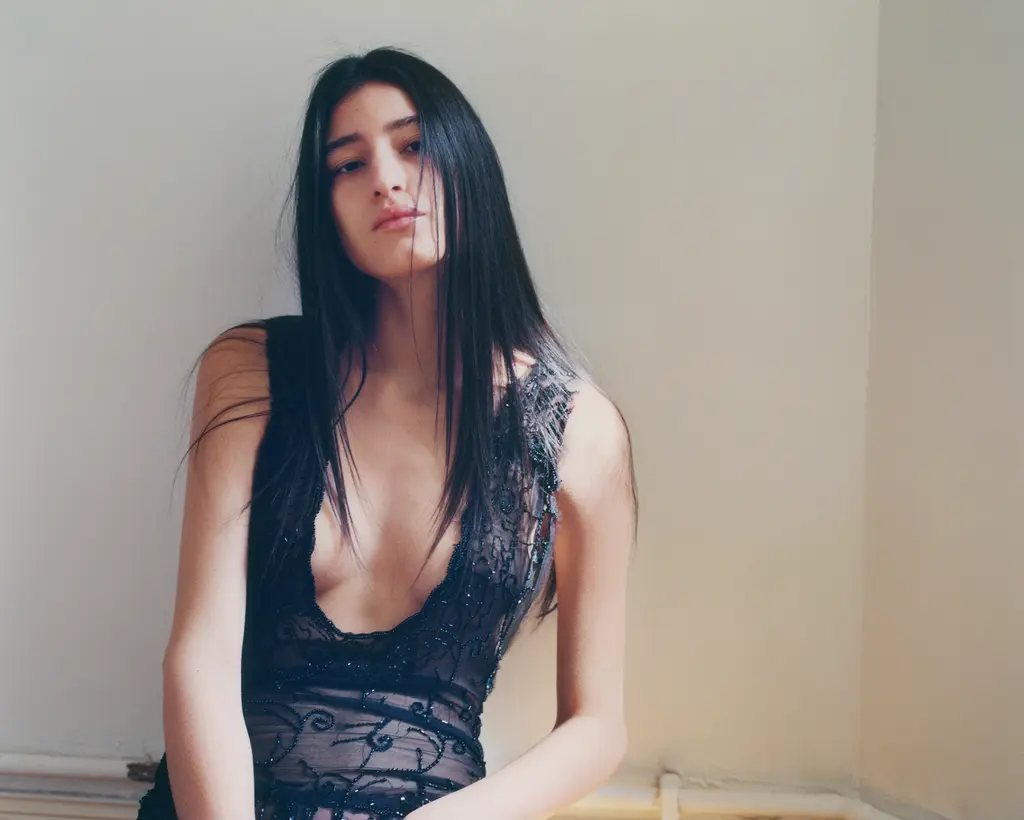
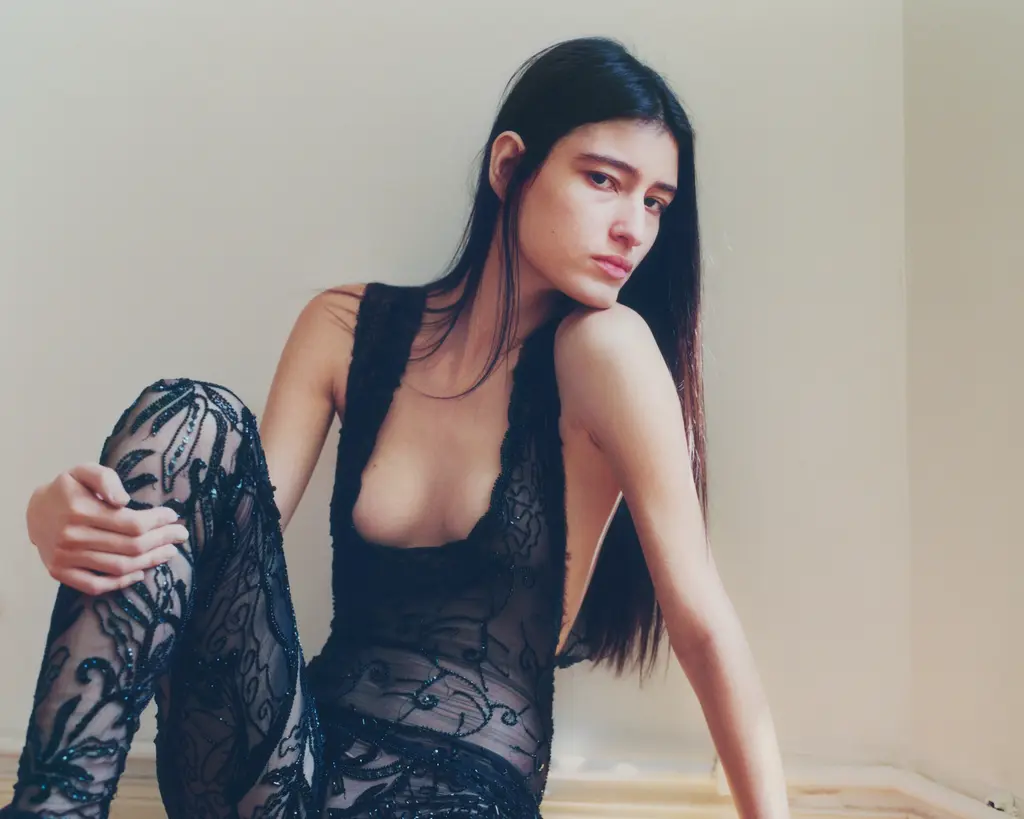
Bodysuit HODAKOVA
What’s your earliest memory of being creative?
My mum and I would always sing, draw and paint together. I played the violin and piano; she played the guitar. We had this huge barn, so we’d put on plays. I’ve always been interested in how people communicate through different elements. Around 16, I was listening to The Velvet Underground, and they’ve got an album with the Andy Warhol banana on it [1967’s The Velvet Underground and Nico]. I got really into Andy’s art and the whole Dada [art movement] in New York. Then it transmitted into [interest in] what Marina Abramović did and Marcel Duchamp did. It was different angles on something that created a question mark, and that [sparked] curiosity.
How did you explore that?
I love following my intuition. At the end of my first year at art school [at The Swedish School of Textiles], I realised that we use clothing to present ourselves. It pushed me to apply for the Fashion Design BA there, so I had room to play with clothing and experiment with sculpture, spatiality and movements. I started Hodakova in school.
“I went into the noisiness of creation; how these emotionally driven sounds — highs and lows — can speak to each other”
Fast-forward to this year: your AW25 collection featured models wearing instruments, and was a play on fashion as a symphony. Where did that idea come from?
Music is the biggest art form because it’s so emotionally driven, but also so real. The show was about both: being real and expressing what I feel the fashion industry lacks. I was trying to balance my own life, because running a brand is intense. To cope with that, I need calmness. I went into the noisiness of creation; how those emotionally driven sounds – highs and lows – can speak to each other.
At the beginning of the show, there were raw sounds of nature [such as] birds and wind. Going from that quiet stillness into something noisy and intense, like rock ’n’ roll, felt right.
There were also leather dresses made of belts and trousers worn as a shawl or dress, which made for quite a diverse collection. What does your creative process usually look like?
I do everything at the start. Draping is my world – I can’t work without it. In terms of materials, we have different collaborations with suppliers who support us with overstock and production. We never create new fabrics. It’s about looking at what already exists and asking: what we can do with it?
With its roots in nature and repurposing, Hodakova is the opposite of a trend-led brand. How easy – or hard – is it to shut out all the noise and remain true to your vision?
It’s important to understand where the trends are going and be able to reflect on that, but still have your own integrity and understand where you are [positioned]. Because trends are trends, and I don’t know if we need more brands that are driven by trends. It’s way more important to sustain and platform [what you believe in].

Jacket and trousers HODAKOVA
“It would be very interesting to see what kind of creativity would happen if the world just decided there could be no new production. Then people would [be forced to] make new business models. The creativity [produced] would be explosive”
We’re in an era where greenwashing is rampant and “sustainability” is a marketing-friendly buzzword. But you’re a designer truthfully rooted in those ideas. Is that a practical, sustainable business model?
For me, sustainability is just a core element. I don’t need to highlight it to drive my position or my sales. It would be very interesting to see what kind of creativity would happen if the world just decided there could be no new production. Then people would [be forced to] make new business models. The creativity [produced] would be explosive.
You were the first Swedish and first sustainable brand to win the LVMH Prize. Have you started thinking about how you can use that money?
Yes, of course. You start to think about improvements. We’re changing the infrastructure of the company [and] the production, and we’re changing studios as the team is growing. It’s not about gaining a lot of money – I’m not running a money-driven company. I am a purpose-driven company, and it’s all about the creation and the actual pieces. The dream situation is what we make of [the brand] – the process is the dream. If it stops being fun, I’ll probably stop. It needs to be fun and generate joy.
Thinking back to the night of your win in September: what are your memories?
It took a month for it to sink in that I’d actually won. I kept thinking, “Did that really happen?” When you’re in your final year at university, you see all these big brands [that previously won]. Then you realise that you won the same prize. It’s just a weird situation. My design assistant filmed the livestream of the ceremony and I [belatedly] saw the video the other day. I was crying so much because it’s so intense! They’re all in the studio watching on the computer, and they have this crazy reaction [to the win]. I’m so grateful for everyone that’s been part of this journey. It’s been wonderful.


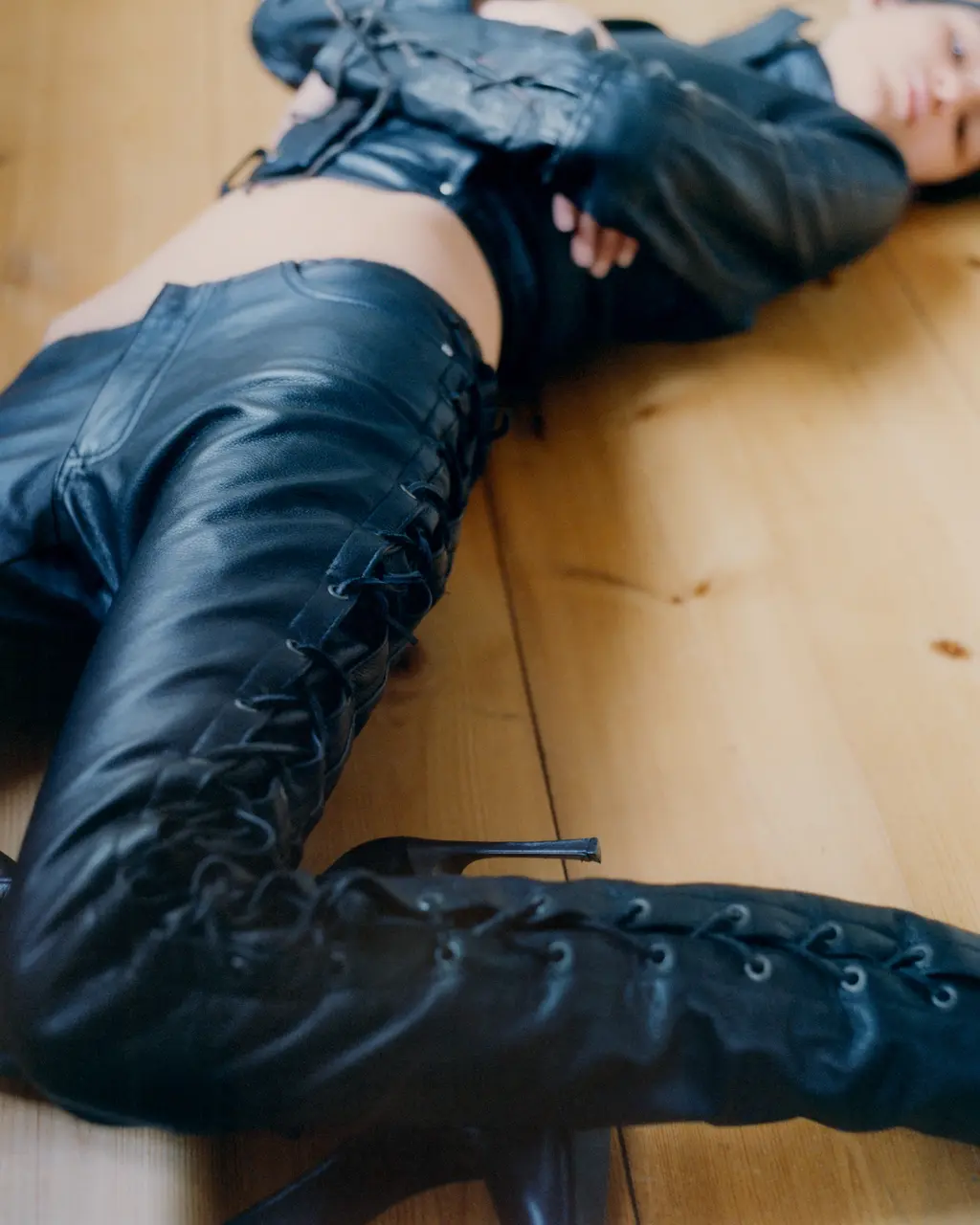
Jacket, trousers and shoes SERGIO ROSSI x HODAKOVA
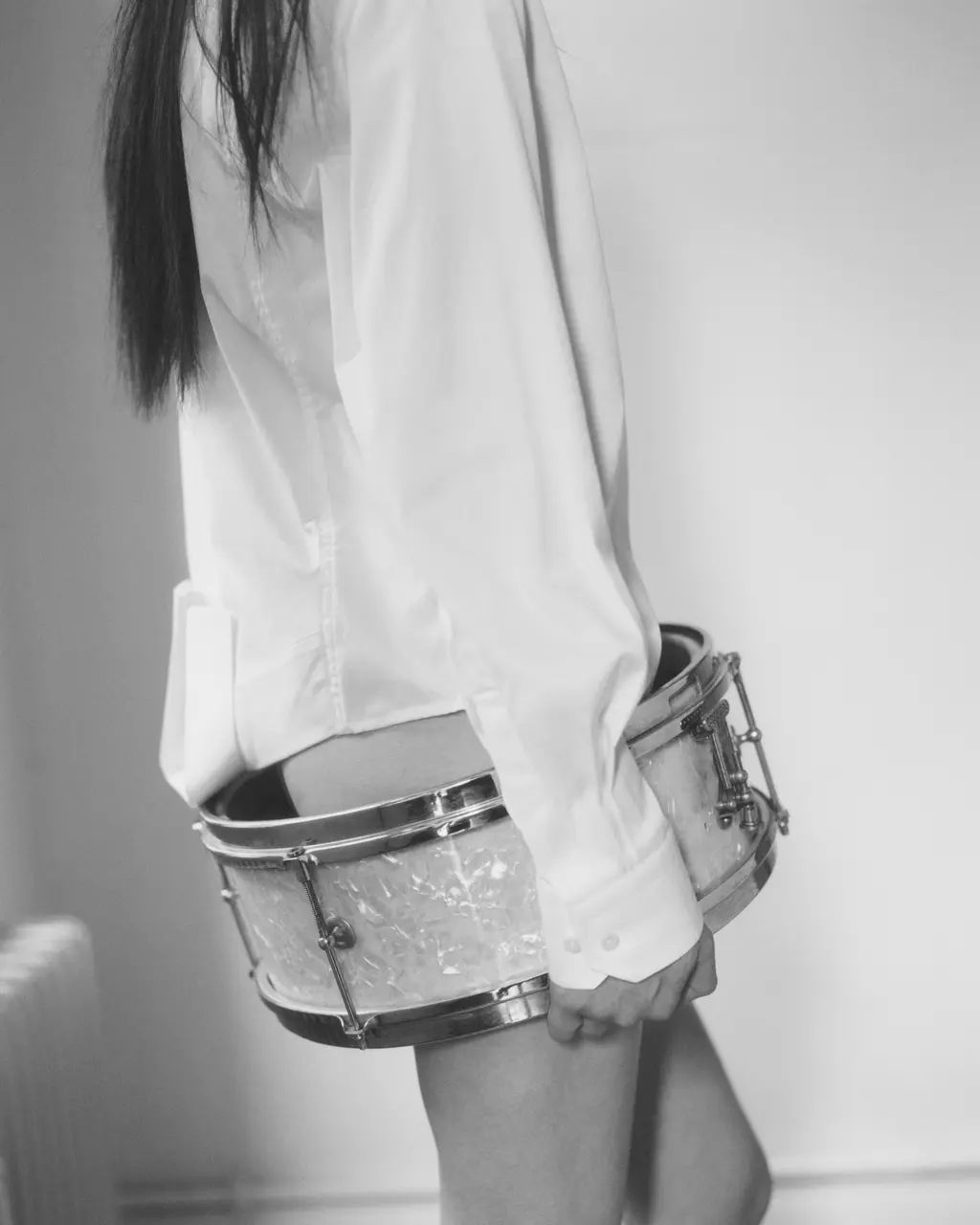
Shirt and skirt HODAKOVA

Top and trousers HODAKOVA


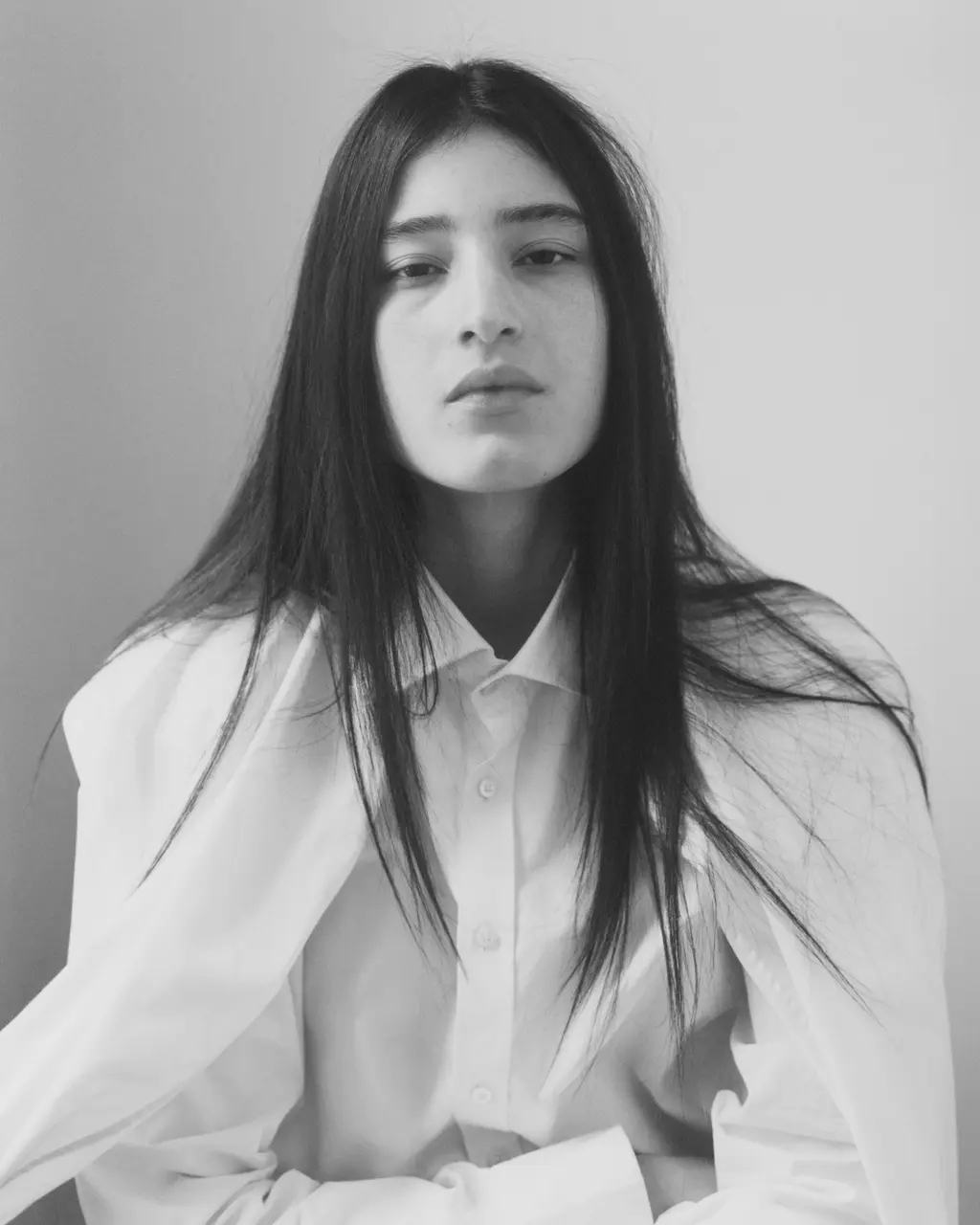
Shirt HODAKOVA
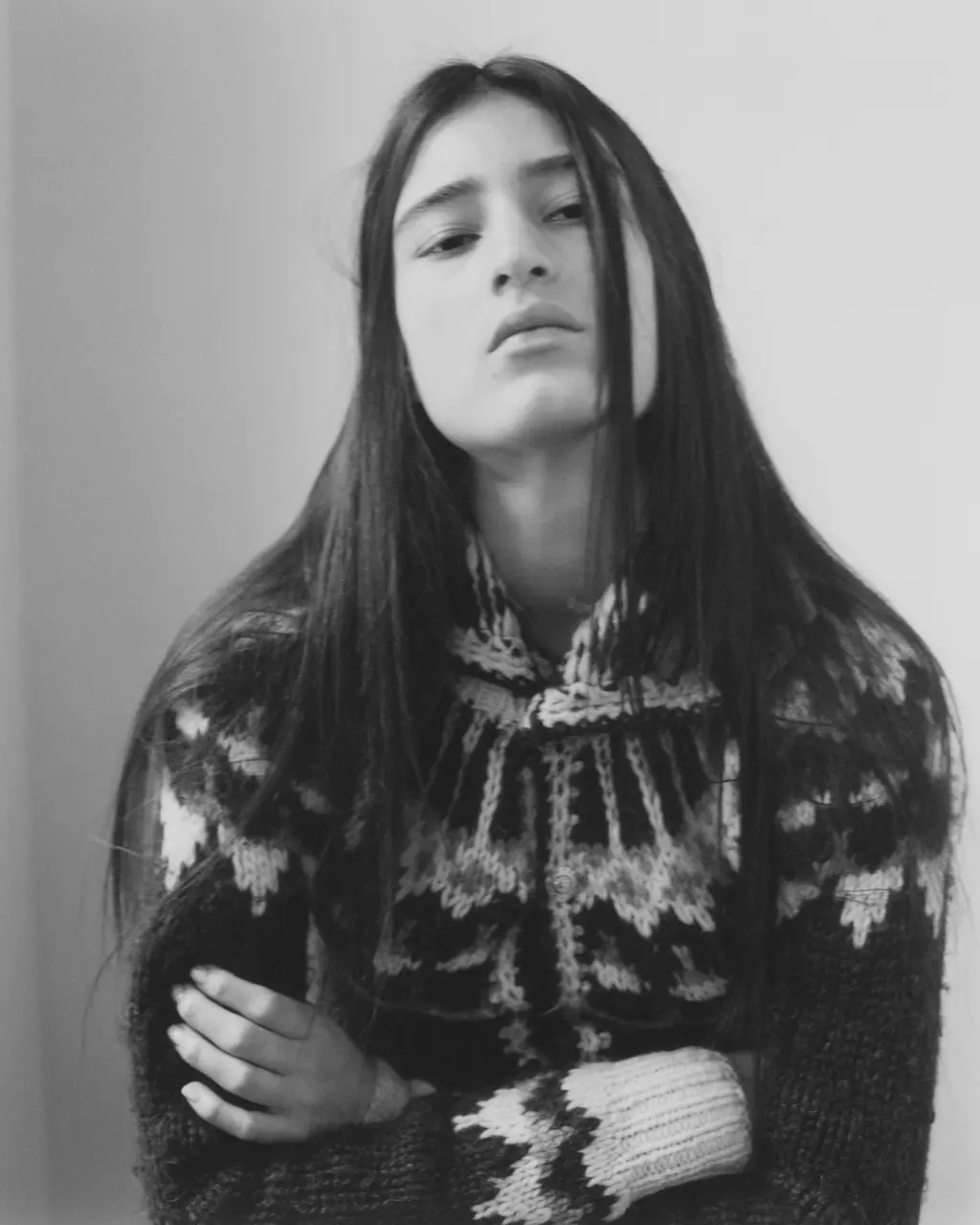
Jumper HODAKOVA


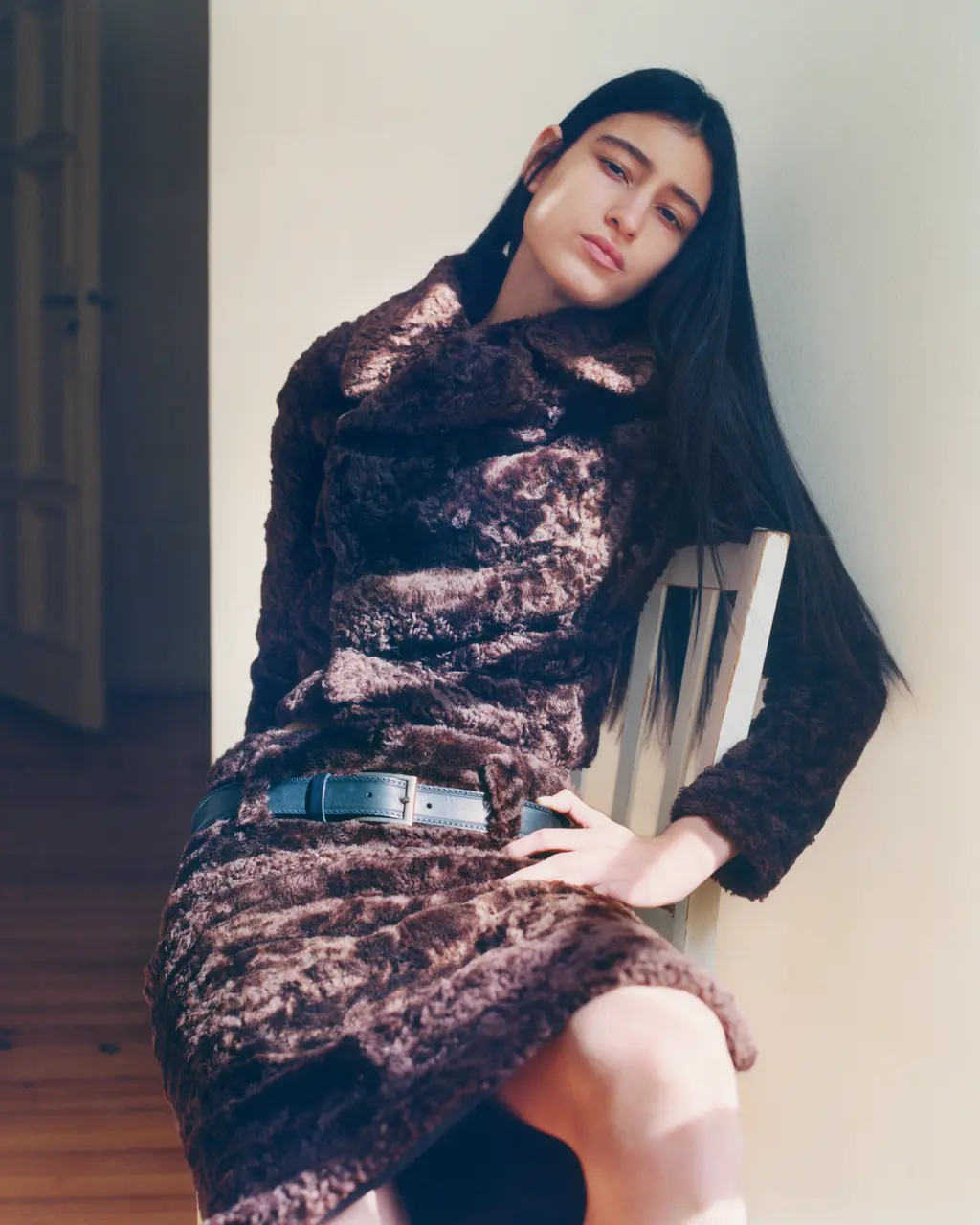
Jacket, skirt and belt HODAKOVA
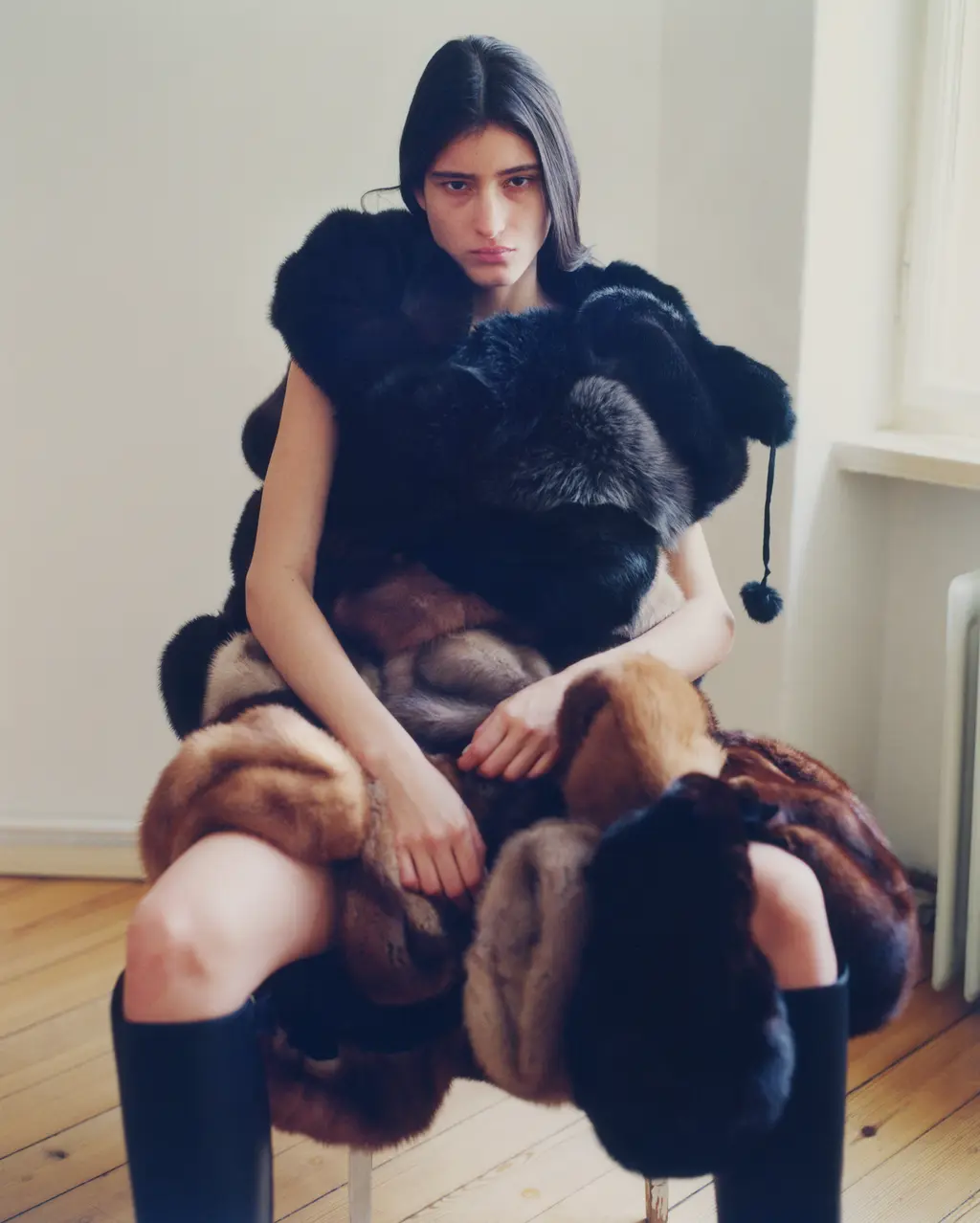
Dress and shoes SERGIO ROSSI x HODAKOVA
CREDITS
HAIR Tosh at Bryant Artists TALENT Luíza at Women Management PRODUCTION WA Productions SENIOR PRODUCER Ana Schnel PRODUCER Luca Steinhöfel PHOTOGRAPHER’S ASSISTANT Leon Dame STYLIST’S ASSISTANTS Ivanna Heredia-Torres and Charles Beugniot CASTING DIRECTOR Simone Schofer at Artistry Global

