
Harris Dickinson: “The people who slip between the cracks – I’m angry about that”

Urchin is the actor’s feature film debut as a writer and director. It’s a powerful, provocative story of addiction and homelessness that might just break your heart.
Culture
Words: Craig McLean
“Don’t mind me,” says Harris Dickinson, stretched out on the fancy hotel couch, shod feet parked on the plumped cushion. “I’m just messaging my mum.” She sorting her frock for the party? “That’s right. [She’s asking] ‘What time’s everyone getting there?’”
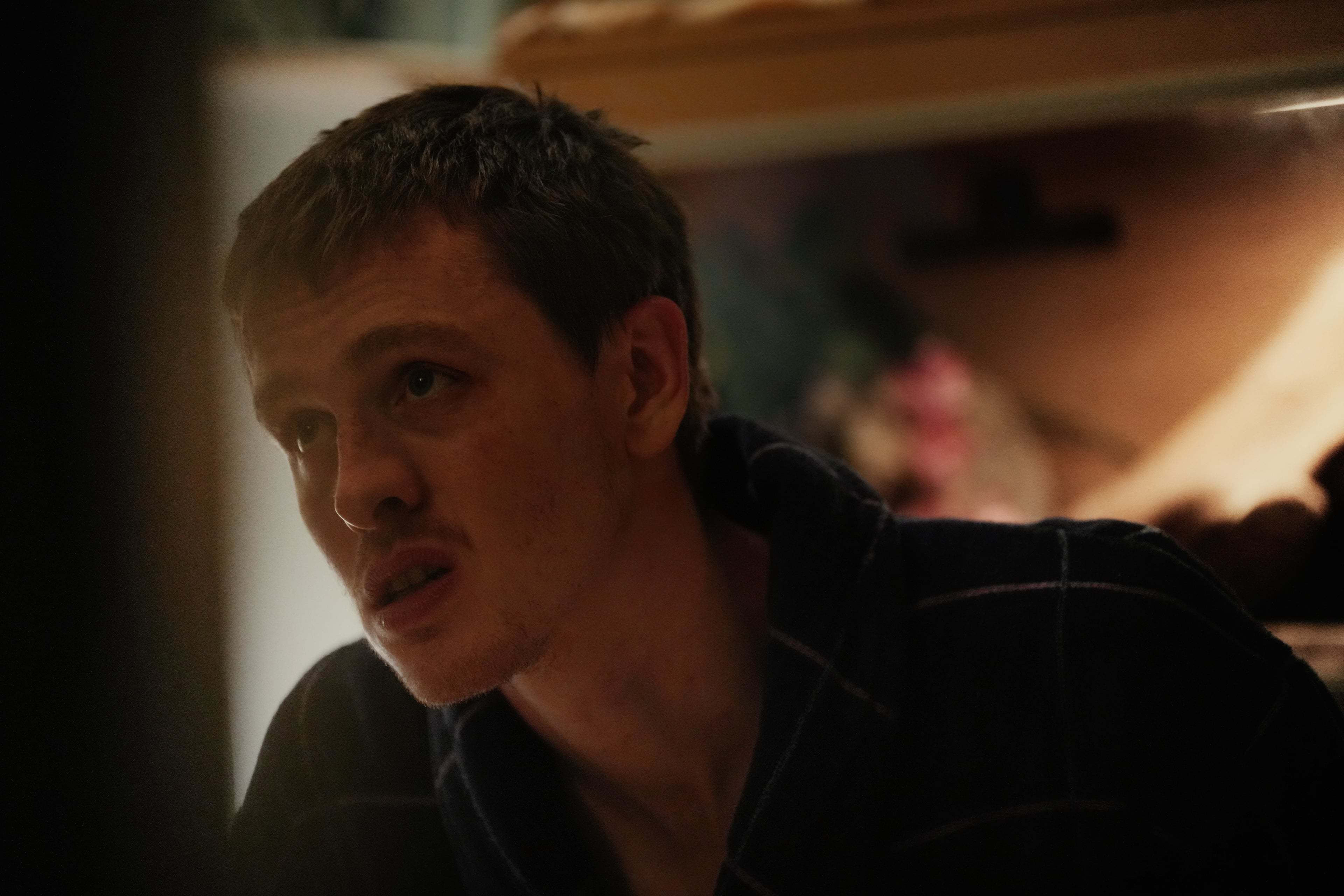
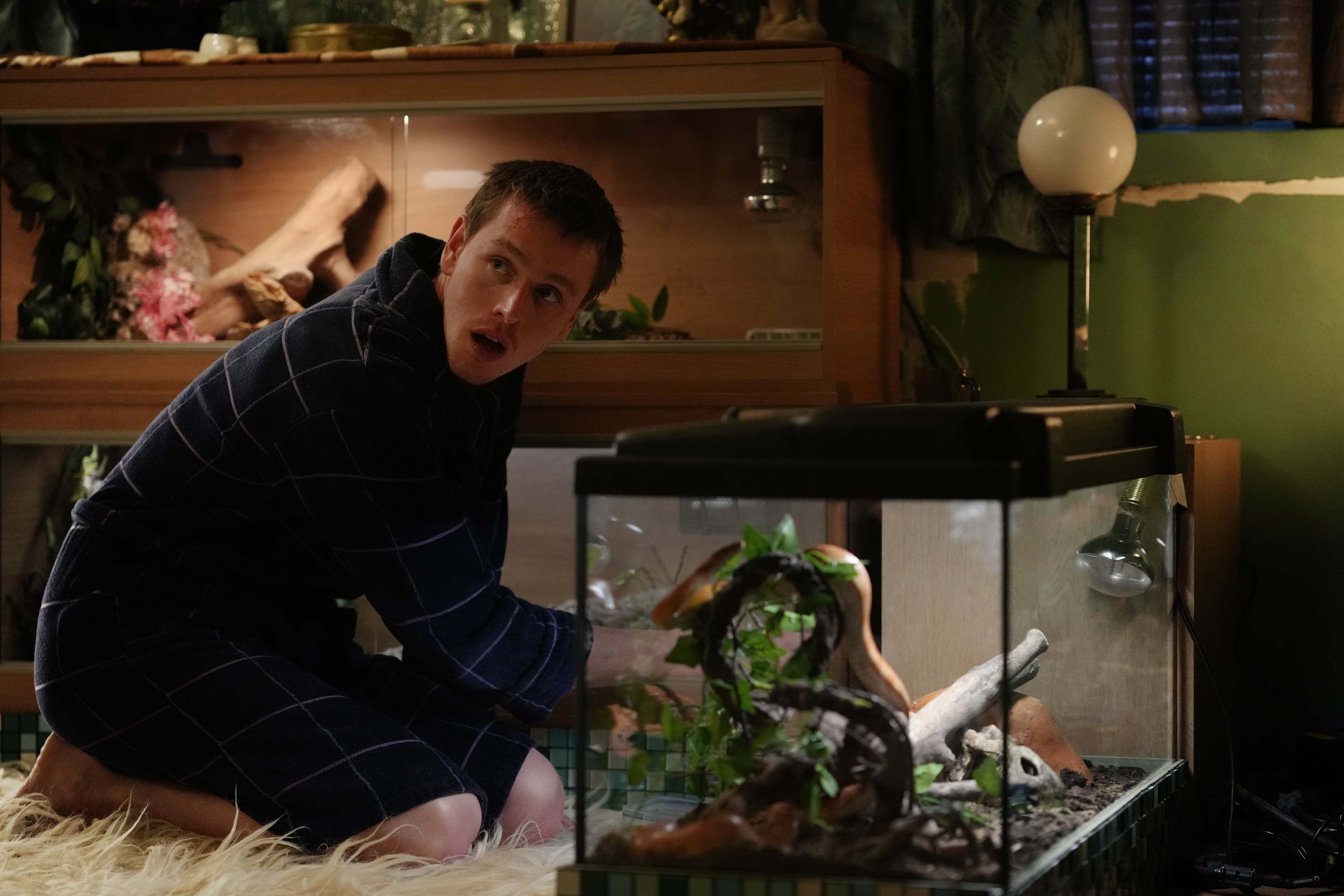
Here in central London it’s the afternoon – the hour, in fact – before the premiere for Urchin, the actor’s first feature film as screenwriter and director. It’s a brain-searing, heart-scorching, soul-searching exploration of the life of Mike (Frank Dillane). Of what it’s like to be unhoused and unhinged, whether the latter is via deep-rooted trauma or baggies of ket. Harris’s film is wondrous and traumatising in equal measure, an unblinking portrayal of one troubled man’s East London odyssey, careening through rough sleeping, prison, probation, restorative justice, moments of onscreen magical realism-slash-spiralling and, maybe, just maybe, redemption.
But as street-smart/street-broken Mike knows better than anyone: when you’re drinking in the last chance saloon, the cracks are forever lying in wait, just outside the door.
Frank, 34, sits opposite Harris, 29, in casual suit, wing-collared floral shirt and Mike-adjacent bird’s nest hair. He’s the one-time Harry Potter kid (he was teenage Tom Riddle in 2009’s The Half-Blood Prince) who won the Un Certain Regard Best Actor award at Cannes for his portrayal of Mike. In partnership with his fellow Londoner and co-star (Harris has a cameo as Nathan, a fellow rough sleeper and user), he’s crafted one of the performances of the year, in the most important British film of the year.
“We made it with a lot of love and a lot of care,” says Harris of a passion project for which he battled for six years to get made. It’s a propitious moment to meet him: his London film, having its imminent London unveiling, in a cinema a five-minute walk from here, mum and family and collaborators in attendance. “In a good environment,” he adds of last year’s filming. “Hopefully a non-toxic environment!”
“Harris was very toxic!” says Frank of collaborator who, as an actor, is in a fascinating midpoint between two diverse, career-making roles – his standout turn in last year’s Babygirl, and his portrayal of John Lennon in Sam Mendes’ suite of four Beatles movies. “No, I’m joking,” continues Frank. “It was an incredibly warm and safe environment that Harris created. One where everyone could do their best work. Especially since we’re dealing with these themes that can be quite chaotic, the environment we filmed in was a really beautiful one.”


An urchin: it’s quite an archaic term – a child, poor or raggedly dressed. It feels Dickensian. Why that title, and was it always the title during your long journey from page to screen?
Harris: We went back and forth, to be honest with you. But ultimately, we found Urchin to be the most suited to the film… To me, especially after the film was made, [I could see that] Mike is someone who just defends. He can go so sharp and so defensive when he’s been prodded or attacked. And it felt like Urchin was a good metaphor for that.
Also, in one scene with Frank going along the road, there was a freezeframe and his hair looked kind of like an urchin’s! But I don’t know if I’m gonna pretend to have some grandiose, prophetic backstory behind the Dickensian term.
Harris, you’ve long been actively involved with London homeless initiatives Project Parker [in the East London borough of Walthamstow, near where he grew up, during lockdown] and Under One Sky. But to go back to the genesis of the film: what was the germ of the idea that made you want to write a script about addiction and people living on the streets?
H: The people who slip between the cracks – I had a bit of anger and care about that. I didn’t really know how to do anything about it or even lend support to it as an issue. I’ve experienced it with people I’ve been close to in my life in various ways. And something that scares me about my own self is the cycles we fall back into.
That became the backdrop of the film, rather than the purpose or the main thing of the film. It was really about the individual. And the minute I started writing it, it poured out of me. Then I had to delicately try and justify each next step in his story and try to find a way for us to humanise Mike. Relate to him in a way, despite his decisions. And test our tolerance and test our morality throughout the script. I just wanted to do a character study, really.
Was there a first scene you wrote where you thought: OK, I can build out from this?
H: I think it was Mike going about his routine on the streets. It was trying to find the humanity in that. That was a lot of what Frank and I spoke about. How do we dignify him and not victimise him?
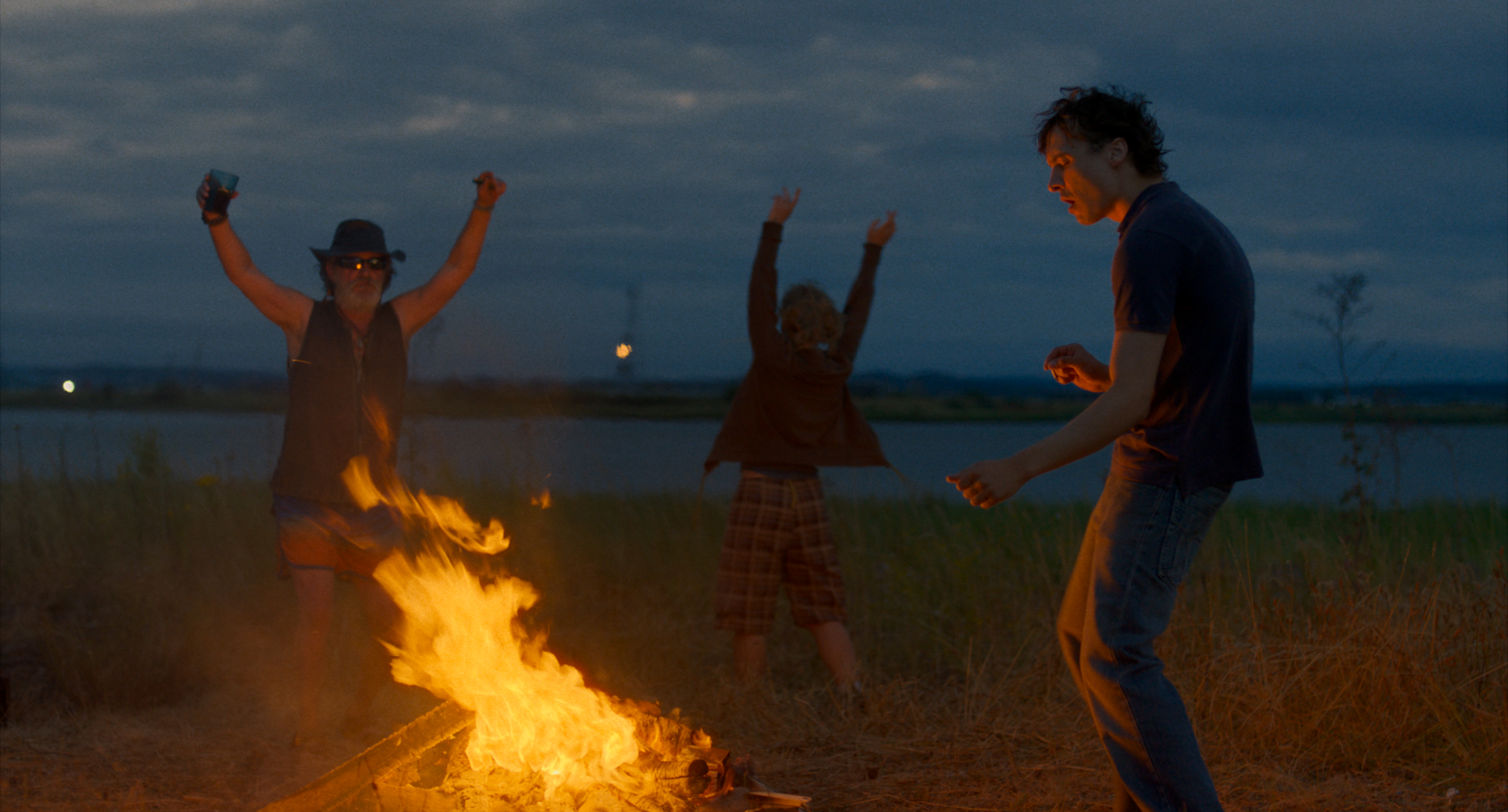
But the moment he started connecting with people, and having conversations with people, it was like: OK, this isn’t about the tragedy, it’s about trying to find the hope. So it was when we started to see him speak to people, like in the big scene in London Fields where the community aspect of it [is there]. There’s levity there, as well. That came alive for me.
How did you go about building a rapport with people in the community, whether homeless or on the margins of society? To reassure them you weren’t a fancy-pants film crew coming in to glom onto their lives. That you wanted to do something empathetic.
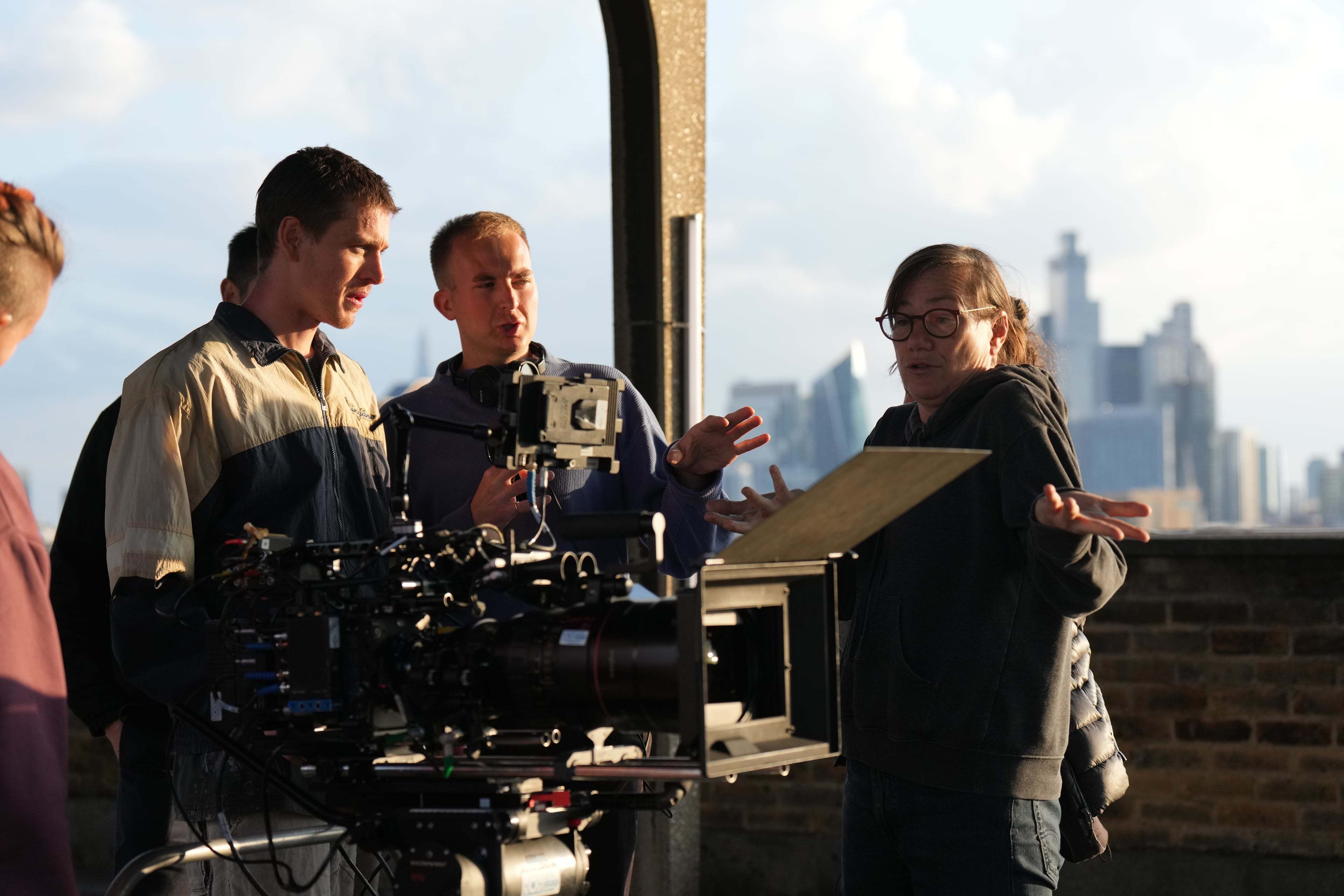
Frank: If you come with good intentions, I’ve found in life, people perceive those intentions and will be helpful. We had nothing to hide. We didn’t have some hidden agenda. We wanted to tell a story that involved [real] people, and that involved you if you wanted to come into the shot.
People are welcoming. People want to have their stories told. I am not a fancy-pants actor! I couldn’t be even if I tried, really. So I approached it with empathy and love and compassion. I have lots of friends in lots of different circumstances. It’s just people. We’re all the same.


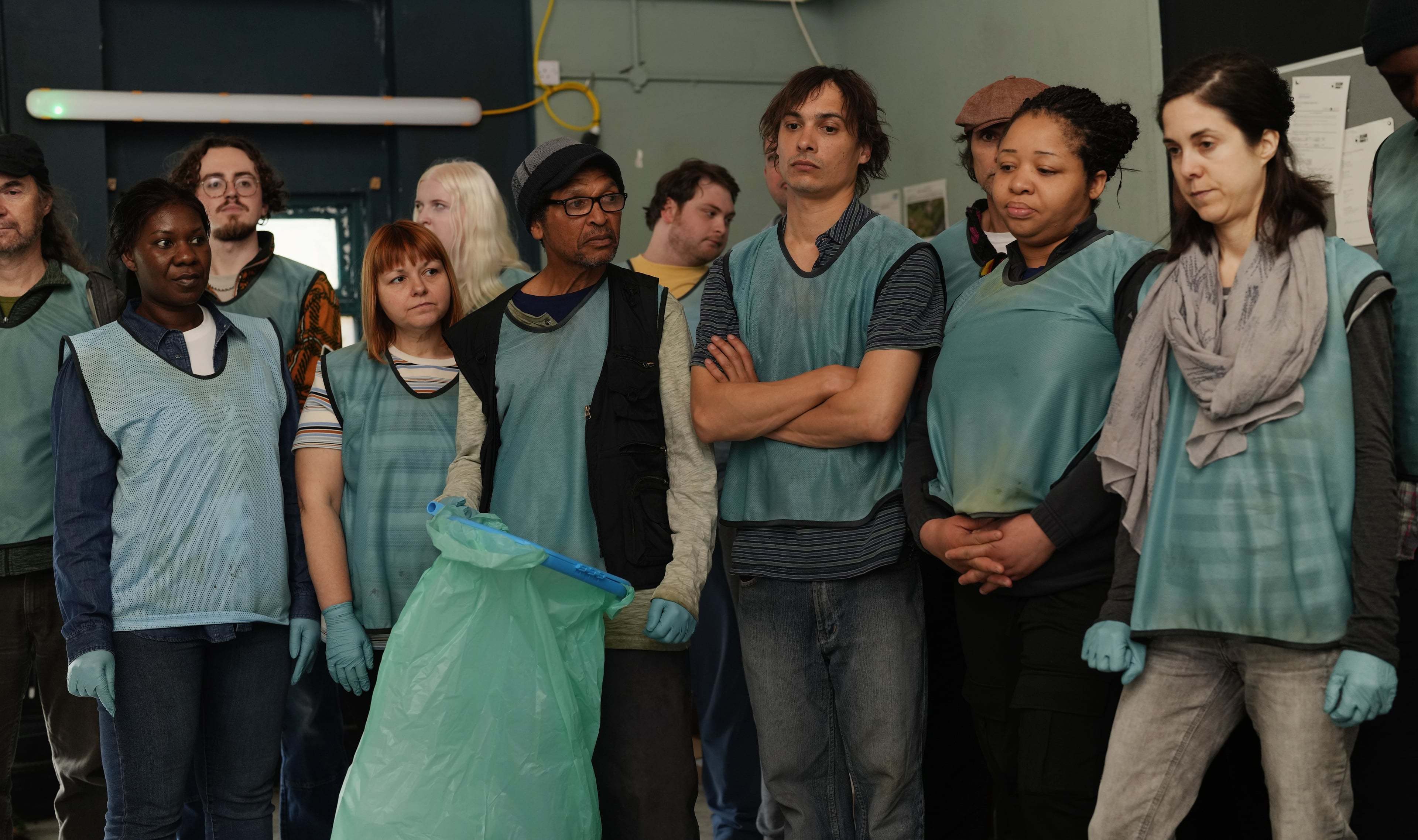
The closing credits shout out dozens and dozens of supporting artists who were to some extent, I’m guessing, street-cast. Respect for ensuring these people had a name as well as a voice. How did you explain your intentions and requirements to them?
H: Actually, we didn’t engage anyone on the film that was actively unhoused. The people we were working with were members of various organisations that had experience with it. It’s a precarious thing to try and take someone from a scenario and bring them into this world.
But there were scenarios where, for example, we were on the street and people came in [to the shoot] and we would pay them, or engage them, and offer them support. But [I know from] the work that I was doing in that community that it takes a while of building trust for people.
Inevitably, though, there’s always going to be an element of disconnect for people. They go: “Why are you here filming? You don’t know [how it is].” But ultimately, I did as much due diligence as I could in inviting scrutiny – from Prison Reform and probation and various homeless organisations. And we had an advisor, Jack Gregory, who’s coming tonight, who’s been on and off the streets and had his own journey of addiction.
That thoroughness, and truthfulness, is apparent onscreen…
H: It was about making sure enough voices were contributing to the story. Then if people didn’t want to be a part of it, we never exploited anyone.
But you know what: we filmed members of the public without them knowing. But they were people who were, like, fine [in life]! When Frank’s asking for money at the start of the film, we were in a restaurant [filming from behind] frosted glass, so no one could see us. They were all members of the public. But in my mind, morally, I don’t care about that. That, to me, doesn’t cross the line.
One of the best scenes, Frank, is the restorative justice scene, where Mike is confronted by someone he’s mugged. It’s an almost wordless performance from you, but you cycle through the feelings. We see the emotions ripple through your entire body.
F: Thank you. If you were there, you’d hear Harris [shouting]: “HOLD IT!” It was an odd scene, that one, for me. Because I was like: “What is this?” Harris goes: “Just listen and respond.” [Eventually] that all happened quite naturally.
The moments of magical realism: were you in a different headspace for those?
F: Funnily enough, Harris wanted blankness. Because we didn’t really know what it was, in many ways. I did have a certain headspace that I had built up of Mike’s backstory – who Nathan was, what kind of condition Mike was in when the magical realism stuff is happening…
“One of the most dangerous things we can do is other other people. Imagine that people who have a different skin colour, or a different class, or whatever it is, are other from you and don’t have feelings. I hope that this film opens that door in the audience”
Frank Dillane

It’s not, in reductive terms, Harris, a commercial film. It’s taken you six years to get it made. You were at Cannes in 2023 looking for finance. Did you have to wait for your box-office capital as an actor to rise to a certain level for financers to trust you with the budget to make your directorial debut?
H: Nnnnnno. When I embarked on the film, I had the support of the BBC, and then the BFI. And the last bit of finance came close to the film being made… But I don’t know, is the answer. I don’t know if it was anything to do with that.
I think if anything there was more of an apprehension because I was an actor. People weren’t rushing to do it with me. It was probably: “This fucking random actor wants to make a film. Who does he think he is?” Totally fair. Totally understand that.
I think it was more just about me having to prove to them why I was the one to make it. And my connection to it, and my love of it, and my passion for it, and my drive with it. Just doing that over and over until someone was just like: “OK, fucking hell…” And luck. Just lucky that someone came along and closed the financial gap on it. I can’t put that down to anything.
You’re in pretty much every scene, Frank. How rinsing was that, particularly the scenes where Mike is out of it?
F: Um, yeah. Yeah, it was. But Mark Rylance said this once, and I think about it a lot: by the time you get to shoot something, it should feel like a holiday. Like a release. I did kind of feel like that. I’d been holding a lot of these ideas, and a lot of this energy, over so long that by the time I came to film it, I was hungry to shoot. Hungry to experiment.
But it was definitely a taxing experience, being Mike. But also a very cathartic one in many ways. He’s a hopeful person. He’s a joyous person. He’s resourceful. He’s brave. All sorts of beautiful adjectives. So it was a great pleasure to occupy him for the time I did.
H: It’s very precarious for actors to talk about how it affected us. Because it can come off…
Sounding like a wanker?
H: Yeah, yeah. But Frank dealt with a lot. There was a lot of shit that was required of him that was heavy-duty. He won’t say it but he put his body through a lot. And he’s incredibly thoughtful, and that takes up a lot of headspace. It’s a credit to his investment in it, because that takes a toll. And he won’t say that.
What, Frank, do you want audiences to take away from this character, this depiction, this life?
F: For me, this film became a lot about feelings. All the different feelings that human beings feel. How much of our culture and our society excludes suffering, both within ourselves and around us.
One of the most dangerous things we can do is other other people. Imagine that people who have a different skin colour, or a different class, or whatever it is, are other from you and don’t have feelings.
I hope that this film opens that door in the audience. It is you in that doorway. It feels exactly how it would feel for you. This person doesn’t have less feelings than you. Doesn’t have less rights to happiness, or a life, or a job than you. It is the same. It is all feelings, and looking after that understanding in yourself. We’re all human beings. This person is you.
Finally, Harris: Ian Hart in Backbeat. Aaron Taylor-Johnson in Nowhere Boy. Robert Carlyle in Yesterday. Gimme some truth: who was the best onscreen Lennon?
H [cheerfully outraged]: You can’t ask me that!
Yes I can!
H [quietly]: Me. But you can’t ask me that…
Urchin is in cinemas from 3rd October.

