
40 years on, the Antwerp Six designers are still making noise

From fake fashion show invites to capturing the world’s attention with guerrilla shows, MoMu’s latest exhibition, The Antwerp Six, celebrates six of fashion’s most legendary designers.
Style
Words: Eni Subair
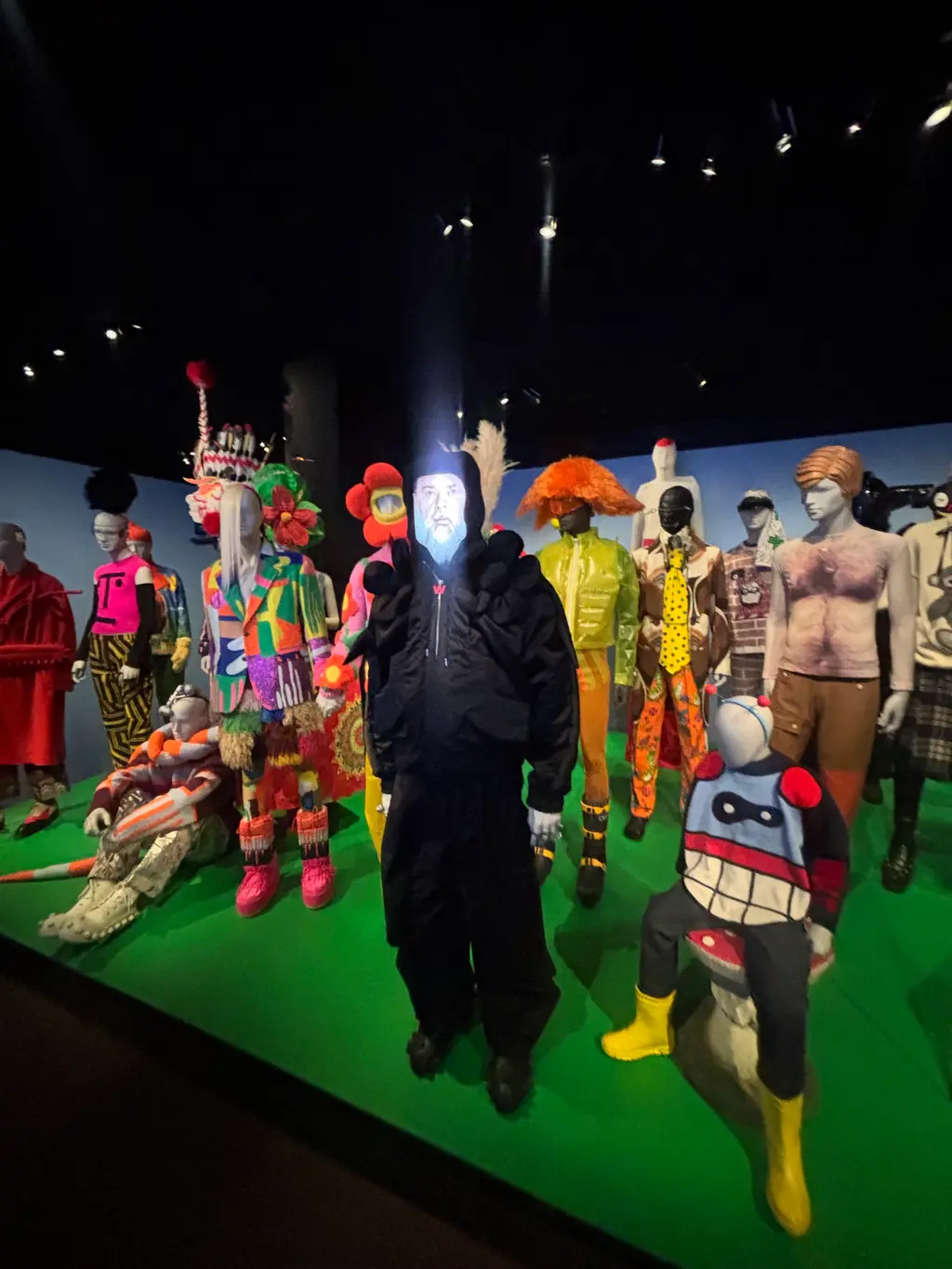
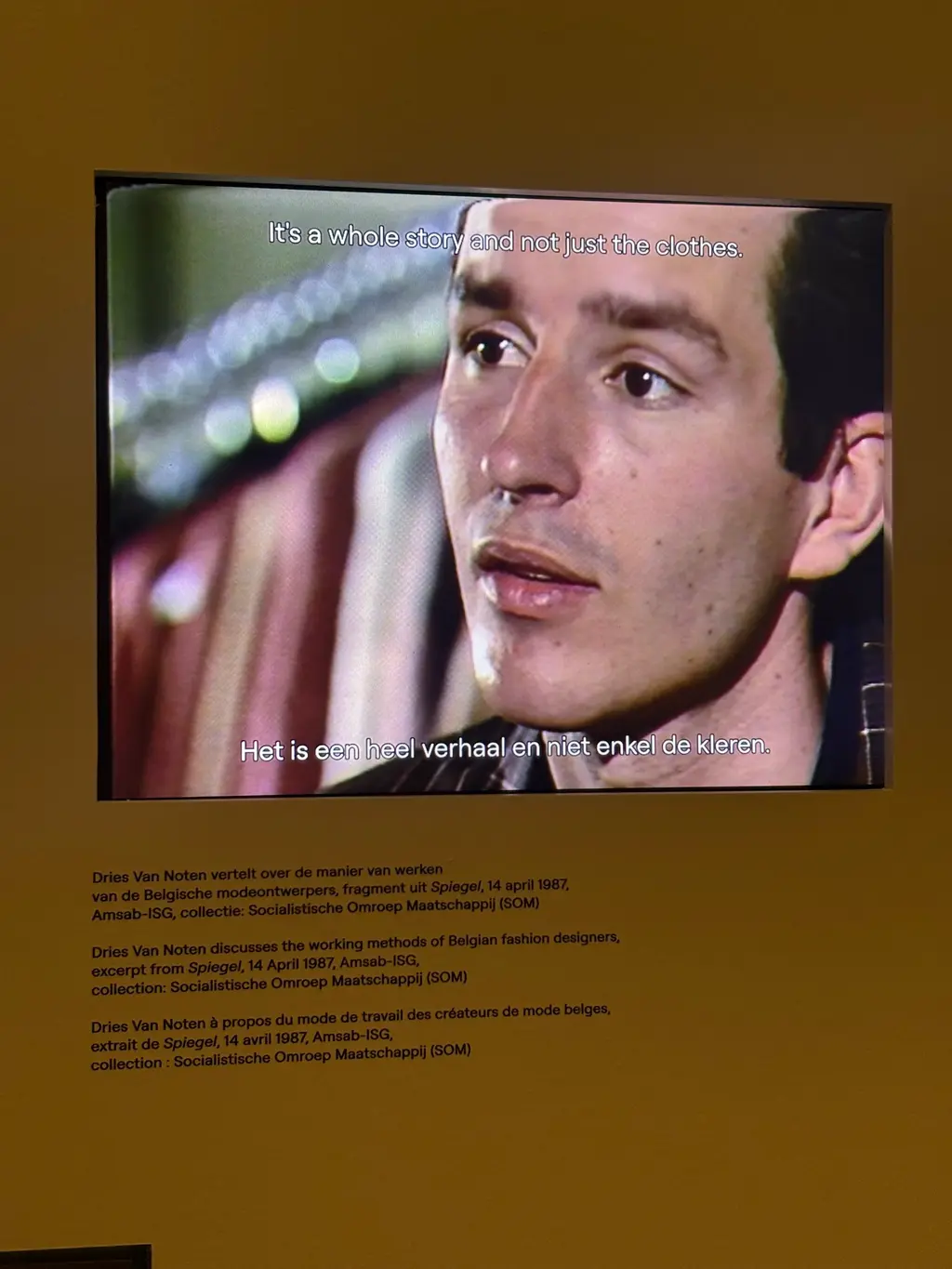
A projection of Walter Van Beirendonck is affixed to a mannequin kitted out in a bomber jacket with floral detailing and black trousers. “Walter” is chatting to his robot, Puk Puk. In the distance, I hear a distorted version of Britney Spears’ Gimme More near Dirk Van Saene’s installation, and the faint musings of Raf Simons talking about a set of distinctive and “individual” designers better known as the Antwerp Six.
It’s the day before MoMu opens its latest exhibition to the public, one that celebrates 40 years since the formation of the radical group of designers: Walter Van Beirendonck, Marina Yee, Ann Demeulemeester, Dirk Van Saene, Dries Van Noten and Dirk Bikkembergs. Truthfully, it’s the kind of show that, even with only three hours’ sleep and a Belgian welcome involving being pelted with hailstones while waiting for my Uber, is more than worth the journey.
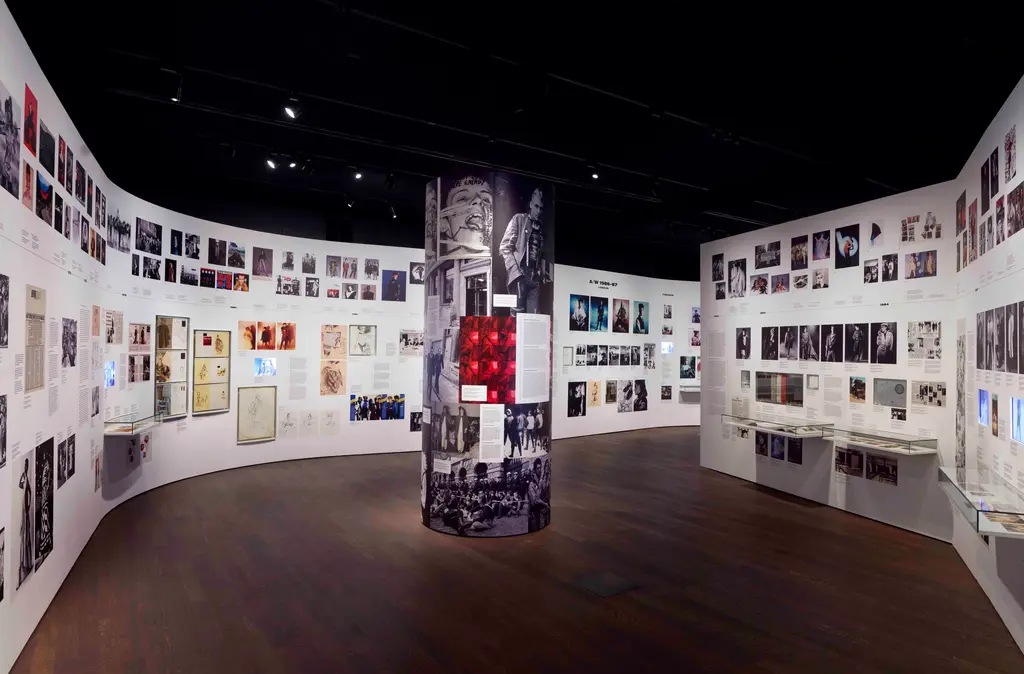
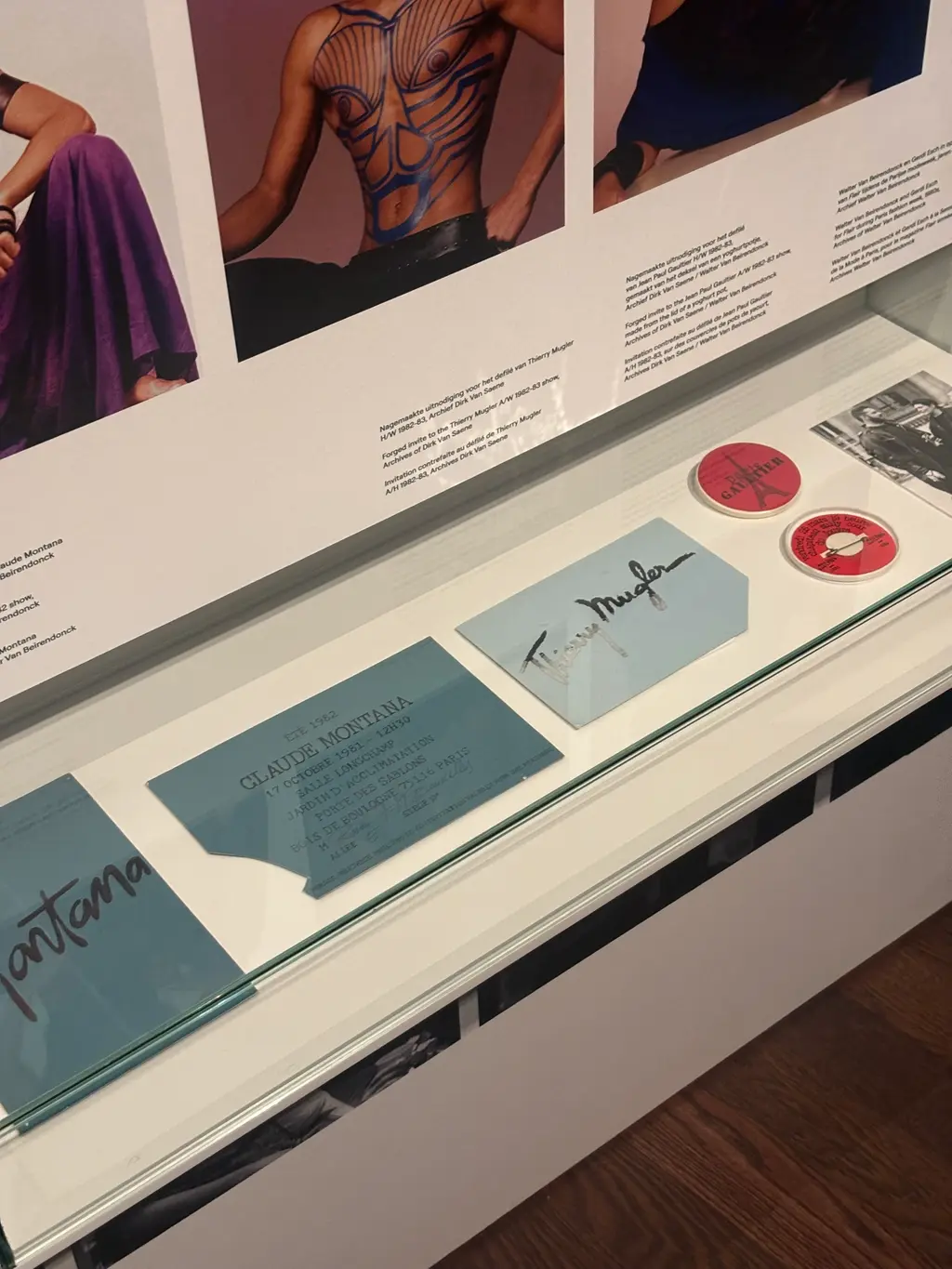
Heading through the semi-brutalist reception space and up some wooden stairs, there are portraits of each of the Six shot by Ann Demeulemeester’s life partner, Patrick Robyn. Throughout the space are six individual installations beginning with a chronological timeline of the Antwerp Six’s origins and evolution: there’s the Golden Spindle contest in Belgium in 1982, designed to encourage textile use, and their first trip to London as a cohort. There are Dries Van Noten’s sketches, fake invitations for Gaultier and Mugler shows made from yoghurt lids, and various other artefacts the Six concocted in order to sneak into fashion shows. “[The Antwerp Six] were different and special,” says Kaat Debo, MoMu’s chief curator and director. “Not all the other students were as ambitious. Some of the Royal Academy of Fine Arts Antwerp students [where all six studied] just wanted to be able to make their own wedding dresses, but each of the Six brought something to the group.”


It’s this ballsiness that eventually captured the world’s eye, leading to the group’s now-famous 1986 excursion to London, where they were given a spot at the British Design Show – albeit a small one. Dissatisfied, they hosted a guerrilla show and were told “not to come back”, Debo explains. While individualistic and distinctive in their designs, they operated separately but travelled as a pack. After the British Design Show fiasco, the Six caught the attention of the press, and Barneys was the first to invest in Dries Van Noten’s ready-to-wear.
Entering the first installation, dedicated to Dirk Bikkembergs – the first of the Six to travel to Paris post-London – I’m met with a slideshow of muscly, ripped models wearing tight briefs, glistening abs barely hidden by gilets, all drawn from his archive dating back to 1988. Most notable, though, is the absence of clothes. Instead, the images hammer home the designer’s message: fashion coming to life on the body, driven through sport.
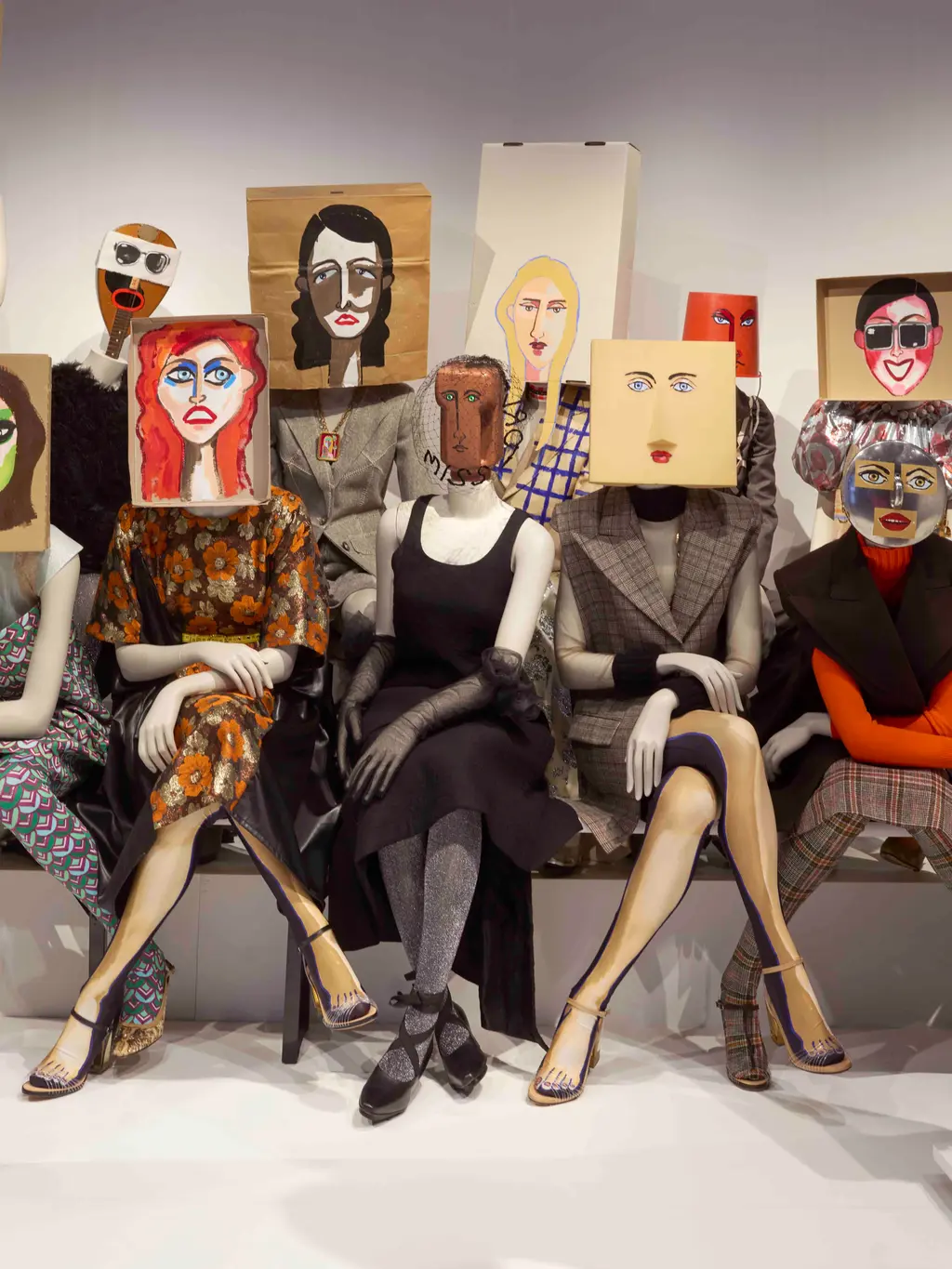
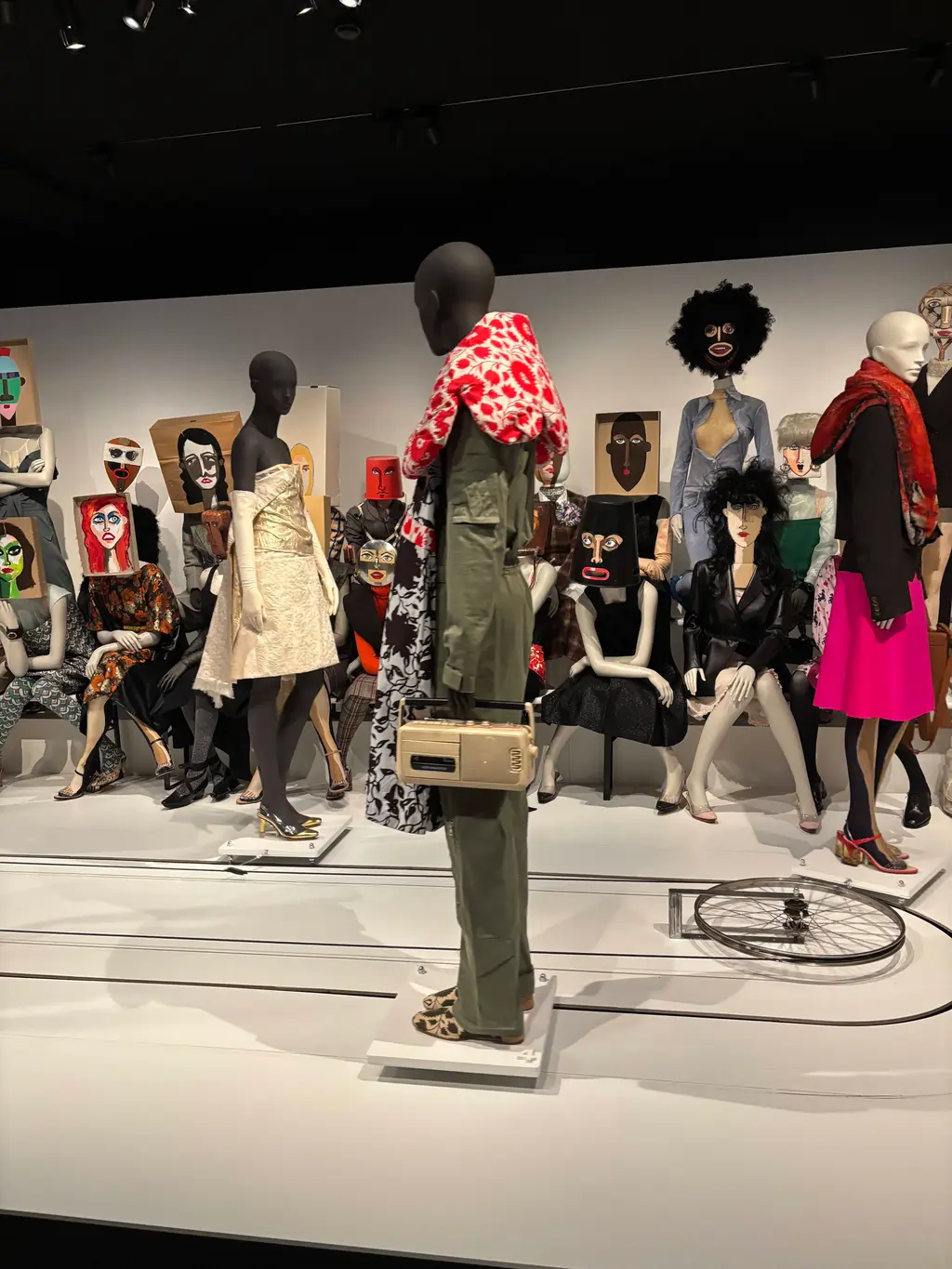
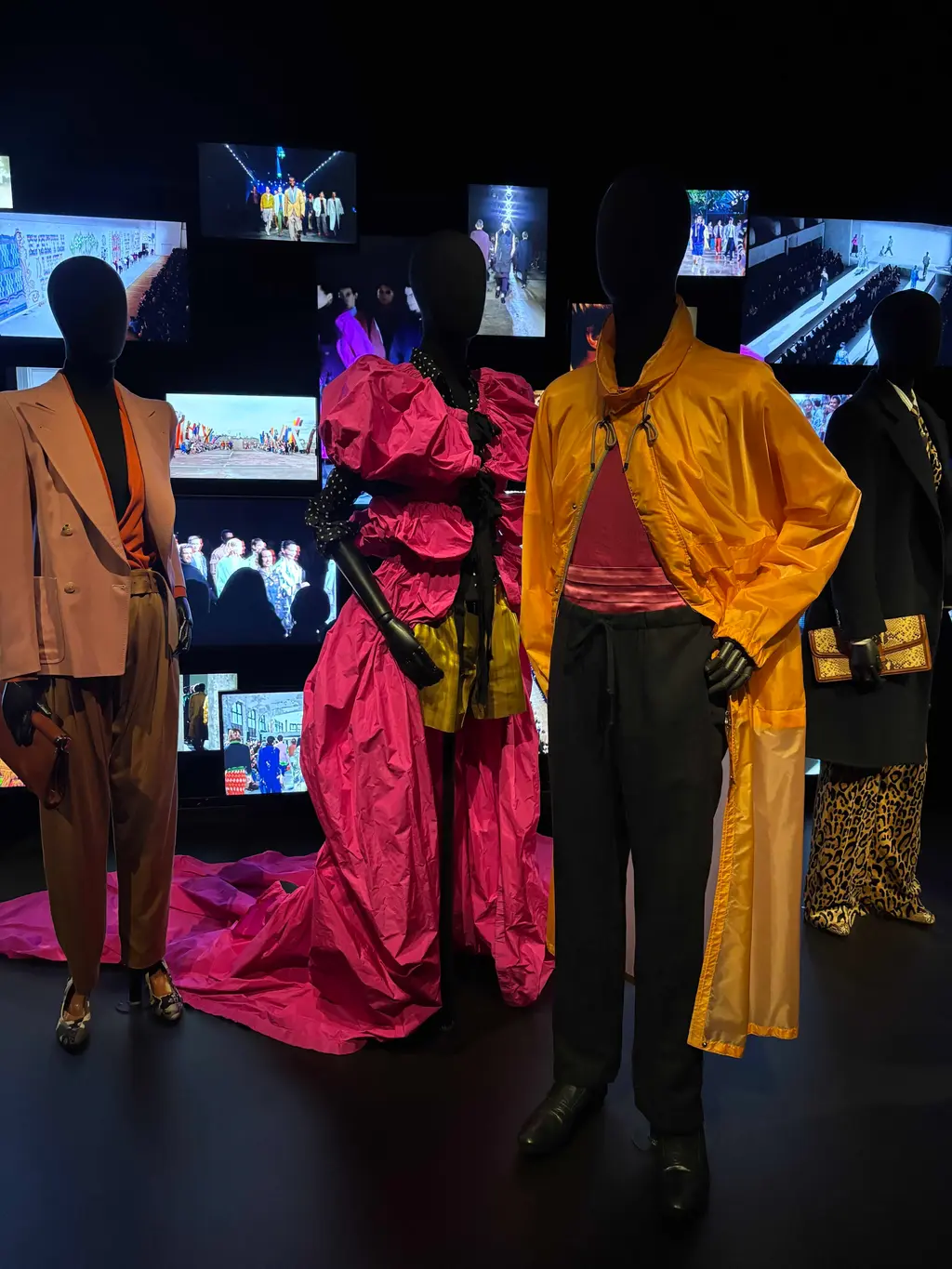
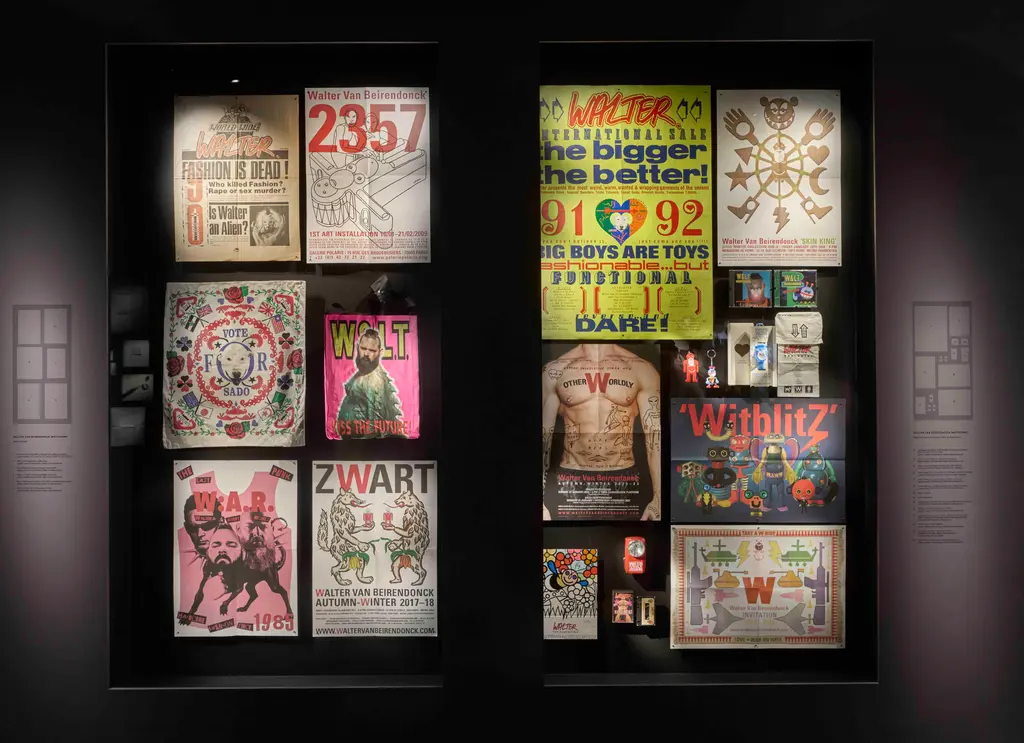
Coming face-to-face with Walter’s mannequin, I quickly realise it’s probably the least interesting element of his installation. Surrounding it are brightly coloured suits, headwear resembling flowers, snow boots that look as though paint has been spilled over them, busy patterns, and shaggy textured skirts. Puk Puk asks “Walter”, “What about the future? What do you see?”, and the designer’s voiceover replies, “The best way to predict the future is to create it. So I keep pushing – future-proof, Puk Puk. That’s what we have to be”. Apt advice in today’s fashion climate. At Dirk Van Saene’s installation, mannequins in trompe l’oeil designs are topped with a series of animated cartoon heads. Now a designer-turned-artist, the influence of surrealism in his work is clear.
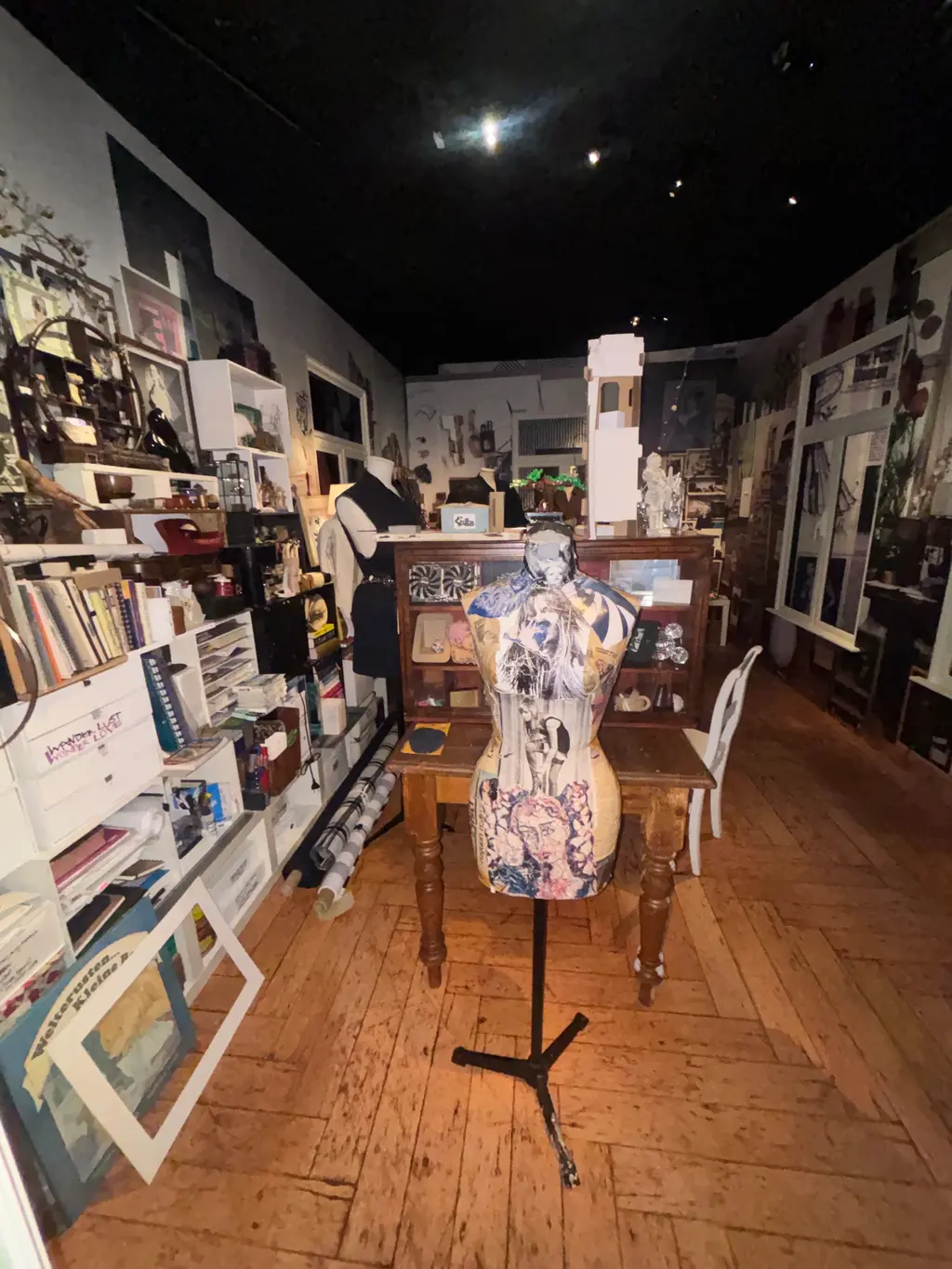
Dries Van Noten’s section features a hidden jewellery compartment (quite fab, I must say), and collections of billowing, layered garments sitting next to paisley prints and embellished skirts. It feels grown-up and playful in equal measure. On the wall is an illustration of looks spanning back to 1997. Marina Yee’s section, my favourite, is presented as a replica of her atelier/flat, where she worked. Everything is nearly identical, only each object has been shifted ever so slightly to the right. Images of fencers line the walls, a mannequin bust is covered in a collage of pictures, and books, shelves and trinkets cover every surface. It’s messy and inspiring. As one of the Six who alternated between art and fashion, Marina officially rebooted her brand in 2018. She passed away in November 2025.
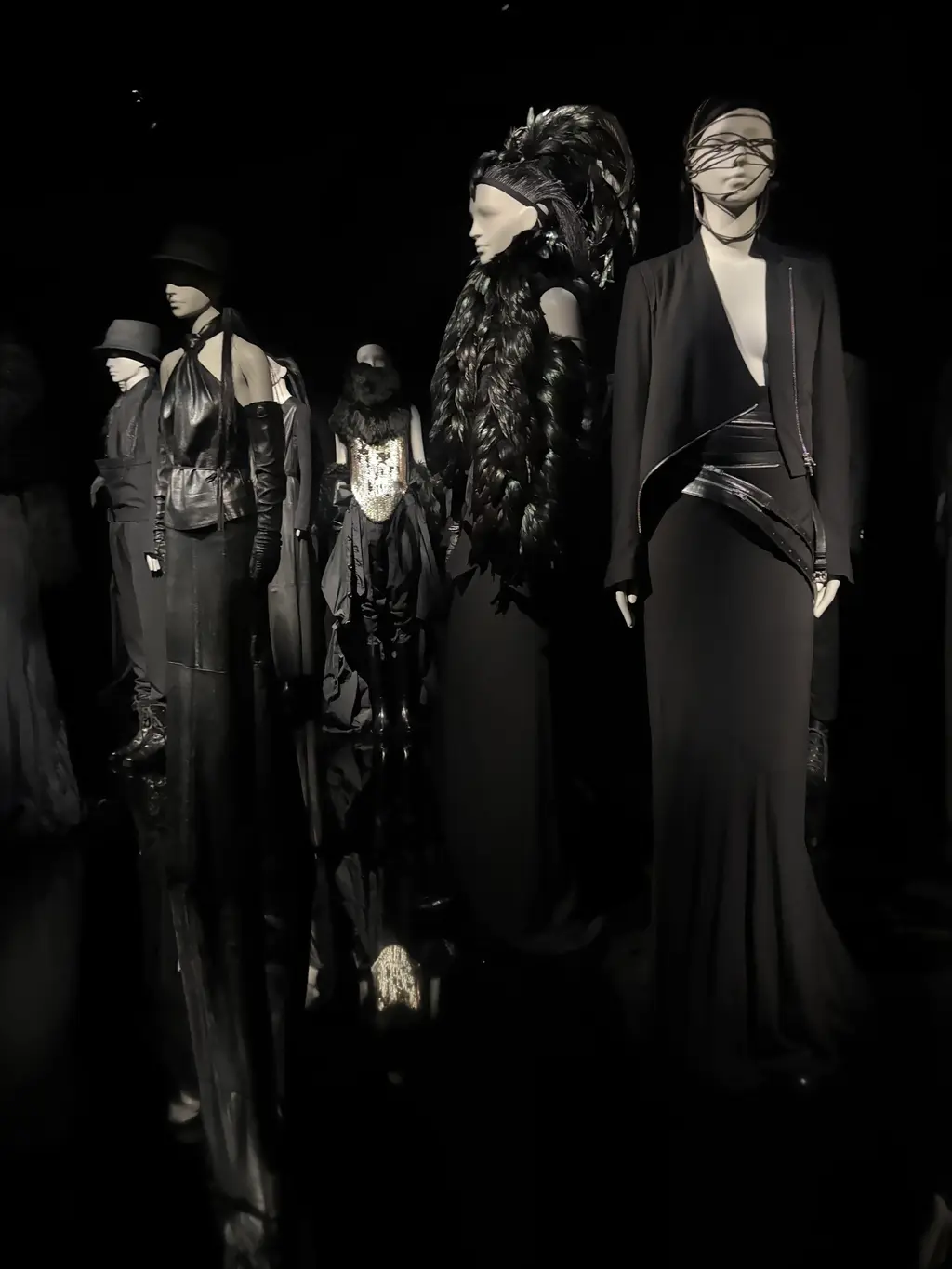
Ann Demeulemeester closes the exhibition with lacquered black flooring and mannequins dressed entirely in black. Romantic, complicated and darkly beautiful, the looks feature feathered hats, leather constructed tops, skirts with multiple zips pooling onto the floor, sequins, and lavish jackets. There’s a lot to take in. Below, Debo shares a few of her favourite moments from working on the exhibition.
What were your initial thoughts when you found out this exhibition was going to happen?
Actually, I had the idea [for it]. I thought, it’s the 40th anniversary in 2026 – maybe we should do it because we have never done a show on this. We had to find the moment that all Six would be in Antwerp, and we proposed the idea to them. The name [Antwerp Six] had mythical proportions, and I thought it was important to really tell the story as a museum, to do the historical research. That’s why we used so much archival material.
Sadly, Marina Yee has passed away. What did you find the most interesting about her work?
She had the most unusual career. The rest of them launched when they went to Paris, Marina was different. She hesitated a lot between art and fashion. And I think as a society, we tend to put creatives in boxes: either you’re a fashion designer, an artist, a photographer. We shouldn’t do that.
What’s your favourite element of the exhibition?
There’s this collage they made together to thank Jean Paul Gaultier when he was president of the second Golden Spindle contest [in 1983]. He was president of the jury, and they made this very funny collage together to send to JPG as a thank you.


Who was the most progressive out of the Six?
Walter is probably one of the most radical and engaged of the Six. Already in the ’90s, he was dealing with themes like HIV, safe sex, queer identity through his work. Using a robot as a character, he communicated difficult messages.
Tell me about the music choices.
Dirk Van Saene and Ann Demeulemeester composed playlists for their installations. For our opening exhibitions, we also worked with 2manydjs, who put together an Antwerp Six tribute playlist. We’ll be launching this in the coming months.
What do you hope people take away from the exhibition?
I hope that it will also inspire young people to communicate with each other, to connect with each other, to network with each other, because maybe we train designers too much as individuals. Fashion is a group effort. Forty years ago, the Antwerp Six were our emerging talents. How do we nurture, support, and challenge our talent today in an industry that is very different from four decades ago? The Antwerp Six emerged at a time when it was still possible to invent an independent fashion practice outside dominant systems. Today’s fashion landscape is very different, but precisely for that reason, their story feels urgently relevant.

