
London designer Oscar Ouyang is taking knitwear up a notch

The Chinese-born designer has quickly amassed a cult of preppy twinks (and It girls), all while keeping the wool industry in business. He’s not sheepish about it, either.
Style
Words: Joe Bobowicz
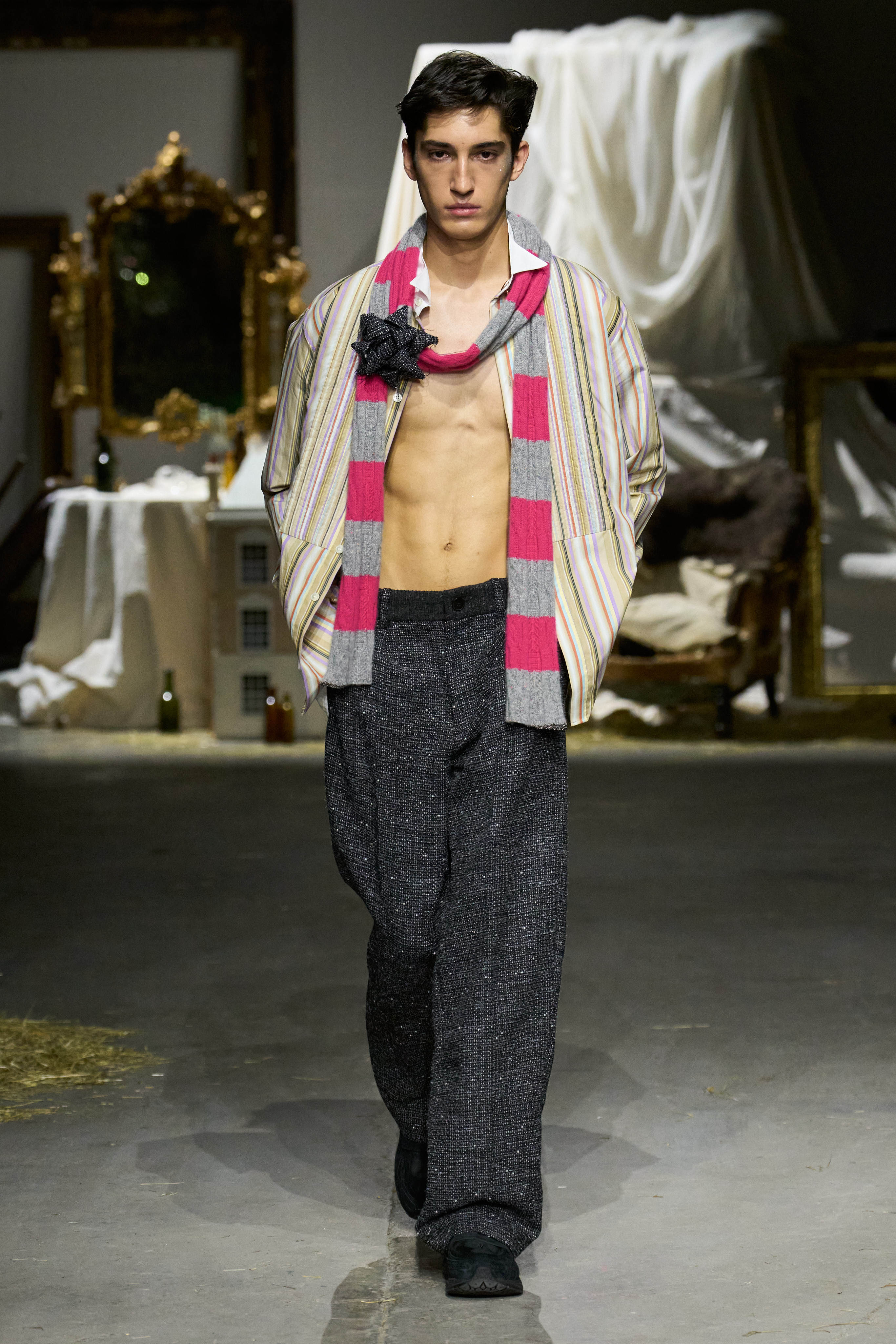
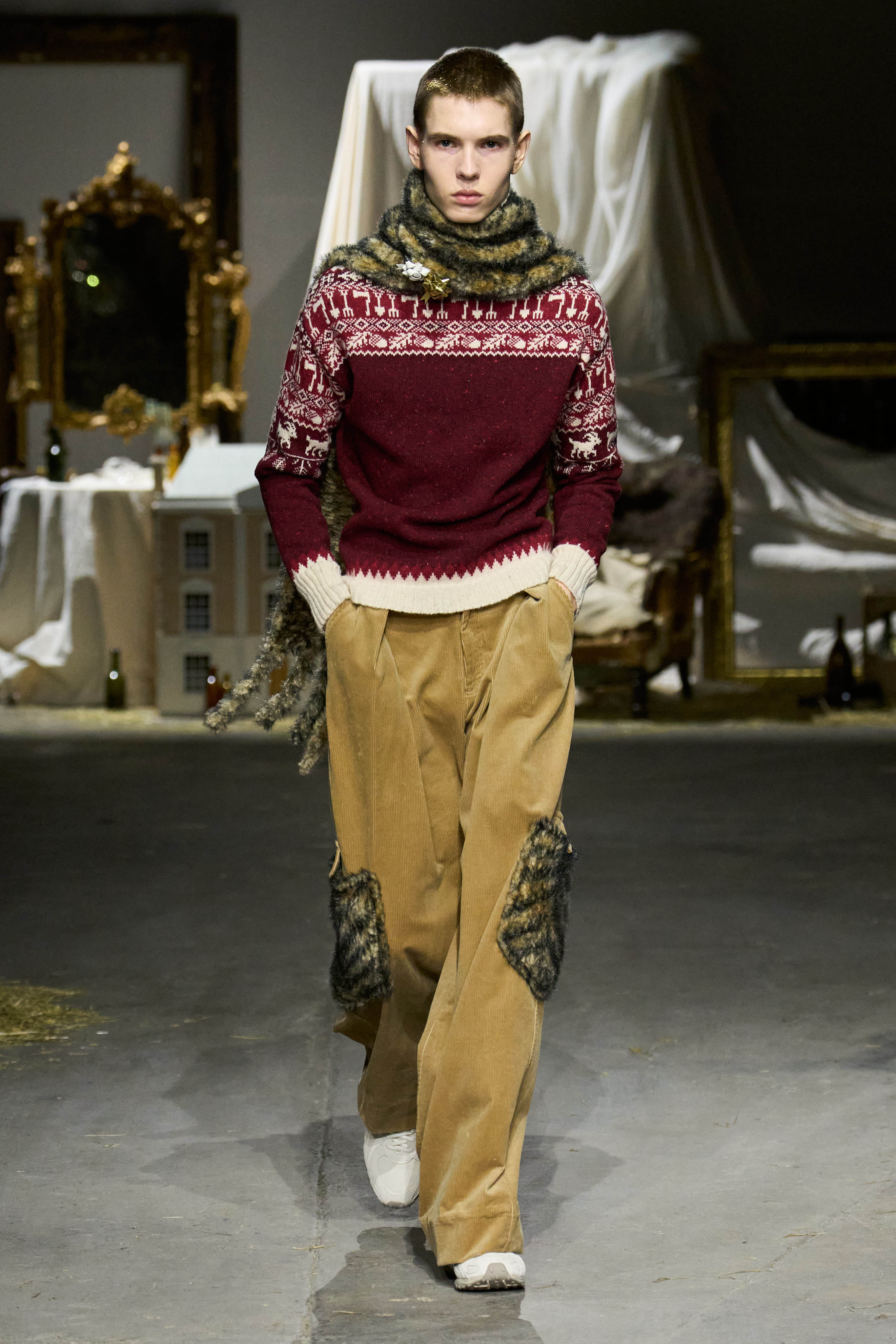
“It’s almost like a chic afters,” says Oscar Ouyang, describing the concept behind his AW26 collection. The 28-year-old Beijing-raised designer is standing inside his dinky Hoxton studio, gesturing towards a rack of finished samples. He hands me a coffee and begins to share the backstory behind this season’s ready-to-wear: an aristocratic family has gone bankrupt, and they’re auctioning off their wardrobe. The teenage kids, oblivious to the reality of crippling debt, decide to go out with a bang, throwing on their elders’ heirlooms for a barn party. The resulting mish-mash of looks is preppy, both parts disheveled and polished.
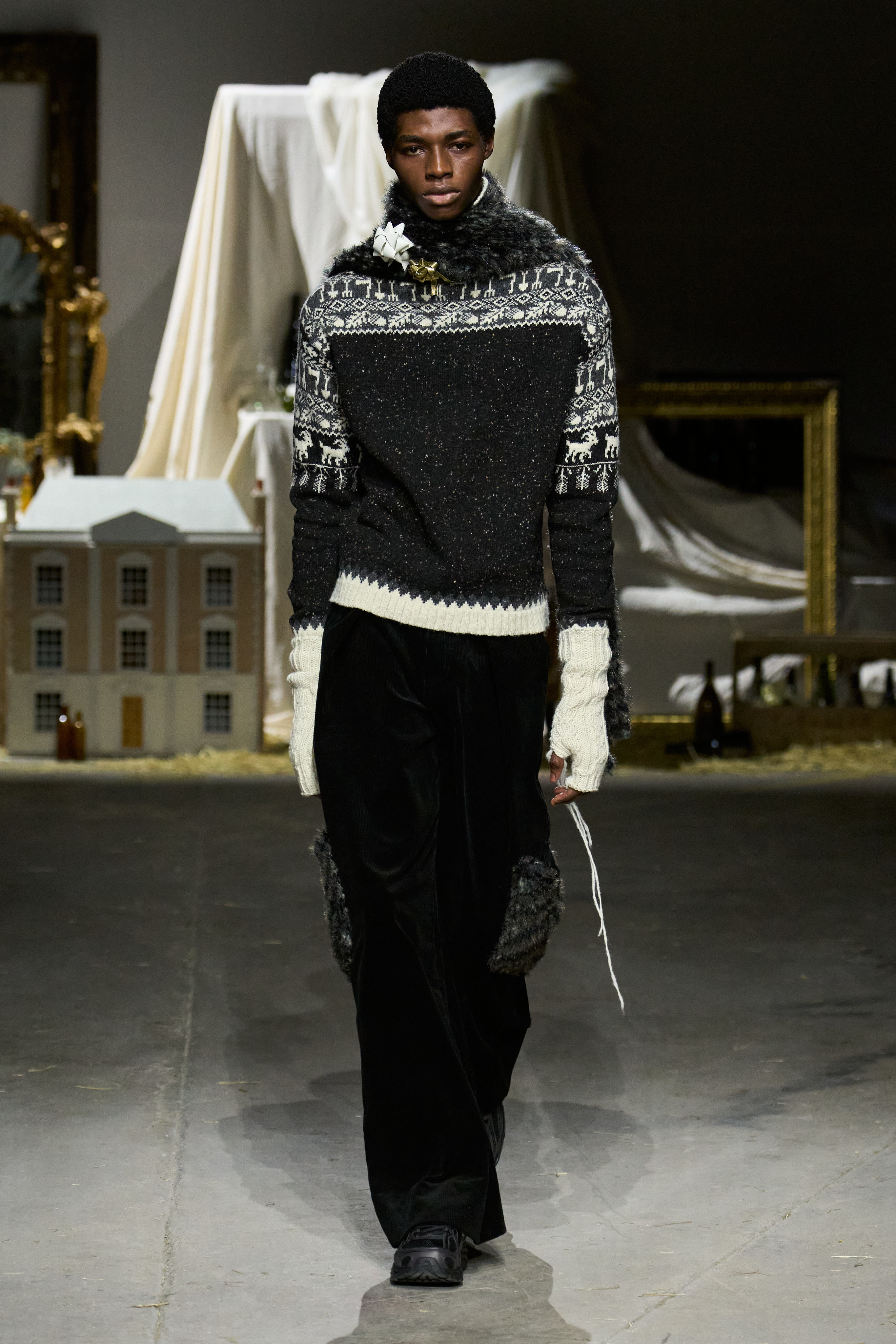
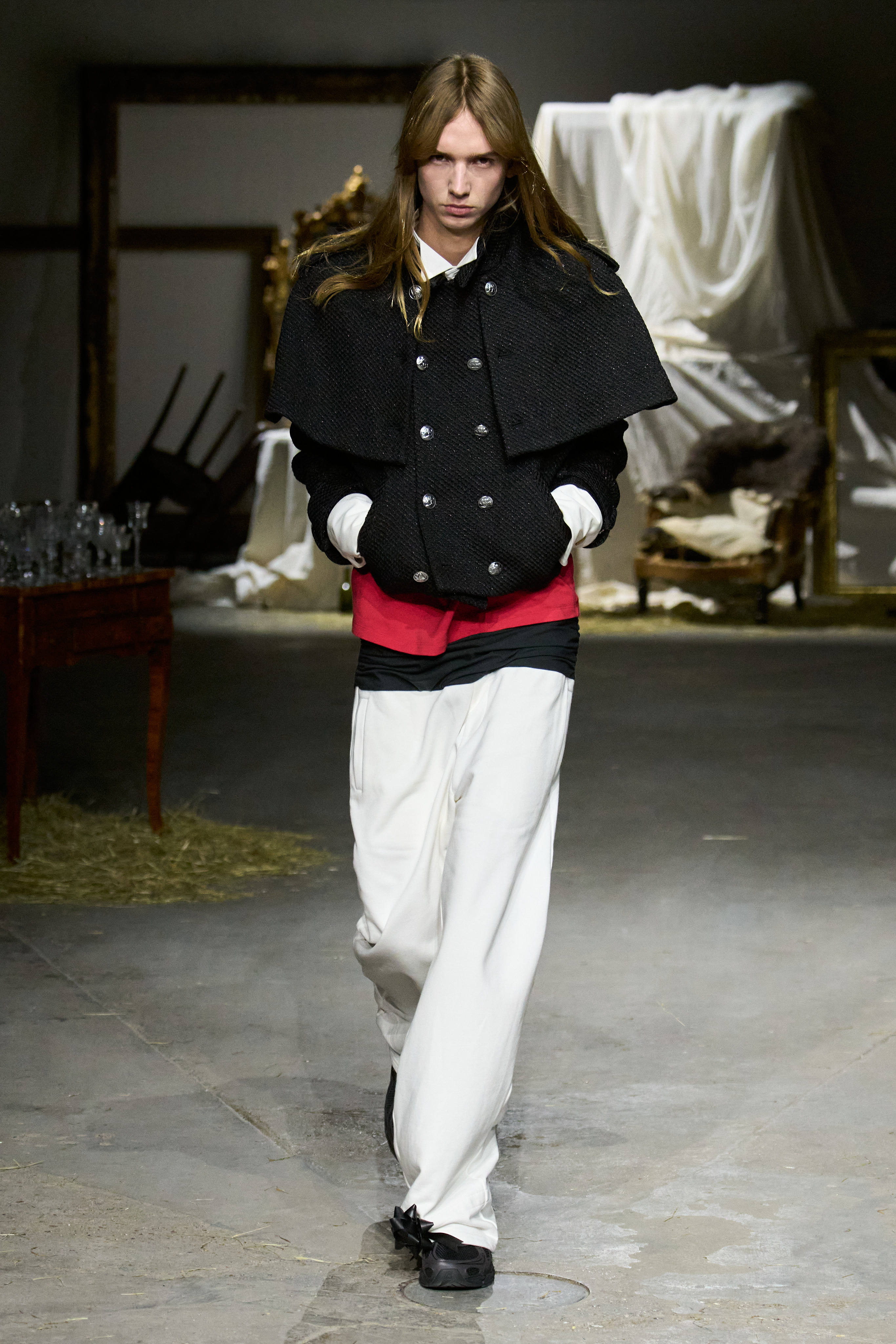
Oscar points out a one-seam caped blazer woven in French tweed, a meticulous double-breasted overcoat collared with detachable reindeer fur and a handful of miniature leather rosettes that will be sprinkled throughout the season’s offering. The bulk of the clothing is knitwear; Italian, Chinese, Mongolian and Irish (Donegal) yarns do the heavy lifting. Silhouettes favour traditional British tailoring by way of safari jackets, military garb, dress shirts and draped cummerbands. PJs are printed with vintage toys sourced on eBay (Oscar jingles a box of children’s lead farm animals on his desk).
Elsewhere, boarding-school rugby shirts feature a make-believe Oscar Ouyang family crest, and nods to longstanding signatures – herringbone-patterned tweeds and bucolic motifs, such as shovels, barley leaves and acorns – cement a world he’s been building since graduating from his MA at Central Saint Martins in 2023.


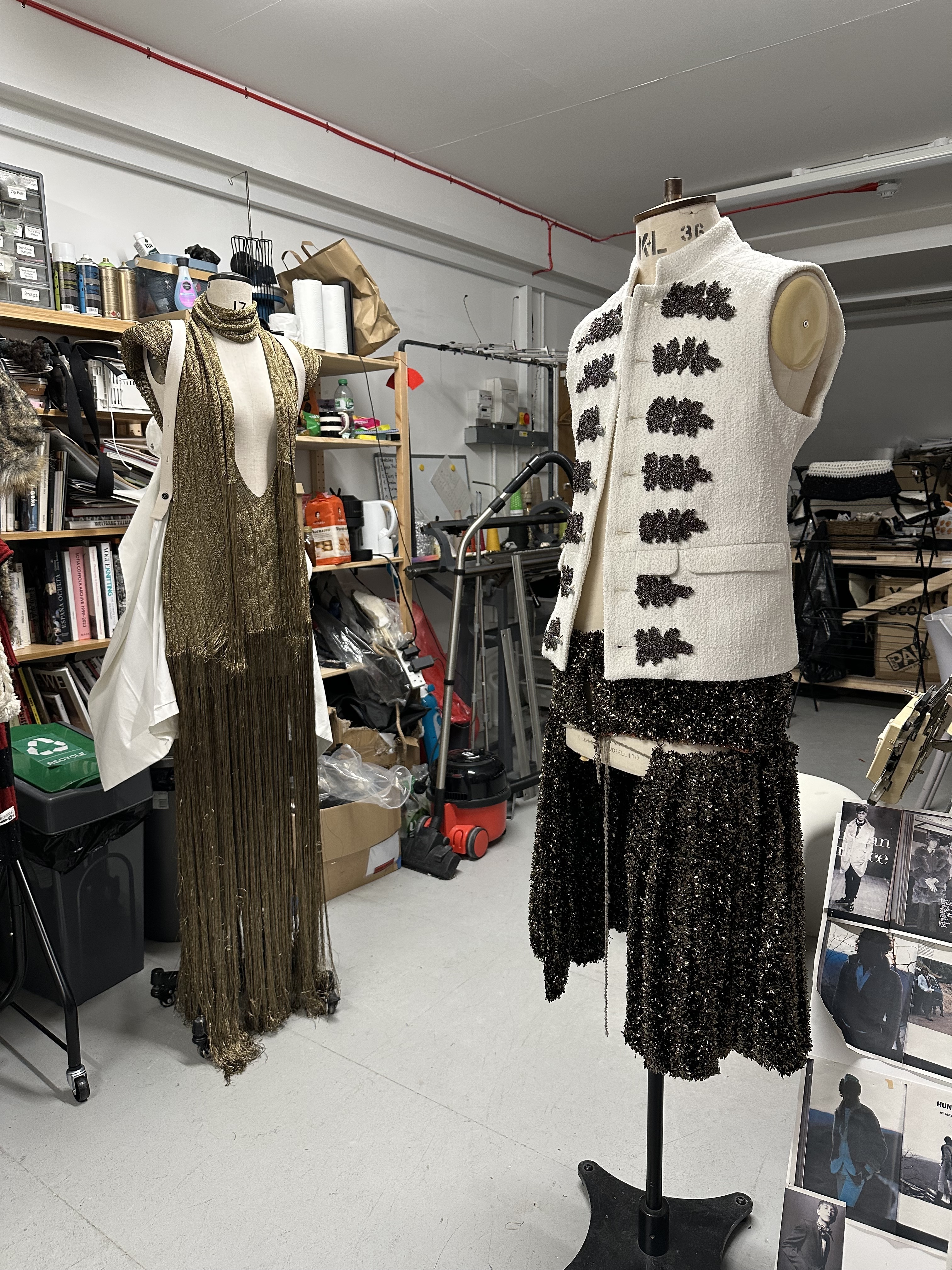
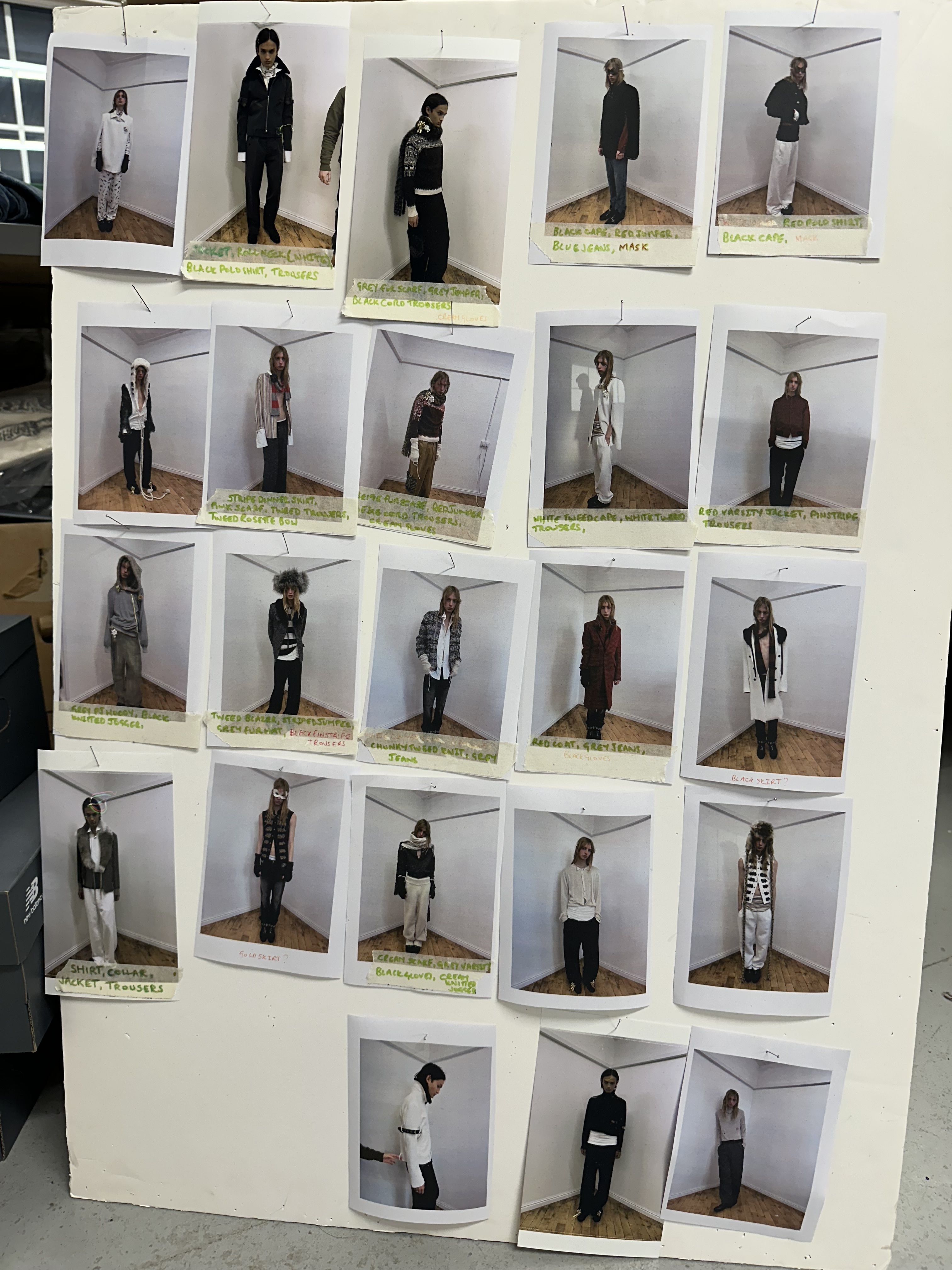
It’s a little over a week before Oscar’s show and the mood in the studio is eerily calm. Kiddeo Deng, Oscar’s assistant, waves from across a worktable, while an intern operates an antique knitting machine – the brand, Dubied, went out of business in 1987, but Oscar is nerdy about traditional techniques. “You’d think it would be absolute chaos right now – everyone sweating their ass off until the last two hours before the show,” he smiles. “I think that’s the kind of fashion people are used to.”
Oscar, a business-savvy mind, has already showcased his designs to the buyers in Paris last month. As such, the collection was ready for factory production by November last year. The early deadlines have meant that the remainder of the team’s time has gone towards editing the looks and nailing the casting – “cute boys is the baseline”. He hands me a lookbook: models pose in fluff-tufted corduroys and Fair Isle varsity jackets. “I could see an east London gay wearing this one,” he says, pointing to a cropped shearling.
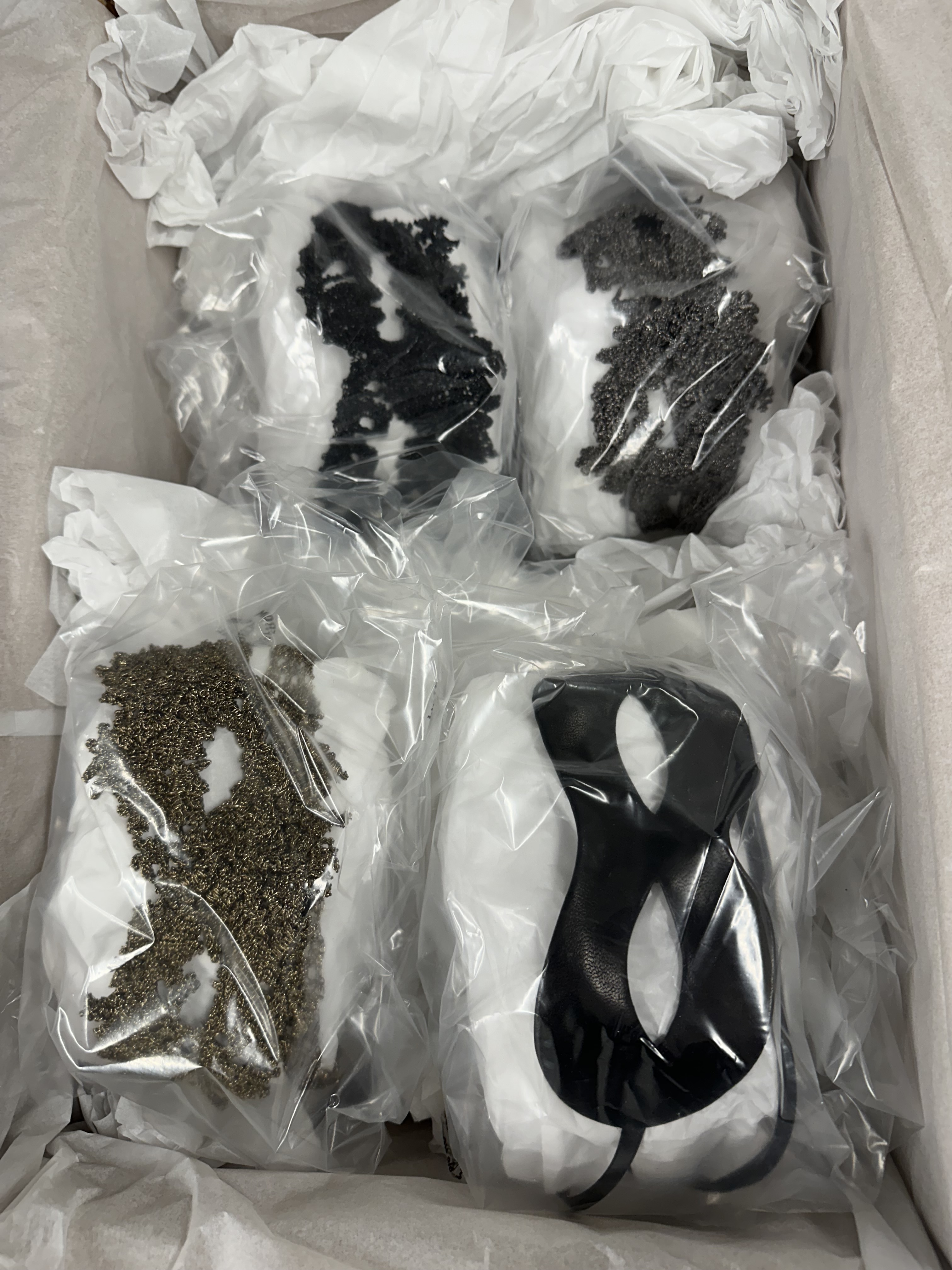
For the show, explains Oscar, models will wear masks designed in collaboration with milliner Noel Stewart (handily, he’s in the same studio block) – some fitted with reindeer horns. The idea was conceived by stylist Jack Collins, who has been consulting for Oscar for three seasons. “The styling feels grown-up and undone at the same time,” Collins tells me over Instagram DM, noting the blend of pyjama-style pieces coupled with more refined suiting and bouclé. “Maybe you picked up the wrong coat or someone else’s scarf when you were leaving,” he adds.


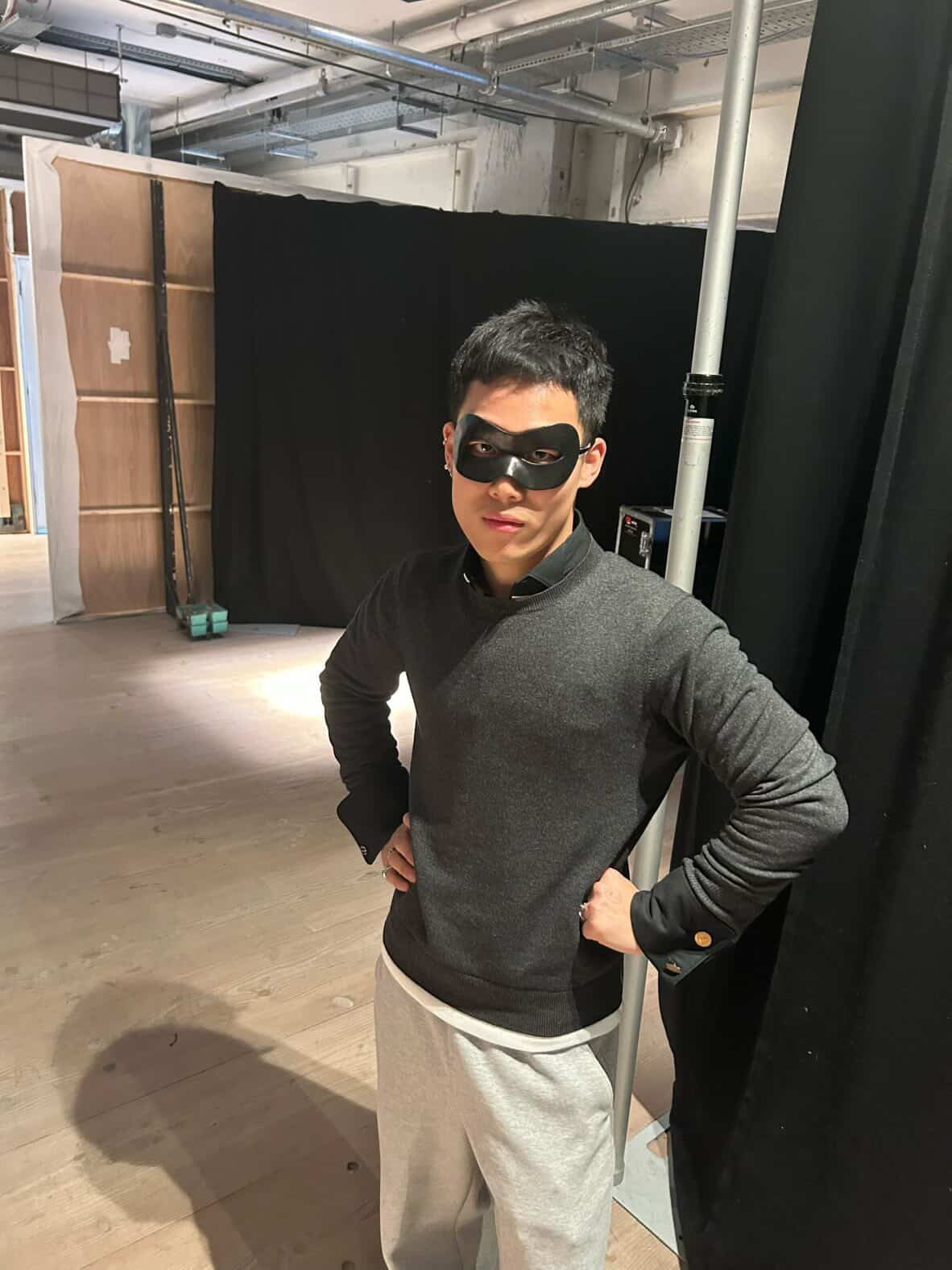
Despite the clarity of his vision and the professionalism he exudes, Oscar is something of a quiet rebel. It all started when he interned at Harper’s Bazaar China, with a dash of Tumblr – “It was a lot of McQueen and Helmut Lang”. Oscar originally considered journalism, before he realised designing could be his livelihood. His father worked in finance and his mum ran a golf course business. Plus his older sister’s in finance. “I’m really the odd one out,” he laughs.
His discipline was learned, not innate. He recalls his first term on the Masters degree when tutor Nicos Efstathiou questioned why he was even there. Coming from the BA, where art-school creativity is prioritised over commercial knowhow, Oscar could be stubborn. “[Efstathiou] would do tutorials with all three [of us knitwear students] together, and then he would tell us off together,” Oscar remembers, laughing. “After, we would all cry at the student bar.” It sounds dramatic, but he’s grateful for the tough love. “We’re close now.”
Efstathiou’s methods paid off. After graduating, Oscar received an email from a buyer at Dover Street Market called Olga Kaminska, but up until that point, the designer was open to working in house at a brand (he interned at Proenza Schouler and Asai prior). Now, he has almost all the DSM outposts under his belt – LA is too hot for knitwear – and, as of last season, Selfridges and East End boutique H‑Town stock his goods. And you can find Oscar’s designs in Shibuya, Tokyo.


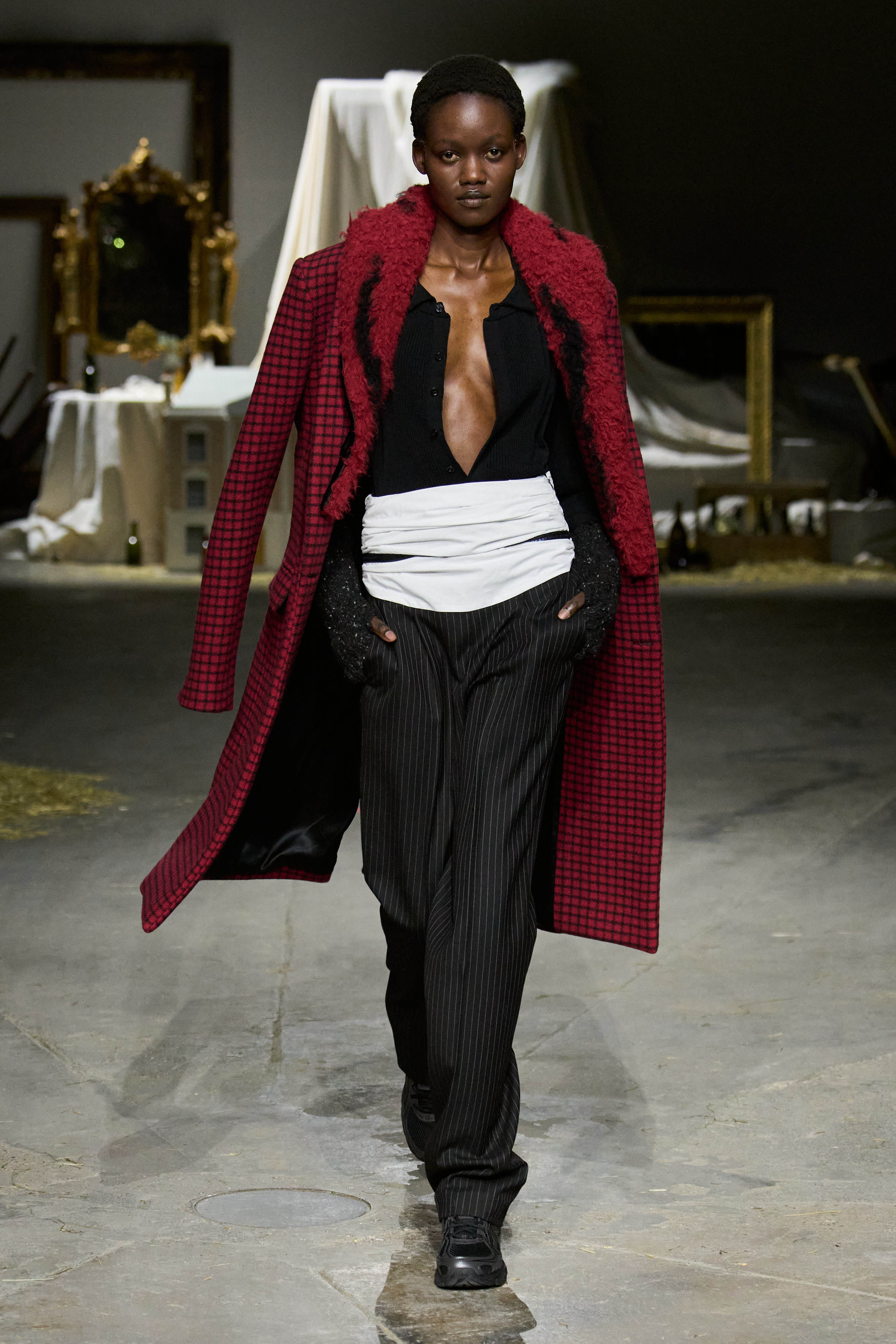
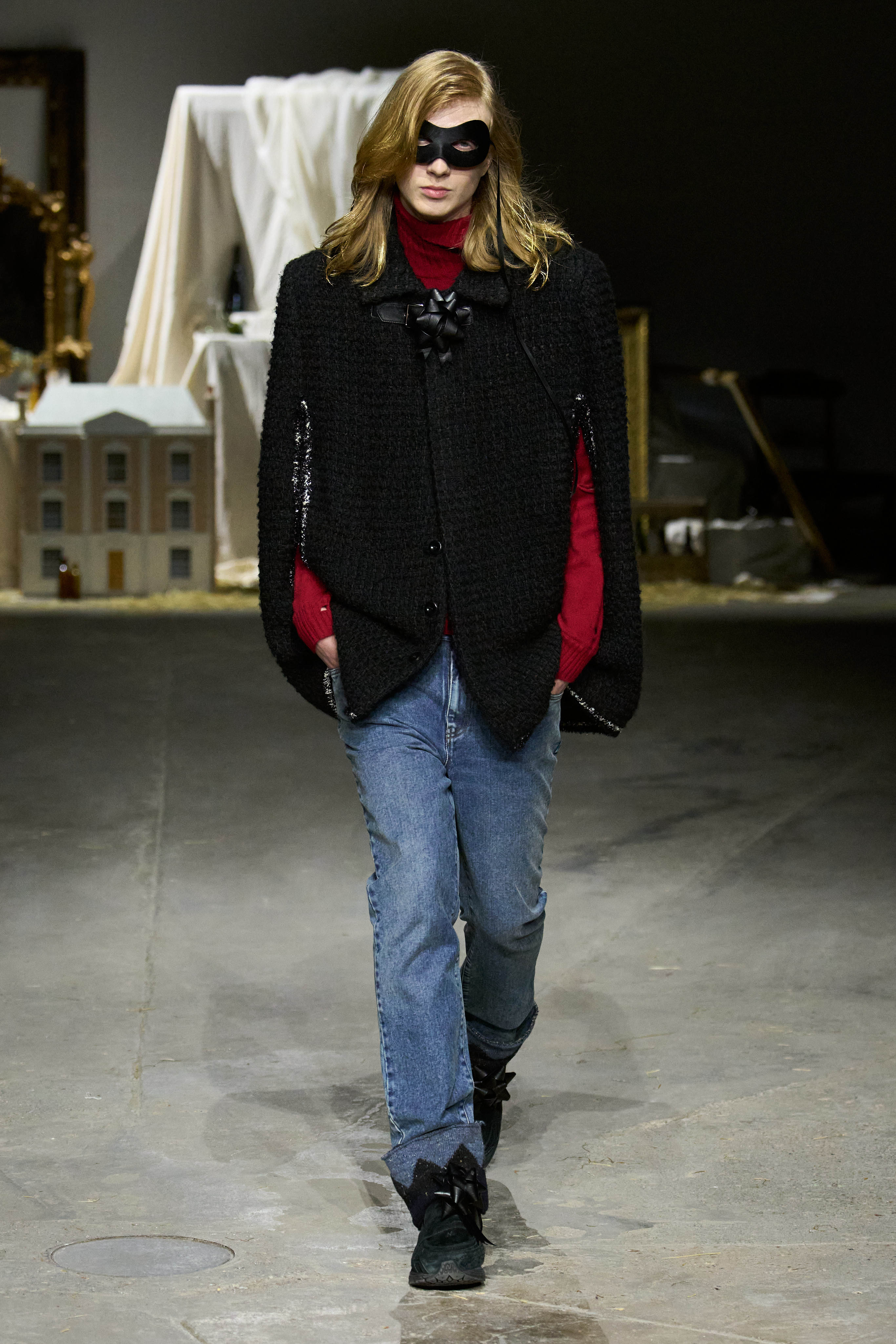
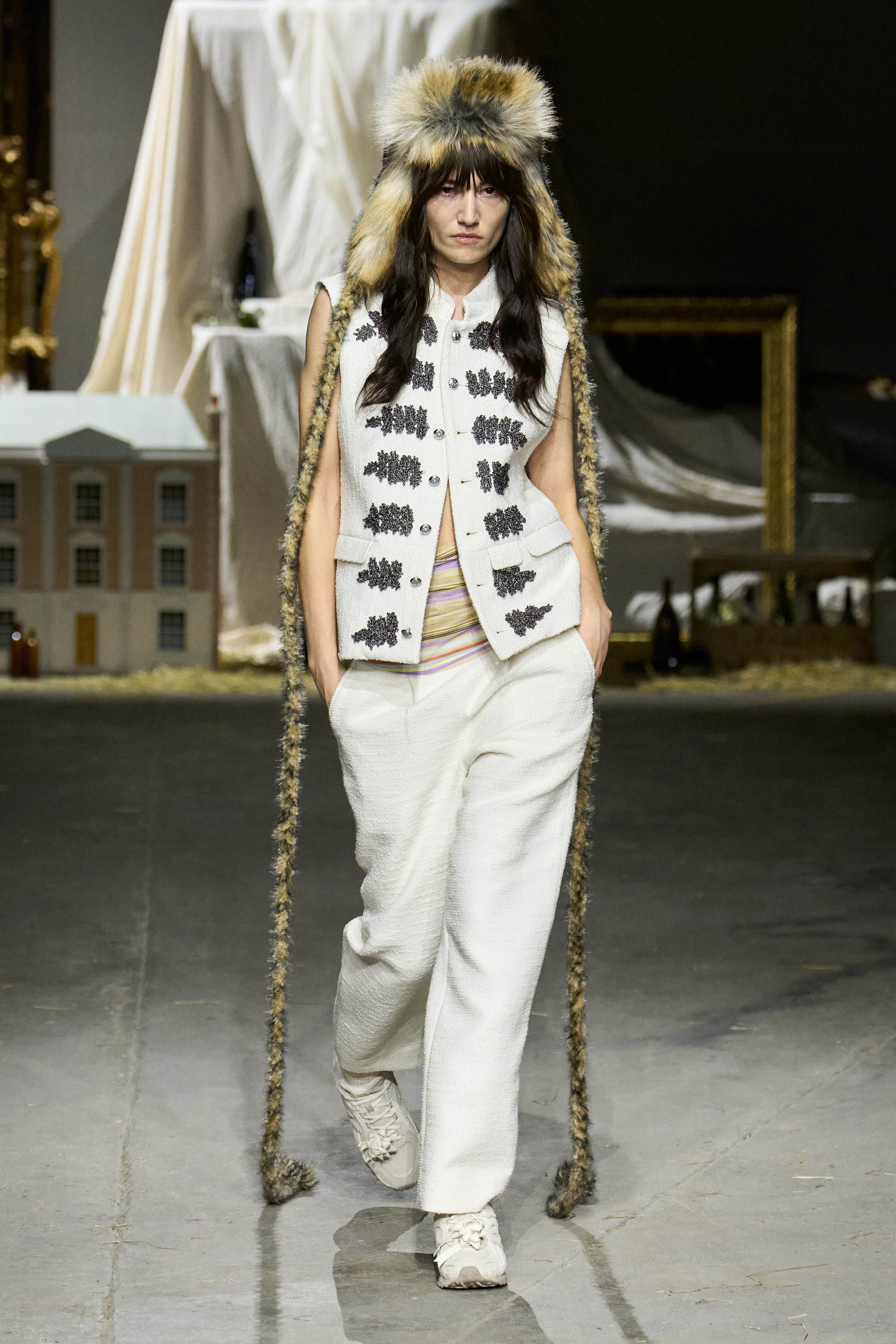
And yes, he does have a celeb posterboy (and girl) in mind. “I’ve been saying we should get Timothée [Chalamet] to wear us. He’s that kind of cute, grungey boy,” says Oscar. “It’s definitely a bit harder for me to find an existing male [star] to wear the clothes because everyone’s quite buff, built and muscular right now. It’s about finding someone a bit more androgynous.” He pauses for a moment. “I would love Hunter Schafer.”
Certainly, Oscar’s world has become a global enterprise, and he confirms business is stable. The label’s co-founder, Yibo Chen, is based in Shanghai and oversees the financial side of operations, while Oscar recognises the importance of maintaining a presence in Paris. “That’s where the market is,” he says. Still, the pull of London – a hotbed for emerging talent and tight-knit creative communities – has kept him rooted there since arriving in the UK a decade ago to study. Now, he’s not only dressing that community, but firmly part of London’s dynamic NewGen cohort, helping keep the city’s fashion landscape on its toes – and, he’s far from easing up.

