
Paris Fashion Week AW26 is big on statements, not subtlety

Jonathan Anderson turns a garden into a Dior runway, Vaquera experiments with unhinged ’60s-inspired shapes and Hodakova finds (more) ways to make garments out of furniture.
Style
Words: Eni Subair
Paris, we’ve finally arrived at our final fashion week stop, and things haven’t run out of steam just yet. Julie Kegels brought the theatrics, courtesy of her considered approach to ready-to-wear – philosopher Martin Heidegger was one of many inspirations this time around. Silk linings and quilted coats complemented pastel-pink pyjamas; raw-hem dresses were paired with makeshift ballet flats; cut-out eye masks worked in tandem with contrasting shirt and knit pairings. Gloves were cropped, cutting off above the wrist, while the end of the collection presented fine, sheer draping with zig-zag patterned tights, high boots, and sculptural dresses.
At Hodakova, the eccentricity continued (Ellen Hodakova Larsson’s MO, some might say), and wearable furniture stole the AW26 show. A wooden structure took centre stage, as models wore literal chairs as weaved throughout the set. One model carried a piece of glass with a cut-out hold which allowed her to carry it over her shoulder like a Sainsbury’s bag for life; perhaps Hodakova was feeling particularly introspective this season, too, as mirrors were placed at the back of models’ heads so the audience could see themselves reflected as they rounded the runway. Another model even stitched a carpet while sitting on the ground, before standing up and turning it into a makeshift skirt. Need we remind you this all happened on day one?
Inside the Dries Van Noten show, a massive mirror at the back of the vast show space was all the decor needed for a collection boasting florals, longline jackets, intricate knits and flawless layering. Chloe’s paddington bags went large, sheer voluminous dresses had cut-outs and shearling trousers made a cameo. Schiaparelli was as glam as ever, with mainly champagne and muted hues saturating the AW26 line that was all glossy pleats, padded corsetry and figure-hugging tactile coats. At Westwood, it was all garters, oversized hats and glitter. More this way…
Vaquera switched things up


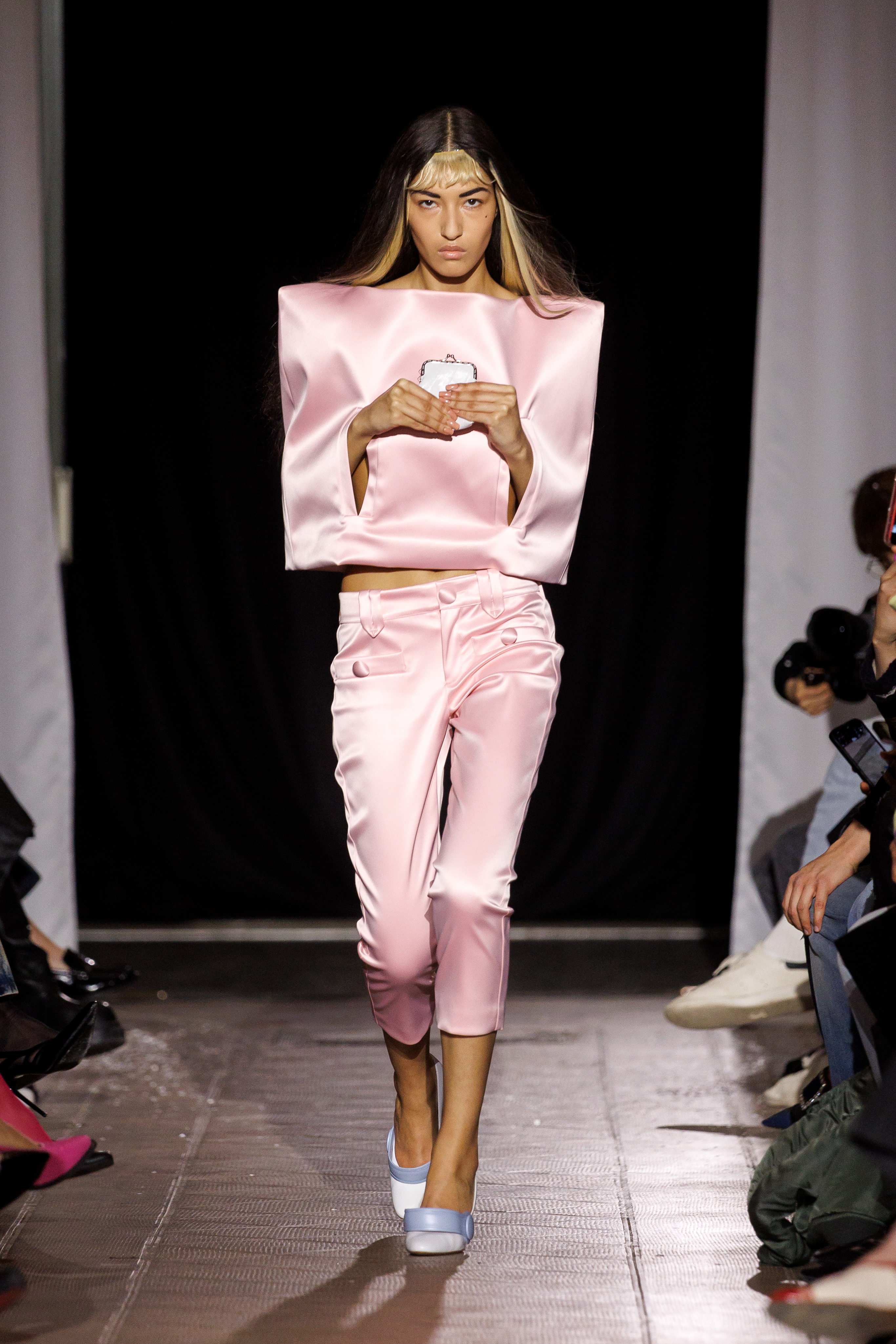
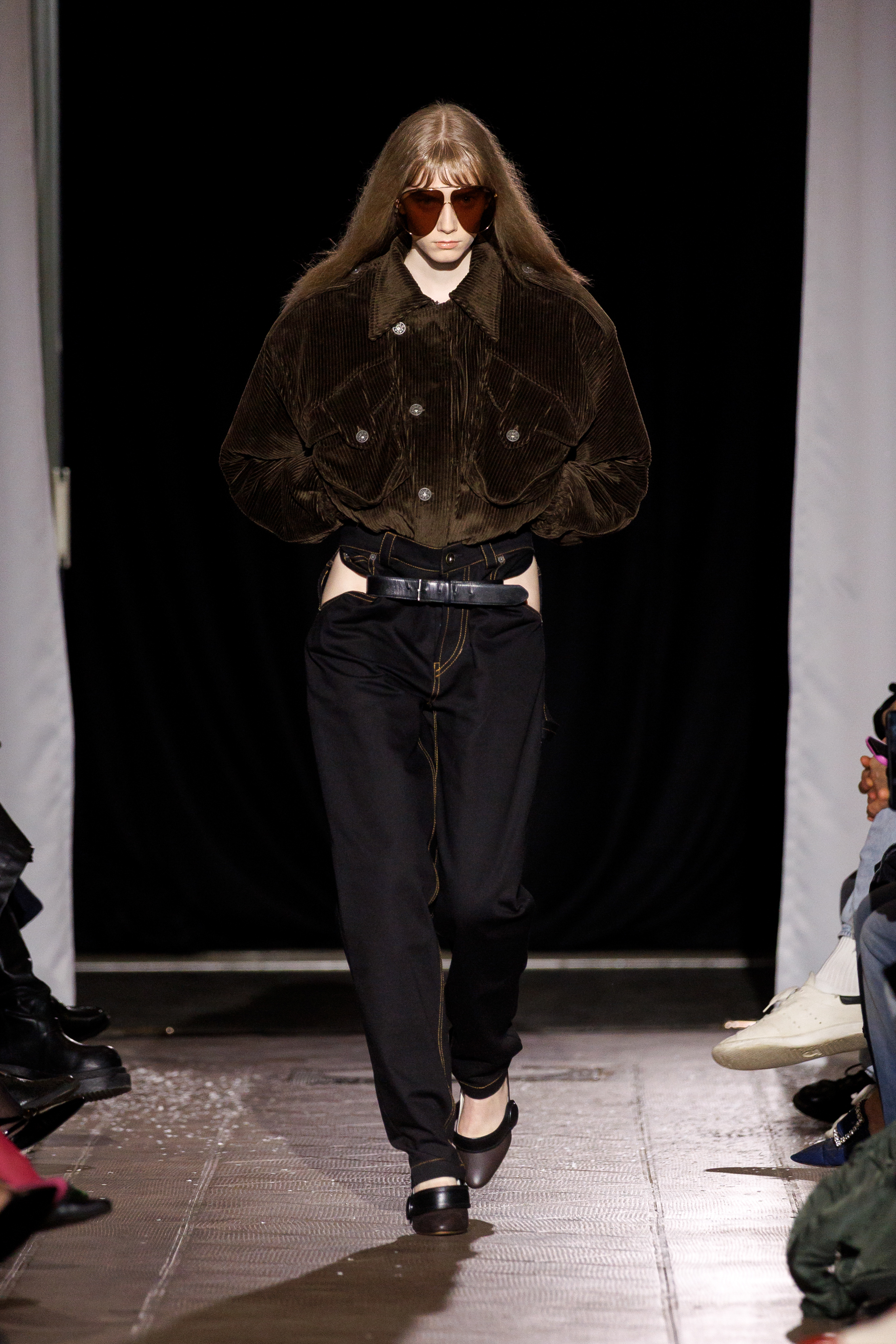
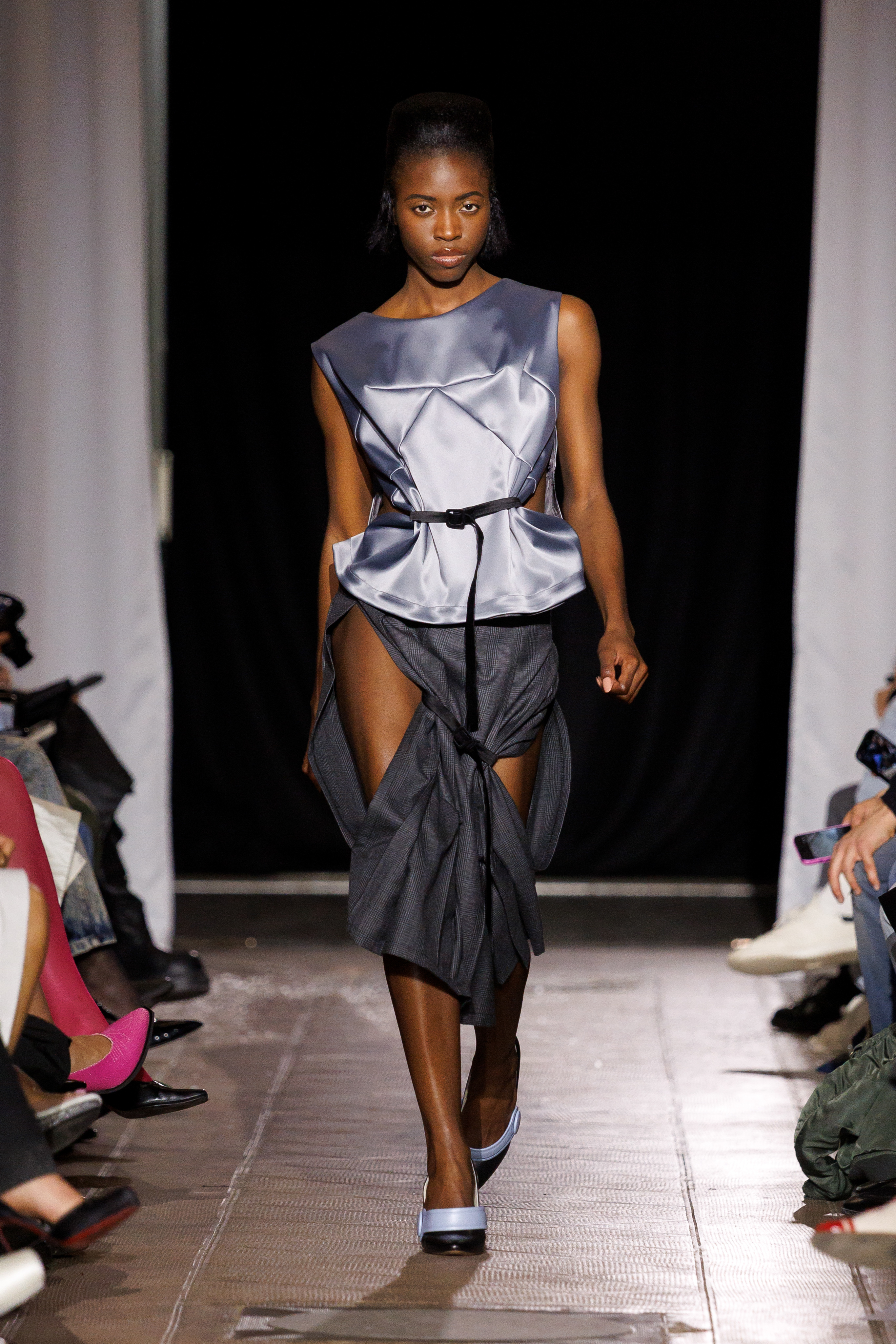
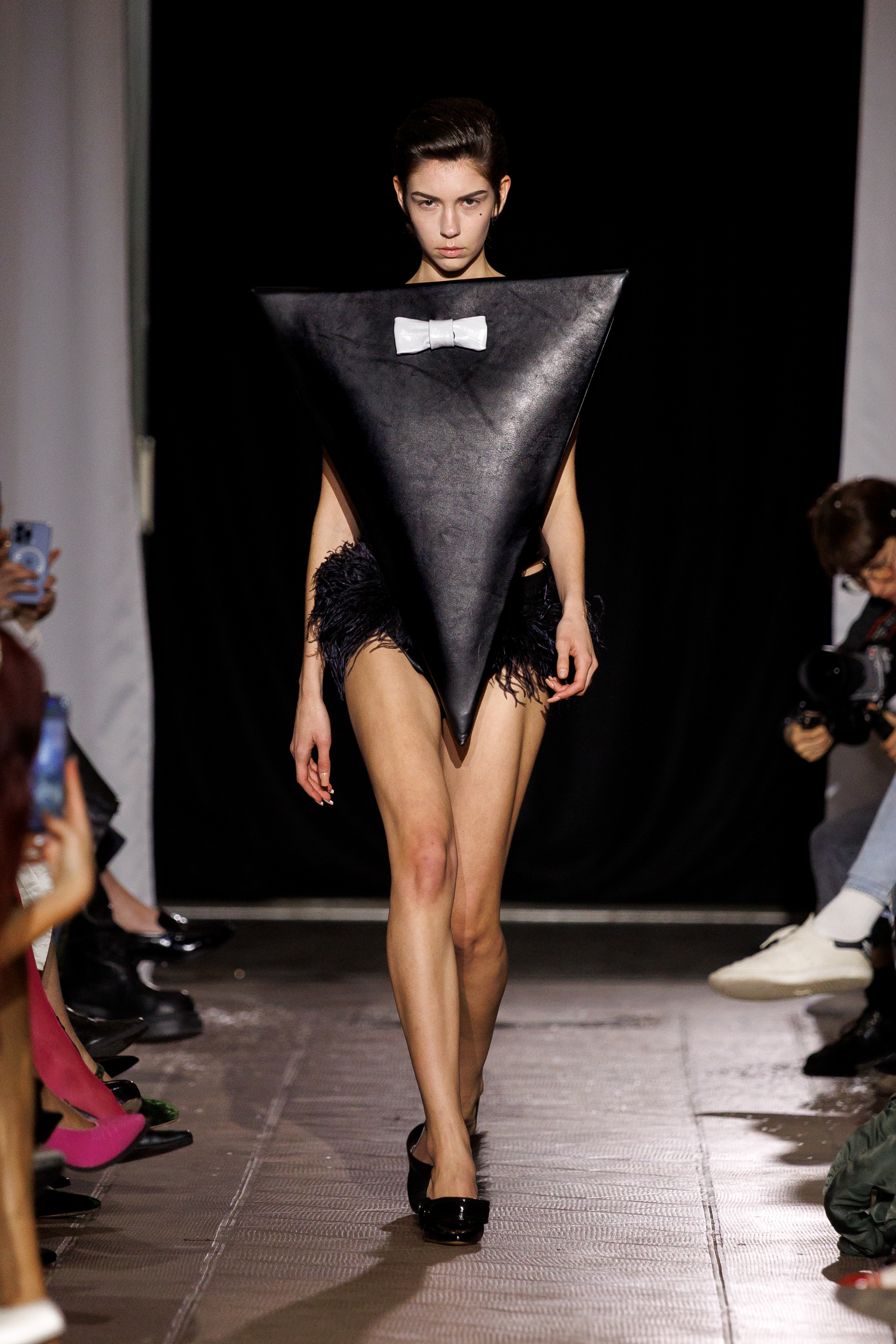
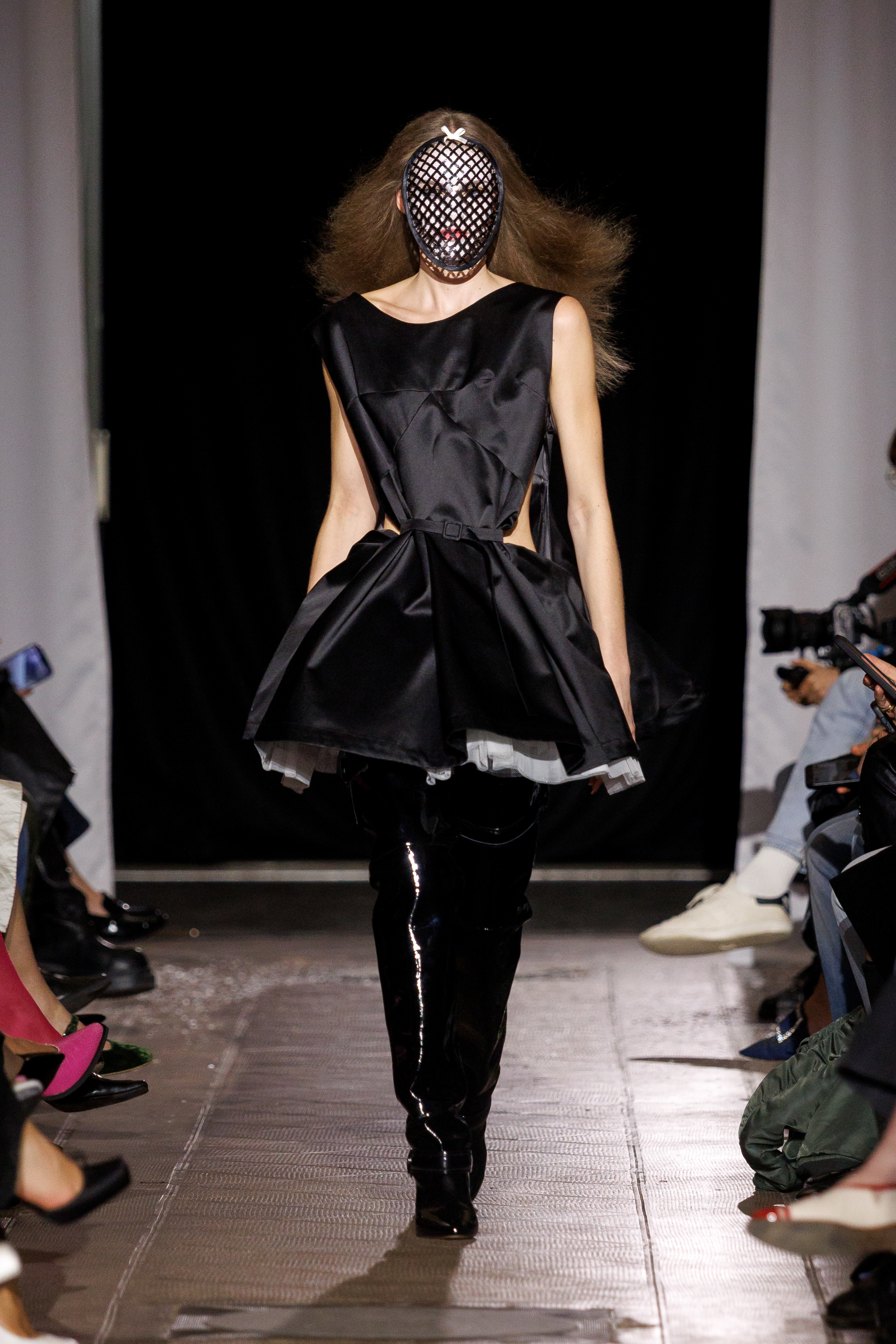
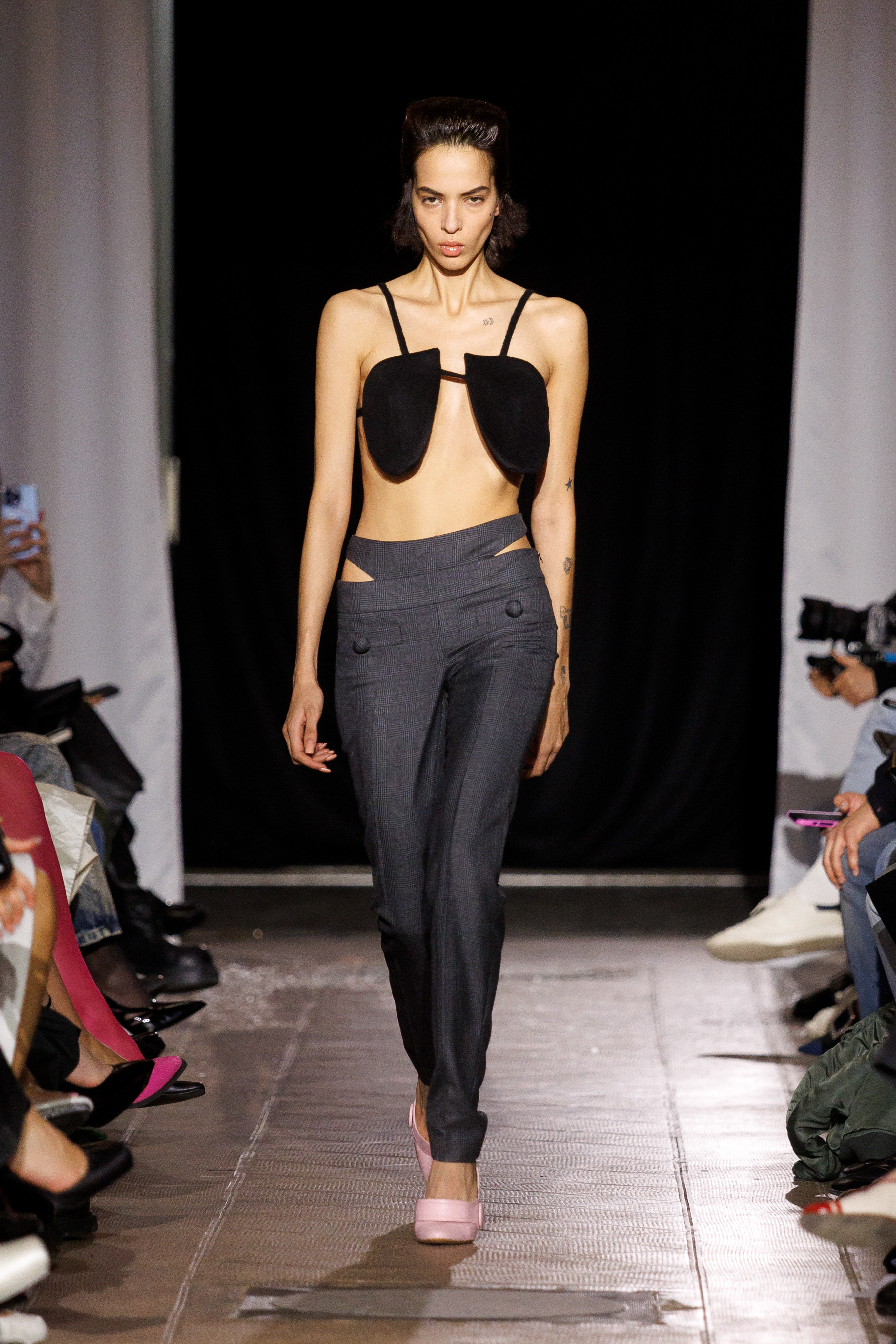
At the Vaquera show, JT of City Girls wore a massive “JT” necklace smothered in twinkling jewels, “Vaquera” emblazoned across suspenders and lucite platform heels. A dramatic outfit, to say the least, but JT was one of the more tame dressers on the front row of the AW26 show. Her seatmate, Ashnikko, wore a blue wig, red lipstick overlining her mouth, spilling across her face and neck, and a negligee-style asymmetric dress and trousers. All that to say: a Vaquera front row is always a good time. Now, onto the clothes.
Staged inside a church, showgoers took up various pews, and a bridal chorus signalled the start of the show. Fittingly a bride opened the show in a dress sprinkled with confetti as she sped down the aisle. Before you could blink, the next model, in a hooded, shrunken cape and a thong appeared with a green heart on her abdomen. Eschewing the ’80s silhouettes that have become a staple of the brand under designers Patric DiCaprio and Bryn Taubensee, it quickly became clear that the ’60s were more of a focus this season. Shapes weren’t voluminous, rather they were flat and neon-hued – pink, green, yellow – while shift dresses were sliced at the sides and ruched. Leather sets were geometric or covered in zips to conceal or reveal, and veils and shields were a core part of the looks.
Dior brought a famous Parisian park to the runway


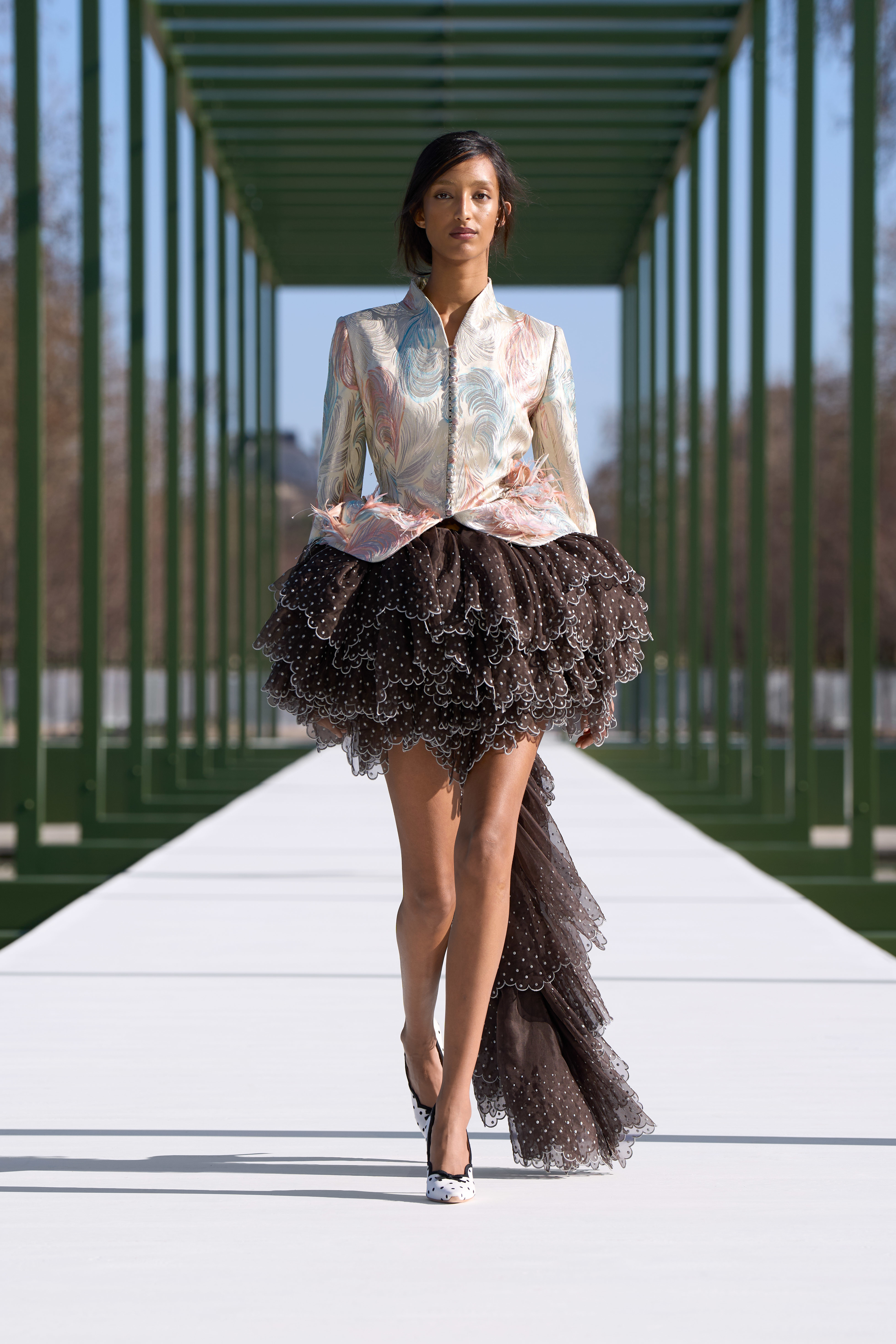
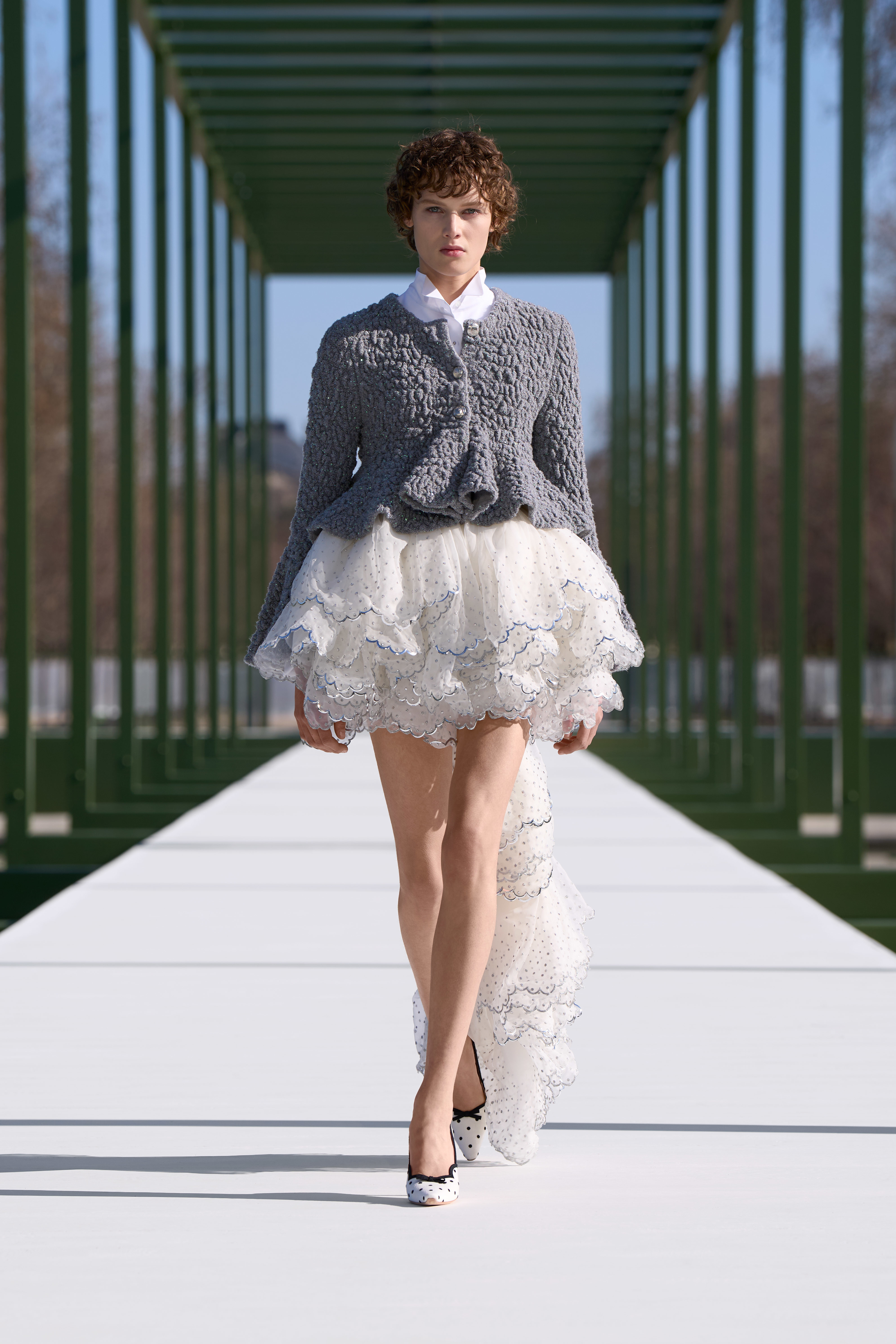
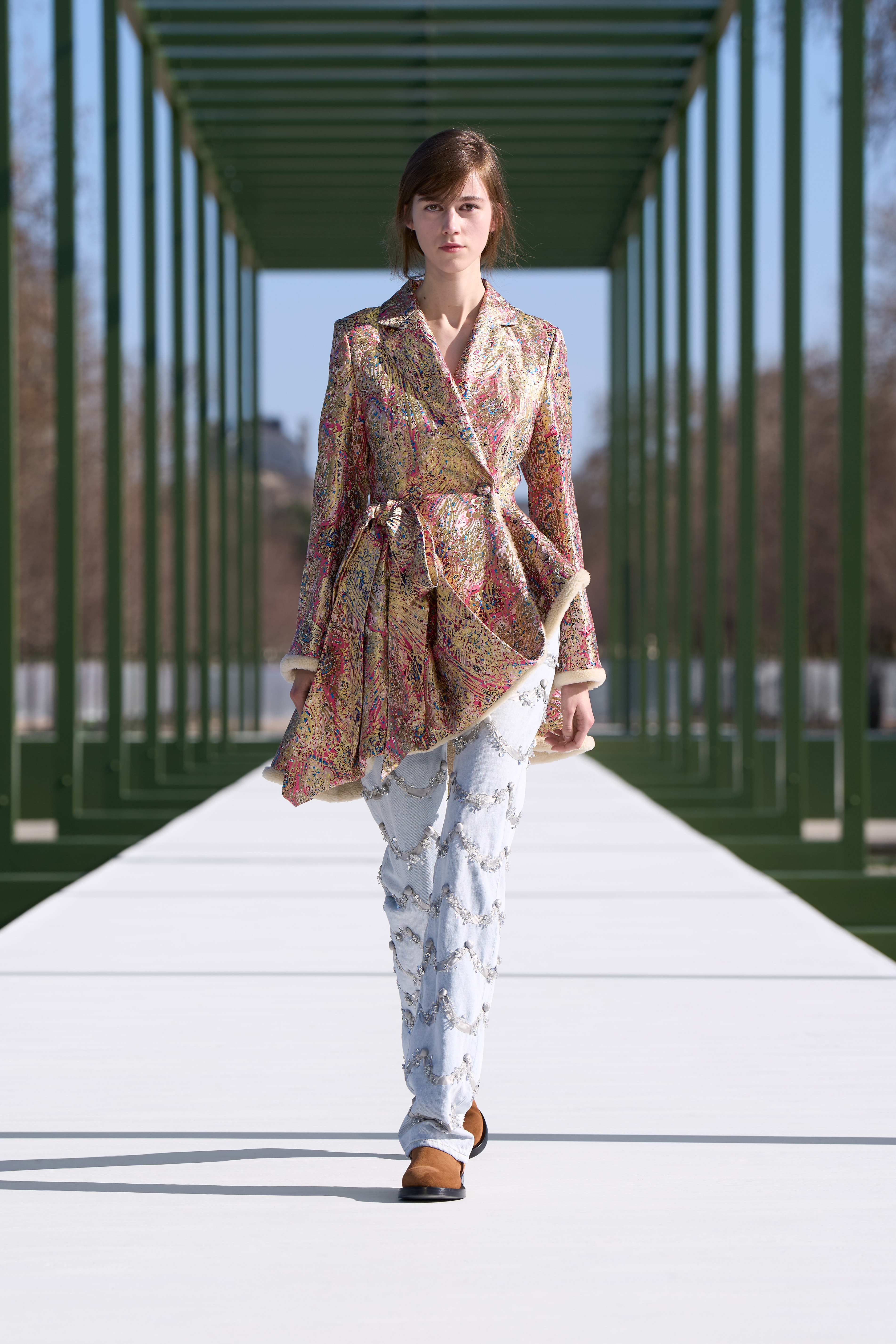
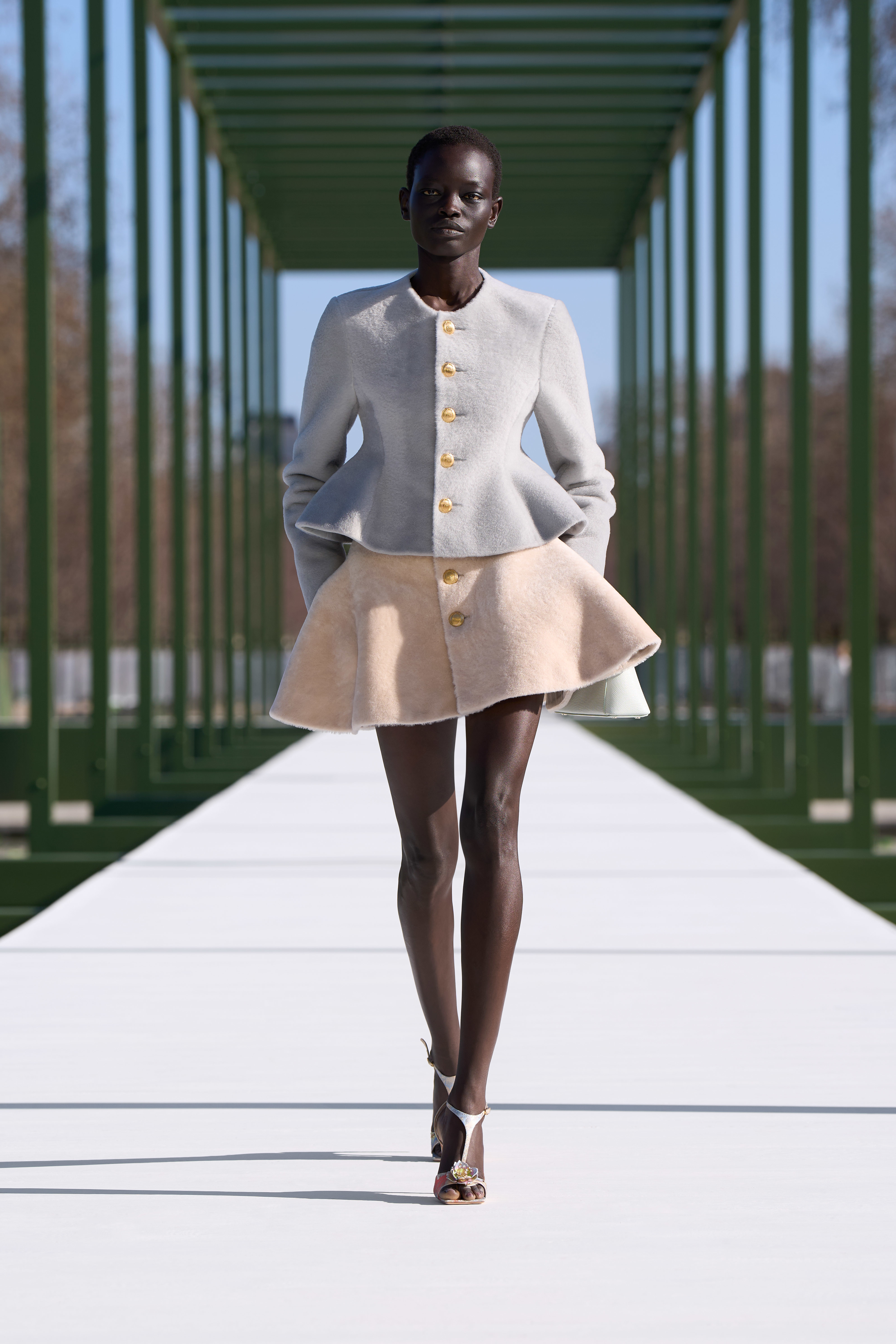
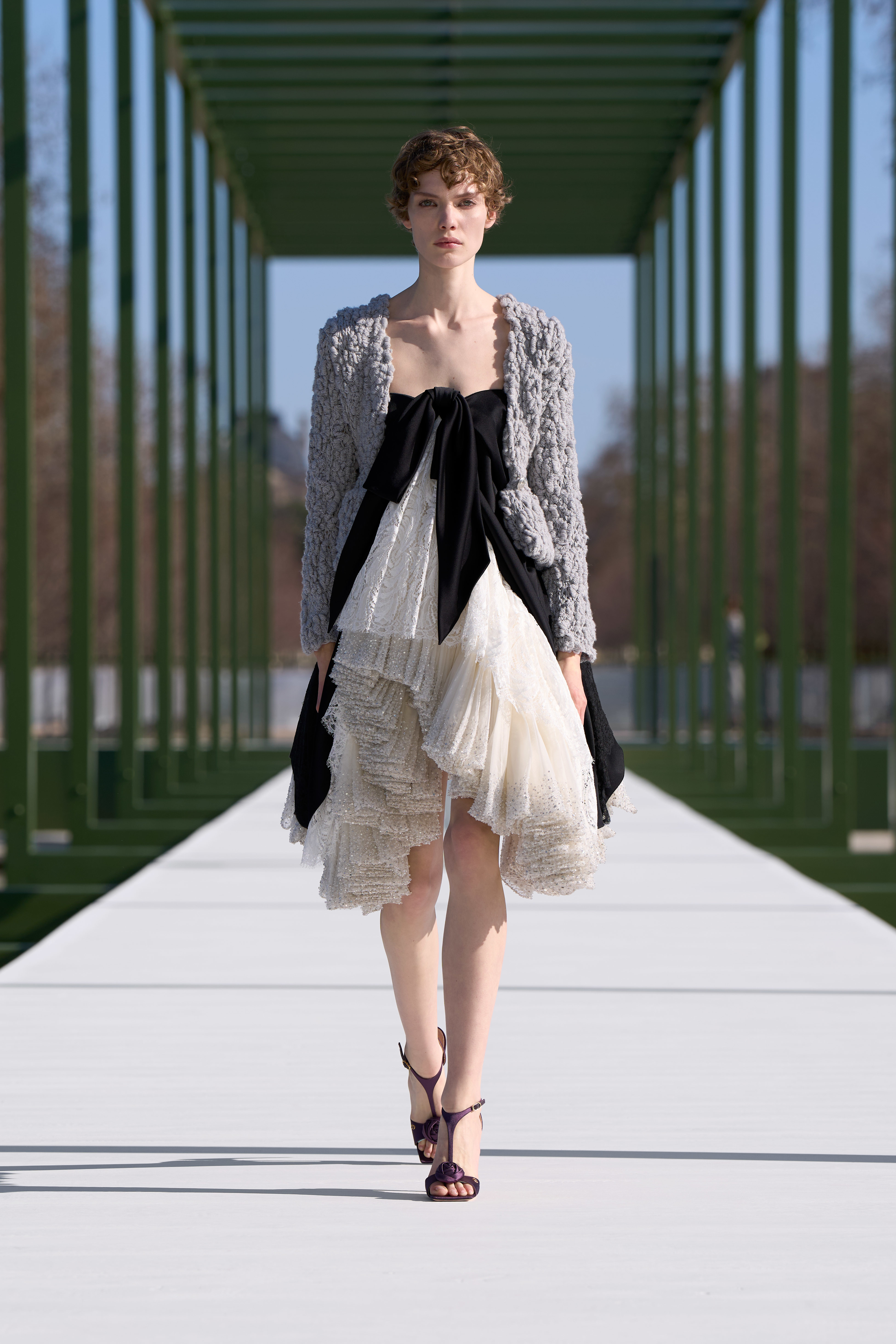
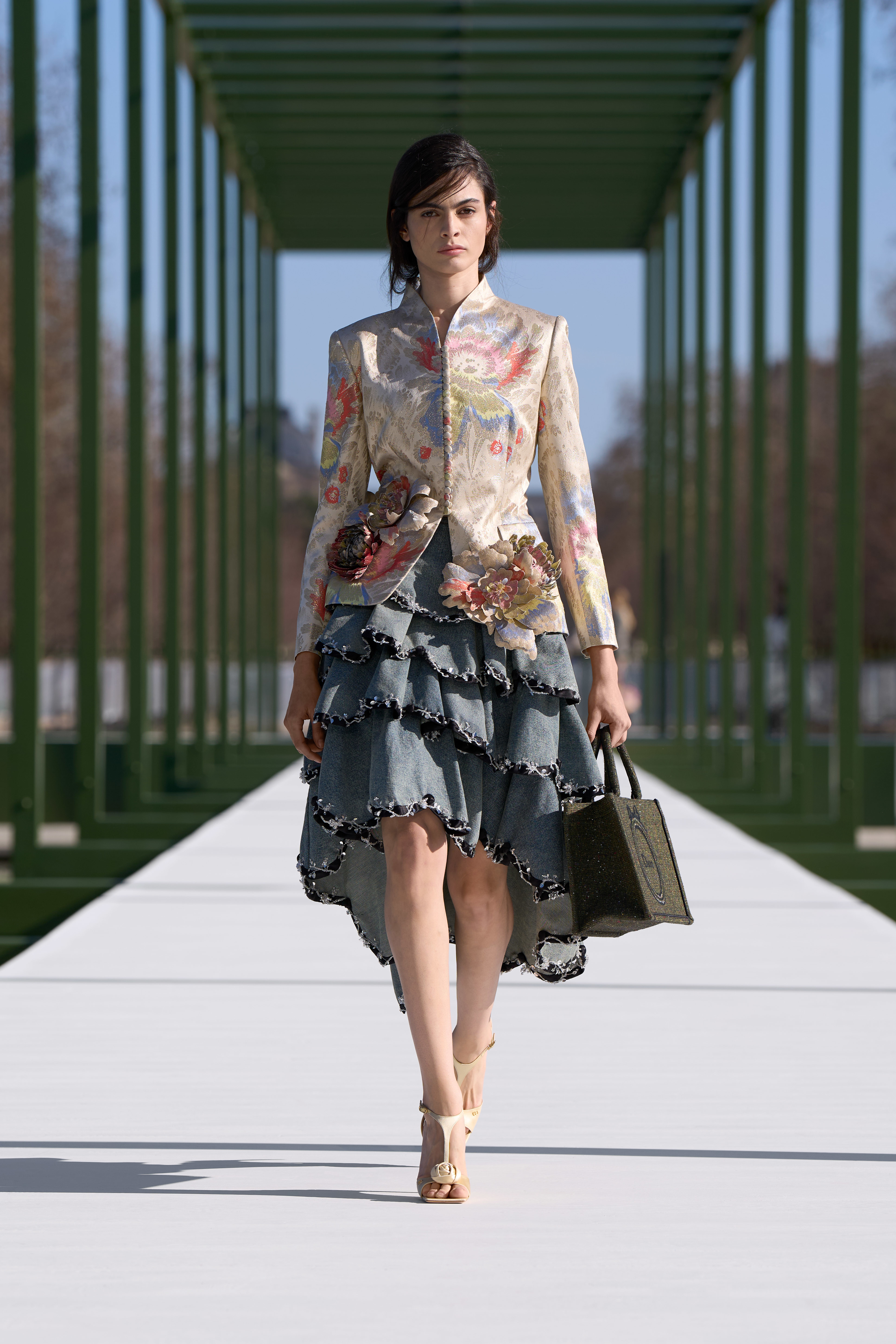
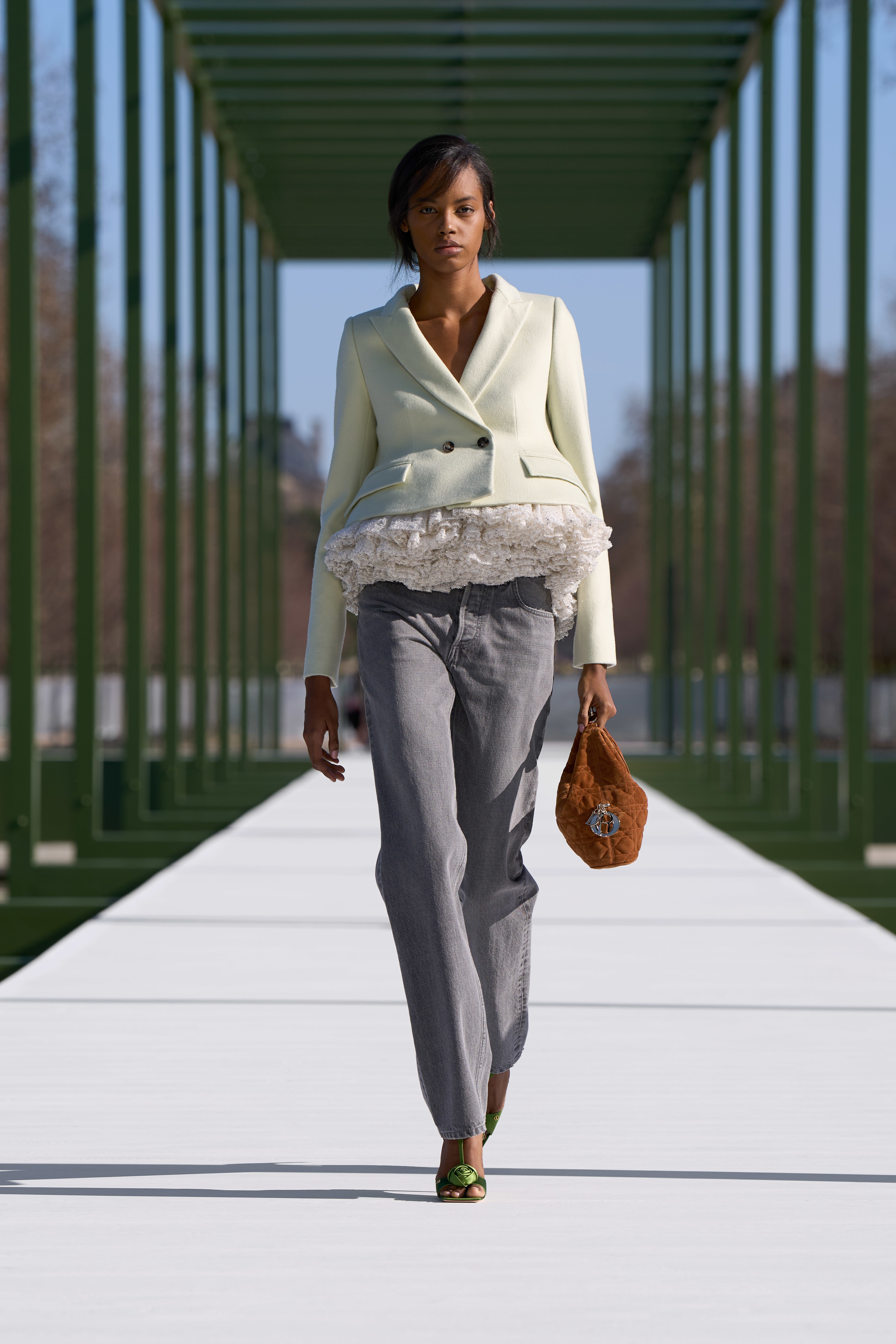
A show invite encompassing the miniature green chairs that inhabit the Jardin des Tuileries was served to Dior guests for AW26. A little clue into the inner workings of Jonathan Anderson’s mind. The distinctive chairs – and legendary park – set the scene inside a glass sculptural building with a pond at its centre, covered in fake water lilies. Door boys saw the crowd outside, which included Love Story’s Paul Anthony Kelly, Anya Taylor-Joy, Willow Smith and Charlize Theron, among others. We spotted Jonathan’s dad, who had some sweet words for his son ahead of the show.
This season, Anderson asked: what do we look like when we’re taking a stroll, whether in a decades-old park in Paris or through your local? What does that look like now? It turns out, nothing less than double jacquard, floral motifs, coats that are both refined yet still fluid in movement, as modelled by Mona Tougaard and Lily McMenamy; heady, decorated jeans, bows, and beading trailing at the end of hems. Take us to the garden, Jonathan.
Acne Studios looks back to celebrate 30 years of the brand


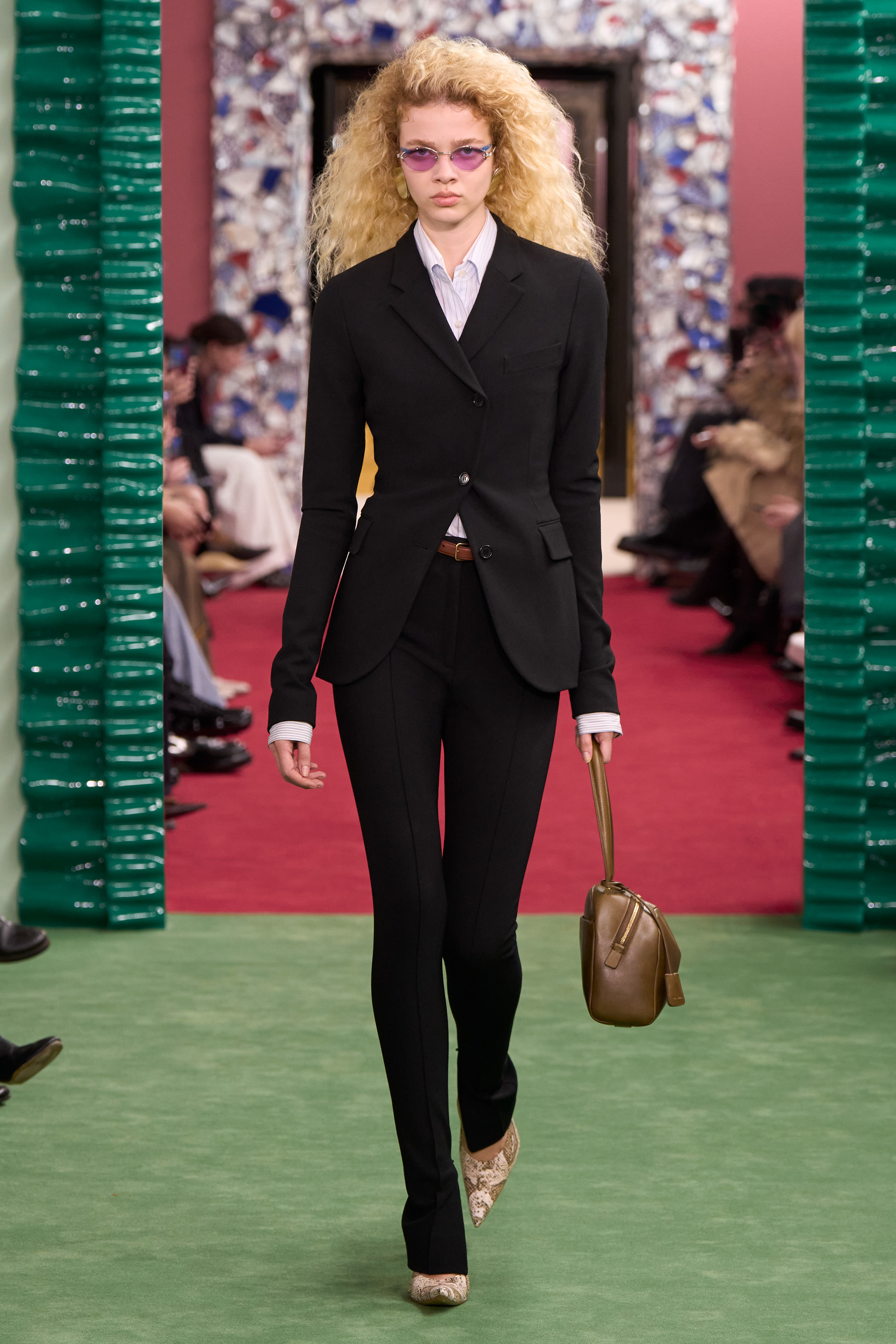
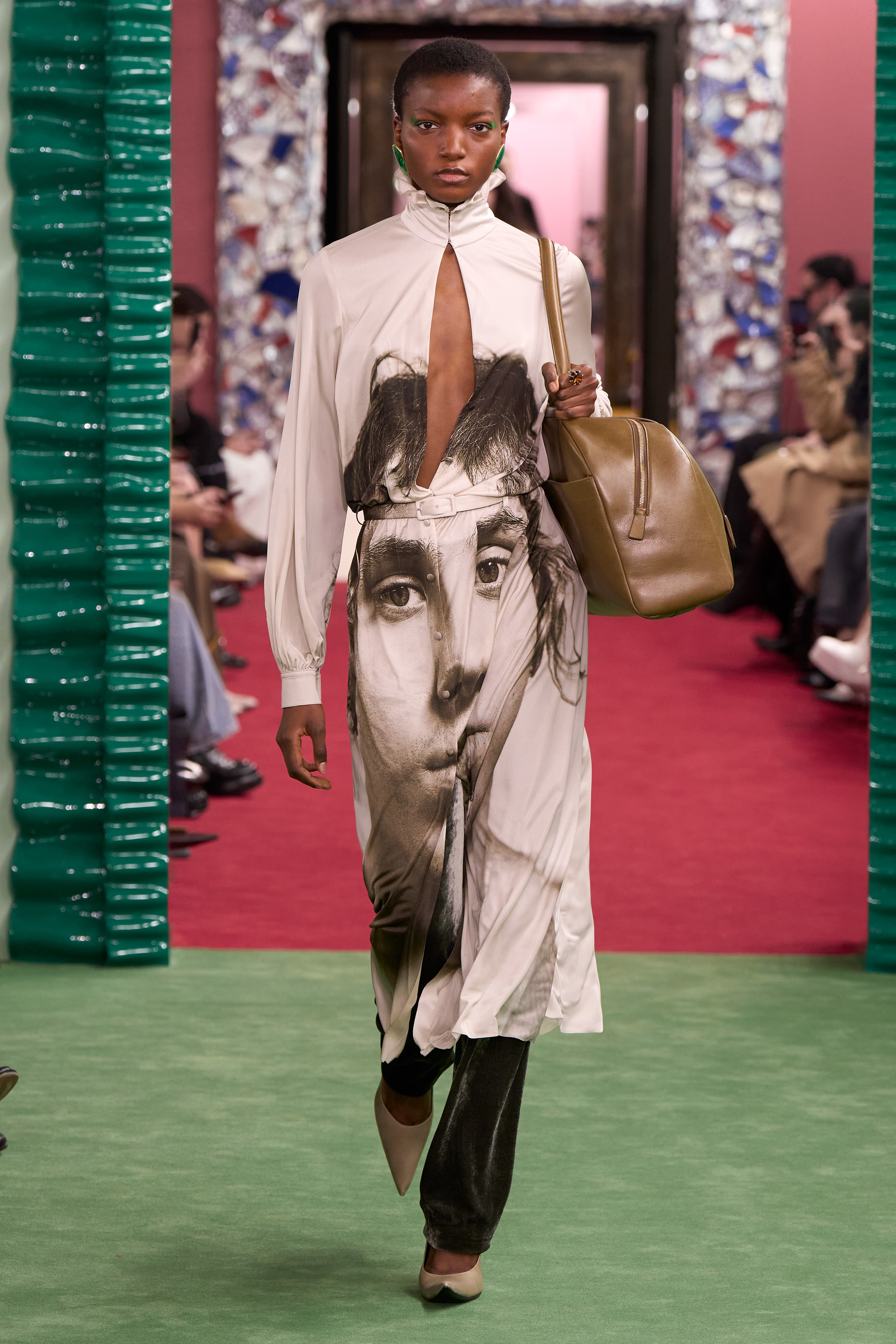
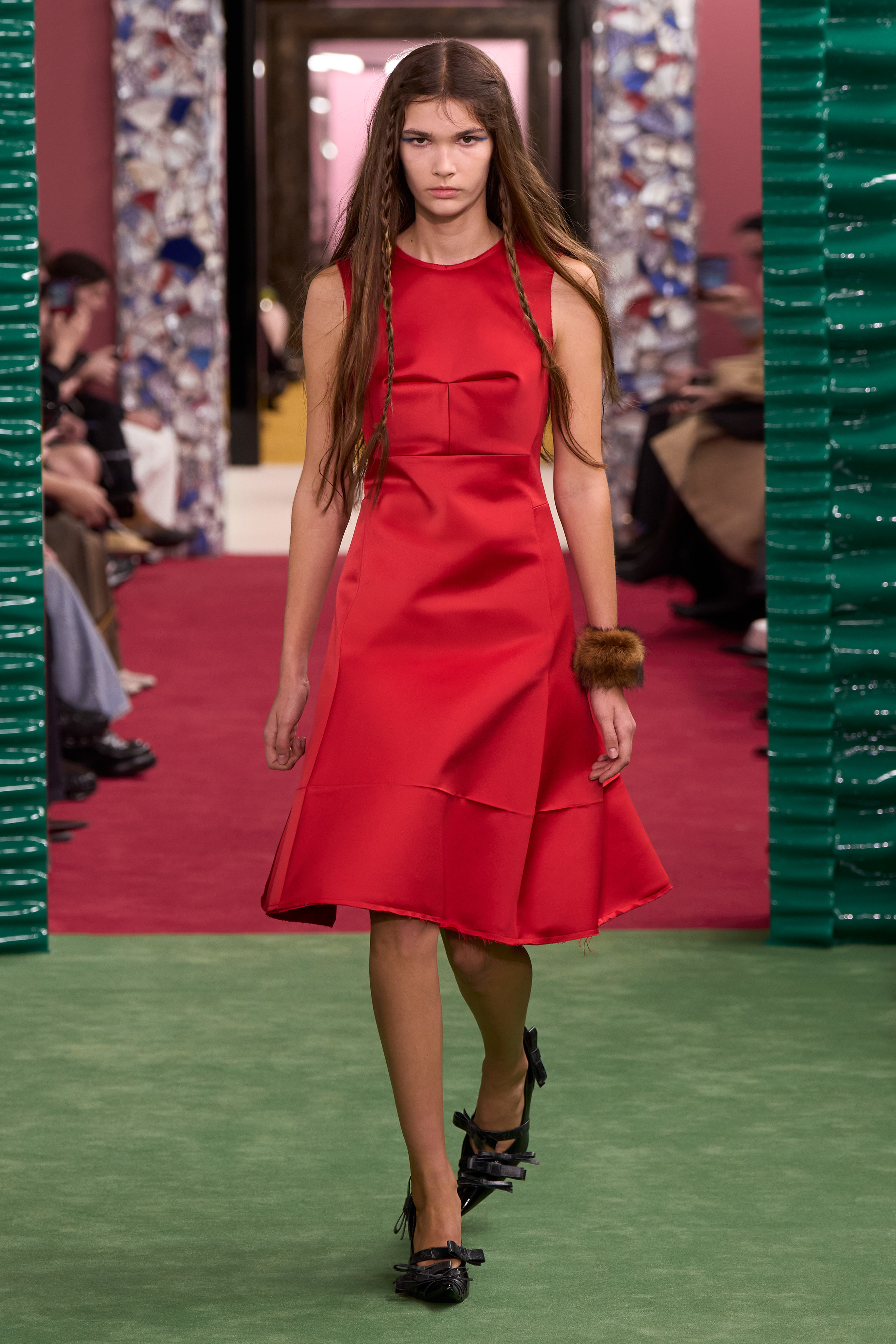
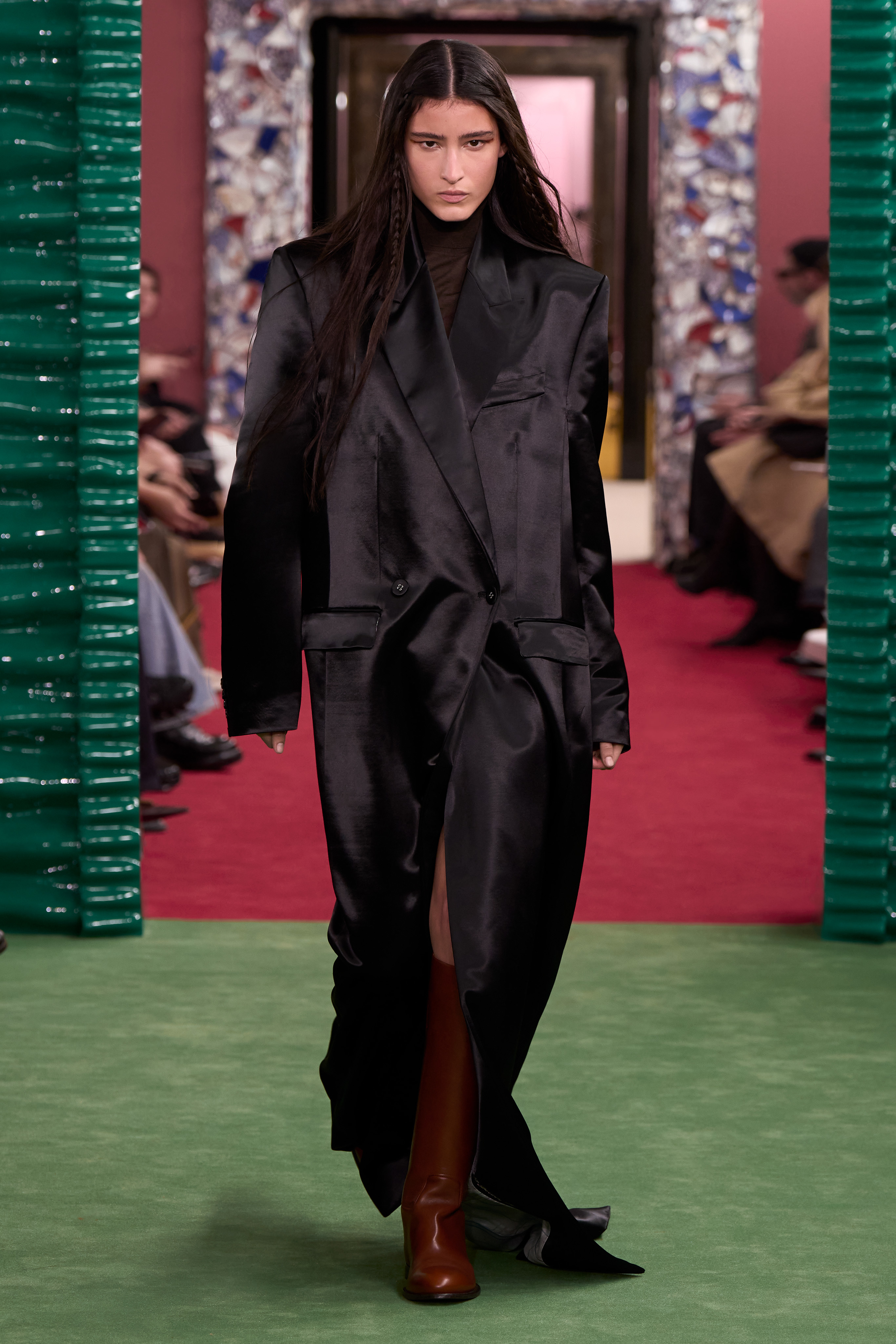
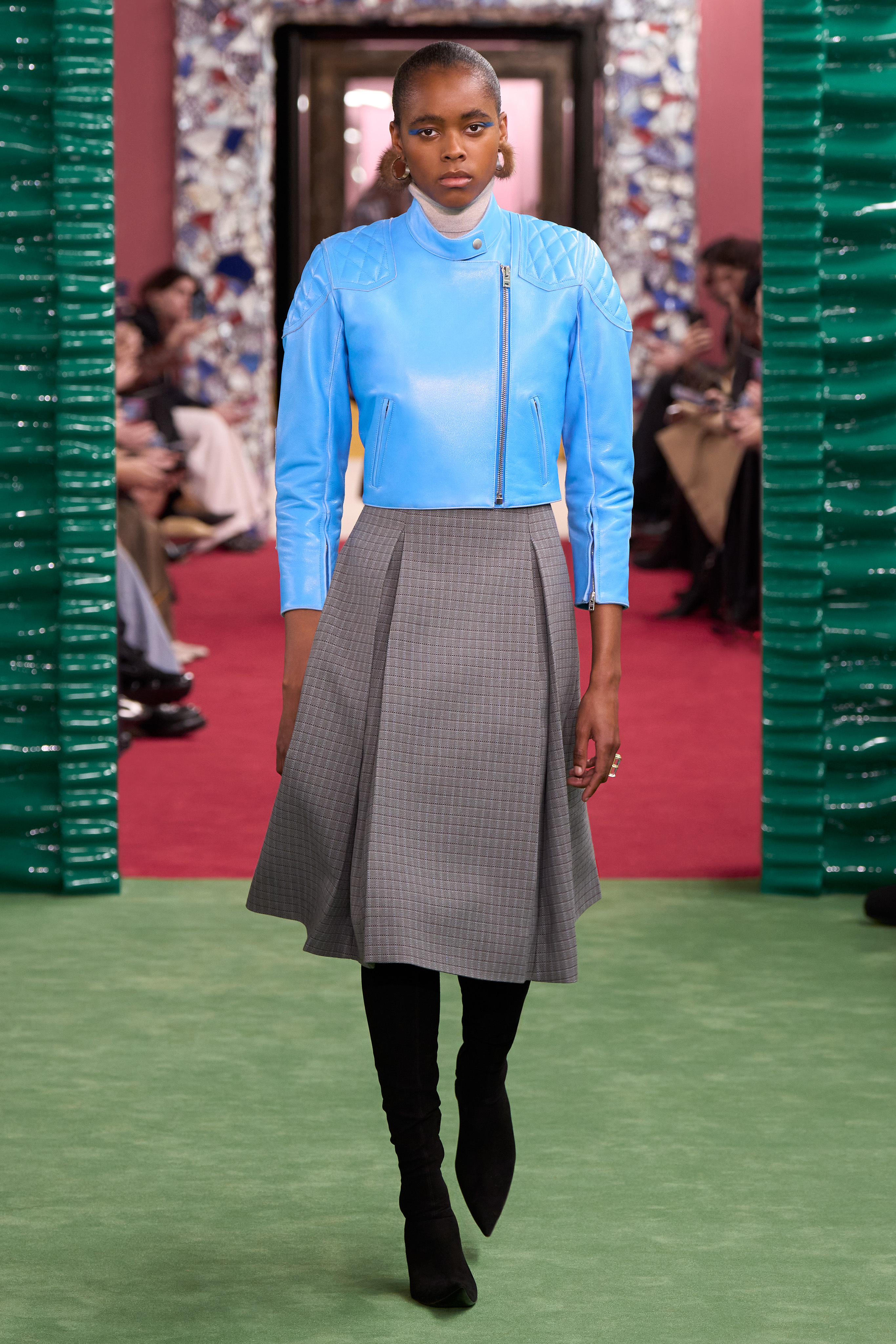
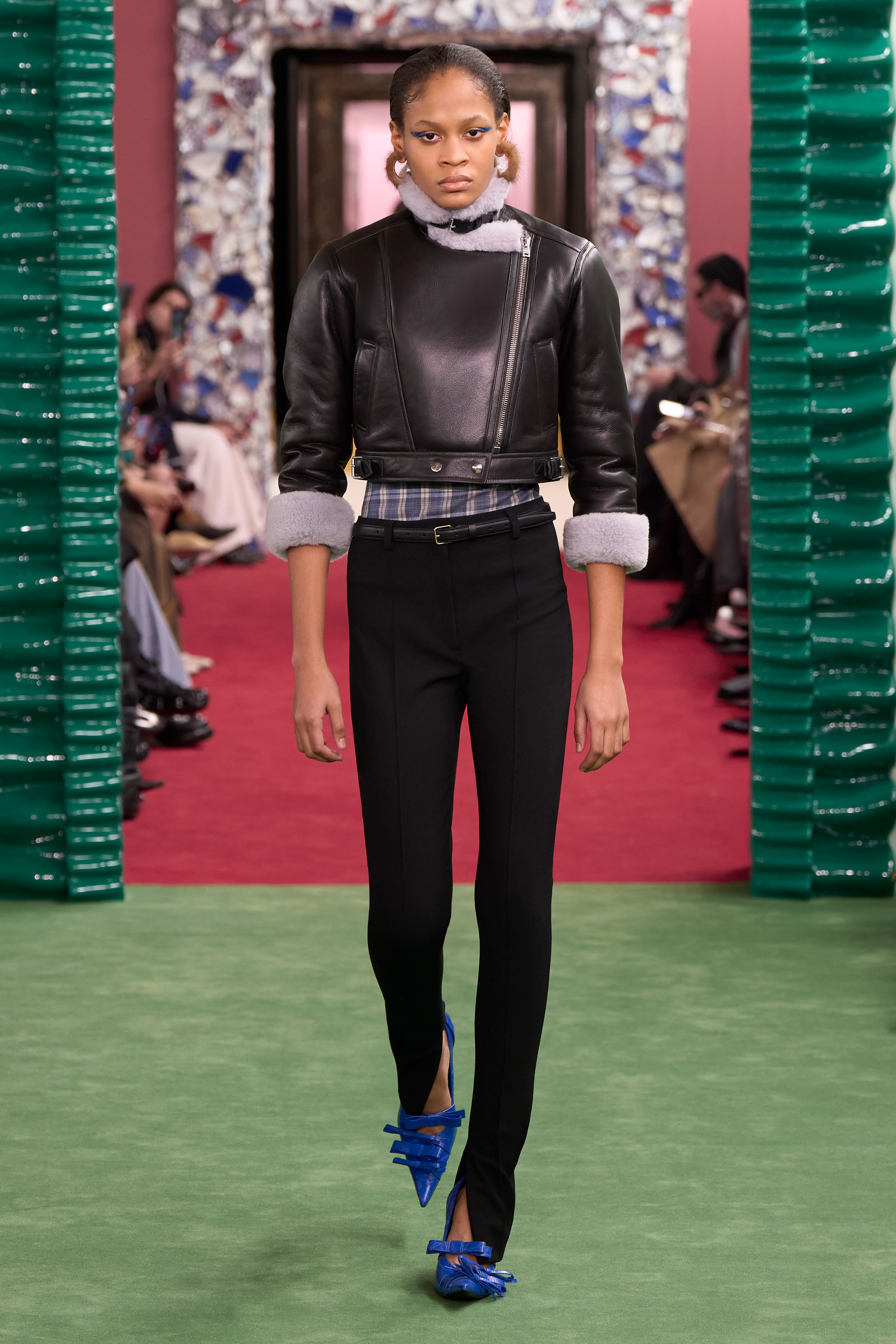
Vivian Wilson turns every which way, posing at the entrance of a doorway-turned-runway, in full Acne Studios, with tinted sunglasses on. She then goes to embrace Brittany Broski. Ravyn Lenae and Peggy Gou chat quietly to each other, and former FACE cover star Chappell Roan walks past in a smoke-grey, corseted lace number with matching gloves. This is the Acne Studios AW26 show.
As I went to find my seat, looking straight down the runway, I saw more doorways – windows into different Acne spheres. Celebrating 30 years of the brand is, naturally, a big deal, and the collection reflected that. Quiet descended on the room as phones swiftly turned, awaiting the first look: a nipped-in suit with a beige bag, then a leather look with electric-blue pointed heels and a bag adorned with buttons. A large espresso bag was paired with boots with faux fur around the top of the shoe. Formalwear trickled through in carmine and brown, with line detailing across the bust. Dresses with prints were layered; earrings were feathered and fuzzy.
Rick Owens finished what he started and Loewe nails sporty-meets-playful


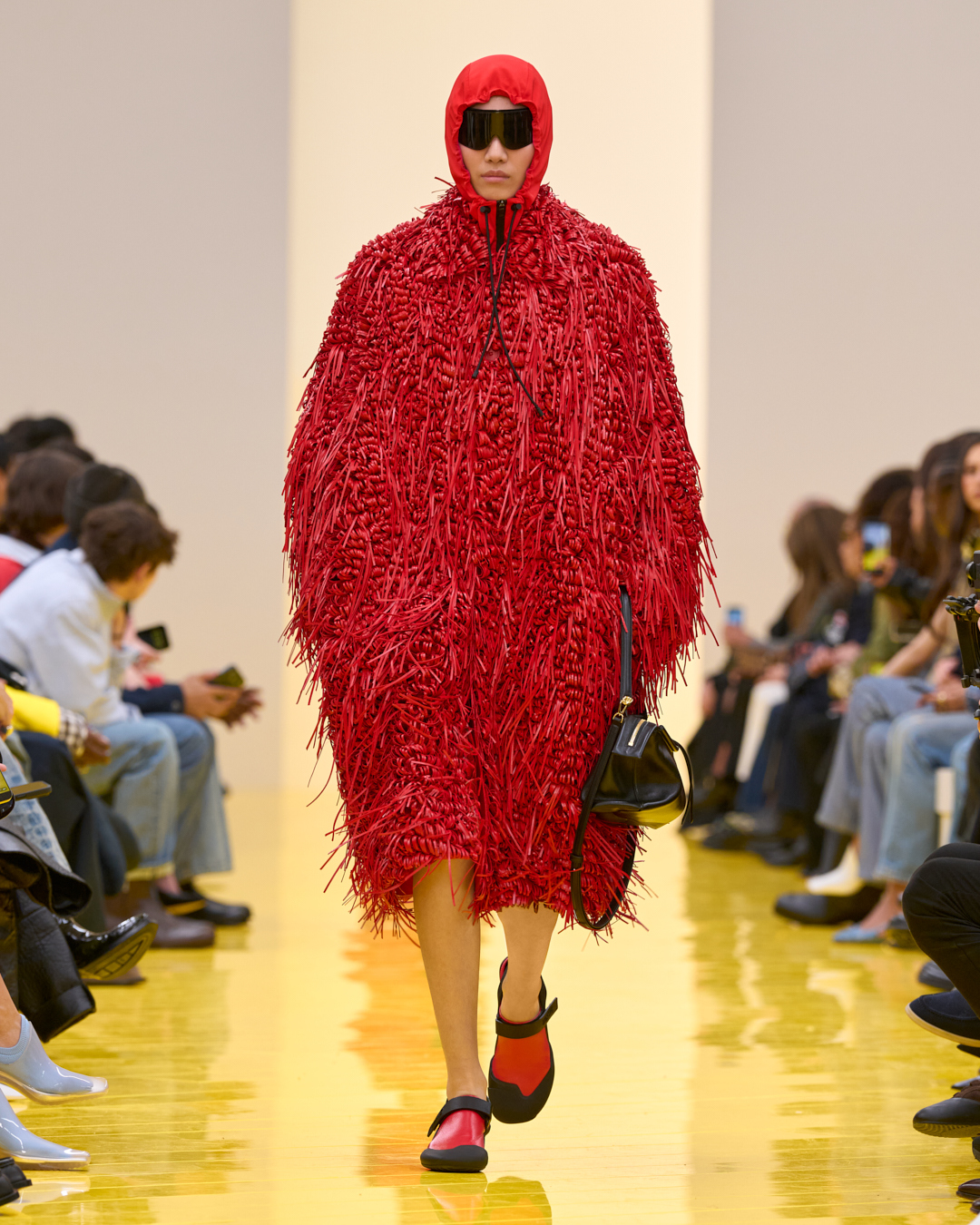
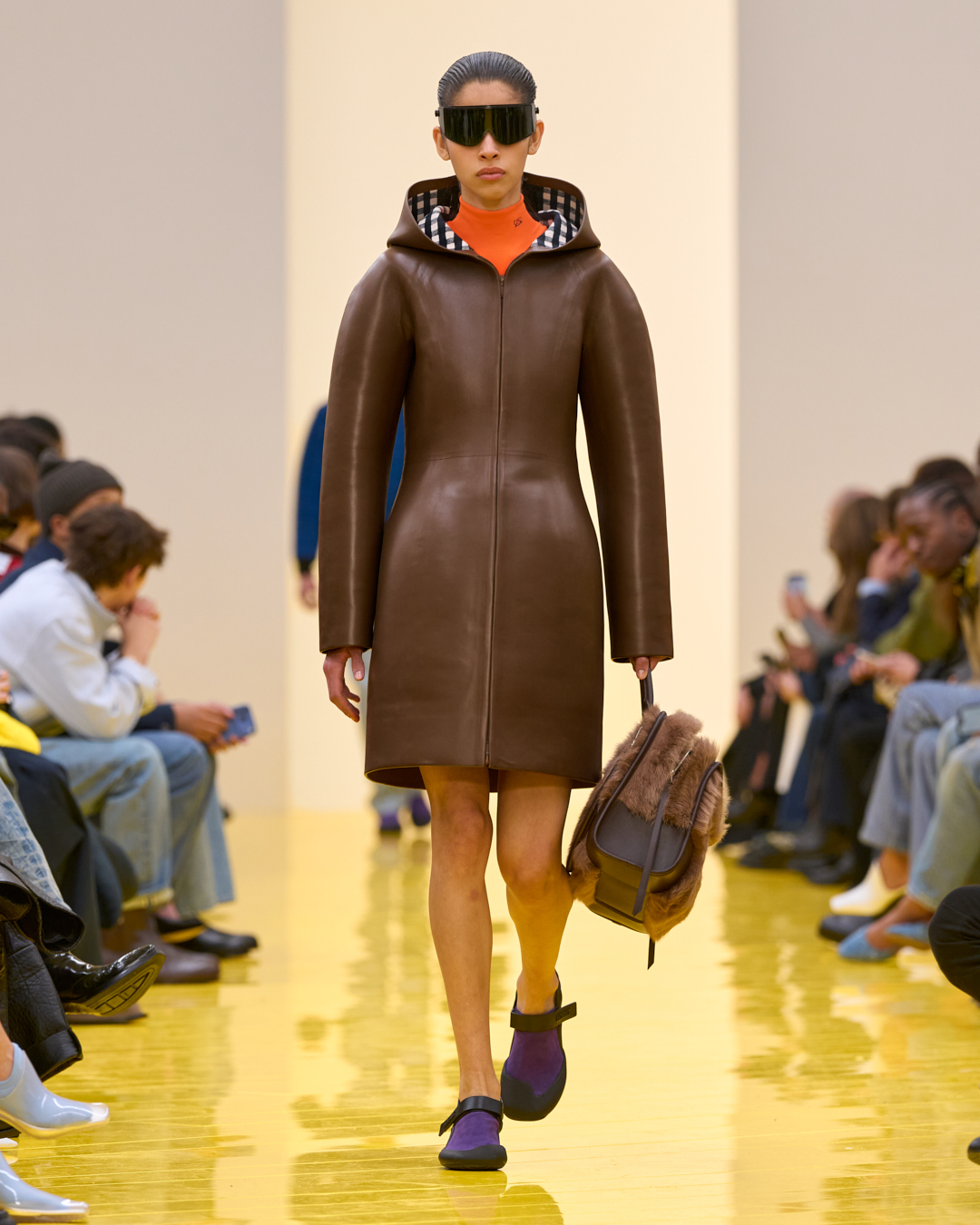
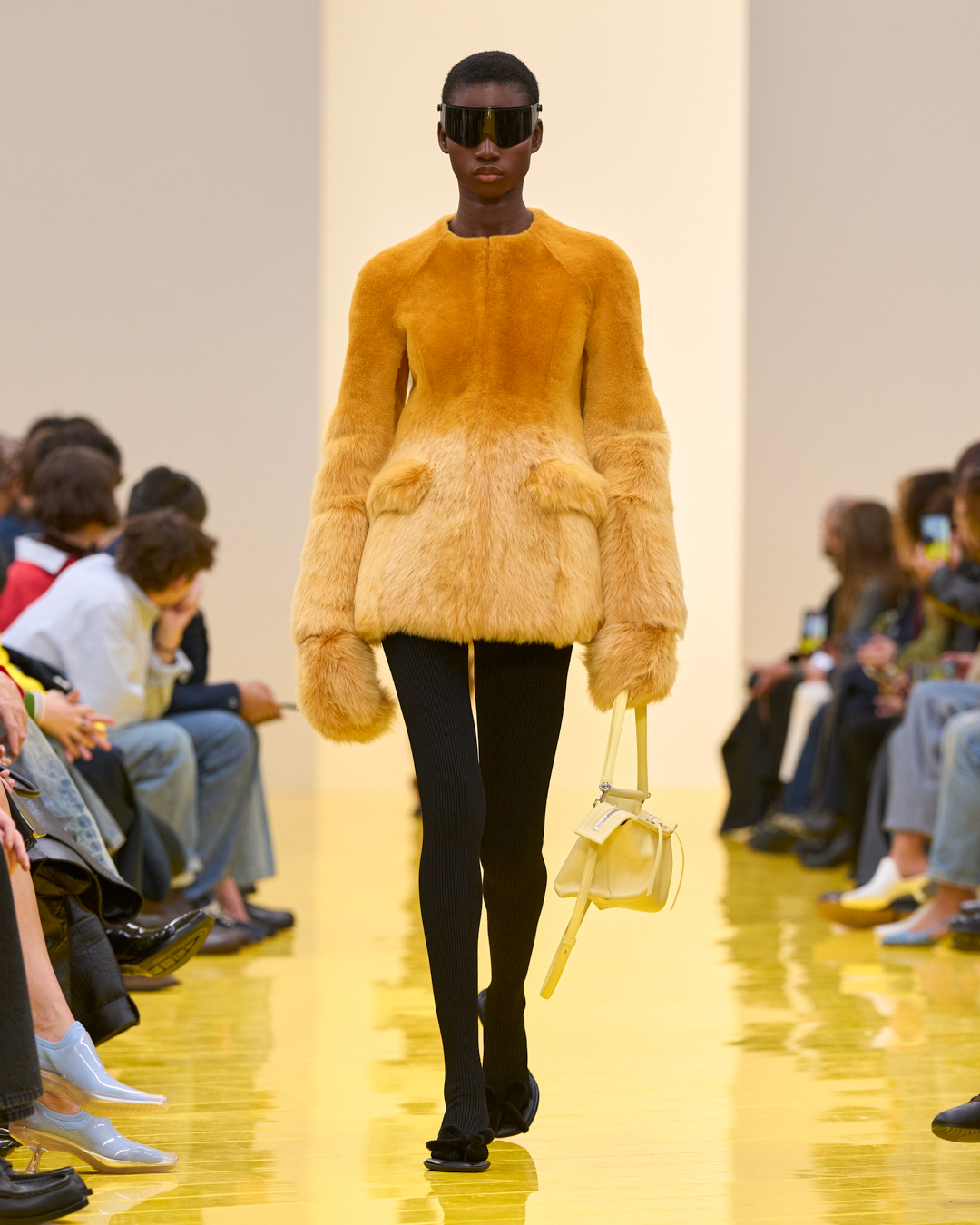
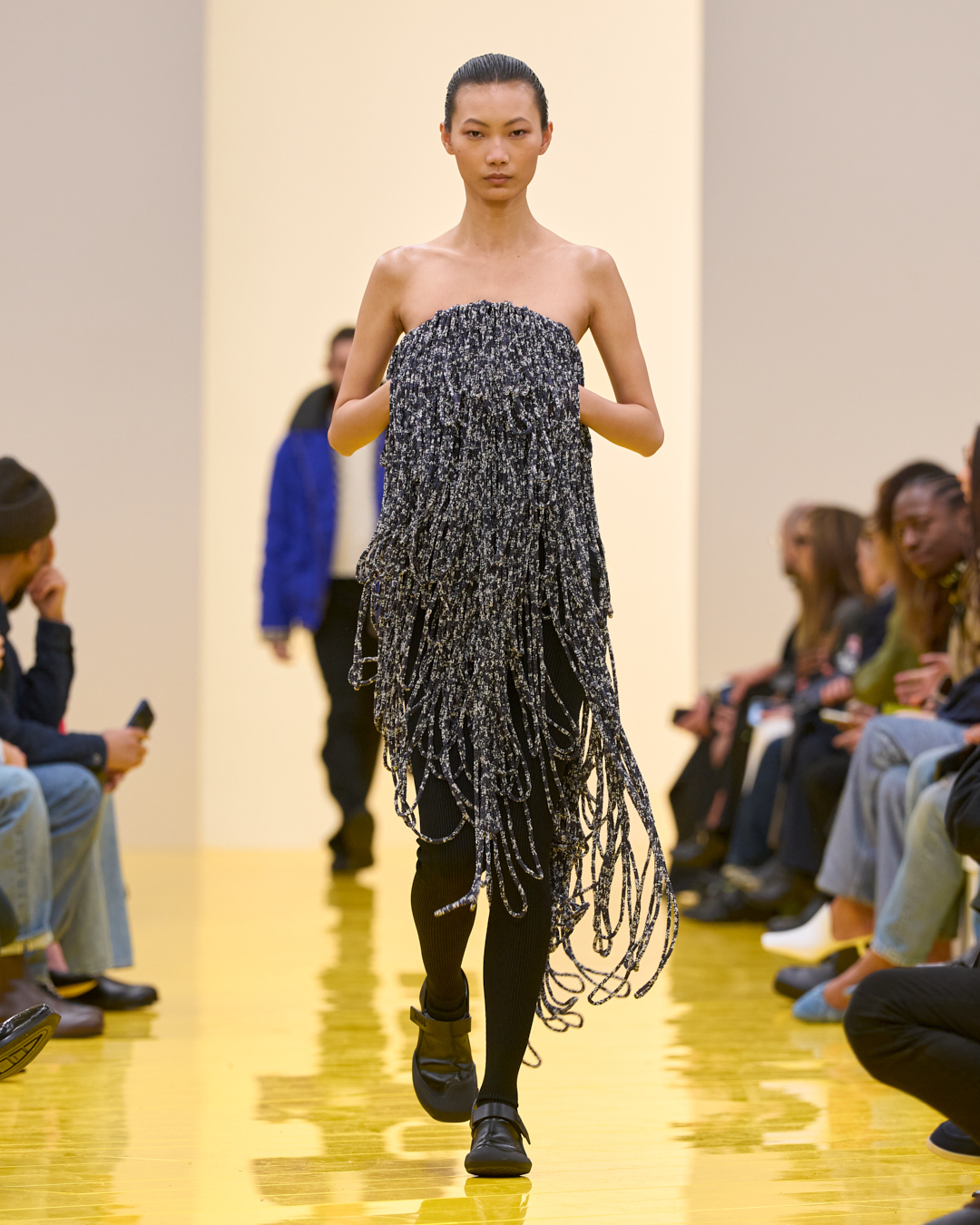
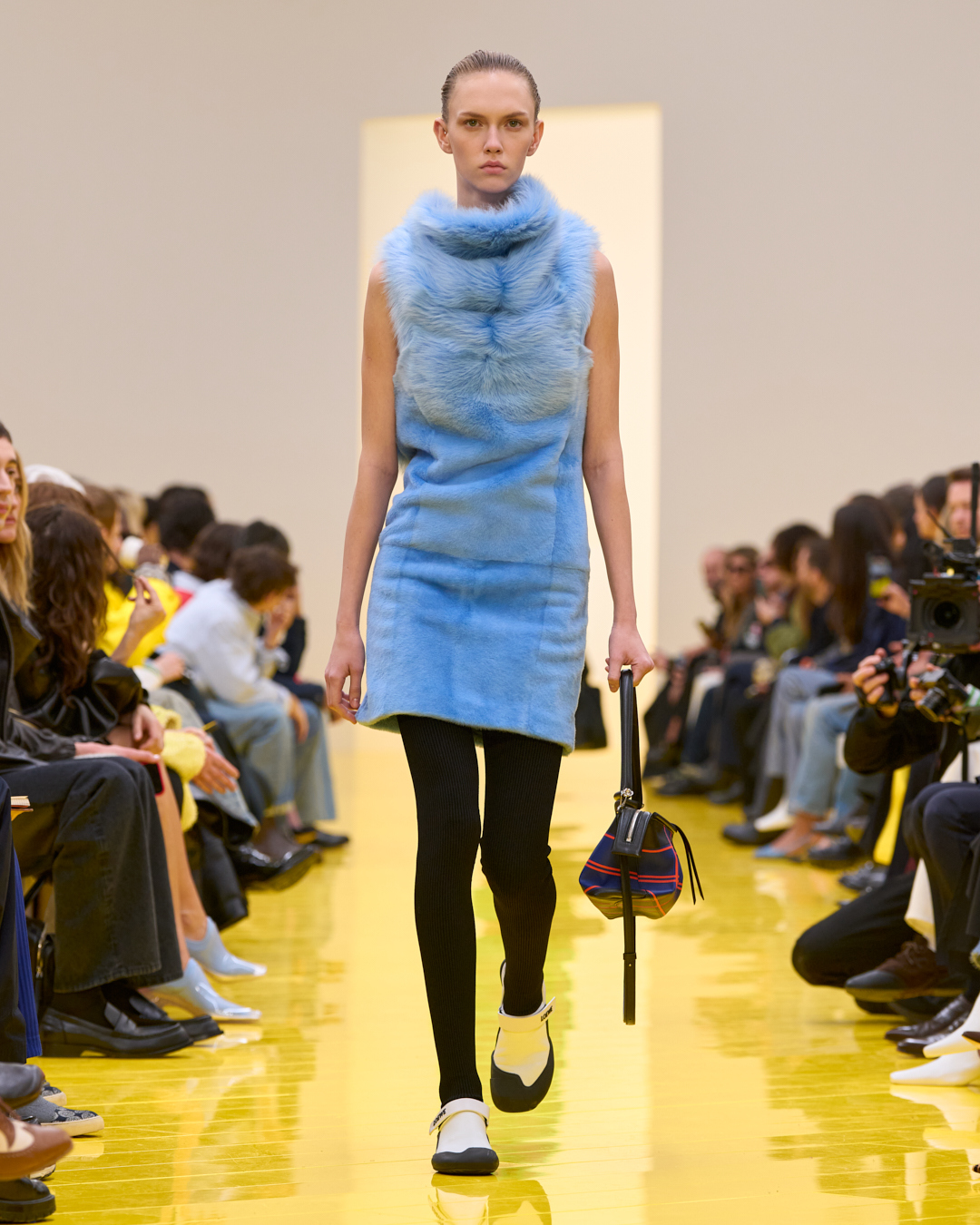
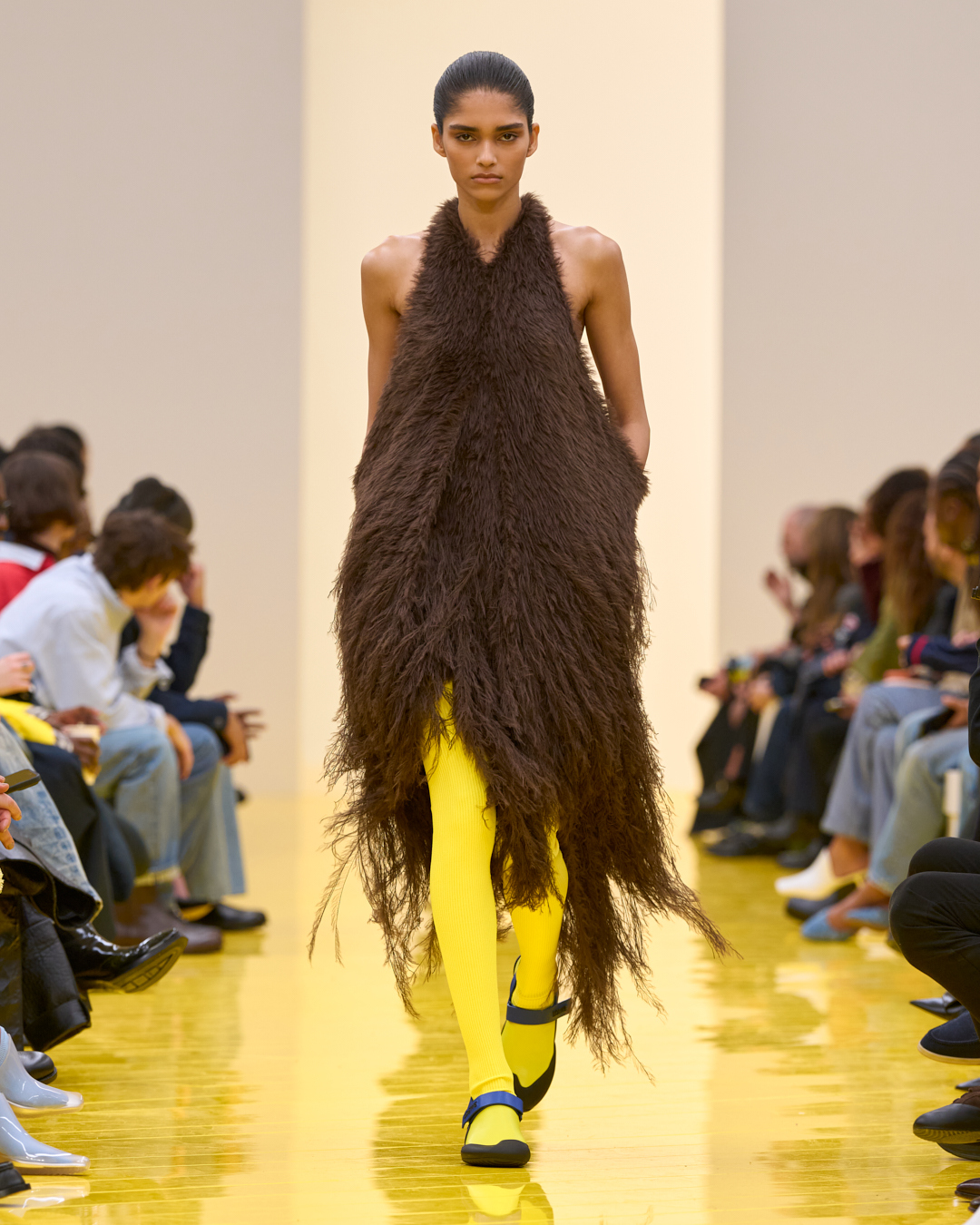
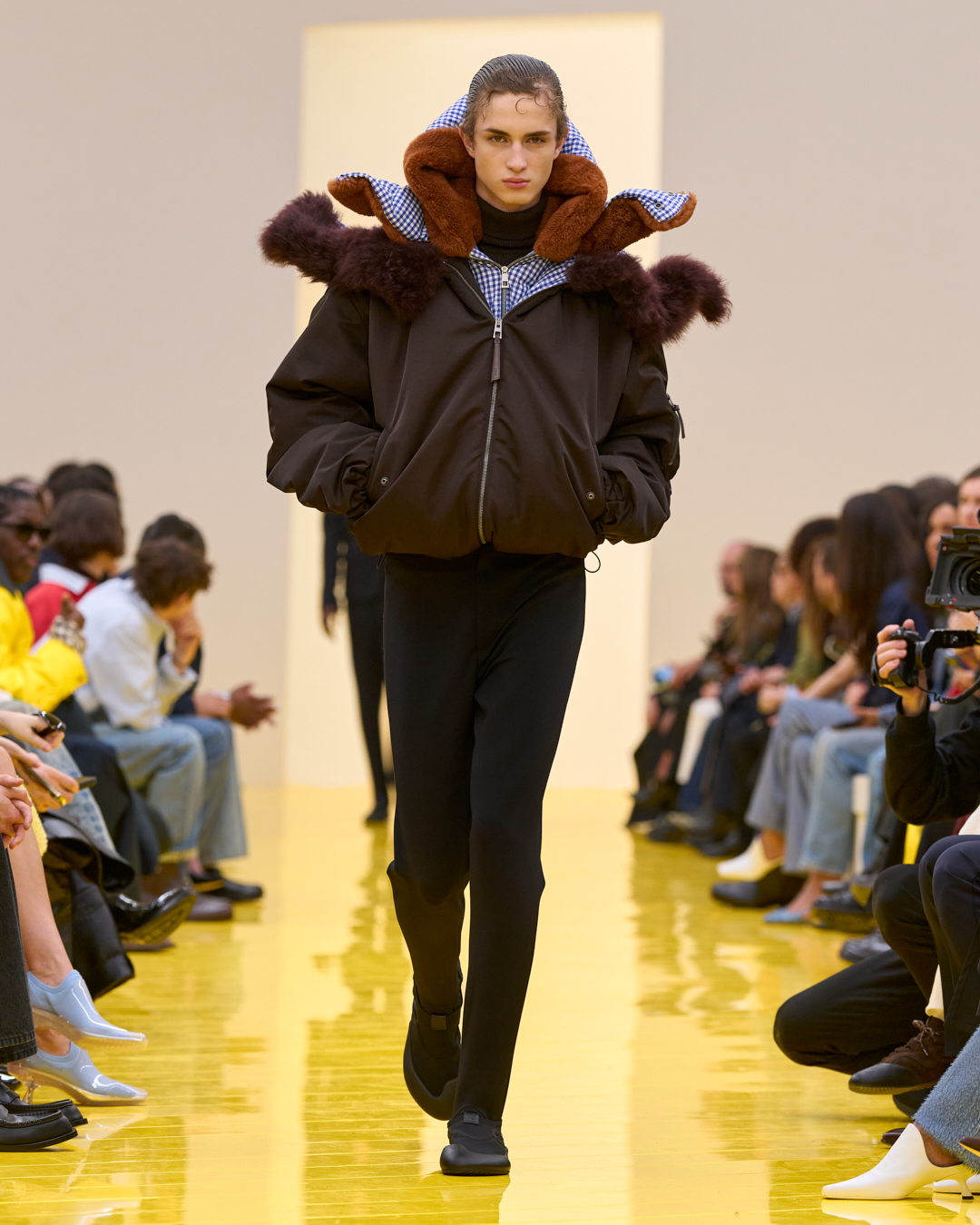
Rick Owens picked up where he left off last men’s show for his women’s AW26 offering. There was a continuation of gradient-coloured, spiked hair, shaggy coats, and neon make-up; more extreme skullets, rainbow rattails, and designs shaved into buzzcuts. But in addition to all of these OTT details, platform sequin boots, fringing and shaggy silhouette coats reappeared, too. Sprawling, tactile and large in scale, they took up almost the entire runway as models walked past, closing out the show.
Jack McCollough and Lazaro Hernandez’s September debut for Loewe, offered an injection of sporty elegance. Outside the show space, guests arrived in steady streams. including FACE cover star True Whitaker, Emily Ratajkowski, Brent Faiyaz, and Lil Yachty.
On the runway, a latex dress juxtaposed with sweet cami detailing opened the show and hit hard. It was followed by a textured coat that looked as though it had built-in gloves, cut into a sand-toned bell silhouette. Another latex cami dress, this time in bright orange, poppy parkas, and peplum-style coats were a perfect addition to a wardrobe in need of some whimsy. Sharper, more intricate tailoring appeared via red and black leather coats that intertwined looping details with fringing. On the models’ feet were transparent wellies and mules with dinky heels, paired with brightly coloured socks.
Like the aftermath of an espresso shot – instant and energetic – the collection left us buzzing.
Duran Lantink’s Jean Paul Gaultier served another dose of drama and McQueen embraced performance


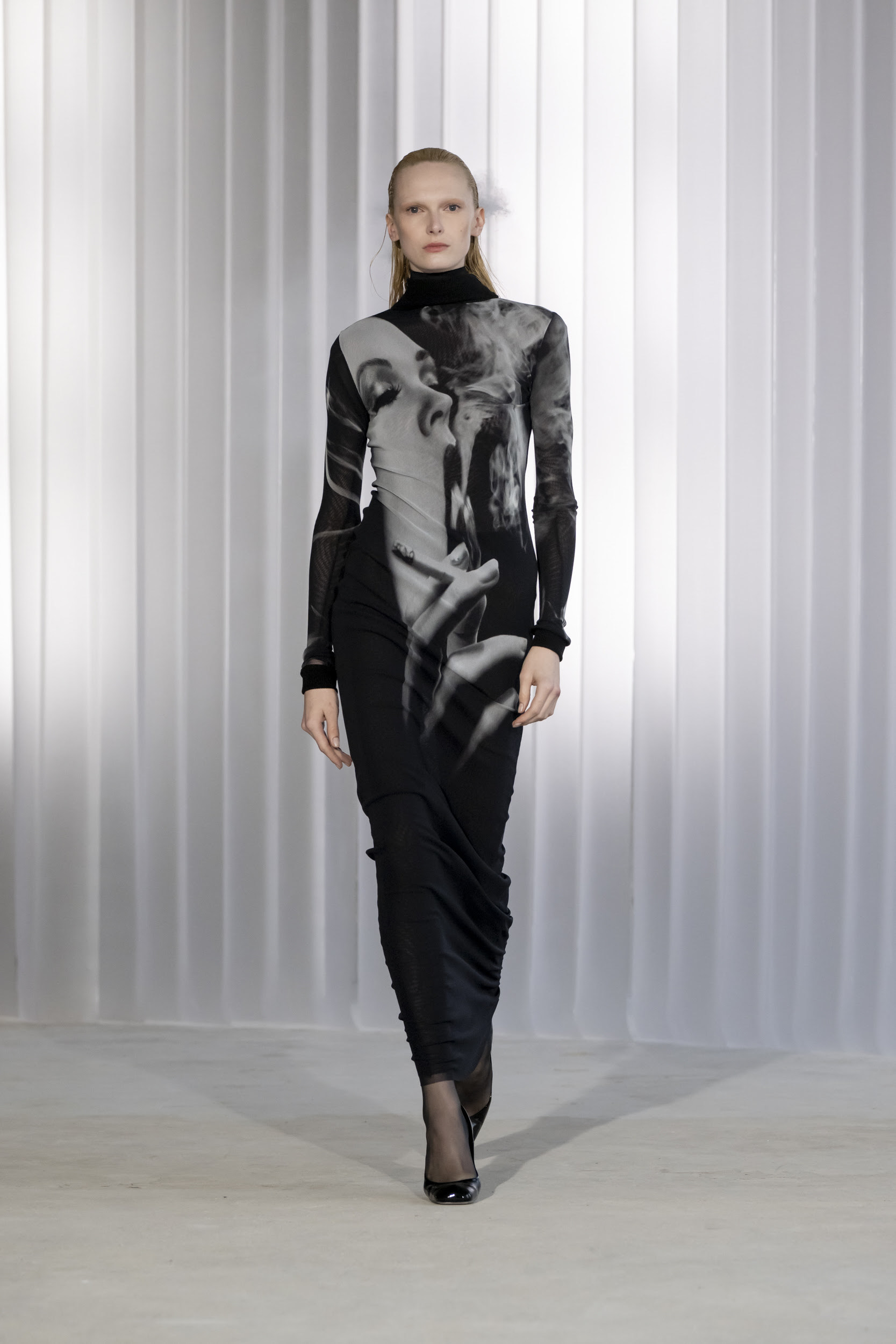
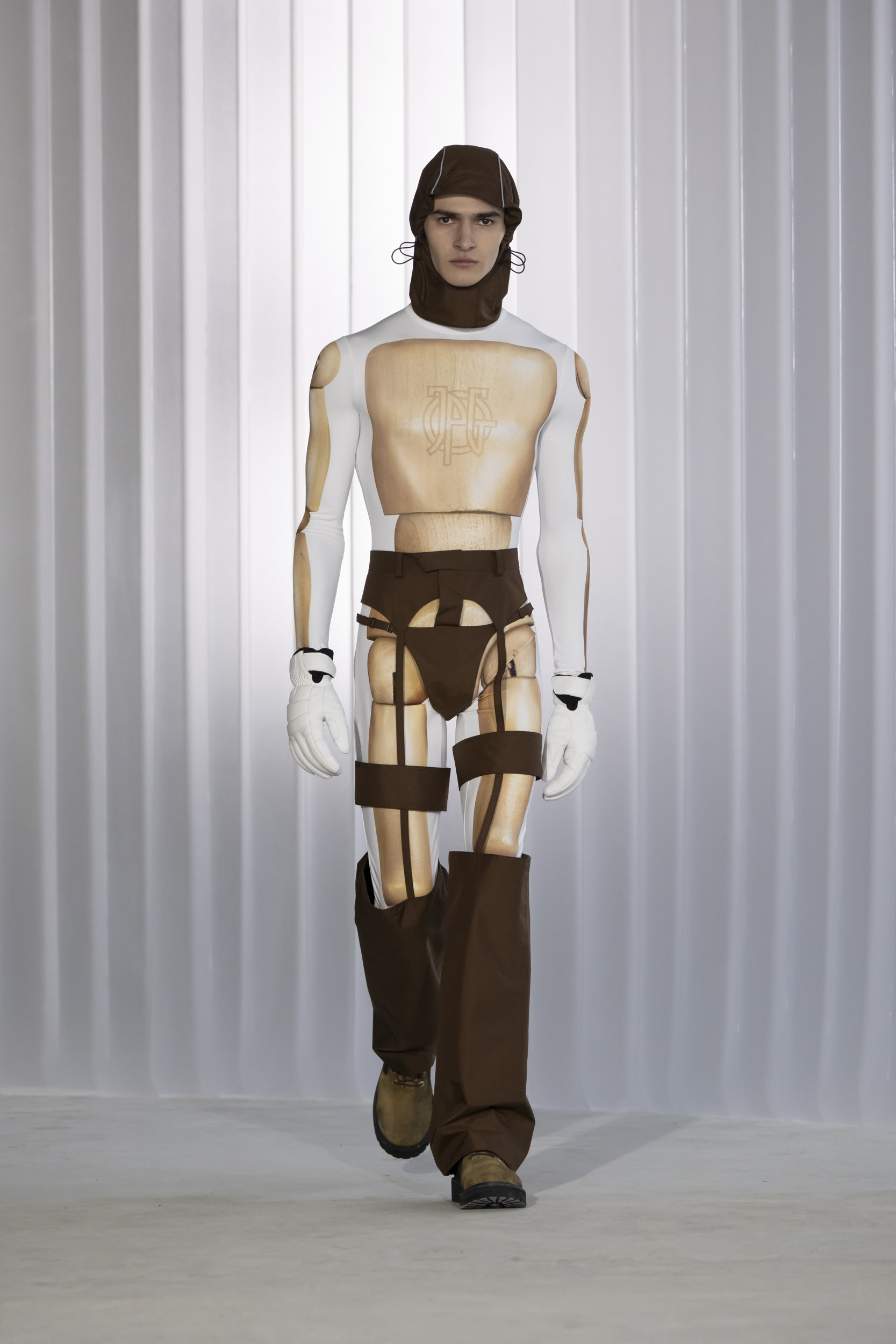
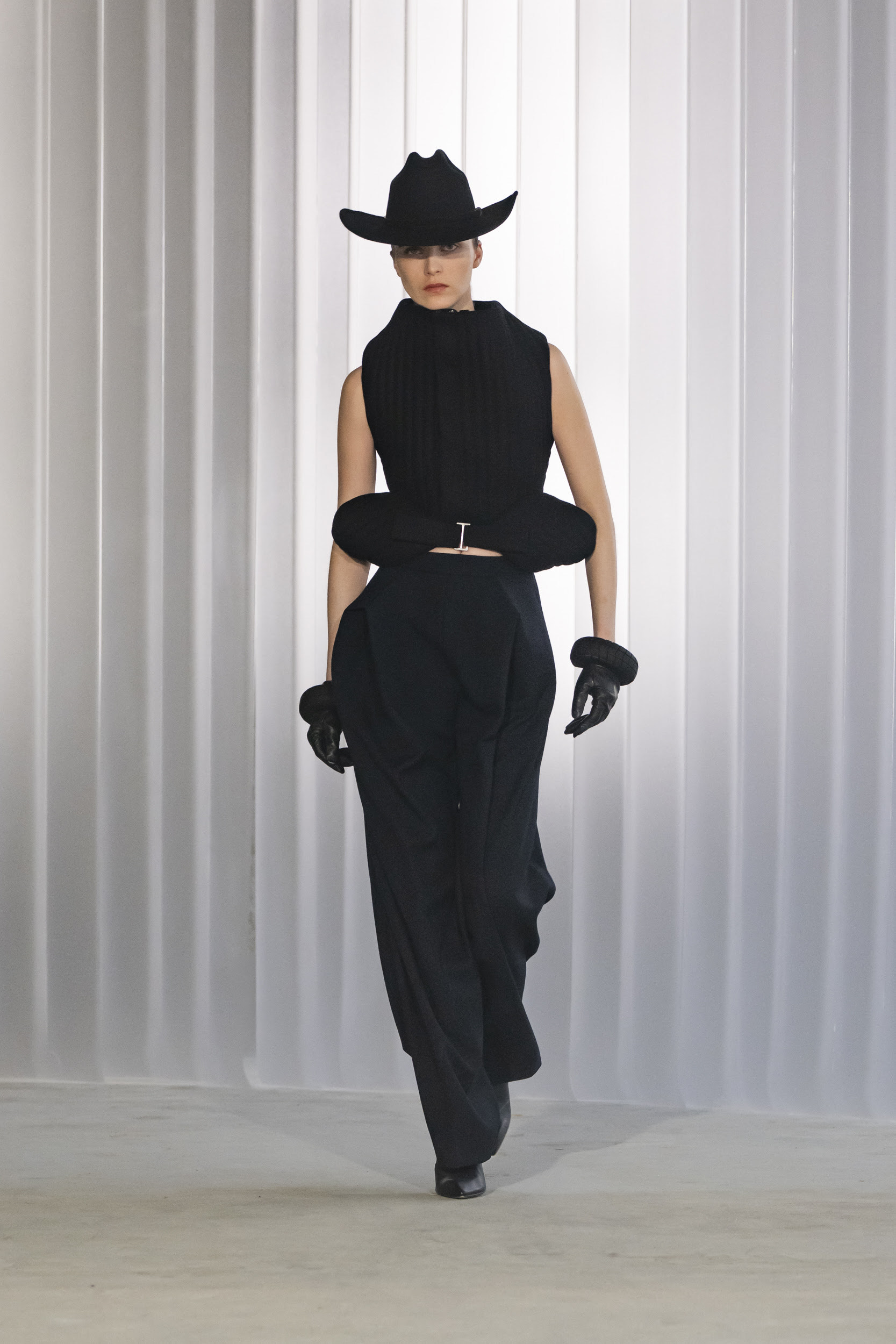
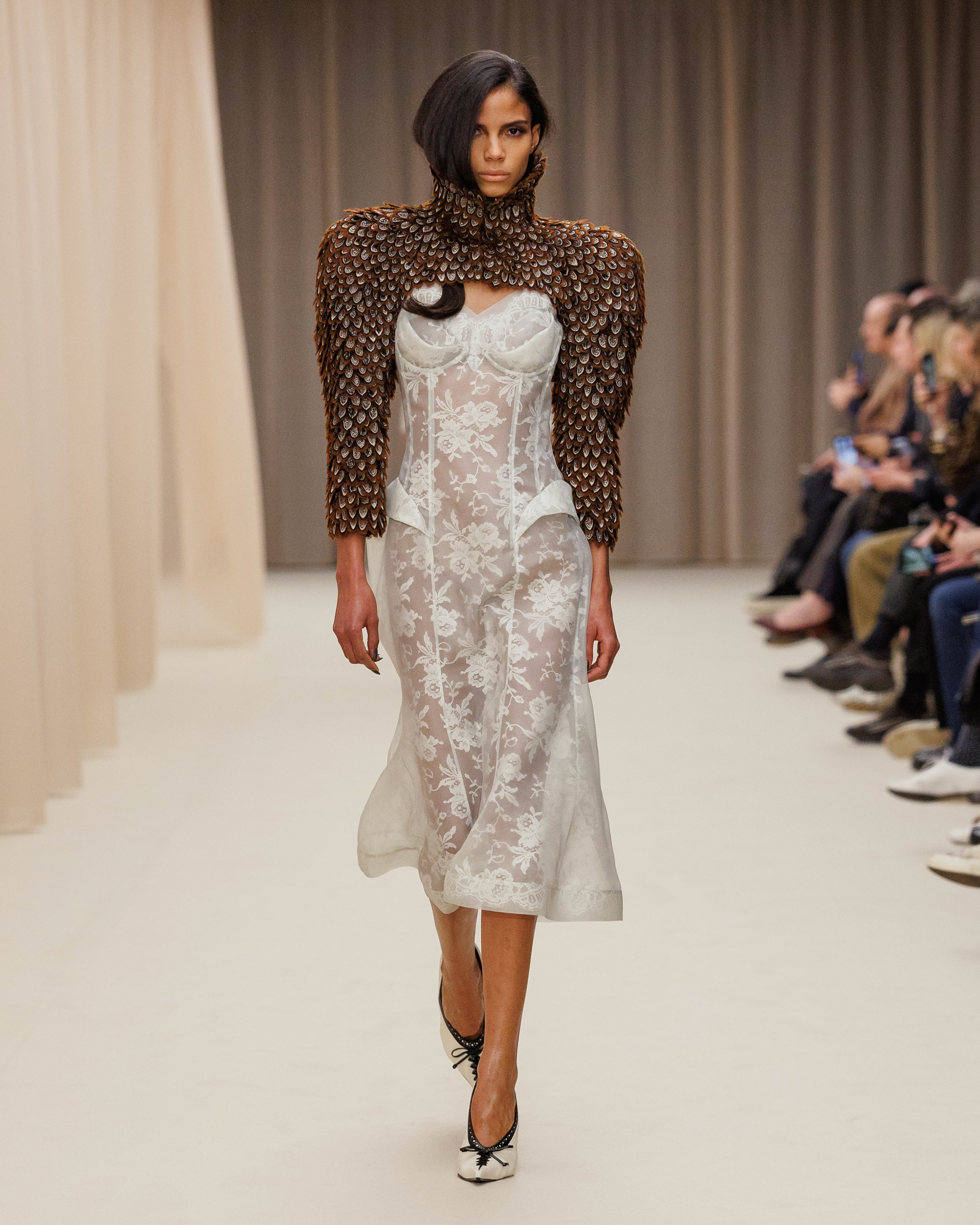
Duran Lantink is a glorified rebel. Weird, wonderful and whimsical, Duran’s AW26 collection had multiple narratives. Held inside a brutalist building (the Balmain show was held next door just days before), winding rows of seats were separated alphabetically.
After the polarising discussion of Duran’s debut show incited back in September 2025, AW26 was bound to stir up a fuss. Up first, a fairly minimalist look: monochrome suiting with trousers sporting upturned cuffs and a coat with intertwining loop detail. Then came inky-black looks, western hats paired with tailoring and oversized shirting. A bodysuit loves to see Duran coming: bodysuits with illustrations of male and female mannequin pieces were printed on them head down the runway, Leon Dame walked the runway in a black jacket with a fanned out hoodie that looked like a blossoming flower. Another FACE cover star, Alex Consanim, had a device attached to the back of her head that made it look like smoke was coming out of it. The final act of the show saw velvet dresses with circular tubing at the waist and padded, bulbous dresses. Certainly another show worth days of chat.
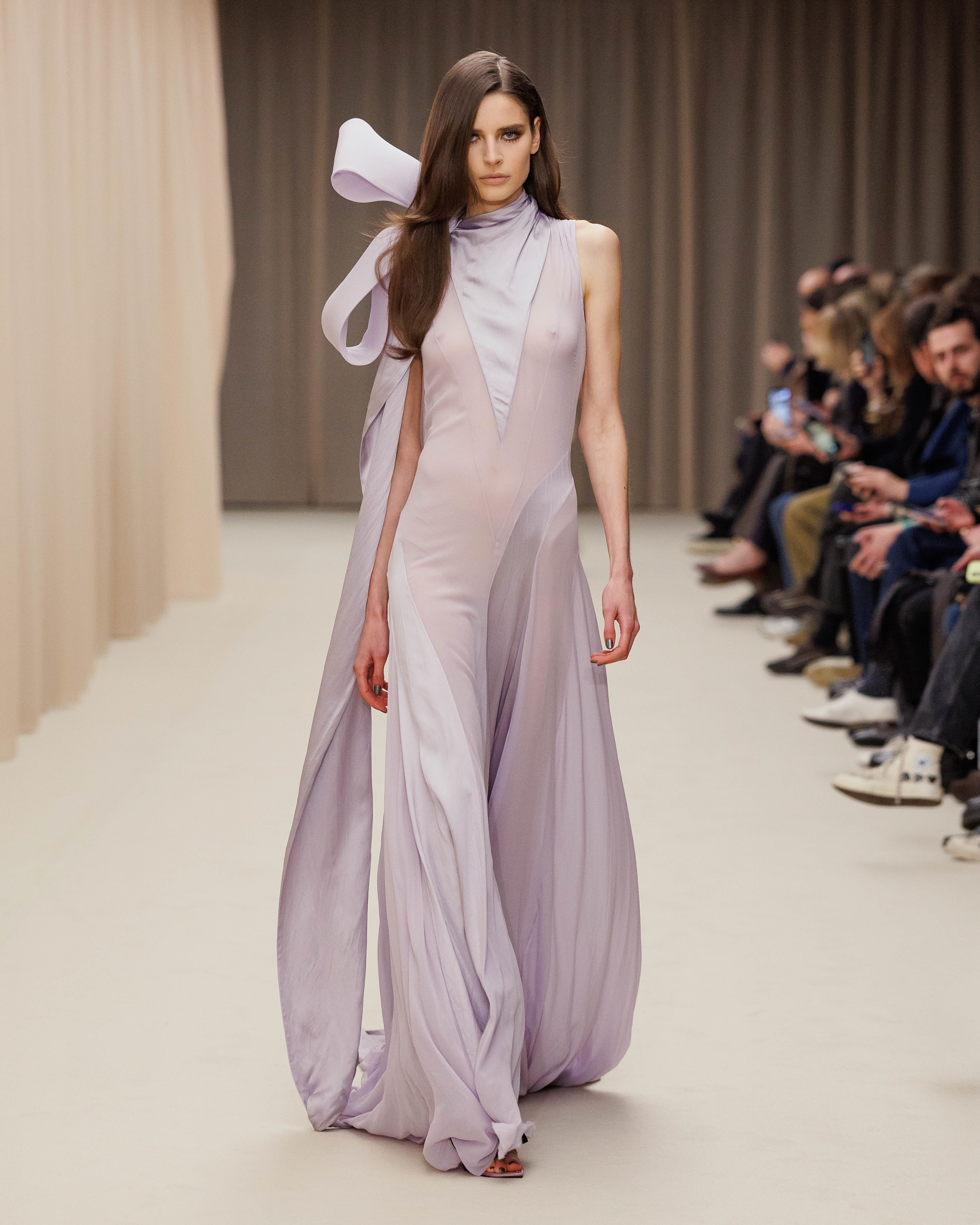
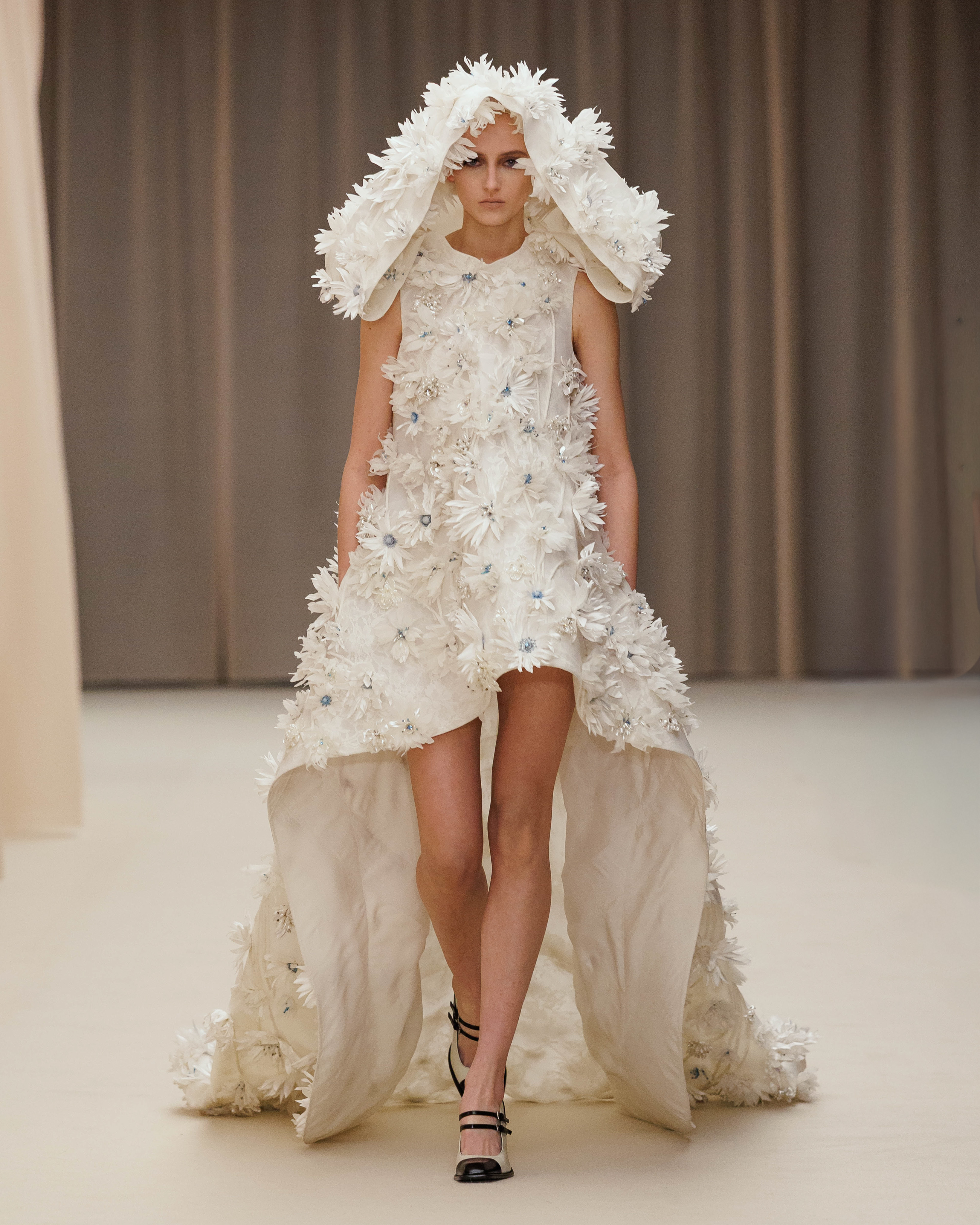
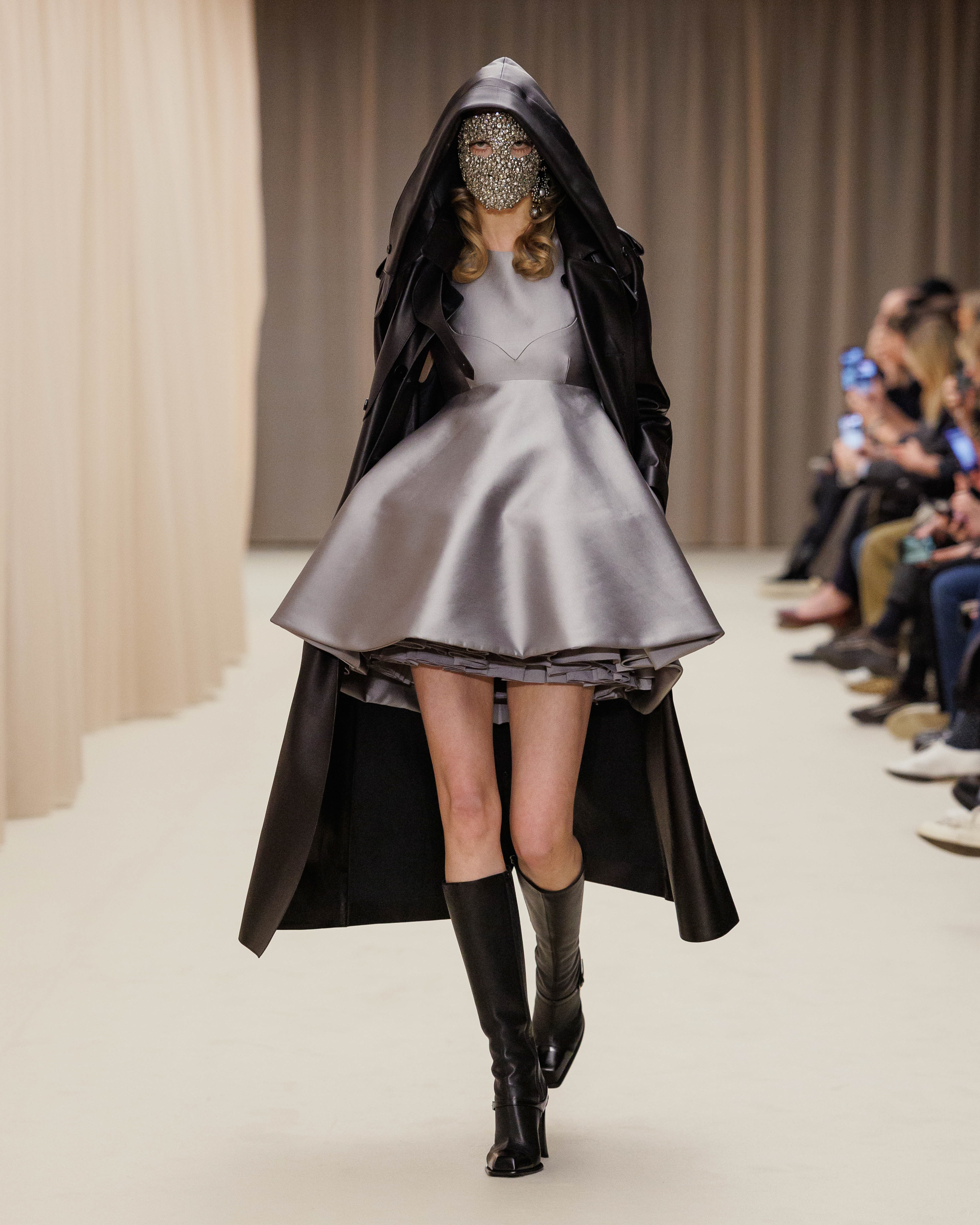
McQueen ended the weekend with a collection that got big names out of the house: Chappell Roan (a regular this season), Industry’s Myha’la, AG Cook and Sky Ferreira. Toying with the idea of performance and perfection, bejewelled masks literally slipped off models; voluminous dresses offered a more refined, polished element to the collection, which was later toughened up by zip-covered leather trousers, cropped leather jackets and matching micro skirts. An engraved bomber jacket, a sheer lilac dress with a large bow, a heavy, metal top with manipulated pleating and a bride wearing a cape covered with flowers were standouts.
Fashion goes feral for Matthieu Blazy’s Chanel (again)


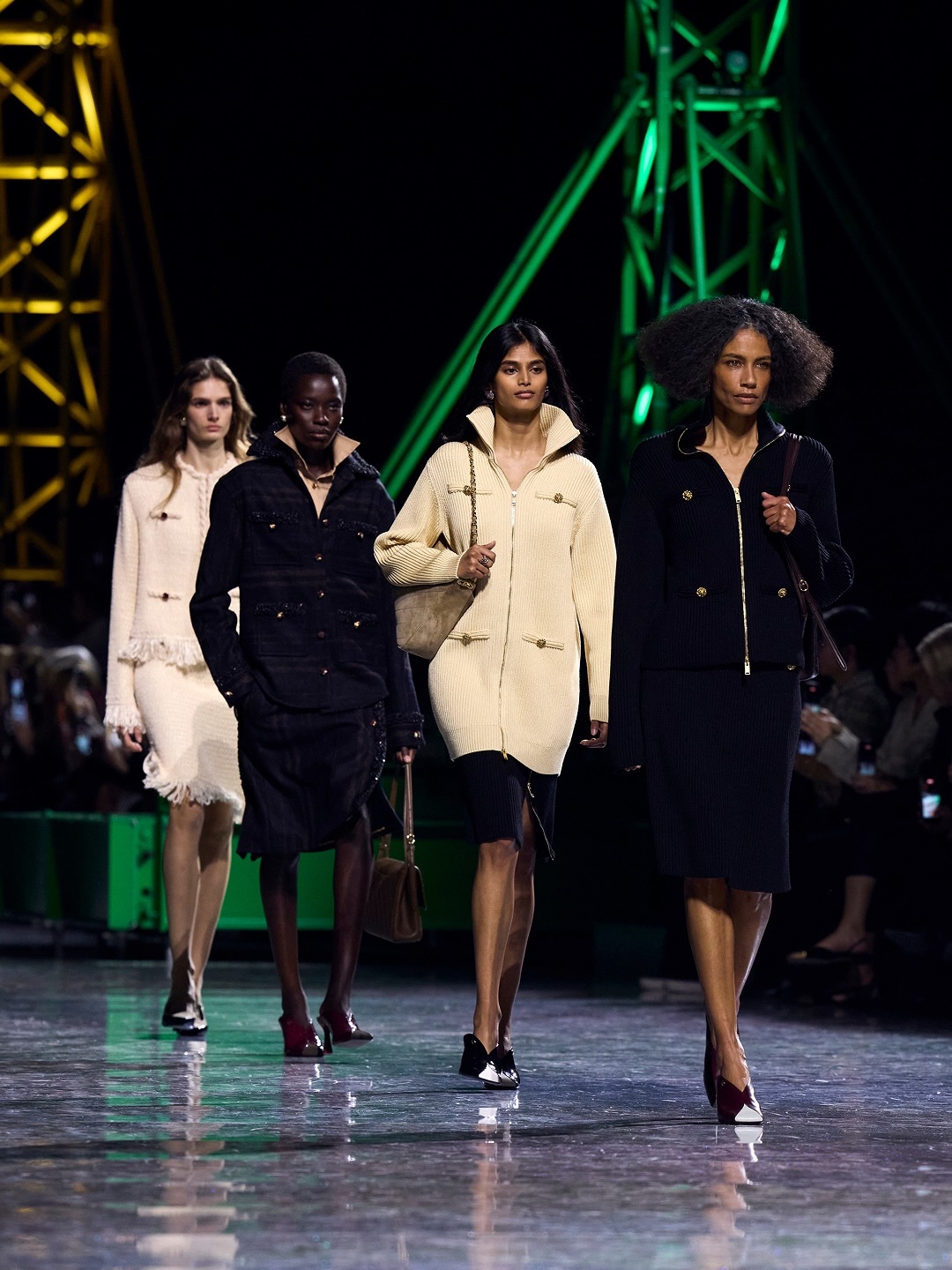
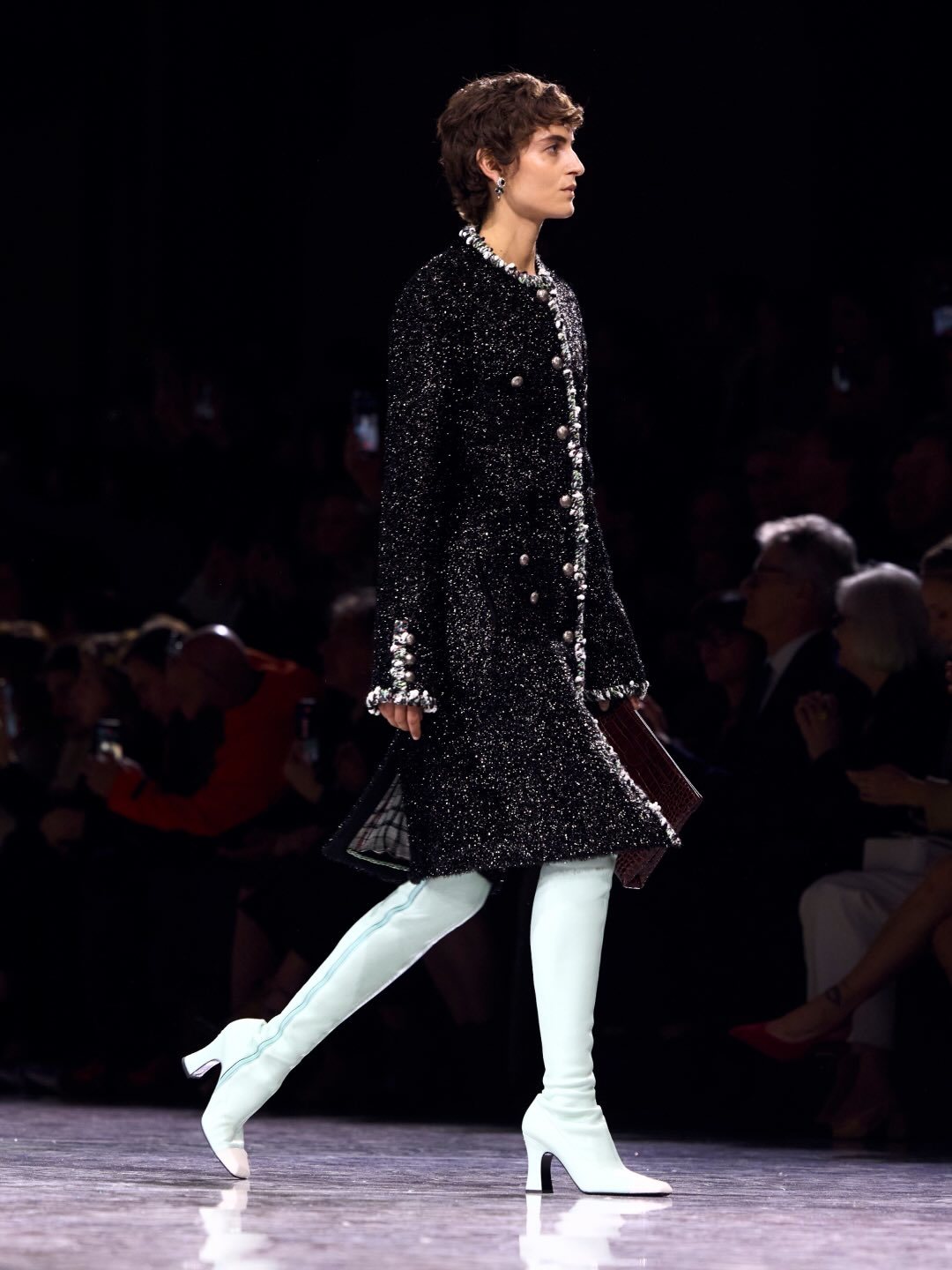
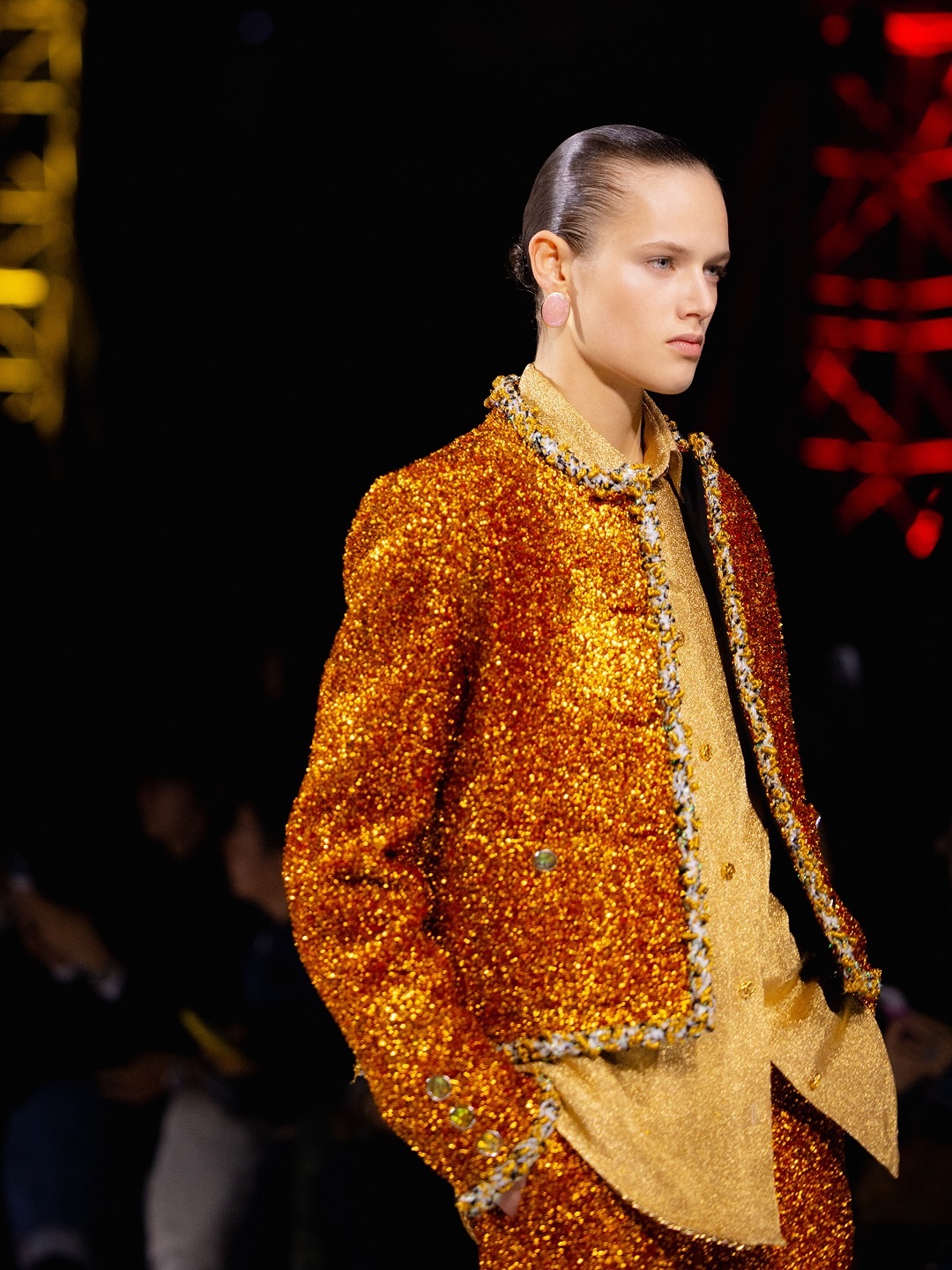
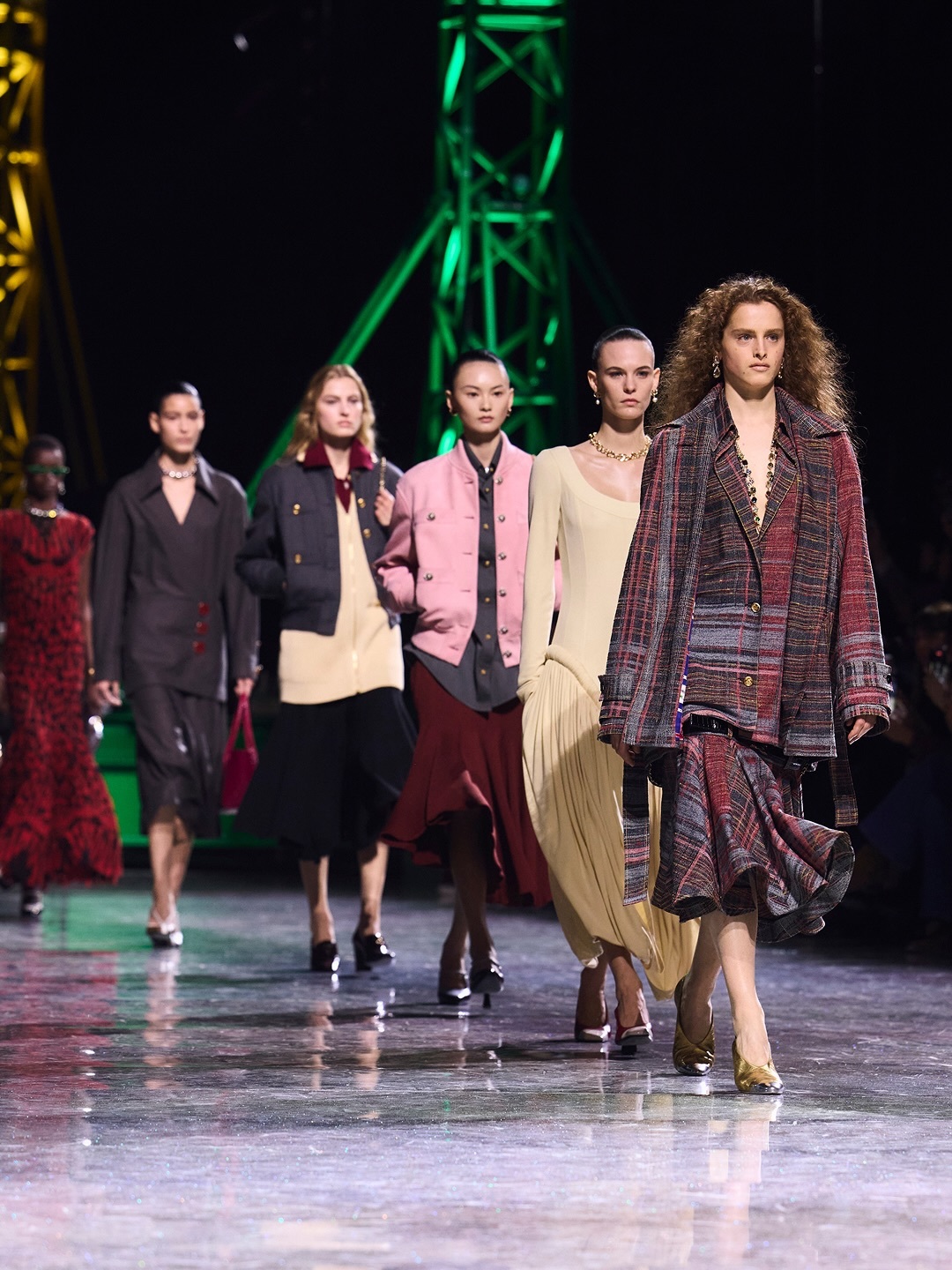
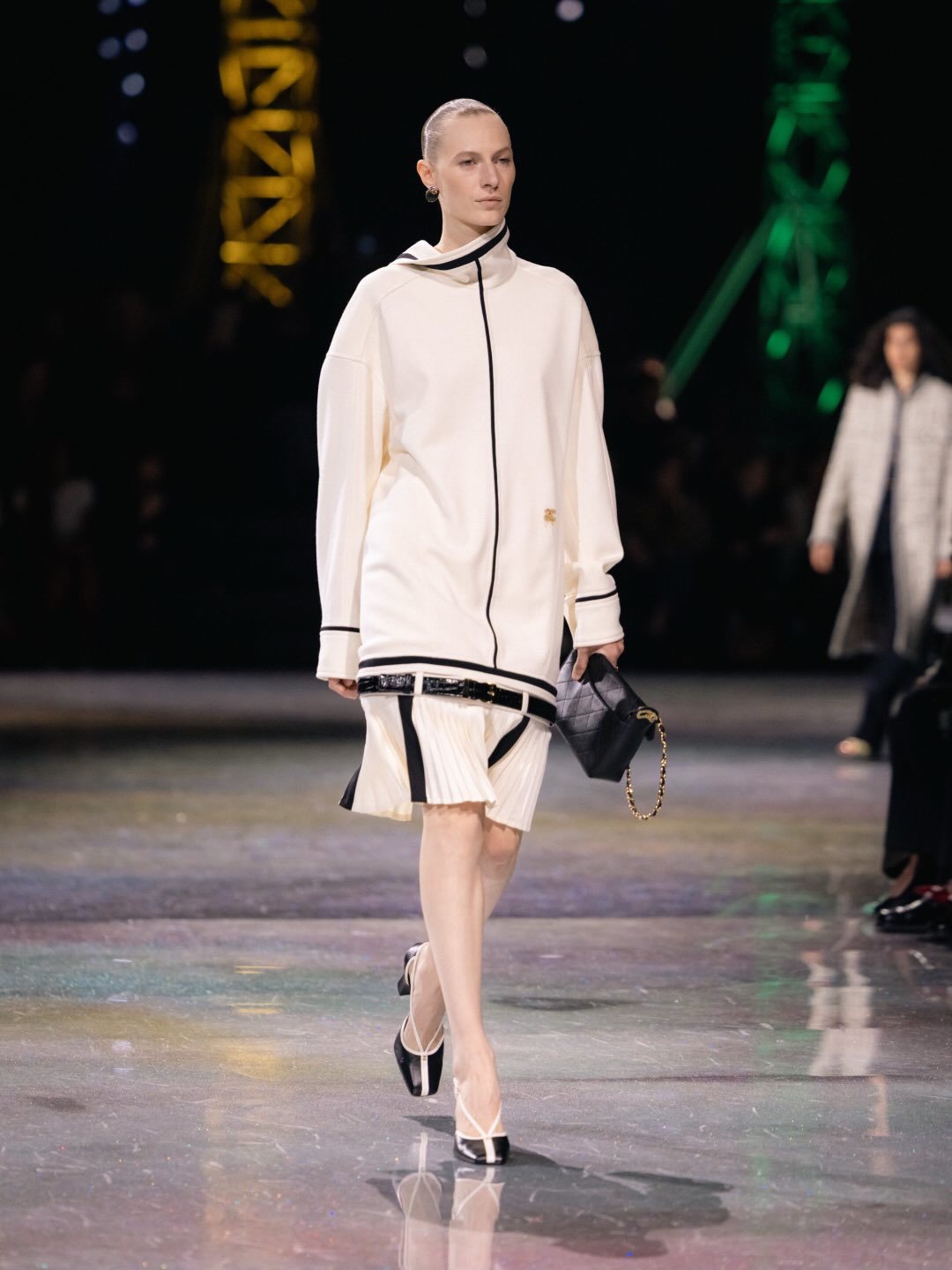
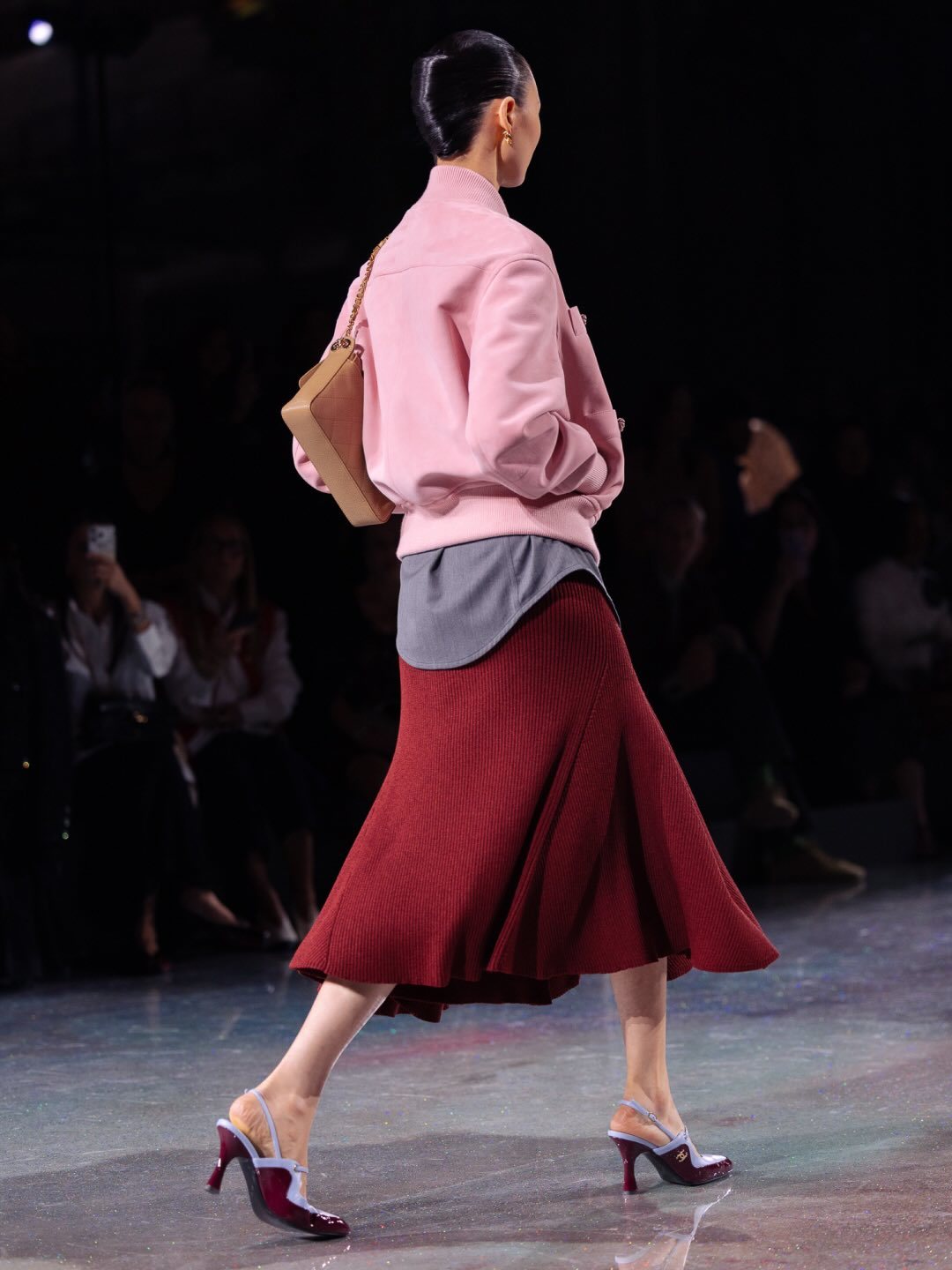
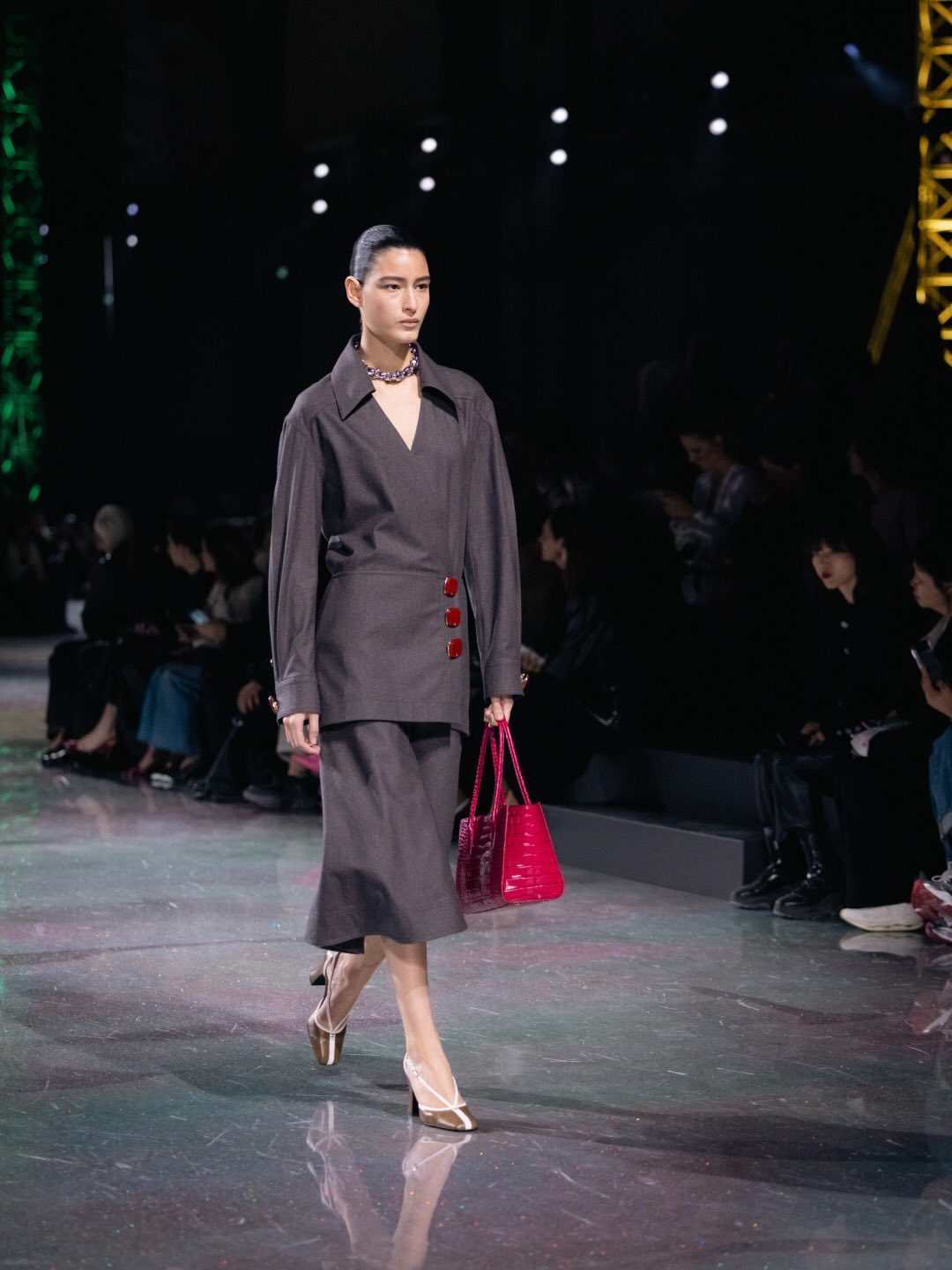
Before the AW26 Chanel show, everyone in Paris couldn’t be paid to keep Chanel out of their mouths. Why? The SS26 collection dropped on 5th March in Paris – those outside of the capital will need to wait a little longer – and ignited Matthieu-mania. Something akin to a frenzy took ahold of editors in the city, as they ran to various boutiques across Paris hunting down large flap bags, mint, croc-embossed heels and animal print ballet flats – all particular standout accessories from Matthieu’s debut. Leading up to the show, with guests wearing their new season Chanel clobber, anticipation was high.
What immediately struck was Matthieu’s use of colour, taking classic Chanel codes and shapes and transforming them into after-dark staples. At the centre of it all were drop waists, a sharp shift from last season’s “borrow from the bows” narrative. Collars were decked in jewellery, rich textures were woven throughout, swans were printed inside tweed suit jackets, and swishing dresses shimmered in iridescent hues that reflected onto the floor. The runway also saw appearances from breakout Chanel model Bhavitha Mandava and Anok Yai.
As for shoes, there was certainly no shortage of those – in fact, they’re poised to spark a stampede next season, thanks especially to those square-toe mules and soft leather pumps in contrasting metallics. “I wish to create a canvas for women to be unapologetically who they are and who they want to be,” Matthieu stated in the show notes. It’s evident in his latest collection: free of restraint, full of personality, yet still recognisable at its core. Judging by the demand for this first line – and surely this one next – Matthieu has accomplished his goal.

