
Notes on THE FACE’s Cindy Sherman cover

Cindy wears adress MARNI and gloves and ring talent’s own
Writer and curator Tosia Leniarska reflects on the almost 50-year career of an artist who constantly transforms herself into other people.
Culture
Fashion Director: Danny Reed
Photography: Cindy Sherman
Words: Tosia Leniarska
Cindy Sherman – the mother of postmodernism, spiritual progenitor of finstas and “do not perceive me” memes – is on the cover of THE FACE’s winter issue. For almost 50 years, she has been transforming herself into other people. Reshaping her face, she has essentially rewritten art history over the course of her career, but most of all, she has undermined our trust in images as a means of understanding our own identity.
I see traces of Sherman every day: in GRWM reels, Aphex Twin album covers, comedians wearing wigs to cosplay as boomers on TikTok, James Charles glamming up for his school photo. There isn’t a picture we can take today without a nod to Sherman’s 20-something-year-old self, in the 1970s, standing in front of her own camera. Not that we were ever really looking at her.
It’s hard to nail down someone as elusive as Sherman. She doesn’t really give interviews, and though she has created hundreds of images of herself, she claims Cindy Sherman isn’t really there. Authors of entire museum monographs on her work have quipped about not knowing what she looks like. Even when she broke the record for the most expensive photograph ever sold in 2011 ($3.89 million for Untitled #96 – she’s still the only woman to hold that title), Sherman is as much a commercial darling and mythical artist as any other cliché she inhabits.
And here she is, in her strange glory, looking uncanny and sort of British for her FACE cover shoot. She selected items from AW25 collections provided by Fashion Director Danny Reed and her own wardrobe – most likely thrifted. The draped backdrops are recognisable from her home studio in SoHo, New York. Each shot is its own character, neither herself nor any real person. If you try to pin their identity down, it only will slip away further: Sherman has been evading identification since her most famous works, Untitled Film Stills, in the ’70s and ’80s. In these, she staged herself as a character in what look like stills from films that could’ve been directed by Fellini or Hitchcock or even a B‑movie filmmaker.


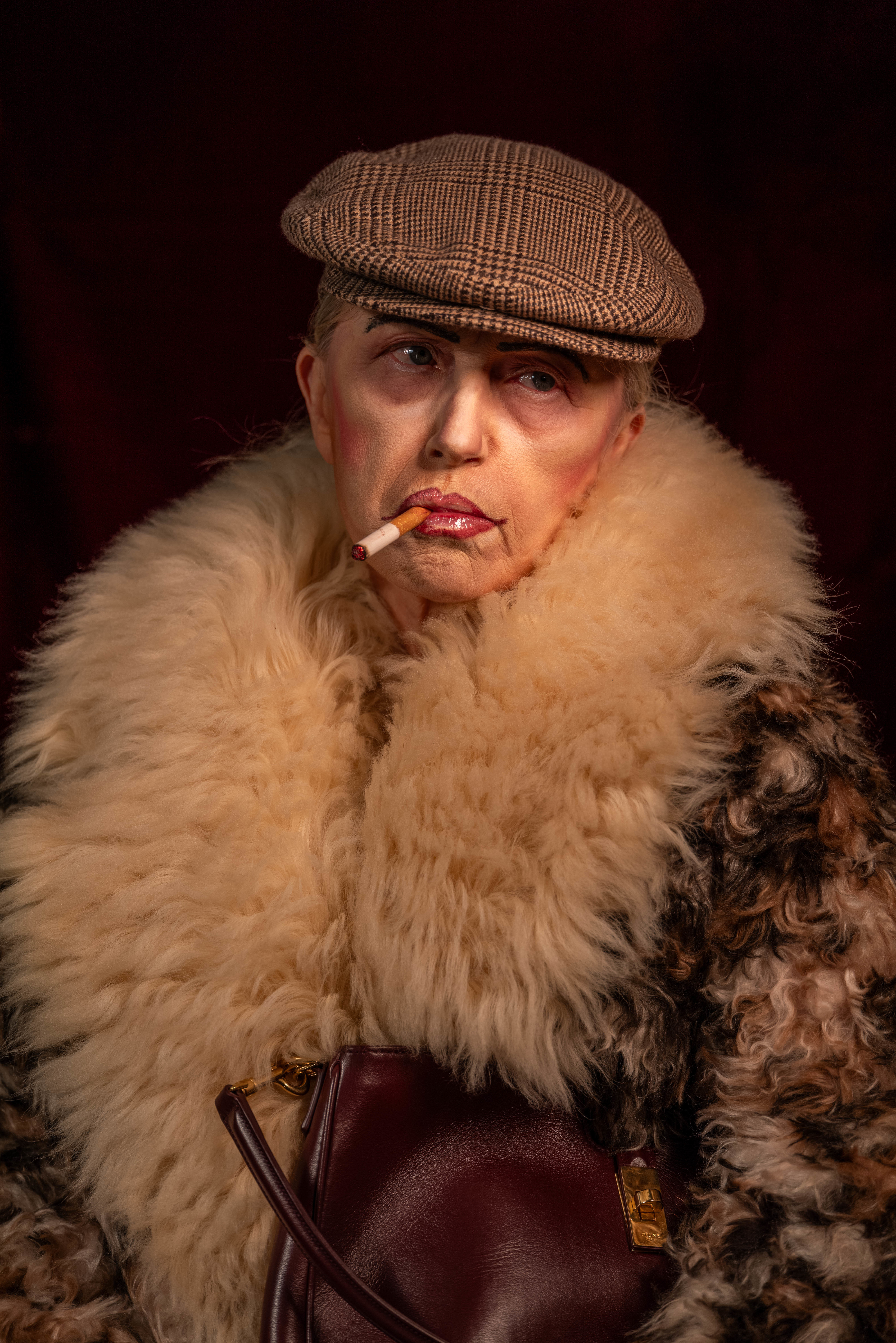
Cindy wears coat, hat and bag CELINE
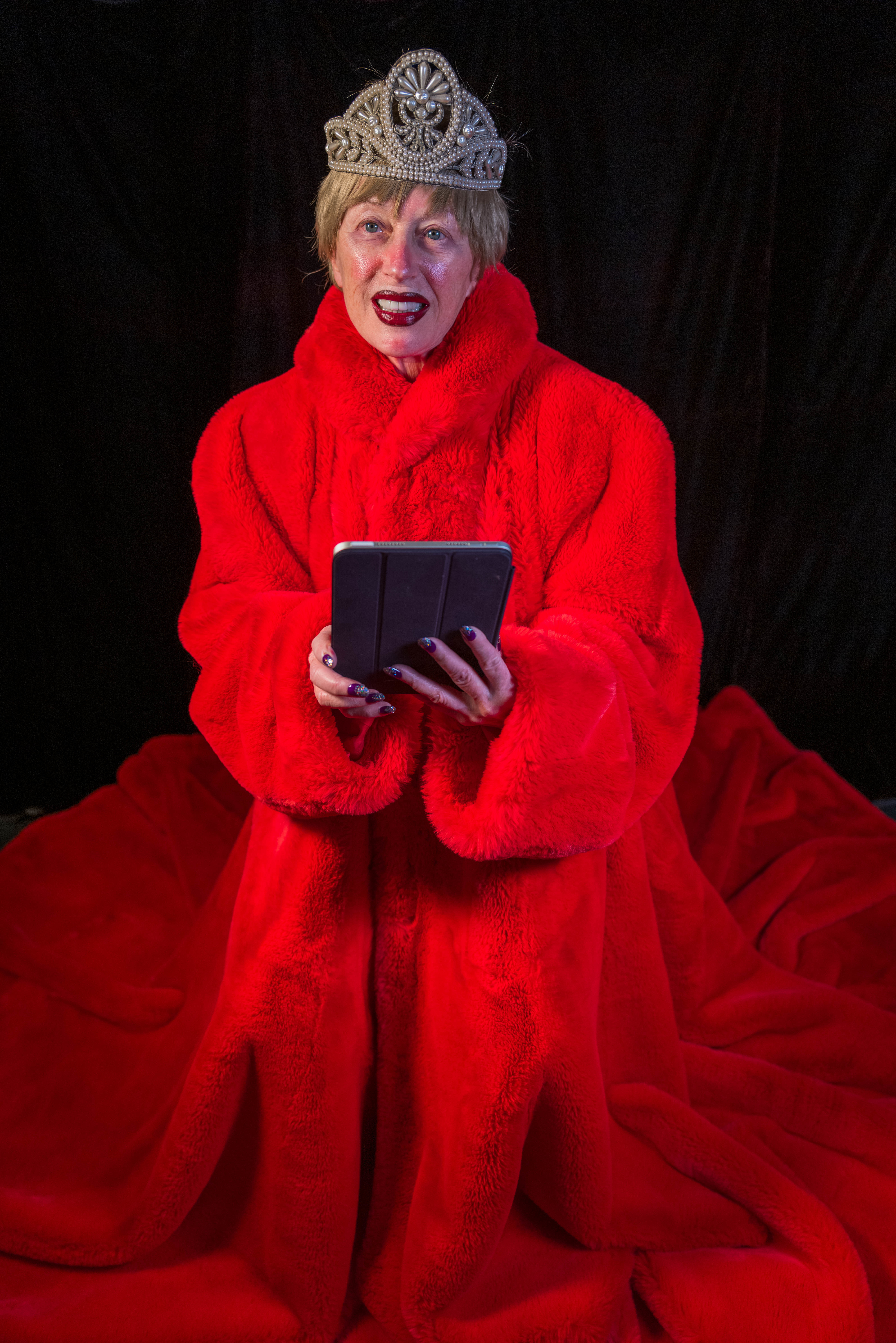
Cindy wears coat BALENCIAGA and crown talent’s own
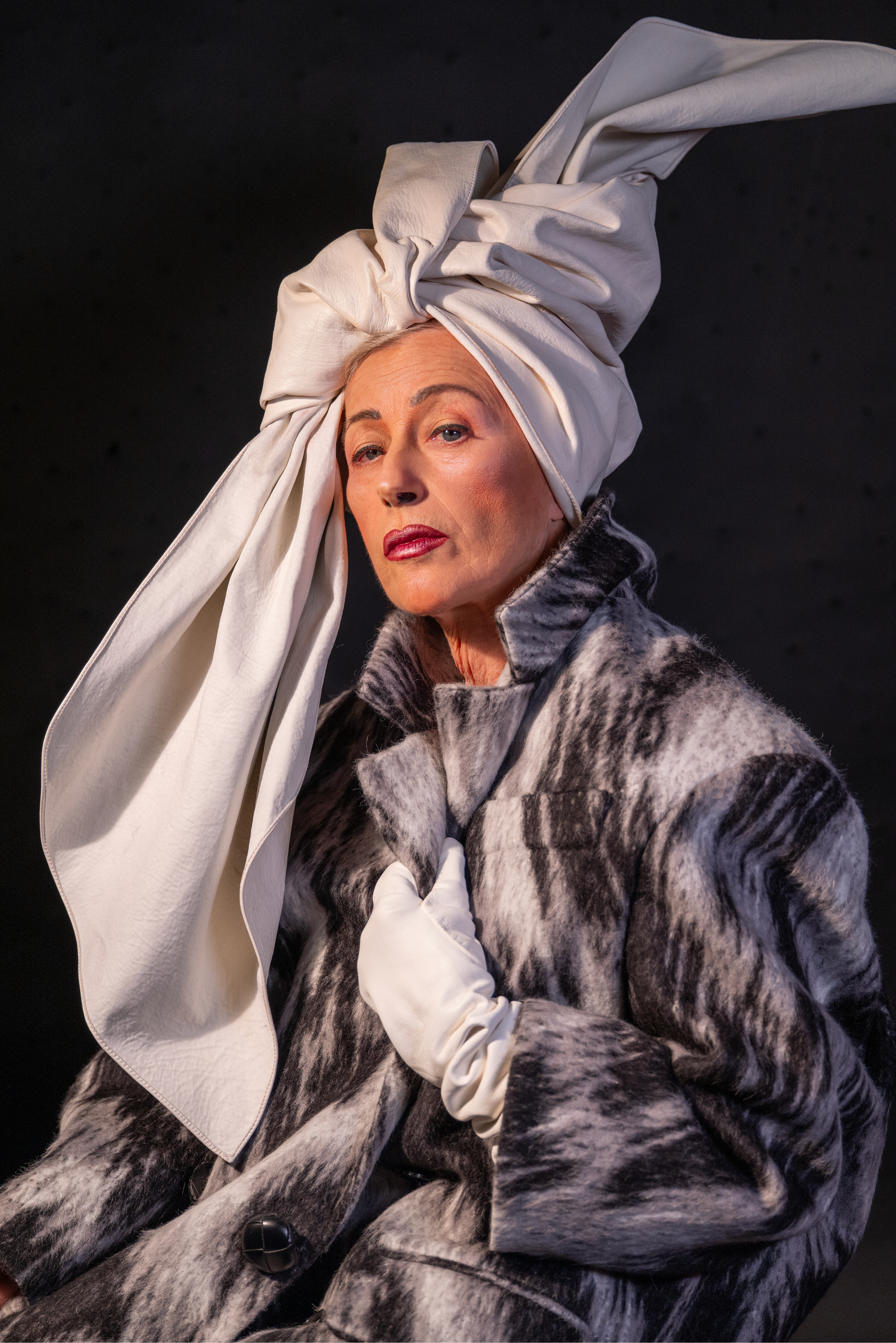
Cindy wears coat, scarf (worn as hat) and glove GIVENCHY BY SARAH BURTON
Her aim was for people to grasp the references immediately and later catch on to their artifice, even if they weren’t well-versed in art theory or film. Fashion allows for this, too. What viewers recognised then were clichés of femininity that Sherman found in the visual culture of her mother’s generation – the ingenue, the call girl, the desperate housewife. Wearing wigs and staging various poses, she further manufactured what was already artificial and pervasive: a construct of what “identity” is meant to look like. She has continued to do this for each generation she witnessed moving forward, throwing us off with identities that came together coherently one moment and fell apart in the next – as she does with the new cast of characters she created for THE FACE.
Sherman planted Easter eggs along the way, too. You can sometimes spot her self-release cable, despite her looking away from the camera, frightfully, as if she wasn’t the one shooting. She replicated the male gaze in that way, the camera’s stalking stare, but also our need to represent ourselves in this ultra-modern contradiction. You and I do this every day: pressing the phone camera shutter, then the post button, all the while dreading our screentime report. All this looking, at ourselves and others. Sherman gets it. As a very shy art student, she dressed up as different characters – a pregnant woman, a secretary, or Lucille Ball – to go to parties and exhibition openings, or even her day job, to avoid being perceived as herself.
Sherman soon moved on from Untitled Film Stills and started trading in abjection and clownery rather than beauty. It’s this transgression that really cements her influence. In her story for THE FACE, she hones into the grotesque, unsettling power of fashion, shaping a reality that warps before us like a hall of fun-house mirrors. There’s a crowned dame in a red Balenciaga coat, tapping on an iPad; a glimmering, glossy pout in a flat cap and a full Celine look; a New Age‑y, flower crown diva donning a nude costume. Furs abound across a range of get-ups, Sherman cosplaying various matrons attempting glamour. Fashion allows these fantasies to come to life – it knows how closely glamour sits with revulsion. Artifice is nauseating yet we can’t get enough of it; we feel it when we look at pop stars and royals, just as we do when looking at the characters from Sherman’s shoot. Her images ask us what we find ugly, and what our discomfort reveals about beauty.

