
Lurker will have you digging your nails into your palm for 90 minutes

The psychological thriller, starring Archie Madekwe and Théodore Pellerin, takes a deep dive into parasocial relationships as a superfan achieves his wildest dream: becoming friends with his favourite artist.
Culture
Words: Tiffany Lai
“It was, um…” The security guard at Universal’s screening rooms in central London is lost for words. I’ve asked him what he thought of Alex Russell’s Lurker, a psychological thriller we just watched alongside a bunch of other journalists. It’s been a tense ride.
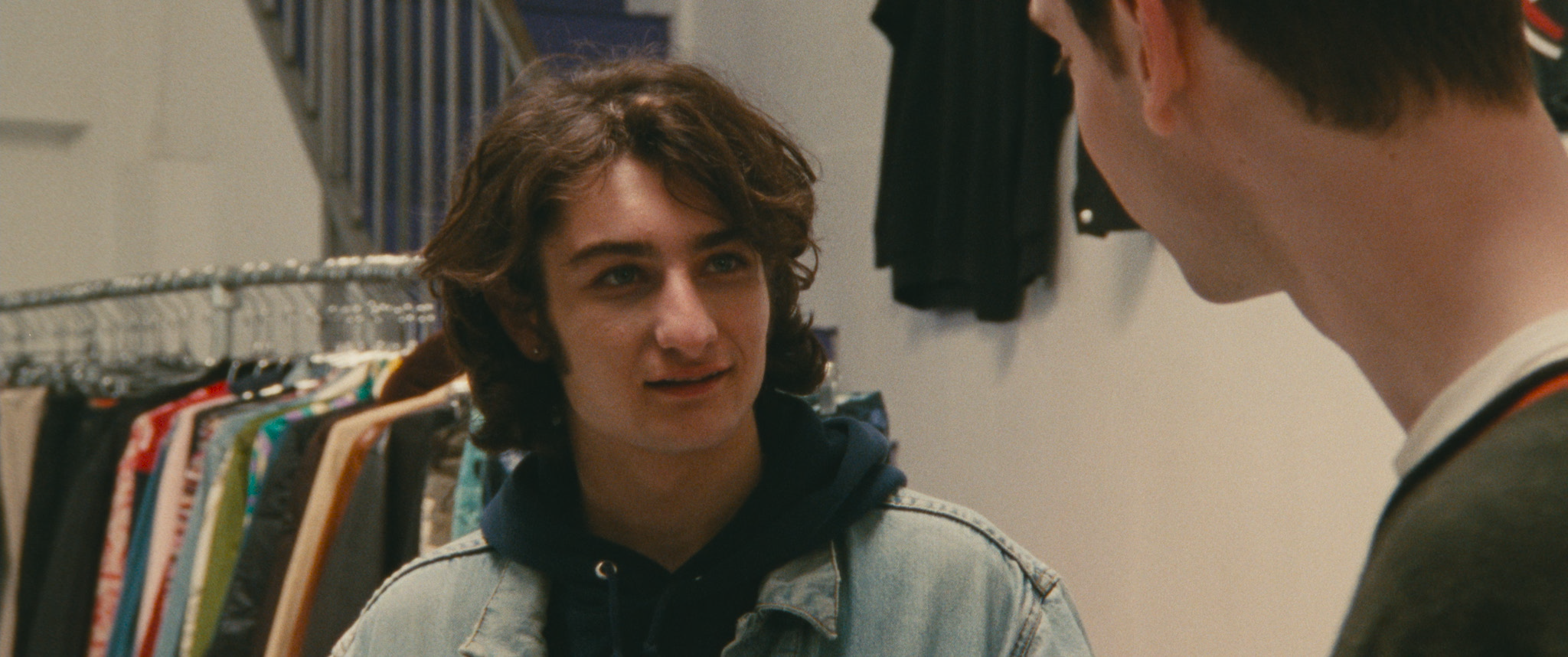
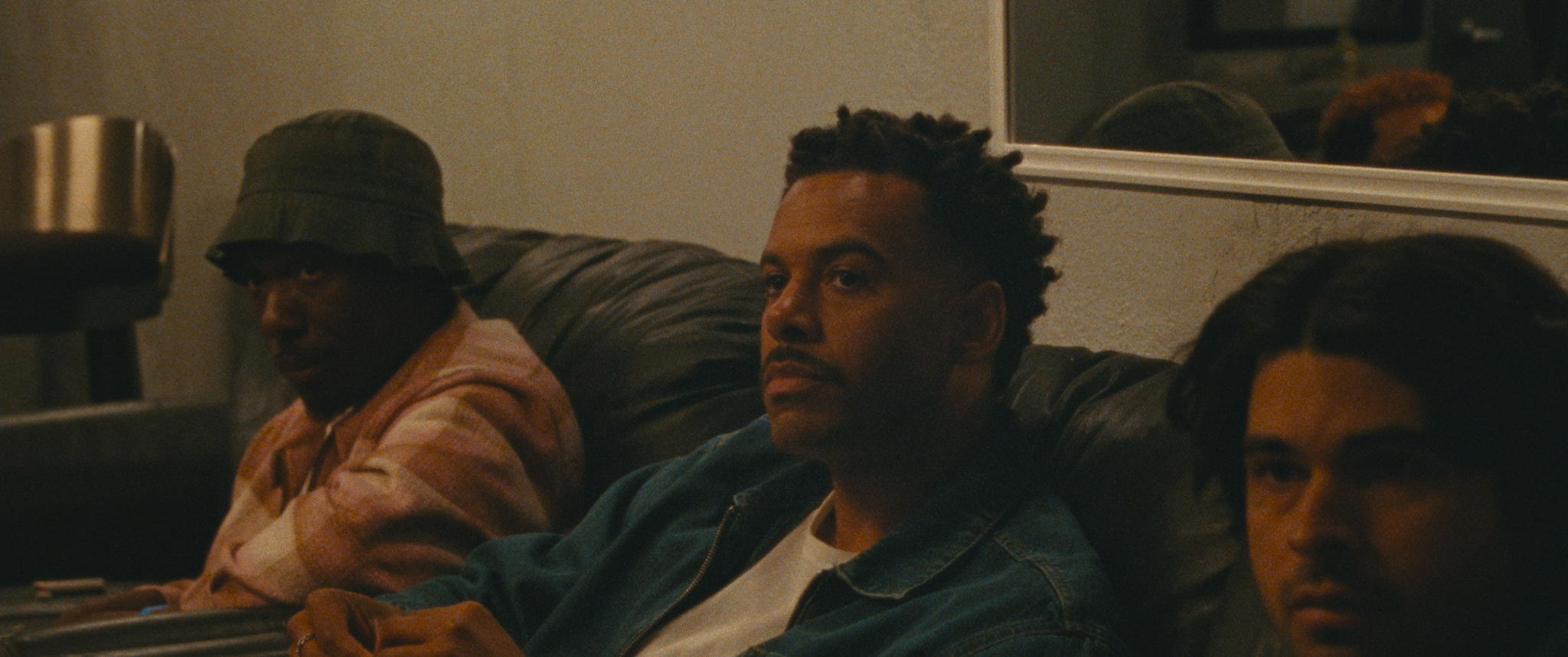
The film, which is out now in UK cinemas, follows Matty (Théodore Pellerin) – a twitchy, mild-mannered retail worker who’s a superfan of up-and-coming indie musician Oliver (Archie Madekwe). During a chance encounter at the shop Matty works at, the two fall into conversation, and after pretending not to know who Oliver is, Matty finds himself with a guestlist spot to that night’s show. Before the gig, he heads backstage, where he meets Oliver’s entourage – which includes Swett (Zach Fox), Bowen (Wale Onayemi) and Shai (Havana Rose Liu). Before long, the pair find themselves entwined, and Oliver ends up playing a game he never intended to get involved with.
For Alex Russell, an ex-music journo who’s got writing credits on shows like Beef and The Bear, the film expertly plays on a what-if type of scenario we’ve all entertained before. What if we met our idol? What if we became friends? What if we were brought into the fold long-term? Featuring plenty of excruciatingly cringe scenes of Matty trying to ingratiate himself with Oliver and his team, Alex pushes these questions to breaking point, as Matty clings on through increasingly dark means.
Both the acting and the scripting is deftly done and though there are often moments of casual insider‑y cruelty from Oliver, Archie manages to hold back just enough, peppering his performance with instances of genuine warmth that keep Matty hooked. Equally, Théodore manages both a Jekyll and a Hyde act simultaneously, never letting us quite lose sight of the insecure kid at the heart of his character.
When I eventually meet Alex, Archie and Théodore at London’s Soho hotel, they’re all dressed in expensive looking jumpers and a generous layer of under eye concealer – the LA-to-London jet-lag is no joke. At the mention of the film’s overwhelming feeling of second hand embarrassment, Alex nods slowly.
“That discomfort that everyone feels watching this was intentional. I did want to make people feel sick to a degree,” he says. “A lot of that has to do with being in Matty’s shoes, for someone like him, he lives and dies by every social interaction. The stake of the story is whether he’s getting the right attention.”
Archie and Théodore – you play with this push and pull, especially in terms of Oliver’s cruelty and Matty’s humanity, despite his intensity. Could you talk us through keeping that balance?
Archie Madekwe: I don’t think Oliver ever does things to be a bully, but he does them to make himself feel better about himself or to give himself an endorphin rush. It’s [either] for the sake of validation or to set the boundary of who’s boss. When you’re not the biggest artist in the world and you don’t have all the things that you want, your ecosystem is just the 10 people that are running around you.
It’s about, “how can I control them to make myself feel bigger if I’m not getting the streams that I want?” Sometimes that looks like the performance of intimacy or friendship. Today, we’re really close, and you’re my only friend in the world. But tomorrow it might be something a lot more severe, and I think that’s what feels particularly cruel about it.
Théodore Pellerin: [With Matty] I sometimes felt like he wasn’t human. Sometimes I really felt like he’s just responding [to everyone else]. The entire first half of the movie is really him just trying to learn how and what to do in order to be accepted. He’s just a kid trying to make a friend or really wanting to be close to something and wanting meaning in his life.
Archie: It’s interesting you say that. I think it’s so human, that idea of mirroring to get close to people. But I do think that you are very unapologetically yourself. You don’t mirror people at all. We could be like, do you want to do this for lunch? And you’ll be like “no.”
Alex Russell: You can never get him to stay on a night out.
Aside from Shai, everyone in the entourage is male, which makes her a great foil for the toxic dynamics between the boys. Do you think there’s anything about the way the team acts around each other that’s quite specific to male friendship?
Alex: Yes, and Shai’s not permitted to participate in the same way as they do. She has an observational perspective on it instead. Obviously it’s important for her to have a place in Oliver’s ecosystem, but it is different. That’s why so much of what’s going on in her performance is just a glance – we know exactly what she’s thinking but she can’t really play in the same way.
Archie: We’ve been talking loads about that hierarchy in male dynamics and that pyramid structure and I think that was intentional. It’s a film about male friendship and I think it’s really interesting to have one very intelligent female viewing this whole thing and when she has nothing to say, that feels intentional too, she’s too intelligent to partake in it.




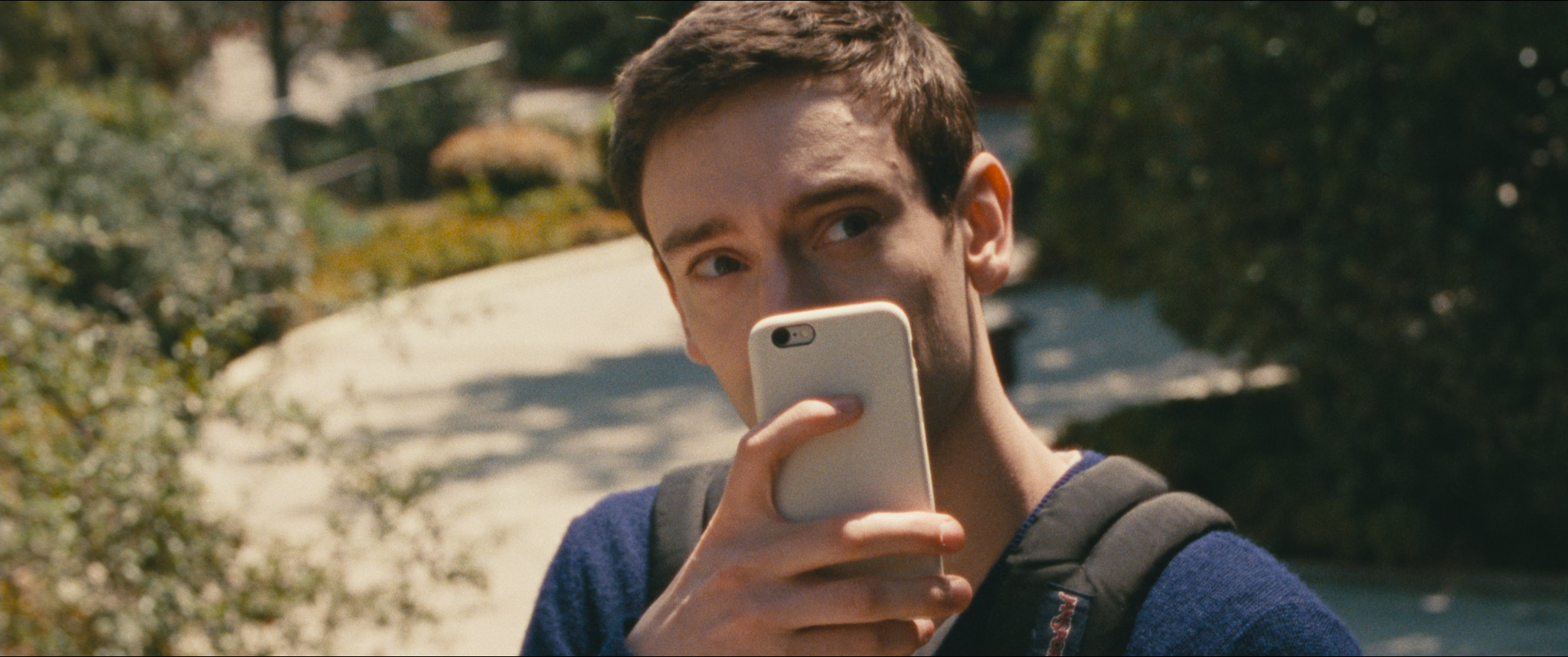
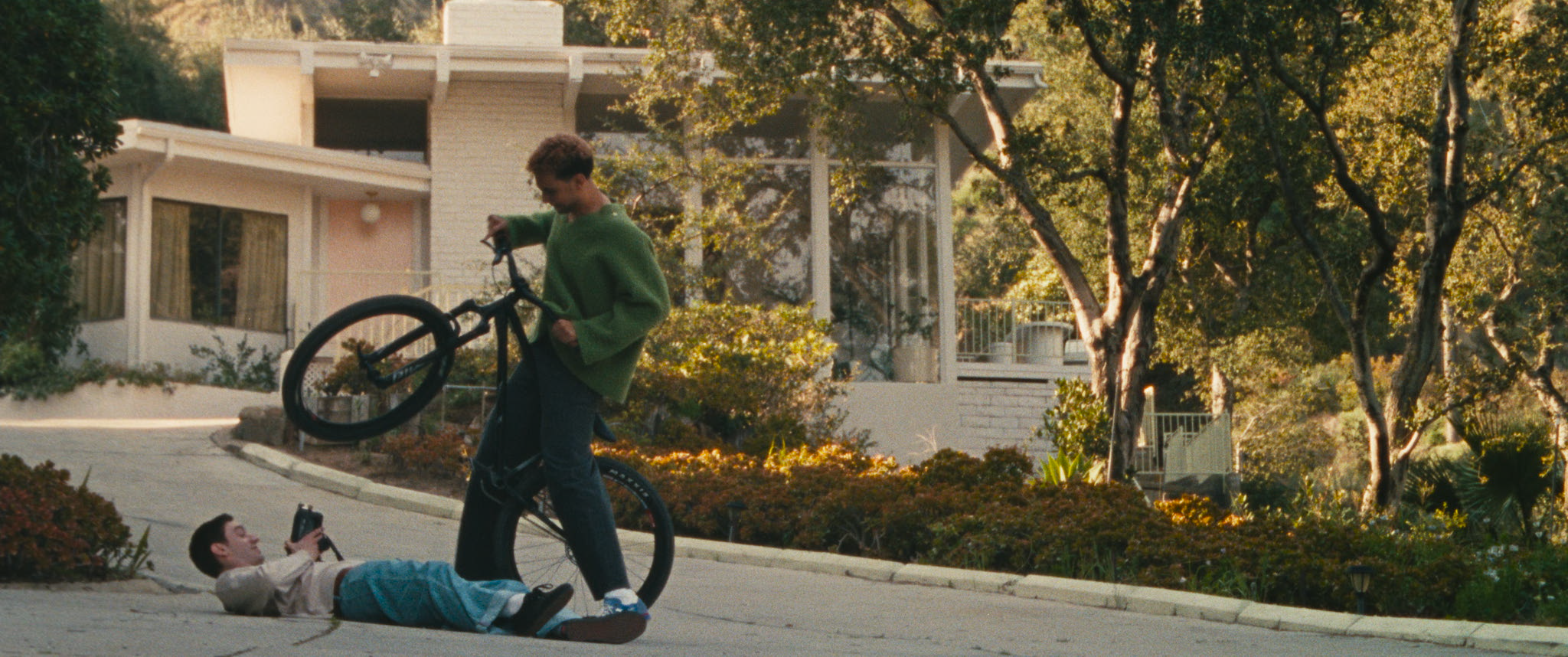
Music is obviously a core theme of the film. Archie, you worked with Rex Orange County a lot on the soundtrack and Oliver has an incredibly similar sound to him. Does the genre of music that Ollie makes have any bearing on what sort of person he is?
Archie: We were very specific about the kind of the artists that we were looking at – post-Frank Ocean, Brockhampton, Dominic Fike, etc. We all know a couple of those people, and hanging around some of them, especially in prep for this, a lot of them are very male-centric. The way that people communicate, the respect and the jokes, it still felt very playground to me. Whenever there’s a large group of men working together, it reverts back to being a playground. My brother’s a fireman and they’re still hazing each other, putting each other’s balls on their head when they’re waking up…
Théodore: What?!
Are there any dynamics that feel specific to the genre, versus a rap group or rock band entourage for example?
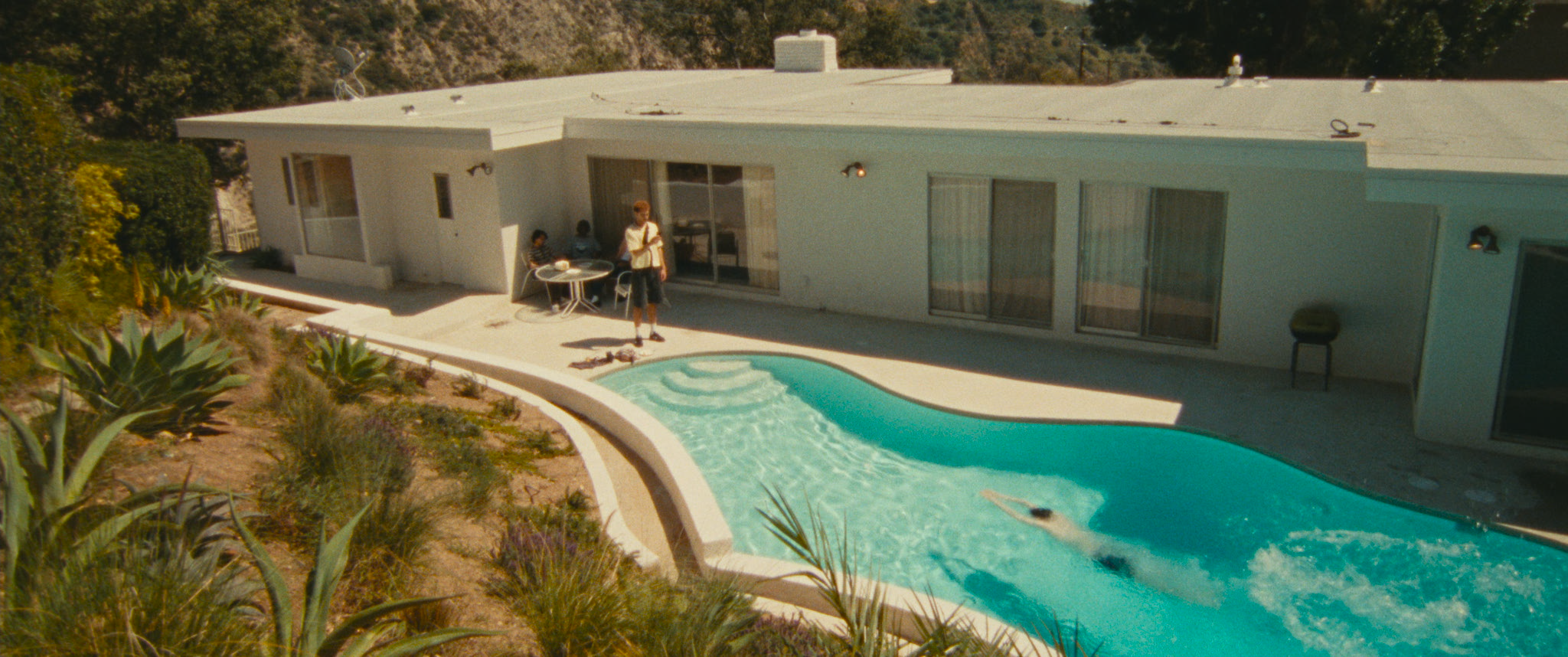
Archie: As far as it connects to Oliver as a person, what’s useful about this type of music is that everything around it is very DIY. You could make it on a laptop in your room, connect with some people over the internet, and now you have an album cover and a music video shot in your backyard and you’re on a Spotify playlist.
So the way all these people have assembled in Lurker is very DIY. It’s not like people grew up together in LA. Everyone has descended into this made-up business. I think that’s very true to the current era, any person can just be a business and have six people working on their podcast or whatever and be independent in that way.
And everyone has quite loose job roles…
Archie: Yes, and often [these guys] would all live in the same house, everyone would come to LA together, stay together and it gets a bit messy. Now you’re cleaning up but you’re also going to edit that video – it’s almost like a college house and that feels very specific to that world of musicians. I don’t see that with pop necessarily, it’s too well oiled of a machine.
For those with a high threshold for cringe, Lurker is out in cinemas now

