
Wayne McGregor’s exhibition will have you thinking about your body in a whole new way

Artist Corbin Shaw interviews the choreographer and director about his latest exhibition, Infinite Bodies, about what it means to be human in a digital world.
Culture
Words: The Face
Photography: Ravi Deepres and Luke Unsworth
In legendary choreographer Wayne McGregor’s exhibition, Infinite Bodies, visitors are invited to ask questions that feel increasingly pressing: what does it mean to be human? What’s the purpose of our bodies in a digital world? And how can we understand ourselves in this realm?
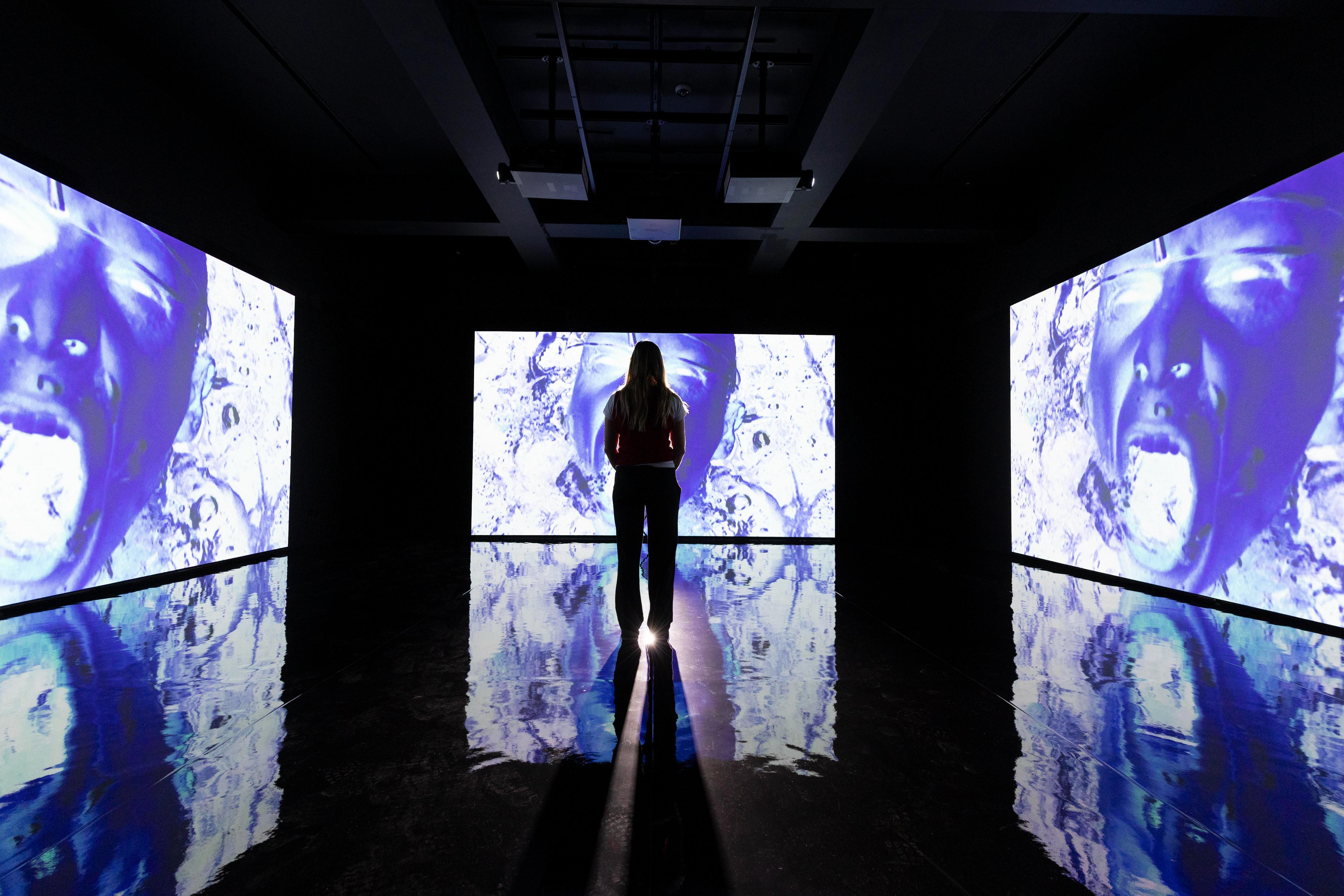
Though the exhibition doesn’t promise an answer, it guides us through multi-sensory installations that help to bring us closer to one. Drawing on works from McGregor’s 30 year career, the exhibition includes films from projects with Radiohead and designer Gareth Pugh, as well as newer works such as AISOMA, an AI tool trained on the choreographer’s own archive, allowing viewers to interact with the programme through movement to create a live, physical dialogue.
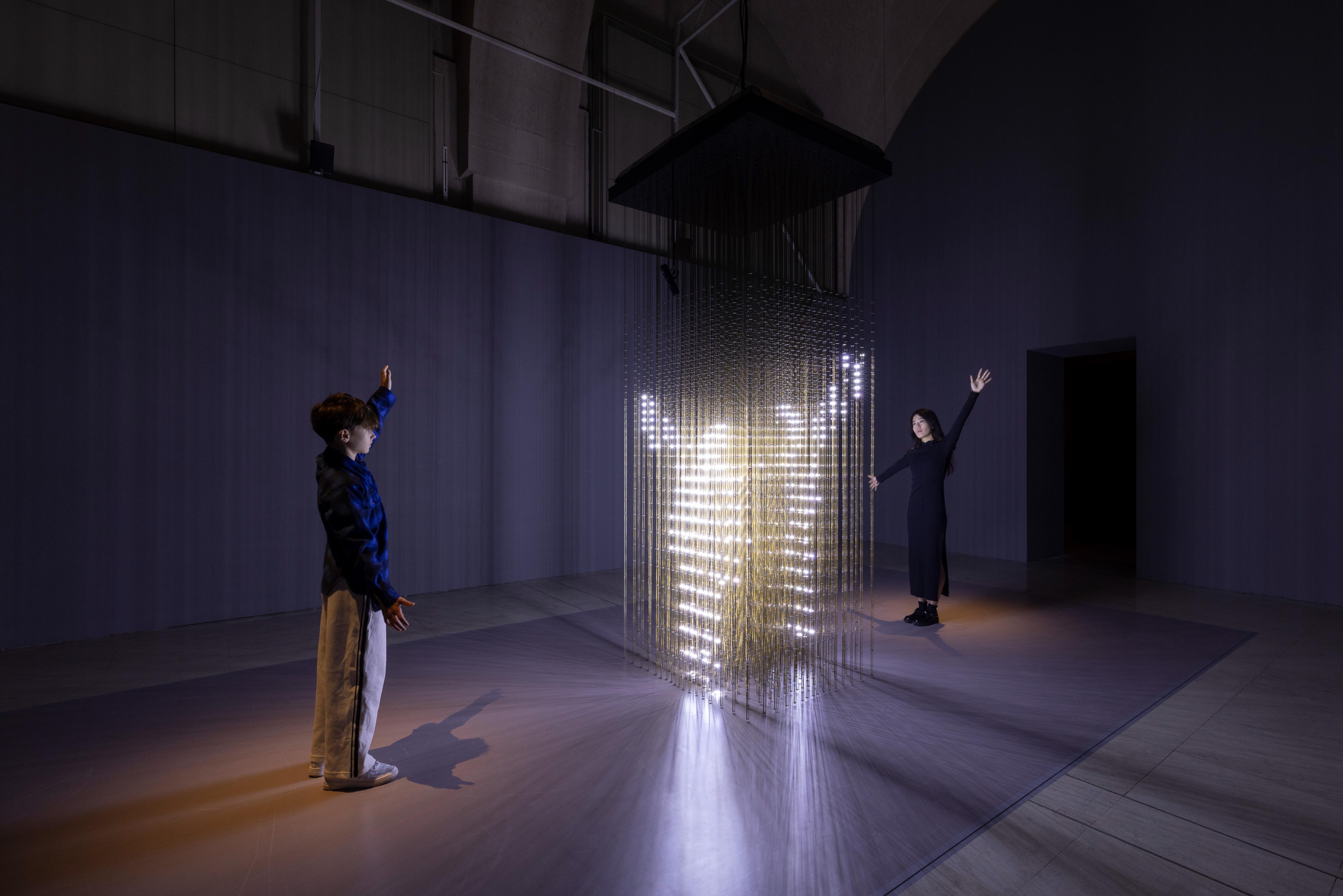
With occasional appearances from live dancers, the space at Somerset House becomes a playground where visitors can see how movement and data points might intersect. And yes, we know that might sound clinical, but McGregor manages to bring a real touch of humanity to the whole process. Take Future Self for example, a piece consisting of a blinking tower of LED lights that respond in real time to movement, forming a shapeshifting, glowing image of the body as dancers wind and twist themselves around it.
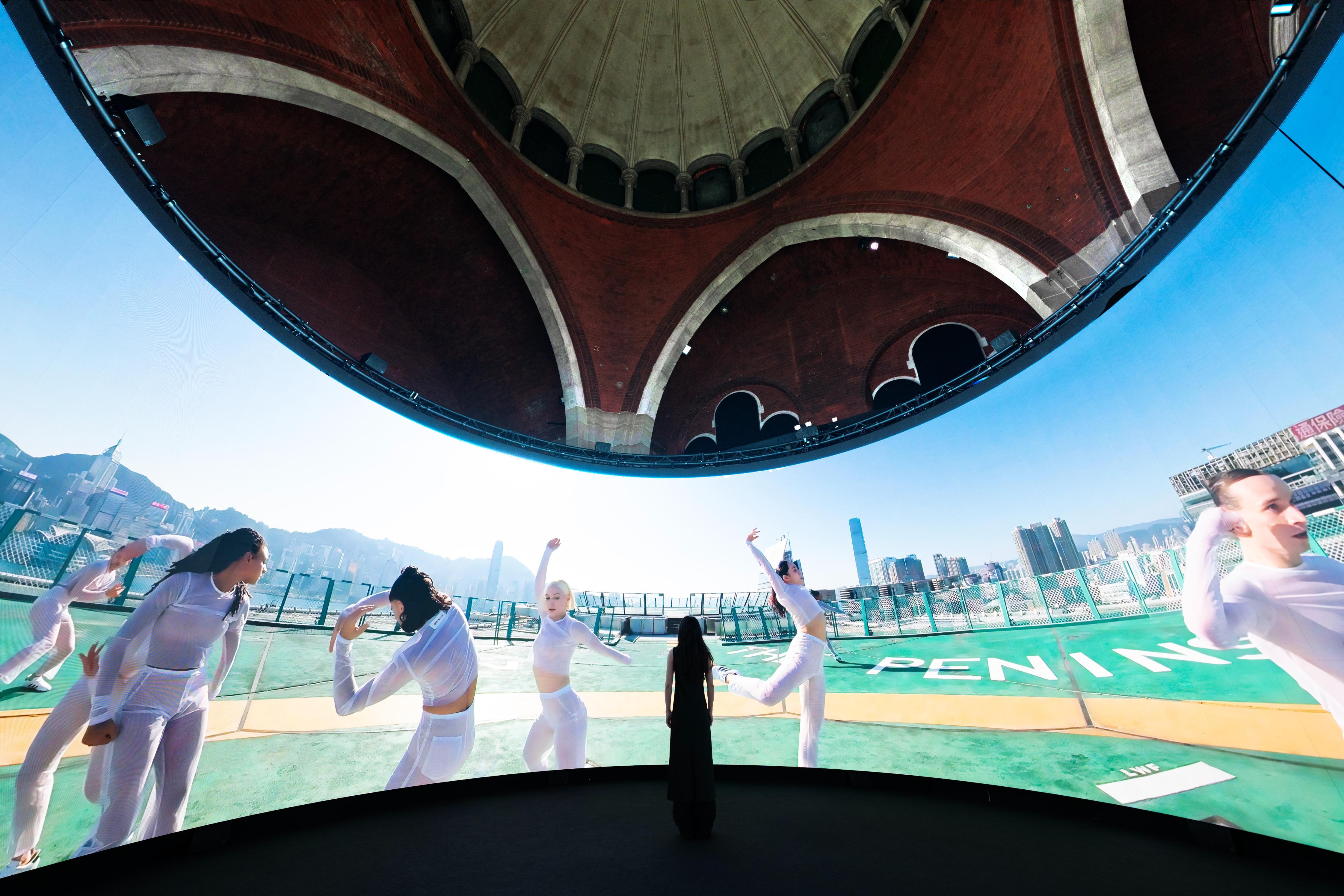
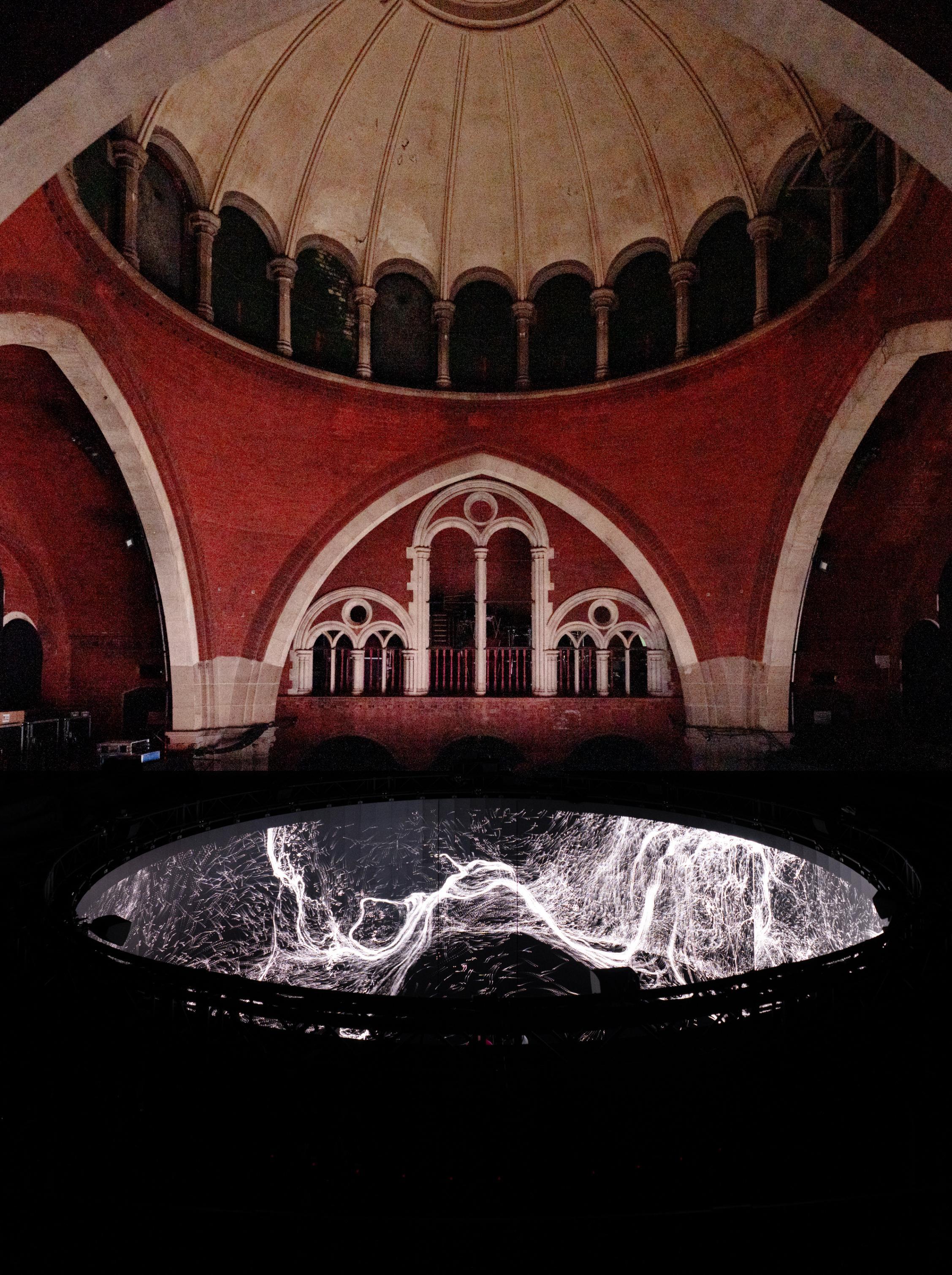
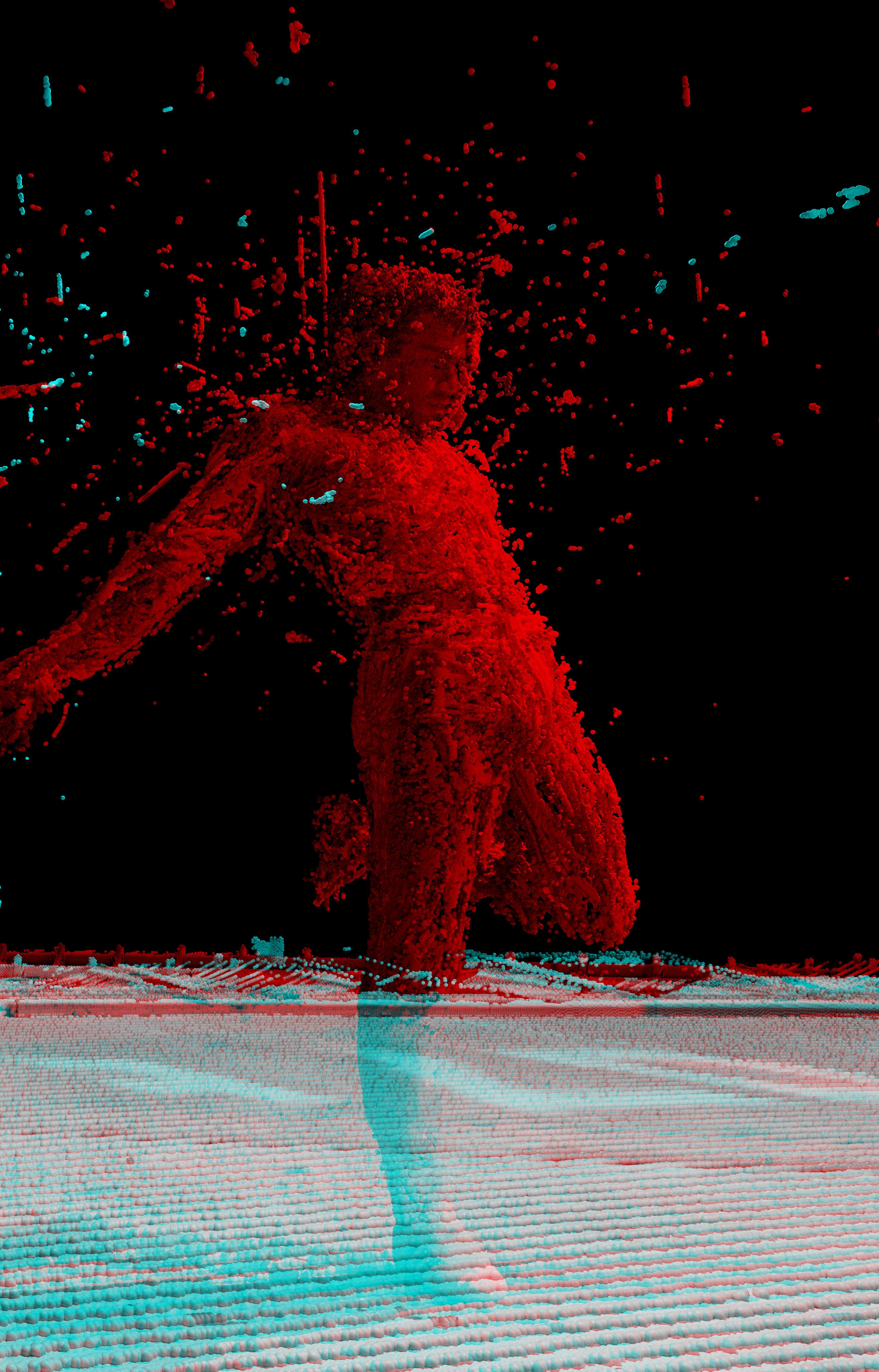
Accompanying the exhibition is On the Other Earth, a 3D, 360 degree film installation that brings viewers so close to every stretch, tilt and point of the dancers that surround them, it almost feels like you can reach out and touch them. Displayed on a large screen, On the Other Earth was partially filmed on a helipad in Hong Kong, with the hyperreal recording featuring dancers from both Company Wayne McGregor and the Hong Kong Ballet.
Unsurprisingly, McGregor has spent much of his career, thinking about the intersection between movement and technology, launching the first bi-directional performance in two countries over Skype in the ’90s, where two companies performed simultaneously in different parts of the world.
To find out more about the exhibition, Corbin Shaw, who’s long been interested in movement in his practice, gave McGregor a ring.


I heard in a couple of interviews you talk about John Travolta being your first introduction to dance. I wanted to talk about some of the dance floors that you first found yourself on.
I used to be quite a physical child, so I was doing lots of gymnastics. When I was very very young, I would just dance everywhere but I also grew up in Manchester so by the time I was in my late teens we were in amazing clubs like the Hacienda and the Green Room where there was really incredible music. And [in regards to] John Travolta, I think what I loved about him is just the swag. I don’t even know if it was the dancing, it’s just somebody that’s so comfortable in their own body. You still see it now when you watch those movies.
You moved down to London in 1992 and set up your first dance company. What was that like? And do you have any words of advice for younger people who want to follow in your footsteps?
London in the ’90s was crazy, in an amazing way. But when I came, I did not know a single person and so it was challenging but I was pretty lucky. I started to make some small things with friends that lived elsewhere and I got a more regular job eventually. It’s very different now and I think it’s really hard for young artists coming into London. There’s still an amazing cultural energy but it’s just really hard to live because it’s so expensive. I lived in Tower Hamlets in the middle of the Bangladeshi community that really looked after me and would feed me…I lived in that house for seven years. I think you just have to build the human connections mostly. And if you build them, it’s much easier to build out a career path.
During that time, I also got my first Arts Council grant which was five grand and at 22, that was a lot! Around then, I opened a show at The Place, which is an experimental theatre in King’s Cross, and the director of that theatre liked the show so he made a few changes and then sent it on a tour of 12 European countries which was much easier to do back then. He also bought me my first computer which was a see-through iMac to send emails on so it’s really important that you find people who will champion you and help you with stuff you need. Who would you say are your champions?
Katie [Grand] and her husband Steve, before he passed, would be a big one for me. They were people who felt and sounded like me because for a long time I was like, “Wow, I feel like such an alien” and I felt like I culturally knew nothing. I wasn’t well traveled. But they encouraged me and showed me things and it was Katie who brought me to your performance.
But how amazing is that? It’s the soft power of those creative networks. I’m so similar to you, I grew up in a really working-class background. The only dance stuff I’d seen were musicals. I’d never seen any experimental, postmodern dance or anything like that [growing up].
Are you a fan of La Horde’s work?
I am, La Horde were my first hero company in Venice when I started [curating the International Festival of Contemporary Dance] in 2021 and what I like about their work is that cross between fashion, cultural politics and everyday physical language. There’s another really amazing Spanish company called KOR’SIA who I presented last year in Venice who do similarly edgy things.
La Horde were the only dance company that I’d seen using tech in their work and when I was coming into Infinite Bodies, I was thinking, how is this going to work? But I was honestly blown away by it. Can you explain for people what the performance is, how you made it, and how you presented it?
It came from a really simple question which is the same question I’ve asked for ages, which is if you’re working with a digital body, why doesn’t it have the same kind of presence or physicality or empathy as a real body?
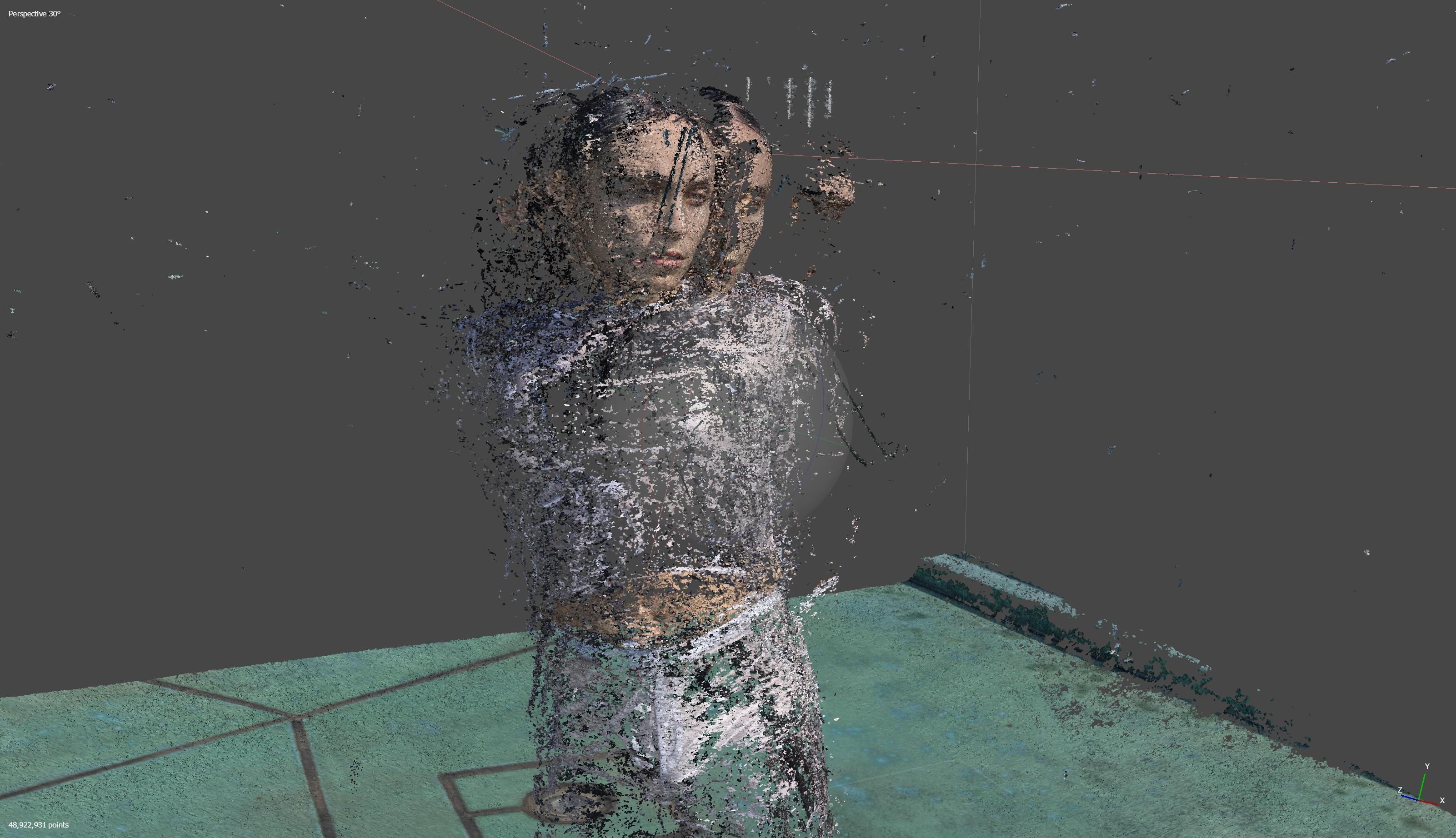
And in a way, lots of the work I’ve been doing with digital bodies is about what is missing as an experience? There’s a lot that’s gained, but what’s missing on a human level? So I just thought one of the things that’s really missing is that you feel that the body is really there. So we’ve been working towards something that’s almost hyperreal [in the installation].
And then the other part [we wanted to emulate was] how in life, you see everything, everywhere, all at once and you choose what to give your attention to. There’s the tech aspect of that because you’ve got the 3D glasses on, but you’ve also got a [cylindrical] stage which just goes back infinitely and you see really really small dancers at the very back like in life which can feel like a mindfuck.
The AI SOMA machine that was so fascinating to me too…
With that, I wanted to do an installation for the public that would help people find their physicality through self, sometimes [in life] that can be something like alcohol, drugs or friends but with the AI SOMA, because it’s quite cartoony and quite fun, a lot of the most unexpected kinds of people dance with it. What you’re really doing is moving that avatar and then that avatar is thinking and you’re learning it back.
Part of the exhibition is to try and get people to think about physical intelligence and [actually], we’re all really good at it. We just forget that we have it, like when somebody’s walking down the street we straight away know whether we’re going to avoid them or not. We’re reading bodies all the time.
Would you call yourself a tech optimist?
I am but with healthy scepticism, I think you need to be optimistic to have vision and to think your way into an idea. I think you have to see that there’s potential or possibility in the idea otherwise you get stuck but I’m not so enamored by technology that I think it’s going to solve all of the problems, but I’m not worried either. And you need to get a lot of this tech into the hands of young artists so they can not only test it in their creative practice but also help us work out what the ethics of that are.
Wayne McGregor: Infinite Bodies at Embankment Galleries, Somerset House, London, and Wayne McGregor: On The Other Earth at Stone Nest, Shaftesbury Avenue, London is on until 22 February, 2026
We Are Movement: Unlocking Your Physical Intelligence by Wayne McGregor is published in hardback by Bloomsbury Tonic, £20

