
How to build a girl in modern America

What can sororities, #RushTok and influencer-student megastars like the Darnell sisters tell us about US girlhood? We visit the University of Alabama to find out.
Society
Words: Biz Sherbert
Photography: Bella Newman
Taken from the winter 25 issue of THE FACE. Get your copy here.
It feels like every August now, the internet is taken over by sorority girls. Dozens, all dressed alike, dance in step to a sexy 2000s hit, hips rolling and eyes popping to the beat. They’re all pretty, but the hottest girls are in the front, giving the most as the world watches. These are the girls of #RushTok, a side of social media dedicated to the highly competitive proceedings by which sororities at American universities choose new members.
Rush, as it’s concisely known, first went viral four years ago, when sorority hopefuls at the University of Alabama began sharing their daily outfits for the week-long recruitment process. Their looks were excessively coordinated, each item bouncy and clean, punctuated with mass-luxury goods such as David Yurman bracelets and Golden Goose sneakers. Most importantly, there was a new outfit for every day of the week, each as articulated in its conscious splendour as the last.
Those not fully initiated in the ritual femininity of the Deep South – so, most of the global population – couldn’t look away. This was an expression of ultra-feminised beauty that evoked gypsy brides, Barbie dolls and long-ago ladies wearing rouge and corsets, their curls shaped by hot metal tongs. But there it was, in our world of smartphones and women wearing jorts to the office.
The breakout star of #RushTok was now-22-year-old Kylan Darnell, an Ohio-born pageant girl with a smile like sweet tea. The news media student’s looks were a step above the rest, the result of years of practised put-togetherness as a former Miss Ohio Teen USA. Kylan was great on camera, too, opening each GRWM video filmed in her Chanel-themed dorm room with a sugary, soon-to-be-signature Southern drawl: “I hope you’re having a great day, not just a good day!”


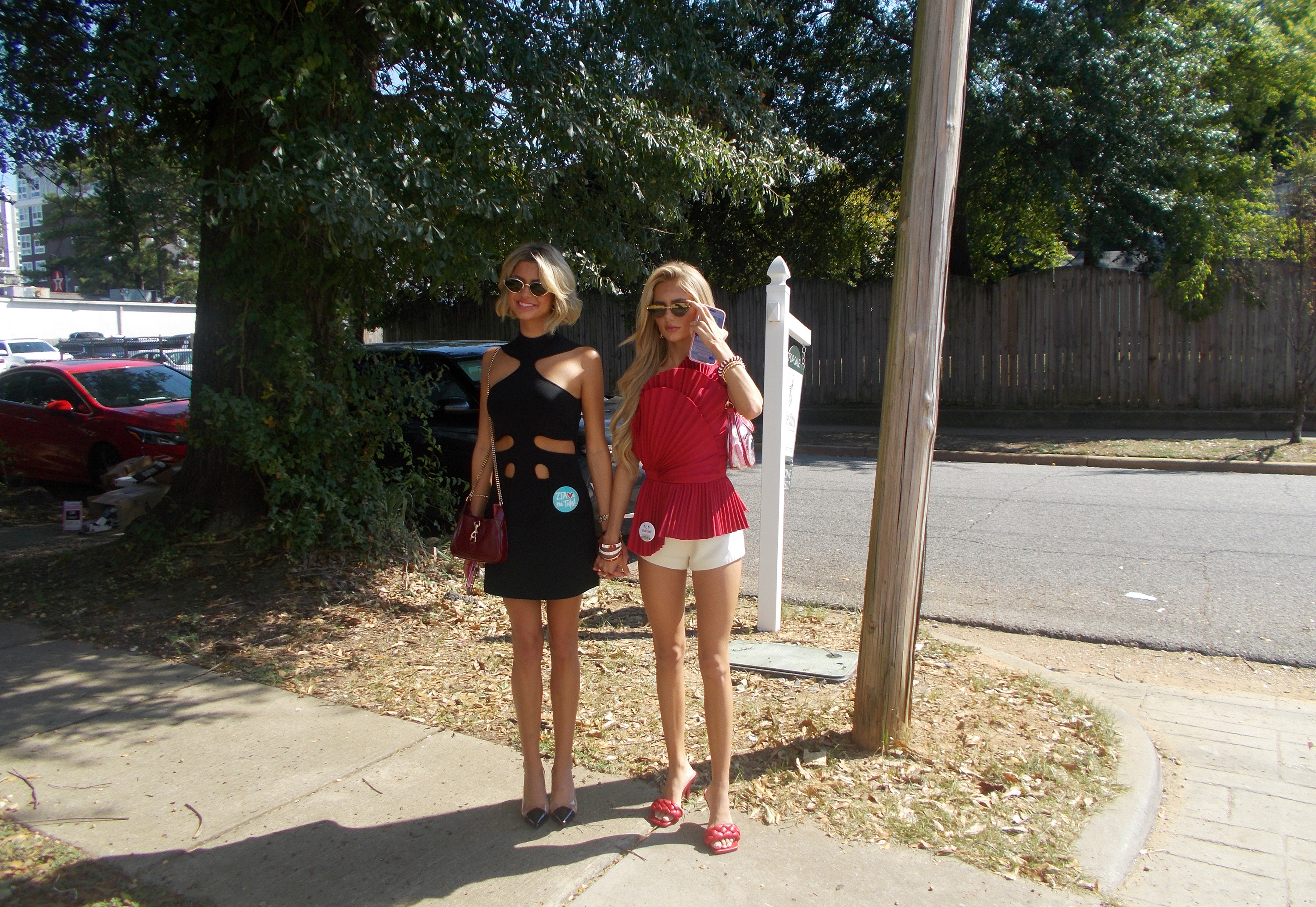



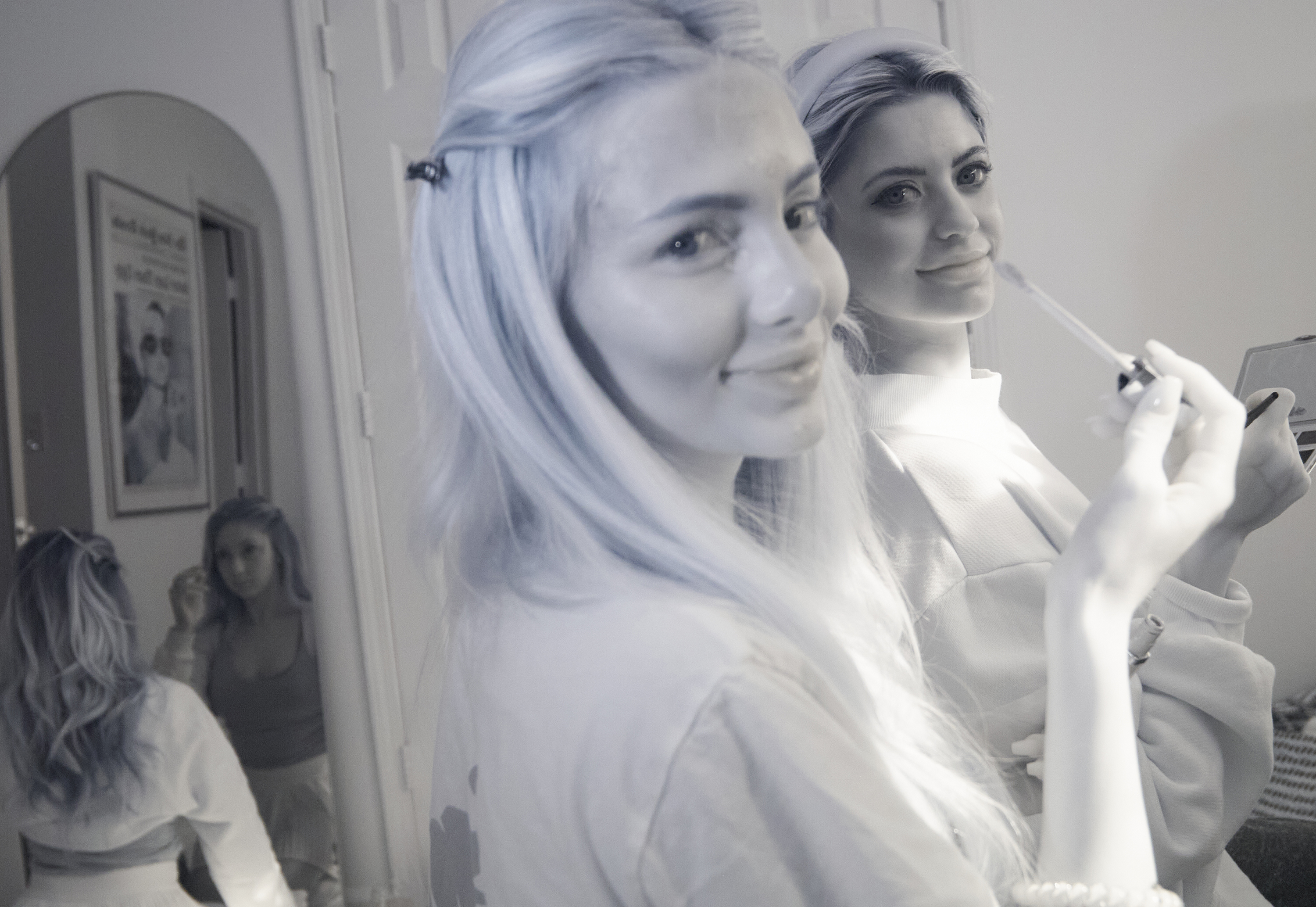
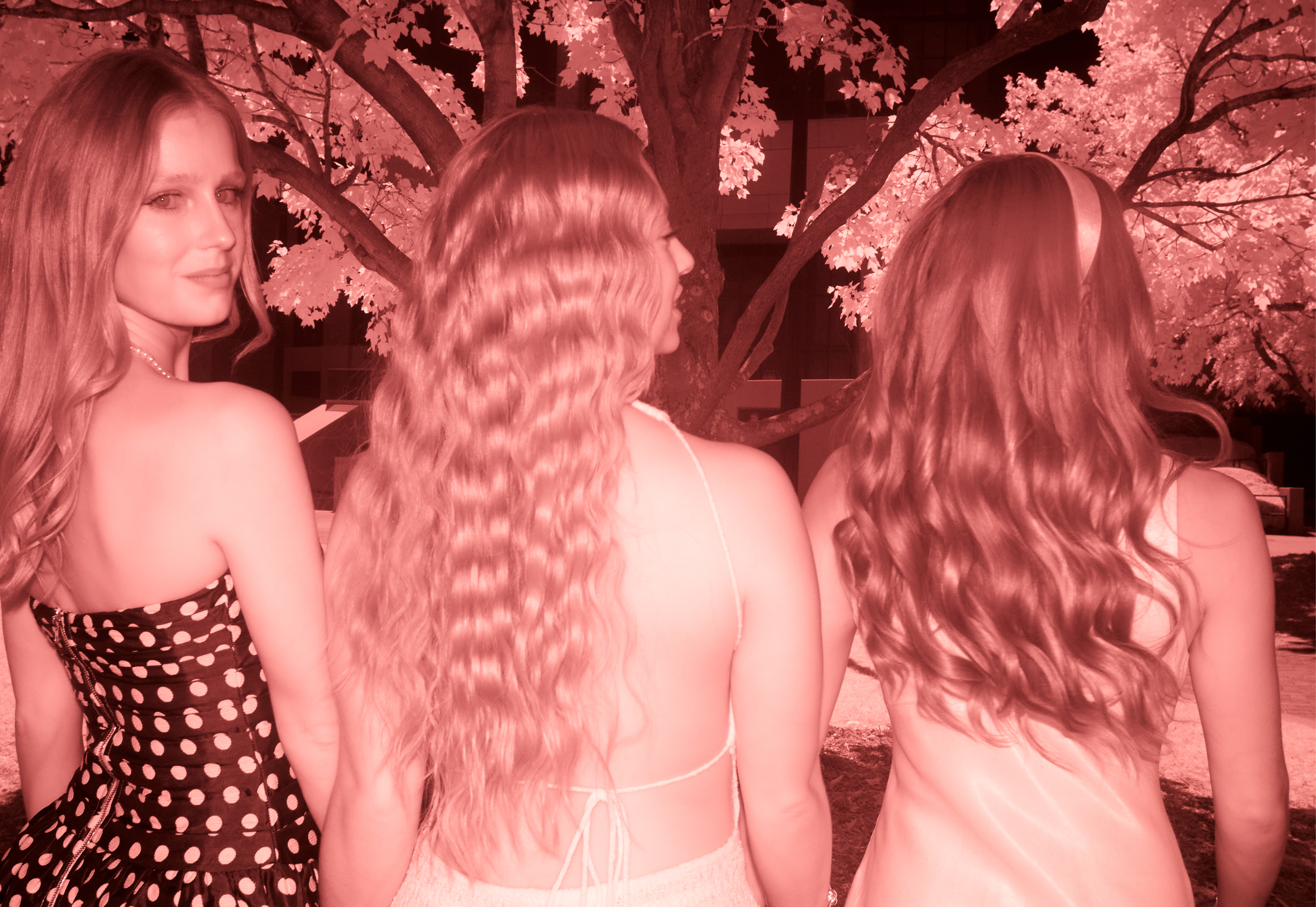
Since enrolling at the University of Alabama, or “Bama” as it’s colloquially known, she’s reached more than 1.3 million followers on TikTok and is, in some ways, the face of the university, rivalled only by the school’s famous football players and coaches. There are entire Reddit threads dedicated to understanding Kylan’s life, some of which are catty and speculative – an indication that she is captivating enough to be treated like a girl who is so popular, she must have skeletons in her closet. Kylan’s orbit has grown with each passing semester, eventually encompassing her younger sister, public relations student Izzy, who, at 19, has 1.1 million TikTok followers of her own and started her freshman year at Bama this August.
#RushTok has only become more influential since Kylan helped put it on the map. Sorority recruitment content is now bigger and flashier than ever, is reach is now wide enough that it’s been claimed by boomerish MAGA supporters. The comments on this season’s dancing videos are full of endorsements such as, “Keep going, girls! This is the America we’re fighting for!”
Meanwhile, fashion brands like Skims and Parke have taken to courting social-savvy sorority sisters, casting them in advertising campaigns and offering endless PR packages. The Darnells have been there since the start. Who better, then, to act as my guide to the American girl everyone’s obsessed with?








I take the Friday morning flight from Newark, New Jersey, to Birmingham, an hour’s drive from Tuscaloosa, the college town that’s home to the University of Alabama. Such is the wide, beyond-campus popularity of college football, that the plane is full of fans travelling in for the third game of the season against the University of Wisconsin. I hear “Roll Tide!” – Alabama’s rallying cry – before I’ve even made it through security.
Pulling up to what I have down as Izzy’s address, I circle the block a few times, thinking the Darnell girls must live in a gleaming new-build condominium rather than the unassuming terraced home in front of me. Outside are cardboard boxes emptied of assemble-at-home furniture, waiting to be collected. Then Kylan opens the door wearing a tight pink workout dress. Izzy’s right behind, wearing the same in yellow. Both are tan and tiny; their slightness feels like a given on social media but is remarkable in person.
This is not the student accommodation a British person might recognise. Rather, it’s a well-proportioned two-storey house, meticulously outfitted from floor to ceiling in plush creams and wheats, the literal opposite of the stain-obscuring navy or grey sheets that infamously haunt dorm rooms. All the surfaces, which are mostly smooth pale marble and blonde wood, are topped with knick-knacks that seem to have been selected to suggest tastefulness rather than for sentimental value: big wooden prayer beads and chunky Gustaf Westman ceramic dupes. On the walls are large chrome mirrors and framed posters of faux-newspaper front pages, headlined by girl-power slogans such as “It’s a woman’s world, you’re just lucky to be here”.
As we settle into the couch to talk, Kylan leads the way – years of winning pageants have made her unshakeable in conversation – while Izzy zones out a little, chiming in a joke every now and then. They both offhandedly flip through endless notifications and Snapchat messages as they hand off answers to my questions. Kylan came to Alabama without knowing anything about sororities. She and Izzy grew up on their family’s farm in Franklin Furnace, a town of around 1,500 people at the southernmost point of Ohio. “If you did something on Friday, every teacher was talking about it on Monday,” Kylan says. Despite a lifelong commitment to glamour, the girls describe their childhoods as full of mud pies and shenanigans.
“My mom would lock us outside all summer basically,” says Kylan, “because Izzy loved to make messes growing up. I did too.”
“They made it seem like if I was not in a sorority, I would have died”
Kylan Darnell
Their mother, Tonya, who once competed for the title of Miss Ohio herself, started the girls in pageants at the age of five. Kylan won her first competition that same year, earning the title of Little Miss Portsmouth, named for a nearby town. “She knew who she was from a young age,” remarks Izzy, quoting the viral line from Euphoria.
When the time came to start thinking about college, Kylan had freedom to explore more expensive, out-of-state options, thanks to scholarship money she’d secured from winning a pageant. She chose Alabama for its well-known sports broadcasting department, which she’d seen older girls on the pageant circuit enter as the first step in their post-competition careers. At the beginning of her first year, Kylan and her mum went out to dinner with a born-and-bred sorority girl and her own mother.
“Her great-grandma was a Kappa Delta [a top-tier, old-money sorority], her mom was a Kappa Delta… Greek ran through their veins,” she remembers, referencing the practice of sororities and fraternities being named after letters of the Greek alphabet. “They made it seem like if I was not in a sorority, I would have died.”
Being a member of a sorority is not like being a member of a club or any other student organisation. It encompasses the entirety of your university experience across four years, all the way to graduation. Your sorority – and fellow “sister” members – determines how you spend your time, how you socialise, how you see yourself and even how you look, with systems of surveillance and discipline to encourage and enforce the standard. Part of the appeal of joining Greek life is that membership doesn’t end when college does. A sister in your sorority might get you your first job post-graduation, or your daughter her first internship 20 years from now.
“Part of the appeal of joining Greek life is that membership doesn’t end when college does. A sister in your sorority might get you your first job post-graduation, or your daughter her first internship 20 years from now”




Kylan decided to rush after her mum encouraged her to share outfit videos she’d originally made for the family group chat on TikTok. They got millions of views, her online popularity undoubtedly smoothing her entry to Zeta Tau Alpha. It’s a sorority known for its preference for pretty girls and for its top-tier status on the New Row, a group of more recently established, less traditional (read: new money) sororities on campus. And the benefits flew in both directions: post-Kylan, Zeta expanded its reputation as first-in-line for sorority sisters who also want to be influencers.
Kylan’s ascension came on the tail of the first generation of TikTok stars – think: Charli D’Amelio, a pre-cool Addison Rae – when much of the general public still saw TikTok as a cringe app for dancing teens. Combine the app’s uncrystallised cultural status with a level of visibility never before seen on campus, and you have a perfect recipe for social ostracisation. Particularly in an environment that historically rewards conformity.
People took pictures of Kylan everywhere she went. Peers filmed her covertly in class, later posting it on social media. Eyes were on her constantly, even in the dorm room where she was living with randomly assigned roommates. “I couldn’t get some water without giving [someone] a photo op. I never knew peace. I was like a meme, a character, not a human. I just cried.”
A breaking point came when Kylan went back to her family home in Ohio for the first
time. “My parents were like: ‘I don’t know if we need to put you in therapy, and we’re here for you, but you are not the Kylan we know and love.’” Kylan gets up and returns with a small pouch of Gushers – bright, syrup-filled gummies – popping them into her mouth as we talk.
Slowly, things got better. She formed an immediate bond with her sorority “big” (an older girl tasked with mentoring a new member), a chatty Tennessee blonde called Maggie. But it wasn’t until her second year that Kylan found her true friendship group, reconnecting with Sanya, a sweet modelesque Zeta she’d met on day one of recruitment. “I never had a best friend until her, and I’m extremely grateful,” Kylan says. The two now live together with a few close friends in a house across the street.



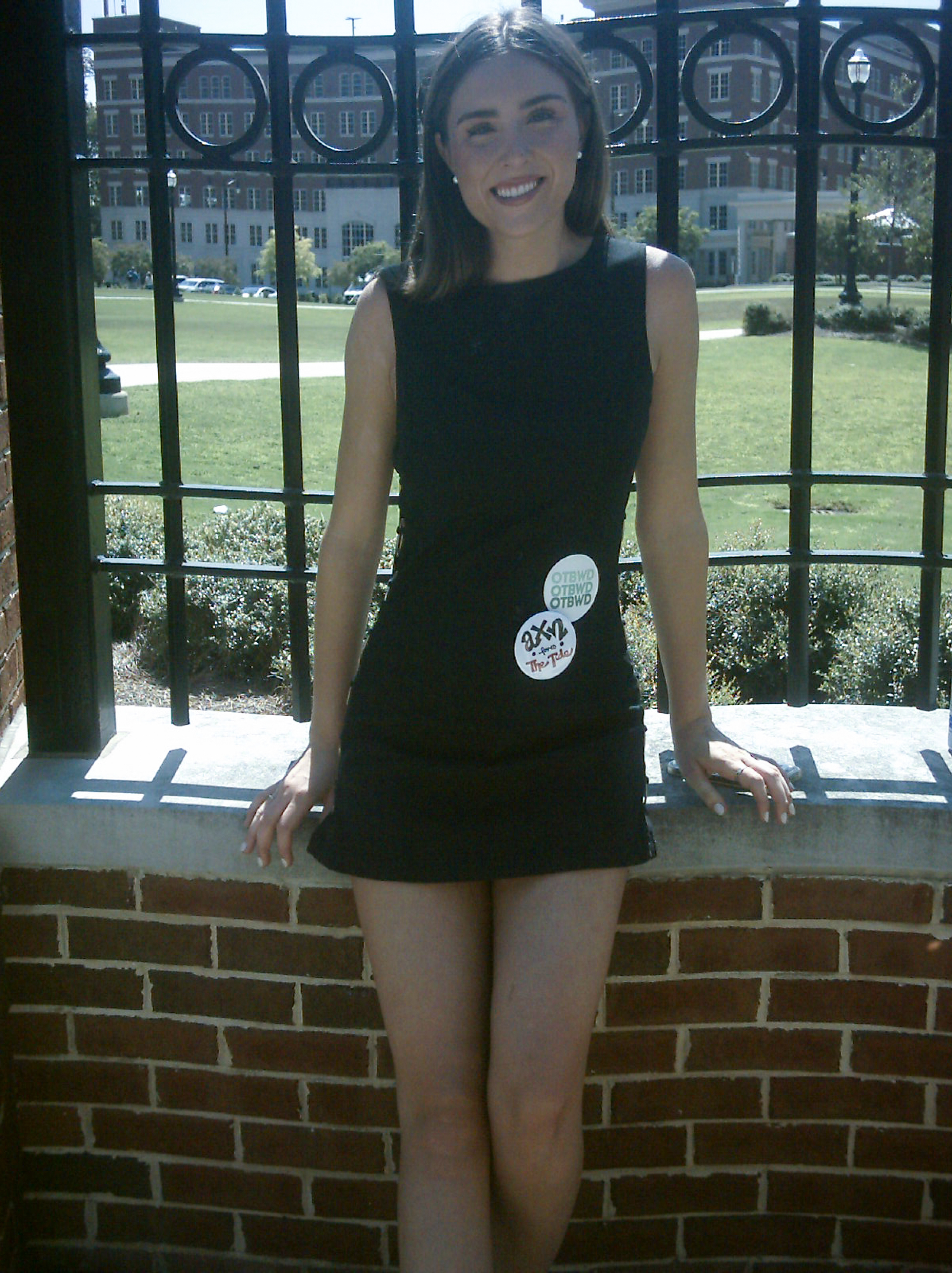




Izzy’s freshman year has been comparatively easier. It helps that she has the kind of thick skin you can only be born with. “She’s the perfect person to have an online presence because she cannot get her feelings hurt, genuinely,” Kylan explains. “Where I’m very tender-hearted, she’s the complete opposite.”
“I’m a playful ragebaiter, a little bit of a troll,” Izzy says of her online persona. Her first viral video saw her stumbling into her family’s pool an hour before prom, ruining her dress and glam before miraculously recovering with fresh hair and make-up in a new dress.
“I was just doing it for the clicks, man,” she says wryly. Since then, Izzy has continued to post content that showcases her devil-may-care attitude towards her platform. She opens each video with a cheeky “Wassup, fools!”, a clear contrast to Kylan’s kumbaya catchphrase. In fact, trolling is so much a part of her persona that when she announced in August she’d dropped out of sorority recruitment during the final round, commenters debated whether it was all just a stunt to rake in views from this year’s rush content. “You would’ve thought I created cancer and cured cancer all in a day,” she says with an eye roll.
While Izzy ultimately chose not to follow her sister into Greek life – she remains, at least, Greek-adjacent – what they share is the now-upgraded status of influencers on campus. “At first, social media was never accepted,” Kylan says. “Now every girl here wants to be an influencer.” Not for nothing do I hear Alabama referred to as “content creation university” several times over the weekend.
“Everyone wants to look as good as possible, and what good looks like is not subjective. At the University of Alabama, being beautiful is the most important thing a girl can do and be”
The next morning, I ring Izzy’s doorbell twice before she answers, overnight tan still smudged on her face and hands. Kylan and Izzy planned to start getting ready at 7am for the 11am game kick-off, but they both overslept after getting in at 2.30am from drinking downtown. Izzy shows us to her glam room upstairs. At its centre is a long smart mirror vanity that features a digital display of the temperature, among other figures. There’s a shelf lined with designer bags and shoes, tiny pairs of Louboutins and a mini pink Hermès Kelly decorated with charms. “Last night I was drinking Don Julio, this morning I’m acting a foolio!” Kylan proclaims as she marches in, saddled with bags of clothes and make-up.
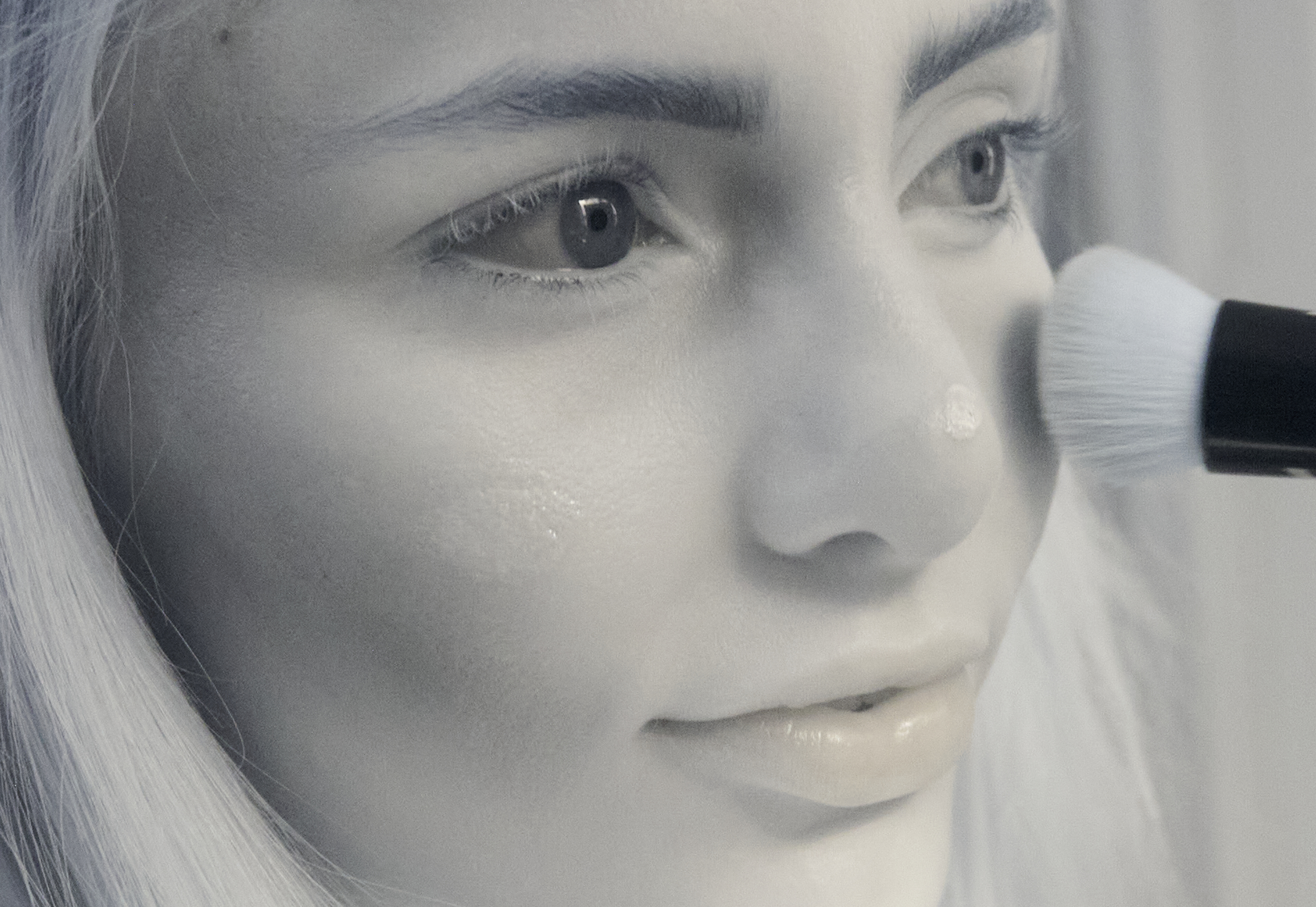
Kylan and Izzy get to work curling their hair and baking their faces, intuitively filming TikToks the whole time. It doesn’t click that they’re making content until later, when I see myself in the background of their latest posts. Glam done, we head to the game. The 100,077-capacity Bryant – Denny Stadium is the 10th largest in the world, a mark of how unfathomably huge college football is. The stadium rises above the earth like the crest of a concrete tsunami. The roar of the crowd is gladiatorial. The temperature today is forecast to hit the mid-thirties by early afternoon and there’s not a single cloud in the sky. Like most American stadiums, it has little overhead coverage, which means no shade. Only a few minutes in, I see girls walking around in knee-high boots unzipped for air circulation.
I approach two boys in blazers and red ties, the required game day uniform for pledges – recruits who have accepted a fraternity’s invitation but have not yet been fully initiated – to ask where I should go out tonight.
“Not to University Boulevard. That’s how you get spiked.”
“What about frat parties?” I inquire.
“Sigma Chi, Pi Kapp, DKE, those are the bigger fraternities where most of the hazing goes on.”
“What type?” I ask.
“They burst into your dorm at 3am and they pull you out to do some crazy shit.”
“Like what?”
“Like eating trash. I’ve heard of people eating throw up.”
“There was another one that had a guy drinking beer until he had to throw up and they had two pledges sitting beneath him. He just threw up in their mouths.”
I have a cheap seat in the upper bowl, the tip-top of the stadium reserved for freshmen and fans on a budget. This high, the heat and the tribal energy of new arrivals create the atmosphere of a bustling market in a desert country. Pledges in identical blazers and white shirts move up and down stairs like ants carrying leaves. Skinny boys slosh around with trays of lemonade. A ball of crumpled aluminium thuds off my shoulder.
I leave in the fourth quarter, fatigued by heat and lack of sleep. I walk to sorority row and catch two girls leaving the big white Phi Mu house that sits opposite the stadium. One has dark skin and dark hair, the other is pale and blonde. Phi Mu is the jewel of the Old Row, the designation for the oldest and most exclusive sororities and fraternities at Alabama. Their girls come from good families and have private Instagram accounts. I hear that PNMs – potential new members – rushing Phi Mu aren’t allowed to post about their recruitment on social media. So I’m not surprised when these two don’t want to talk to me, or that they’re really nice about it. “Unfortunately, with our sorority, we’re not allowed to take any kind of interviews. Thank you so much for the opportunity, though,” they say, voices steeped in a generous tone of trained sweetness.
As I walk down the nearby fraternity row, flags spray-painted in memoriam of right-wing activist Charlie Kirk hang from huge, stoic houses. “RIP CHARLIE KIRK JOHN 3:16” frames the front door at Phi Gamma Delta, while a sheet scrawled with “Long Live Charlie Kirk ‘Jesus is the answer’” bows in the middle over the stately brick at Sigma Nu. This tracks: Kirk was shot and killed two days before I arrived, while addressing a crowd at Utah Valley University, and Alabama has a reputation as one of the most conservative states in America. I’m told that the day Trump was elected for his second presidency was like game day times a thousand.

I head to Innisfree, a student Irish pub that is almost always encircled by a line, and where the cover to get in is $40 (I hear that last night it went up to $190). Inside, the bar is made up of several cavernous rooms with layers of ephemera on the walls. I’m told that it’s common to stay here for eight hours or more.
Keen to understand Bama as a training ground for conservative ideals preached by the likes of Kirk (marriage, kids, an SUV and a blonde blow-out), I want to know what dating on campus is like. The answer: cut-throat and male-centered. Kylan says she’d never date a guy who goes to Alabama and while Izzy’s boyfriend is a student here, a freshman baseball player she met at a bar, her opinion of Bama men is equally low: “The guys here are ugly. The girls are fabulous.” Their views are shared by a sorority girl I meet at Innisfree, who witheringly declares of a typical Bama couple: “You’re looking at the next Alix Earle [going out] with a 400-pound redneck fuckface.”
Yet there’s a stereotype that Bama girls go to college to meet their husbands, accompanied by not-really-jokes about enrolling for a “MRS degree” (i.e. going to college only to become a “Mrs”) and locking in a ring by spring. “Their families have been working together for the last 40 years,” I’m told by an anonymous sorority girl, referring to old Southern families, especially those from Alabama, who carry on the old-world view of marriage as a consolidation of power, bloodline and resources.
Kylan recalls a conversation at another mother-daughter dinner. “My mom was like, ‘Kylan’s doing sports broadcasting. What’s your daughter doing?’ [The other mom said,] ‘Oh, baby, my daughter’s getting her MRS degree.’ I look over and my mom’s mouth is on the floor. It was so funny. A lot of girls are here for that.”
The pressure to succeed in this sexual marketplace is immense. I talk to a girl whose last real meal was on Thursday night, two whole days ago, to look better in game day and going-out photos. Hunger is kept at bay with packs of candy, stashed in purses for quick access at the bars. “It gives you quick energy and keeps you from throwing up when your mouth starts watering,” she says breezily. Another girl says that everyone’s on Ozempic, paid for by their parents, because it’s cheaper than the cost of food.
I’m a little shocked to hear how far these girls are willing to go sweat, inject and starve themselves into the Bama beauty standard and how normalised it is by the adults in the room: parents and even the institution itself, which allows its debit-style Bama Cash cards to be used at the local medspa for lip flips and filler. But I’m not totally surprised, either. These are the same conversations I hear from working women in New York and London – thin girls adding weights to the scales while weighing themselves to get a doctor to sign off on an Ozempic prescription, thin girls flying to Asia to get an ounce of fat liposuctioned. Everyone wants to look as good as possible, and what good looks like is not subjective. It means a tight body and a young, sexually inviting face.
Here, though, the stakes feel even more dire. I see how girls who are larger or not considered beautiful are invisible to boys. I hear about fines for Instagram posts deemed “trashy”. You must look this way because the alternative is punishable. At the University of Alabama, being beautiful is the most important thing a girl can do and be.


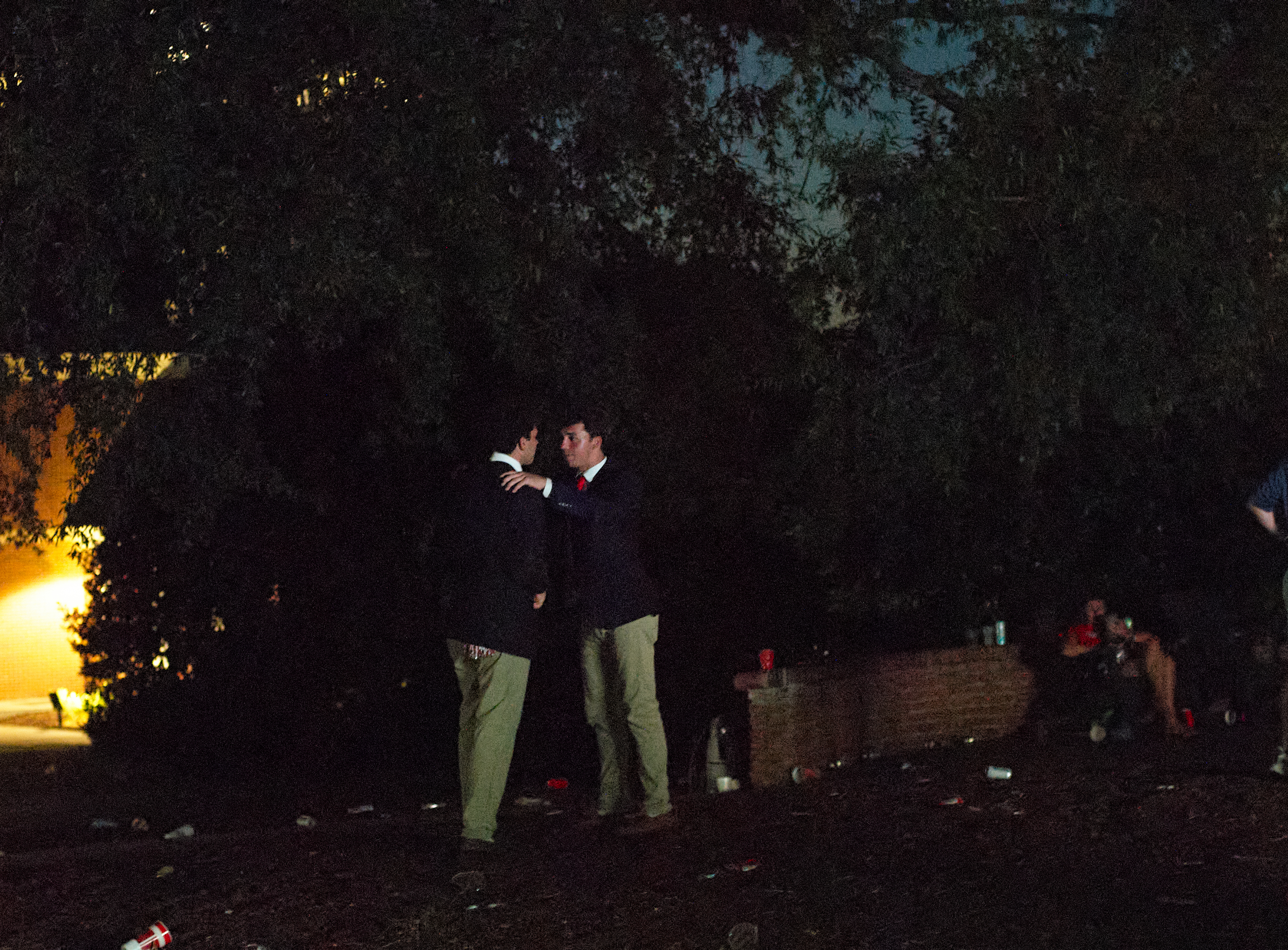

At Innisfree, I try the bar’s speciality, a milky purple Jäger and rum concoction called a Grimace Bomb – after the McDonald’s character – and decide it’s time to leave. I pay the cover at another bar on University Boulevard and watch a girl swipe through another girl’s engagement photos while Get Low by Lil Jon fills the room. I hear about a frat party across campus and call an Uber.
My driver asks what I’m drinking tonight. Vodka. He opens the glove box and hands me two mini bottles of Tito’s. He usually has tequila, too, he says, but he ran out.
The fraternity is checking IDs. The boy in charge scoffs at the year on my driver’s license as he inspects it under a flashlight. “C’mon. Pushing 30? You’ve got to get a new one of these.” He thinks I’m under 21 and have a bad fake ID, but lets me in anyway. I walk in with a little more blood in my limbs.
The party is in the grassy courtyard of a large U‑shaped building, which is technically a house but has the metal doors and fluorescent lighting of commercial buildings. There’s a big stage with a DJ booth and multicoloured concert lights that twist out onto the crowd. Boys watch other boys DJ and girls in fast-fashion corsets move their hips and take videos of themselves. A guy who looks about five years older than everyone else is pouring vodka straight from the bottle into people’s mouths.
There are a lot of people here, hundreds, mostly freshmen who can’t get into bars yet. The crowd feels excited and free, far less self-conscious than anywhere else I’ve been.
The music is the same as what was played at frat parties when I visited my sister a another big Southern football school 10 years ago: vibey EDM remixes and hip-hop hits from the early 2000s, building up and up and up before whooshing down. It’s fun. I join the line for the girls’ bathroom, which is three stalls in a small room of painted cinder block. It’s so hot the walls are dripping with sweat. The girls in front of me realise they both know the same guy; they send him Snapchats, squealing and throwing up peace signs. Back outside, the grass is covered with flattened cans and red plastic cups. A boy and a girl clumsily make out as Clarity by Zedd plays: “If our love is tragedy, why are you my remedy?” This is the first time I’ve seen anyone get physical, and it’s already half an hour to midnight, which feels kind of late for that.
I leave Tuscaloosa the next day, a quiet Sunday afternoon. As I wait for my Uber to the airport, a white convertible filled with girls singing along to Cigarette Daydreams, a 2014 pop-rock hit by Cage the Elephant breezes by: “So sweet with a mean streak… Hide behind that baby face.” My brain is fried. I watch fast food restaurants and strip malls blur by on the highway. I don’t feel any judgment towards the girls I’ve met this weekend for taking Ozempic, or starving themselves, or bending over backwards to fit in or make an ugly guy choose them. They are doing what they feel like they have to, and there’s great pleasure in belonging and being desired. But maybe tradition and modernity weren’t meant to combine this way. Maybe it’s too much to conserve age-old values of femininity (being a good Bama girl in order to become a good Bama wife), while also hurtling towards new ones (having the latest lip filler placement and lots of social media followers who love-hate you). I remember back to Saturday morning, when I asked Kylan and Izzy about their beauty routines as they got ready for the game. “I walk to make sure I’m in the sun and I go to the tanning bed,” Kylan told me. “I’ve been really anxious as of late, so I haven’t really been getting my nails done. I bite them off.”
CREDITS
CASTING DIRECTOR Emma Matell PHOTOGRAPHER’S ASSISTANT Bella Bradbury

