
2026 is the year of the costume designer

From Sinners costume designer Ruth E. Carter becoming the most-nominated Black woman at the Oscars to Miyako Bellizzi paving a new way for younger names in the field via Marty Supreme, this is the year costume design got the attention it deserves.
Style
Words: Lauren Cochrane
With the Oscars around the corner, culture vulture group chats are probably stacked with bets on who will win best actor, best film, best director. But, in another corner of the internet, the narrative is about something far more important: costumes.
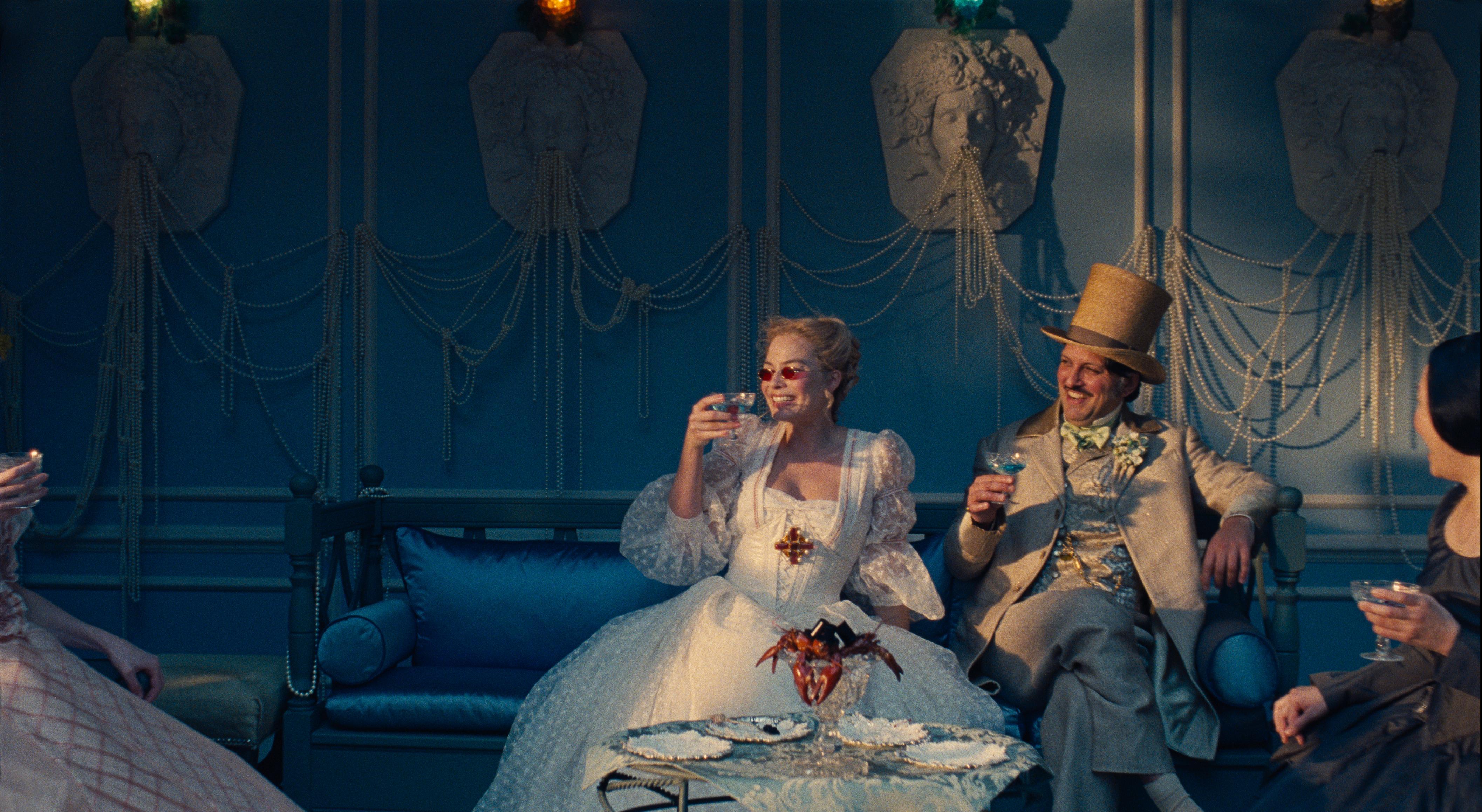
The last year has seen clothes in film shift from the background music of the promo cycle to something central. See the outrage around Margot Robbie’s frocks in Wuthering Heights – the English lit girls were not happy about those anachronisms – or the hype around Marty Supreme. This wasn’t even about the clothing in the film. Instead, A24, the original pranksters of film merch, moved the goalposts again. Queues formed around streets for fans to buy a ’90s-style Nahmias windbreaker with the film’s name on – and that was even before it got to cinemas.
Meanwhile, Emerald Fennell’s Wuthering Heights adaptation brought Jacqueline Durran’s costumes to the red carpet in February, with Robbie’s outfits going method and paying tribute to the era of the novel. There were corsets, ribbons and even a Dilara Findikoğlu dress using hair, referencing Victorian mourning bracelets made from the hair of loved ones. With a 25% increase in cinema trips for Gen Z this year, this is a trend that has only just started. Could it be that 2026 is the year that fashion and costume design come together in more ways than ever before?
Hagop Kourounian, the man behind the Director Fits Instagram, has noticed the change, and points to the Marty Supreme effect as an example. “Every film Miyako Bellizzi has costume designed for the Safdie brothers or Josh Safdie has become mood board fodder,” he says. “I can go down to a bar in Highland Park, and there’s 30 people in wide trousers, a striped button down shirt tucked in with some loafers.”
Ruth E. Carter, Sinners’ costume designer, is nominated for an Oscar this year, and even if she doesn’t win, she’s the first African-American woman to receive five nominations. Carter says the reason costume design is so crucial to a film is because it helps us understand character. “Sinners goes back to my origin story,” she argues. “It’s the reason why I wanted to be a costume designer to begin with – to tell history, to be imaginative.” Carter says the biggest change she has seen over her time as a costume designer is a “paradigm shift”, with more diverse stories coming to the screen. “We have [began] to understand that there is some authenticity to telling another cultural story,” she says. “Spike Lee got the ball rolling, and I was working for him.” Carter began working with Lee in 1989 with Do the Right Thing, and got her first Oscar nomination by dressing Denzel Washington in Lee’s Malcolm X in 1993. Not a bad start.
While the rise of merch sounds less historically important, it does say something about where we are at with fashion and film under late capitalism. “The human side of my brain is like ‘oh, my God, we’re just little rats,’” says Kourounian. “But then my cynical marketing brain is like ‘but it’s actually genius.”
There’s little doubt that these moments move the needle for brands like nothing else. The Nahmias jacket is so sought-after that one is currently on StockX for £3,036. Jess Hannah, the designer behind J.Hannah, worked with A24 to produce replicas of the heart locket that Priscilla wears in Sofia Coppola’s 2023 film, itself a replica of one Priscilla actually wore. They sold out almost instantly. “I think people responded to it because it’s rooted in something real,” says Hannah. “It’s not a trendy logo or a slogan, it’s an object with a lineage.”
Hannah says the project put the brand on the radar of different customers but, crucially, it did something else. “It placed our work in a broader cultural conversation [and] reinforced the idea that jewellery can participate meaningfully in storytelling, not just fashion cycles.”
Mark Gong, the Parsons grad who lives between New York and Shanghai, has dressed women like Lisa from Blackpink and Jenna Ortega. The gig to dress Robbie for the Wuthering Heights premieres came after being contacted by her stylist Andrew Mukamal. “Andrew and Margot are very strategic about press tours,” says Gong. “Every appearance builds on the last one….It felt collaborative, focused, and very exciting.” The collaboration played to Gong’s strengths. “To build these storytelling moments together – especially when there is good creative chemistry – is something we not only enjoy but also something we are good at,” says Gong.
Of course, the new scrutiny on costume design can sometimes mean drama beyond the onscreen plot. In November, the choice of Valentino Rock Studs for Miranda Priestley in the trailer for The Devil Wears Prada 2 prompted immediate TikTok takes and debates in the comments. “I can’t unsee these shoes…these shoes are kind of a choice” said fashion commentator Amy Odell in a video. Others just simply wrote “no to the shoes” in the comments. After an initial reaction, however, the trailer demonstrated how costume design affects fashion now. “The Valentino Rock Stud is back and I’m getting whiplash,” wrote Vogue last month after seeing the shoes on celebrities like Tyla and Dakota Johnson at fashion week.
A similar furore occurred when we saw the first images of Sarah Pidgeon and Paul Anthony Kelly for Love Story, the Ryan Murphy-produced Disney+ series about Carolyn Bessette-Kennedy and John F Kennedy Junior. They were greeted with disdain by fans, with one calling the costumes “fashion murder”. Stylist Gabriella Khalifa-Johnson was one, writing on the Diet Prada post of the images: “Please up the wardrobe budgets. I know the silhouettes look the same but Zara is very different from vintage Calvin, Narciso, Jil [Sander]…send help.”
This time, they did. A new costume designer, Rudy Mance, was hired. And Murphy told Puck that a “style advisory board”, made up of Bessette-Kennedy style experts had been appointed.


“Costuming used to feel aspirational or distant. Now, people want to engage with it directly and personally”
Jess Hannah, the designer behind some of the jewellery in Priscilla
Mance, the new costume designer, went in with his eyes open. “I think the internet and paparazzi have made [costume design] more accessible, and at a faster rate,” he says. “Sometimes by just seeing images without knowing where the setting or storyline is that it’s attached to has led to it being more scrutinised than it has been in the past, for better or worse.” Fast forward to the series being released and Mance’s attitude paid off. It’s been responsible for a relapse of CBK fever – with searches for ‘Carolyn Bessette Kennedy style’ spiking 99 per cent on Google Trends after the show’s release.
Costume has always had influence on what we wear, says Kourounian: “films like Rebel Without a Cause changed the way people dressed in the late 50s, and my dad would say there were like 10 [Saturday Night Fever] John Travolta clones on his street in Lebanon back in the 80s.” However, in 2026, virality is an added factor. “The difference now is how quickly those references circulate and become accessible,” says Hannah. “Costuming used to feel aspirational or distant. Now, people want to engage with it directly and personally.”
And there’s more to come from these connections. Fashion designers have long worked with film – see Givenchy with Audrey Hepburn in Charade in 1963 or Jean-Paul Gaultier with Milla Jovovich in The Fifth Element in 1997 – and custom costume has ramped up again recently, particularly with JW Anderson’s working with Luca Guadagnino on films like 2024’s Challengers.
While the clothes are great, it’s caused some tension. When Guadagnino praised Anderson’s foray into costume design at a Business of Fashion talk last year, big names like Arianne Phillips and Kate Hawley weighed in. Carter says she’s used to the hierarchy here. “We’re just not of the same gravitas as a creative director for a big fashion brand,” she says. “It’s because our job is not only designing clothes… We tell a story and we squirt blood on your top.”
In 2026, the people that squirt blood on your top are finally getting their flowers. Carter has been working for nearly 40 years, Durran for 25. Bellizzi, meanwhile, is the first Asian person to be nominated for a Costume Design Oscar. The Met Gala in May – with its exhibition ‘Costume as Art’ – could see this recognition going even further, with red carpet goers potentially taking influence from costumes in their favourite films. There’s no doubt that the job is becoming more talked about at career fairs, and there’s a new generation ready to get involved. “My proteges are right behind me. The line is long,” says Carter. Although, she says, it’s been forever thus. “When I first started, I was an intern, and so when I got my first professional job with Spike Lee, we brought interns, and those interns have blossomed and created stuff.”
Kourounian sees this as only the beginning of a new era where costume and design come together in new ways. Like Guadagnino, he appreciates fashion designers working with film but he’d also like to see traffic going the other way, with costume designers getting into fashion. It’s already happening a bit with Bellizzi styling figure skater Alysa Liu for an appearance on the Today show recently, but he thinks this could be the next chapter of an increasingly intriguing story. “It would be so cool if Bellizzi made clothes, or if Paul Thomas Anderson’s costume designer Mark Bridges made a Savile Row inspired brand,” he says. After a year where costume design dominated fashion, never say never.

