
Designer Petra Fagerström on tradwife tropes and the perils of AI

The Gothenburg designer took home the CSM L’Oreal Prize earlier this year. Now, Charli xcx is wearing her clothes and she’s turning her attention to the elephant in the atelier: AI.
Style
Words: Eni Subair
Figure skating was Petra Fagerström’s entry point into fashion; making her own costumes a way for her to execute her vision on the ice for over a decade before becoming a designer in her own right.
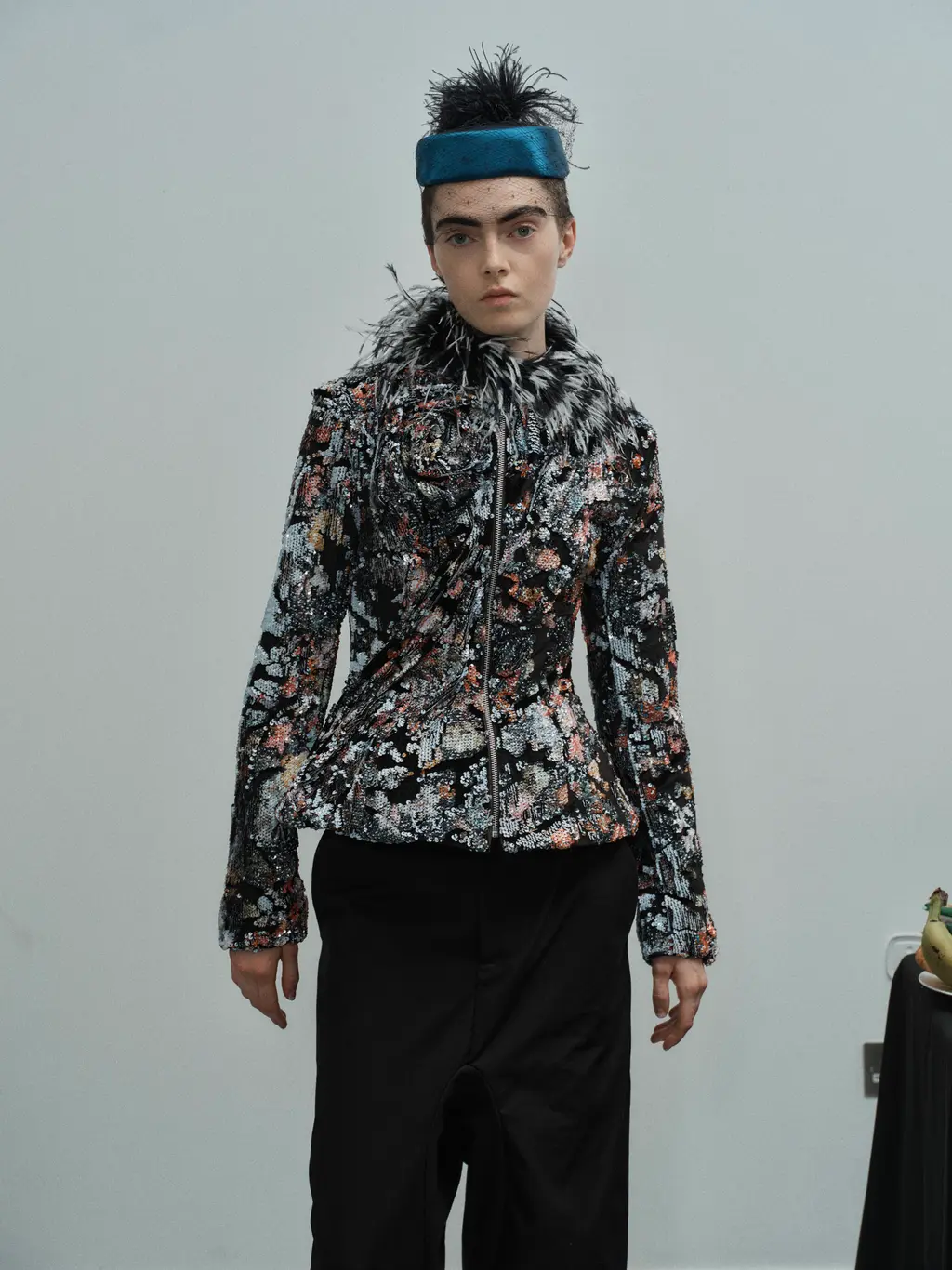
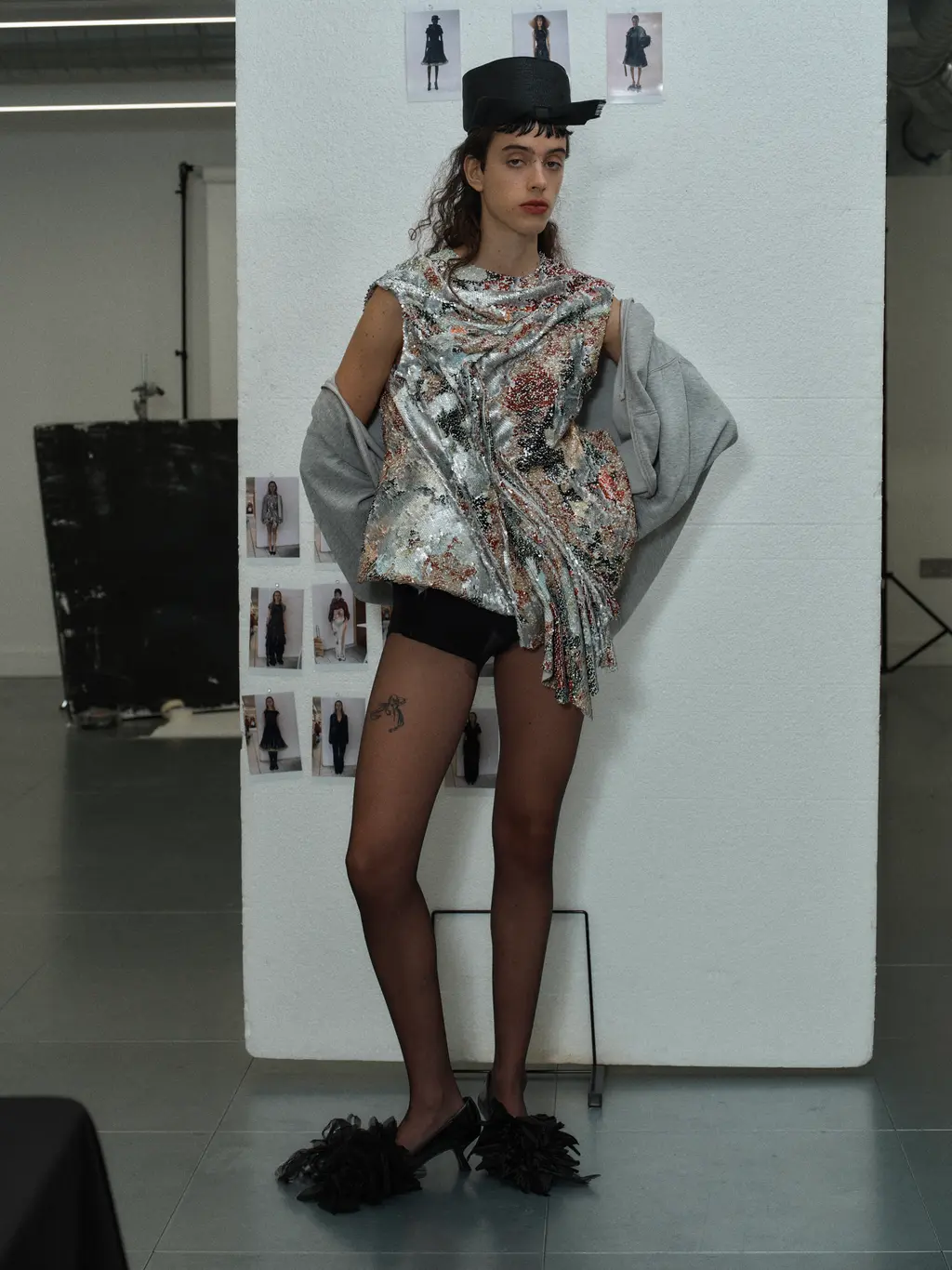
“I have a lot of memories of staying up late and the excitement of wearing a dress I made myself for a competition,” she says, fresh from scooping this year’s Designer of the Year win at the Fabric of Life Award in her native Gothenburg. “I’d make the same costumes for my Bratz dolls. I was obsessed with the action of putting crystals and sequins on my dresses.” That appetite for garments that sparkle has never really left her – that much is clear from the kaleidoscopic popcorn top the Central Saint Martins alumni is currently wearing, plucked straight from her SS26 collection.
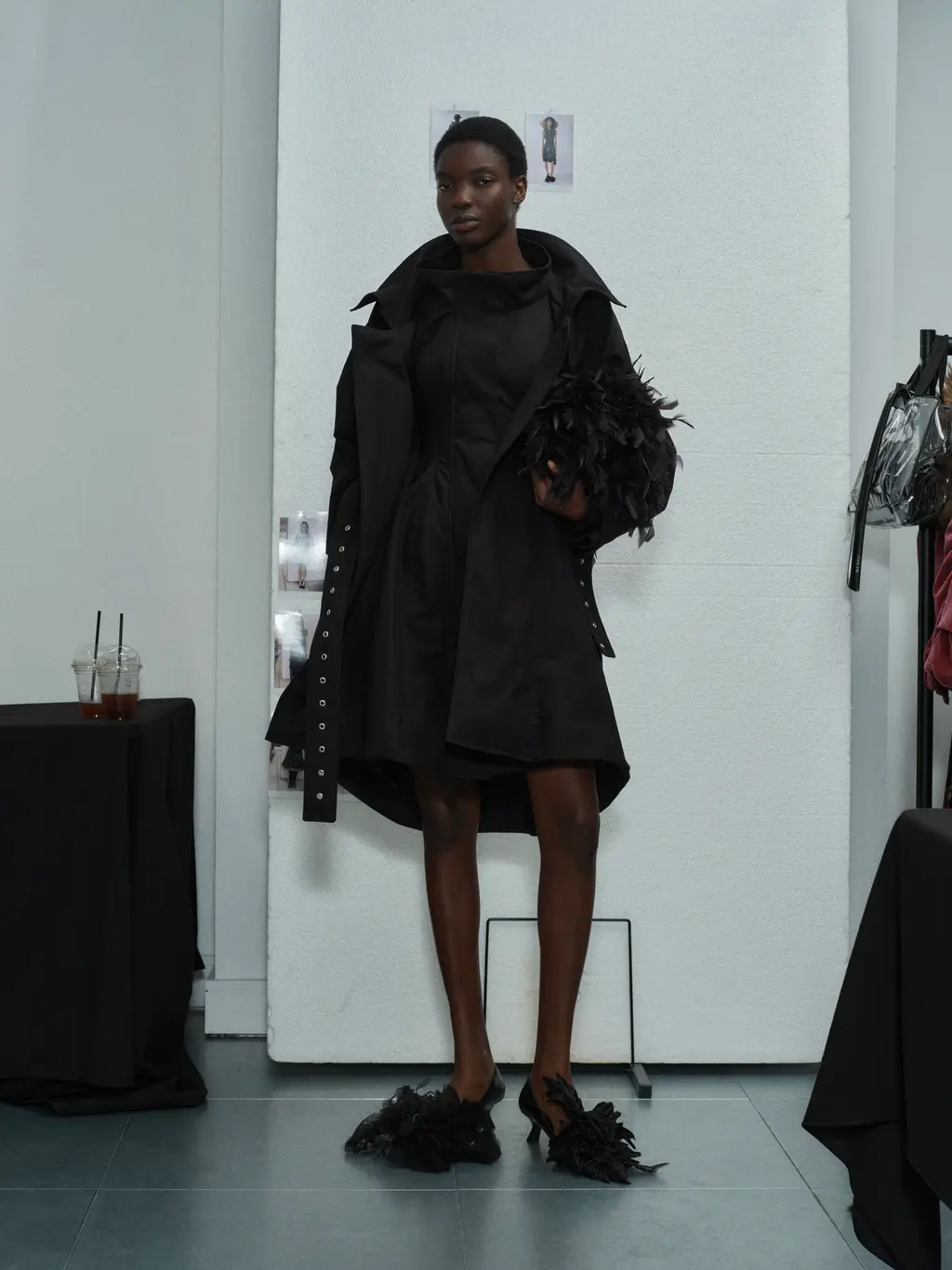
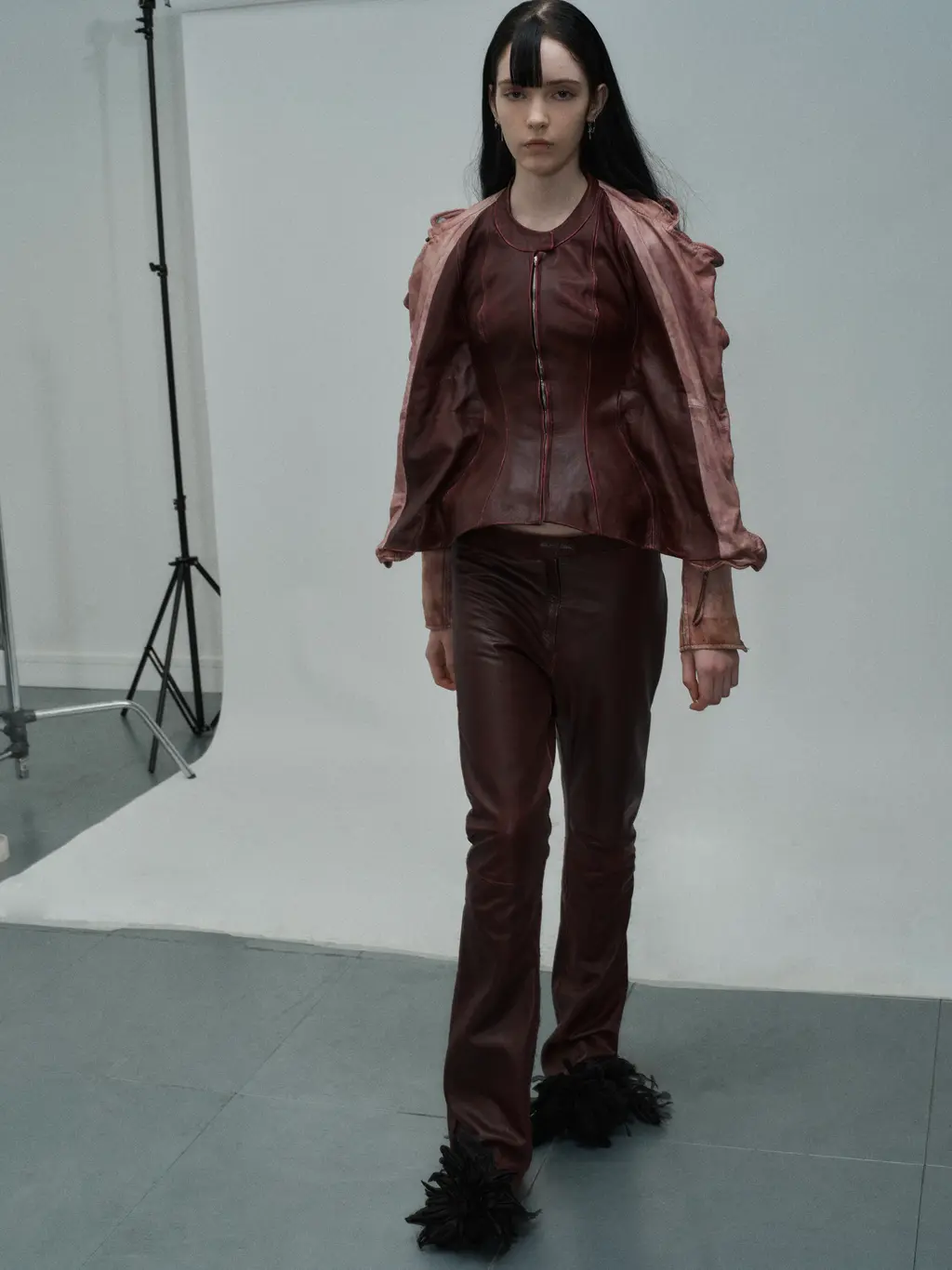
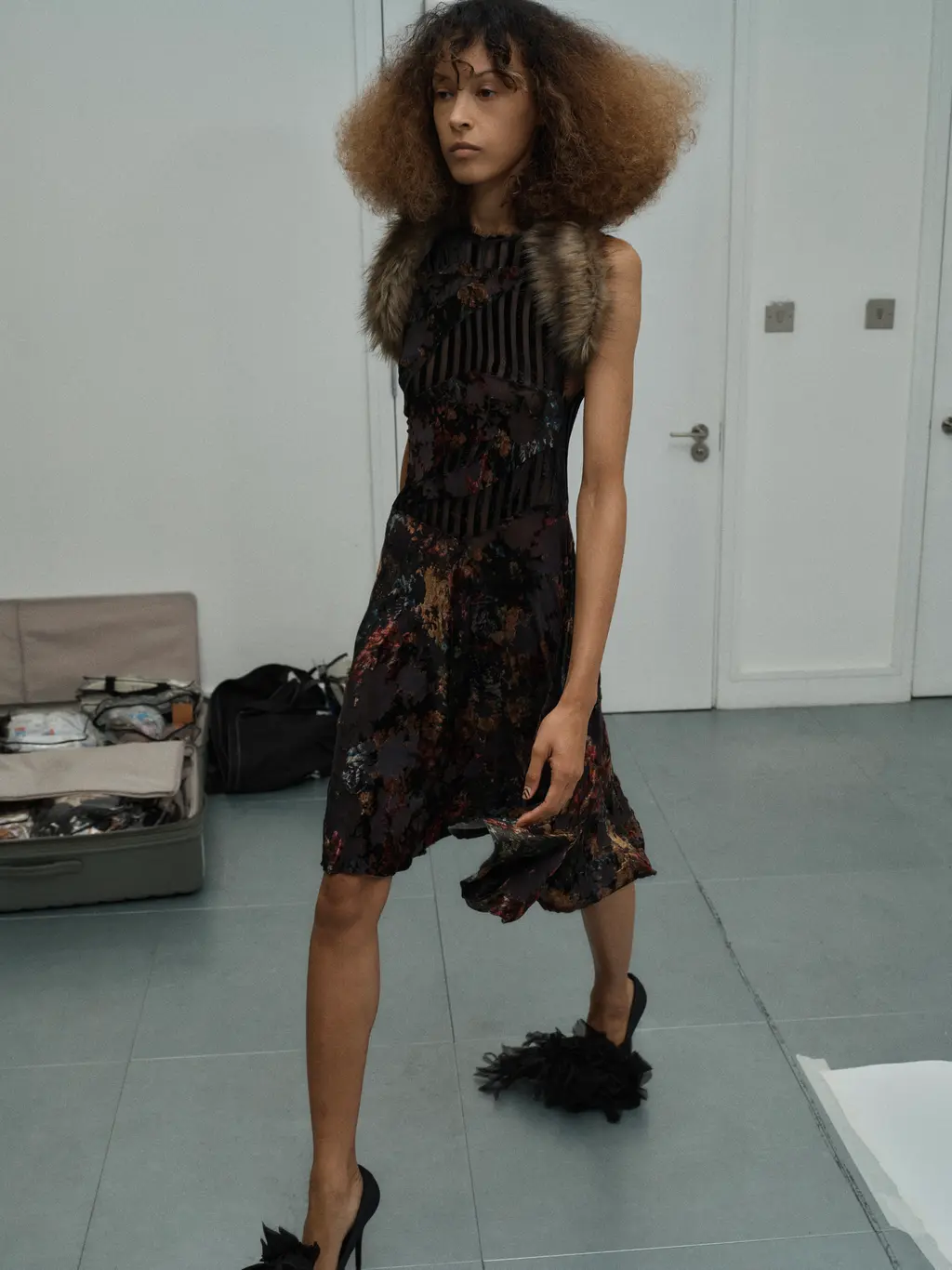
There’s more where that came from: intricately pleated trompe l’œil pieces, handcrafted sequin skirts and feathered heels have all contributed to Petra’s ascent as a designer to keep an eye on. This year alone, she has also won the CSM MA Professionnel Creative Award and the Challenge the Fabric Prize in Milan. Charli xcx and stylist Harry Lambert, meanwhile, have noticed her work. “It feels surreal!” Petra says. “It’s not even been a year since I graduated. The fact my work resonates with people, winning the Fabric of Life Award…this isn’t something I take for granted.”
While figure skating (and running a Rihanna stan account on Tumblr) helped sow the seed of her creativity, a stint taking evening illustration classes in her hometown helped refine her craftsmanship. These both paid off: eventually, Petra landed a spot studying fashion design at Parsons in Paris, before moving through internships at Balenciaga and Acne Studios. Then came Saint Martins, and, well, the rest is history.
All of this meant that risk-taking was embedded in Petra’s MO when it came to starting work on her MA collection in February. AI has been a looming threat across all creative industries – and let’s face it, the world – rapidly blurring the line between reality and fantasy. Petra’s collection, then, examined the effects of conservatism and trad-wife culture, using AI as a tool to reimagine what this might look like fifty years from now.
“I hate the AI-ification of imagery and media. My fear of AI made me want to understand it better,” Petra says. “I had this idea of an AI-led collection creating a kind of fake memory about today, and thinking about how an AI tool would remember this time in the future. I ran my prototypes through AI, took research imagery of conservative, structured pieces associated with trad wives and merged them together to see what images it would produce.” The skewed imagery informed Petra’s pattern cutting ideas, resulting in interchangeable double front parkas and off-kilter tweed jackets.
This work led her to embark on a parallel, year-long project with Substorm, a Swedish AI company. “While working on my final year collection, I naturally found myself thinking more about AI, which is what prompted me to reach out to the CEO and co-founder of Substorm,” she says. “I’m still extremely critical of AI, which is exactly why I think it’s important to work with it and potentially make something productive out of it.”
Petra’s admission that she was intrigued by the technology and felt compelled to explore how it might support designers – without using it as a creative tool – was a bold one, leaving her somewhat in the firing line. “After the MA show, people in the comments were like, ‘I love this designer, until she mentions AI’,” she recalls. “But I believe we have the power to define and develop AI in the direction we want.”


It’s been both a busy and special year for you, Petra. How have you remained grounded?
When I start a new body of work, it starts telling me what it needs and it becomes this thing I’m feeding. It’s an overwhelming amount of work. The Swedish Fashion Council has been there as well as my community in London. Nothing prepares you for the mental load.
You can now count Harry Lambert as part of your community now, right?
Yeah, we met at the CSM showroom. Harry’s the loveliest. We stayed in touch over email and he pulled a look for [model] Mia Regan. Then, I reached out for some advice for my SS26 campaign, which he styled, and it’s an ongoing collaboration now.
Your MA collection was called “Recollection 404” and your most recent SS26 line is called “Recollection 405”. Where did those names come from?
“Recollection” came from an error message that you get on a computer, while also [being] a play on memory. SS26 was a continuation of my MA collection, and looked at how an AI would reflect the future. I wanted to include more playfulness and girly tropes but with an element of seriousness. All of the glitches that came from an AI tool was flat imagery, but of course, it isn’t a guide to actually constructing handmade pieces – that’s essential to my practice. So, I took the mistakes that the AI images produced and used it as something to examine rather than to directly copy.
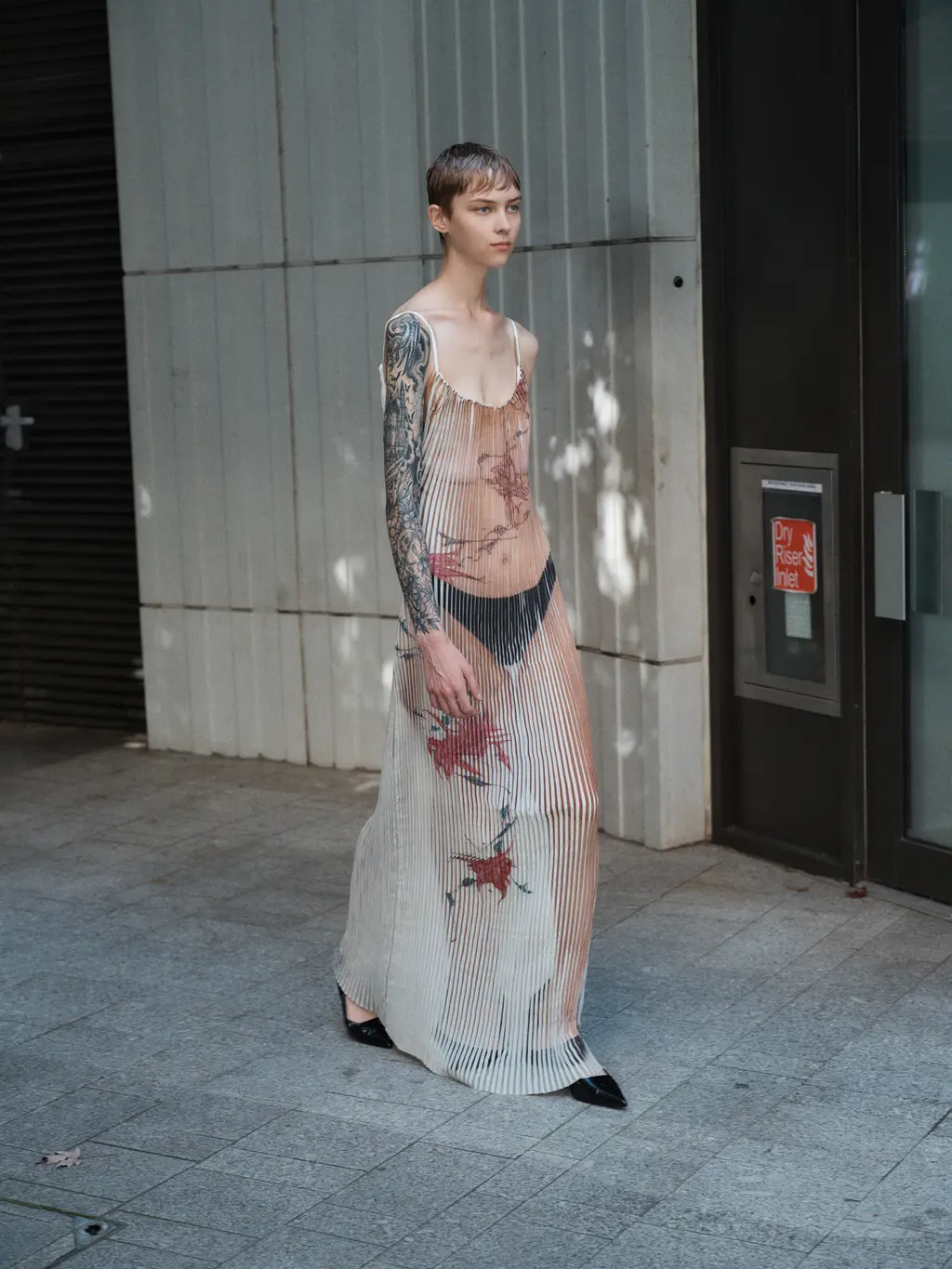
SS26 examined the same trad wife trope as my previous season toughened up: patterns from floral, silk nightgowns that emitted purity were turned into tattoos on pleated designs. As for next season, I’ll be looking at something else but my hope is that every two collections will have a theme that ties them together.


What techniques did you gravitate towards for SS26?
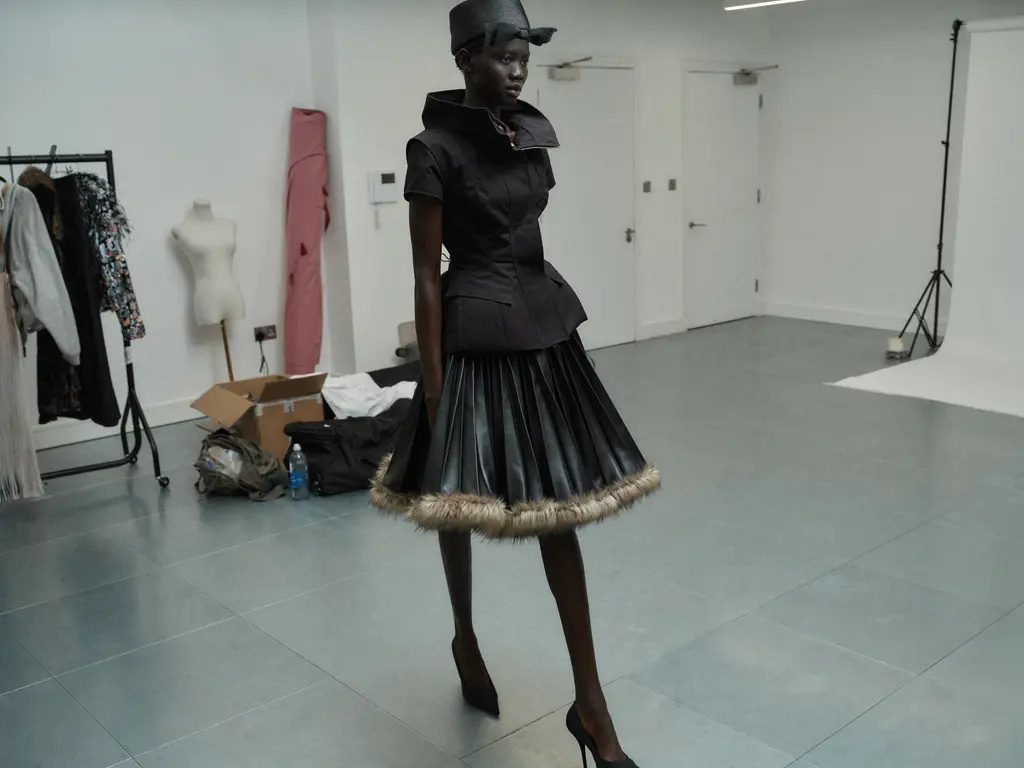
I really do love coming back to having at least a few pieces in every collection that are quite labour intensive. Not only to make more beautiful clothes, but also to send the message that handmade is good. Not everything has to be super fast. Pleating is a core element of the brand – it’s called a “lenticular plate” which changes the image as the fabric moves.
You’ve been working with Substorm to develop an AI tool for a year. Tell me about that.
I was looking at how AI misunderstands experiments. For example, you’d be able to check what your twirl looks like in a different fabric, without any creative input and without it adding elements that weren’t there.


What’s the end goal with the project?
The tool isn’t developed enough yet to actually be used but my dream vision for the tool is that it takes care of more of the admin side: categorising, organising numbers, making line sheets and order sheets. Things that always pull me out of my creative process.
What do your design pals think about your project?
A big fear for a lot of creatives is putting your work into an AI model, and then it mimics your work or suggests something similar to someone else. The main thing is to be able to trust the tool. But there are ways of using AI in an intelligent way.
I talk a lot to my friends who are also designers, and initially people are a little put off. But then, the second I mention an AI tool doing admin stuff, they’re like ‘give it to me!’ I think it’s safe to say that even when AI makes “art” and generates imagery, we usually don’t respond to it very well – even if it looks convincing. It just doesn’t feel the same as something human made. It usually has something uncanny about it. Perhaps we shouldn’t aim to develop AI towards generating image and art/design but rather use it for tasks that can, instead, encourage creativity.

