
Dirty Looks: the exhibition about fashion’s filthiest rebels

The Barbican’s first major fashion retrospective since 2018 is a freeze-frame of fashion’s most uninhibited, unhinged and curious moments in time.
Style
Words: Annabel Nugent
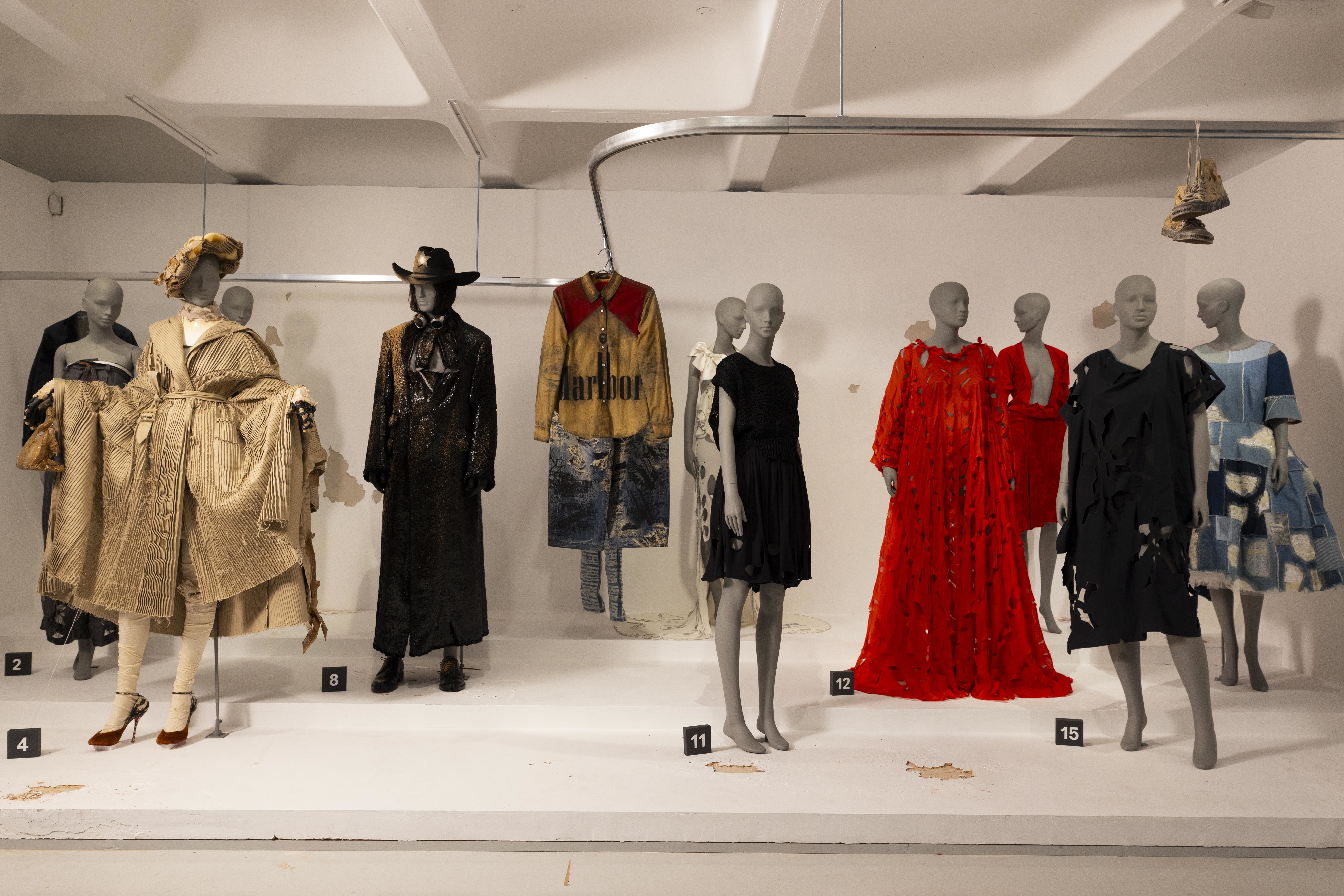
Mud stains, gaping holes, and singed sleeves that look as though they’ve been caught in the crossfire of a club’s smoking section –plenty of the garments on display at the Barbican’s Dirty Looks exhibition wouldn’t look out of place in a charity shop. Though the glorious stone-washed, piss-splashed jeans from Italian-British brand JordanLuca, which feature in the show, likely wouldn’t even make the cut.
The average consumer may be less inclined to buy a moth-munched sweater, but the fashion world has long found itself fascinated with filthy things. And Dirty Looks – the Barbican’s first major fashion outing in over eight years – takes a wide-ranging view of that fascination, wrestling with questions of rebellion, authenticity, and desirability in the process. It also marks the first Barbican exhibition for curator Karen Van Godstenshoven, newly transplanted from the Costume Institute at the Metropolitan Museum of Art in New York.
“It [represents] a reconnection to materials and to the earth at a time when our lives are so digital and unmaterial,” she says. “These garments challenge notions of what is glamorous, tapping into the idea that decayed things become more desirable.” The exhibition spans the past half century, compiling more than a hundred looks from over 60 designers across the world including Alexander McQueen, Vivienne Westwood and Rei Kawakubo. Fashion’s love of muck is universal – and also diverse, from literal sludge and found objects to bodily fluids and deconstructivism, dirt is on display in all its glory.
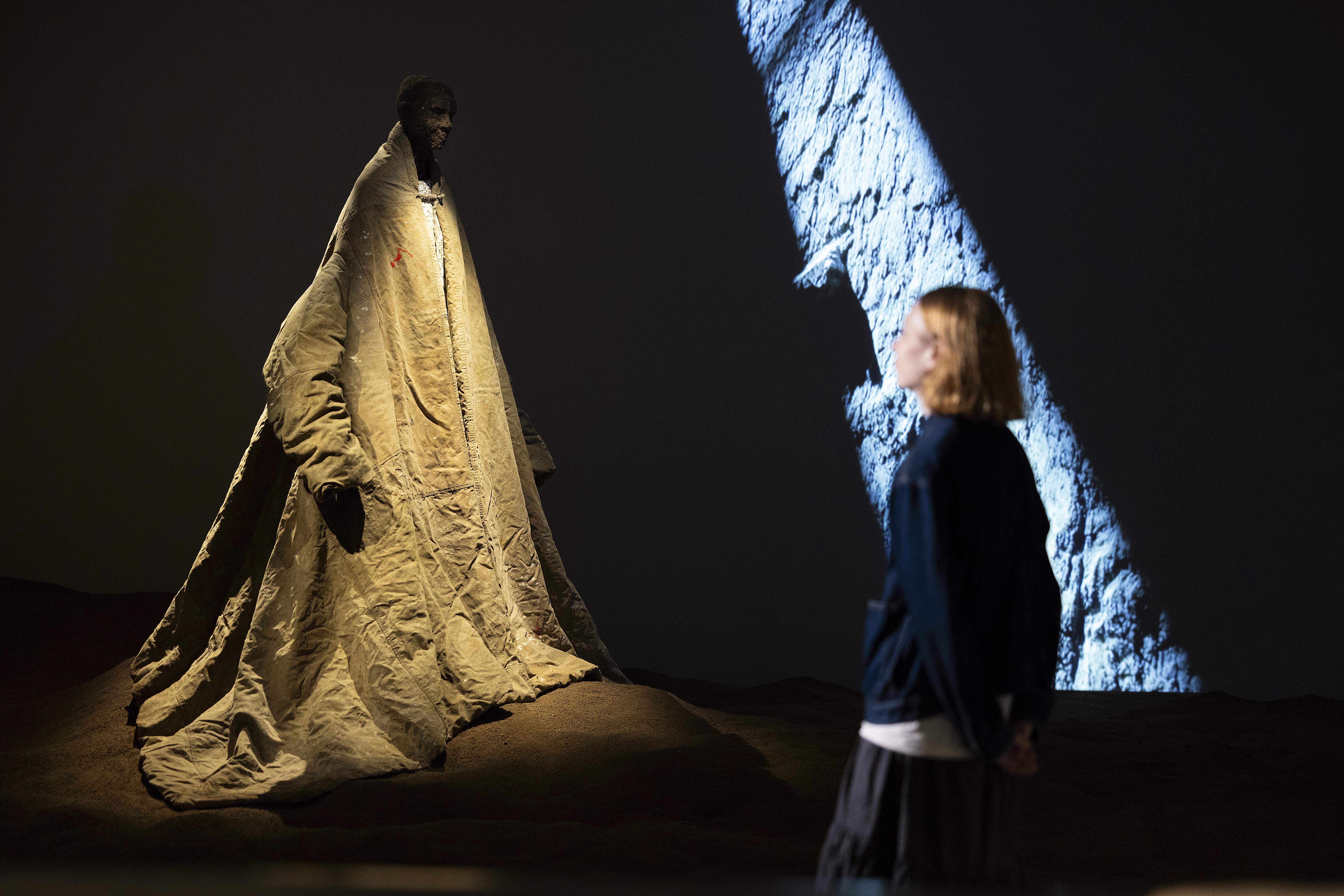
This makes the art of conservation a tricky one, with some garments quite literally hanging on by a thread. One of McQueen’s dresses, a torn blue lace number from his famously controversial AW1995 Highland Rape collection, is too fragile to even hang – instead, it’s lovingly laid to rest in a display case. Another of his gowns, from his AW01 Yoruba collection, had to be reinforced; the caked-on mud and wax on the skirt so heavy it threatened to rip through the whole thing. In such cases, the passing of time makes itself known more viciously than usual. “The ’90s weren’t that long ago, but a lot of the pieces are already falling apart,” Van Godstenshoven says. “These designers didn’t intend for them to last forever and we really had to make an effort to capture them. It makes the garments more rare and luxurious in that way.”


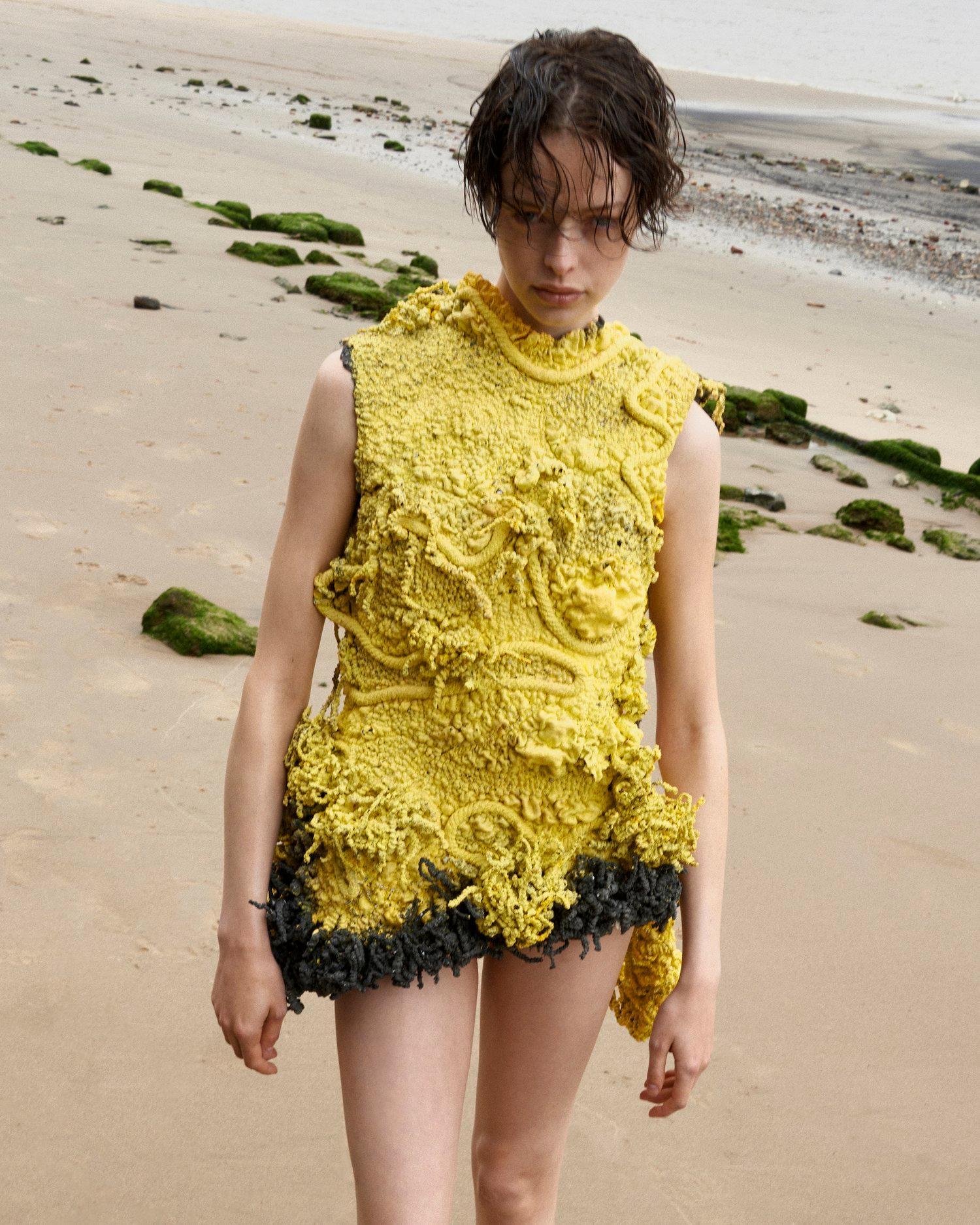
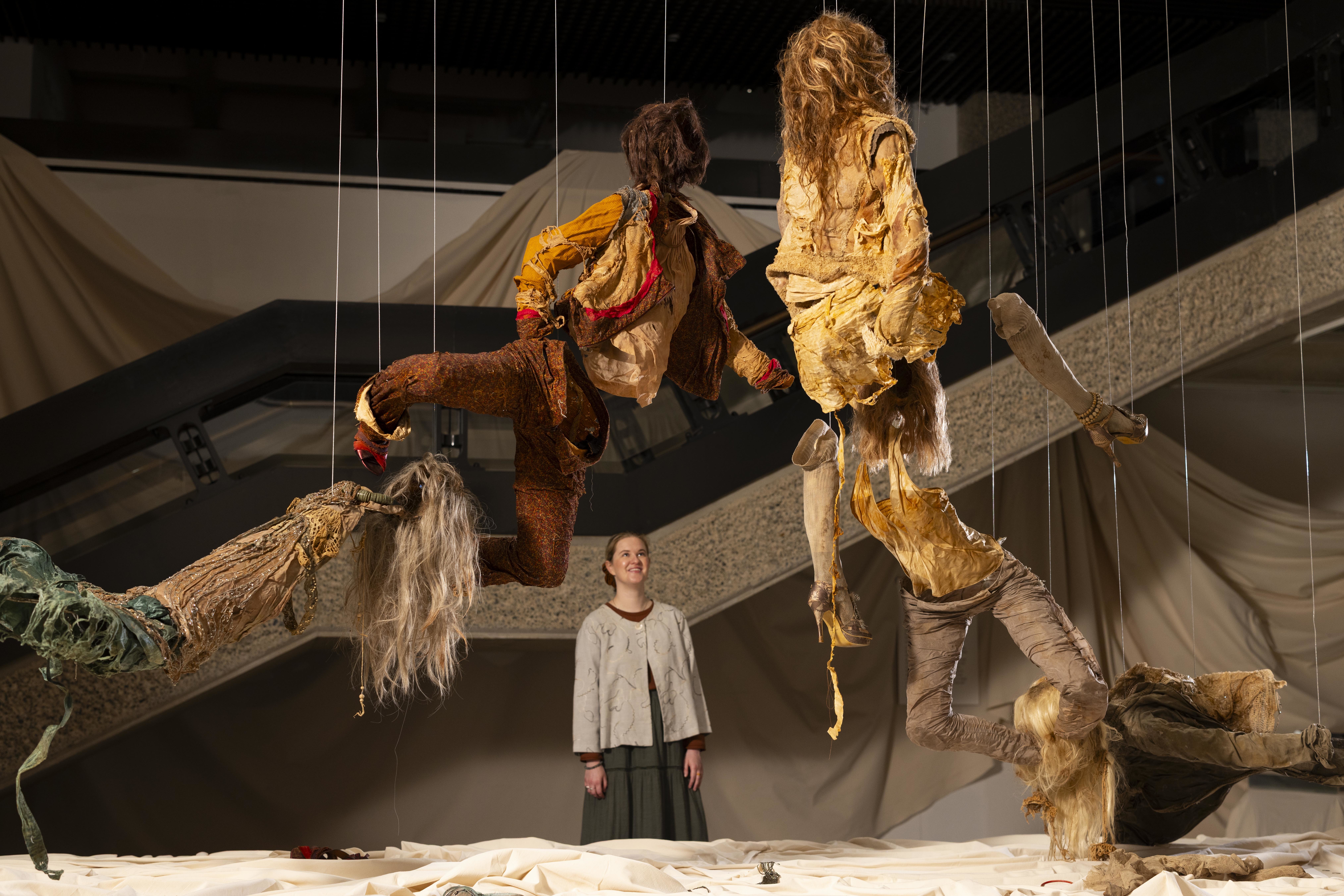
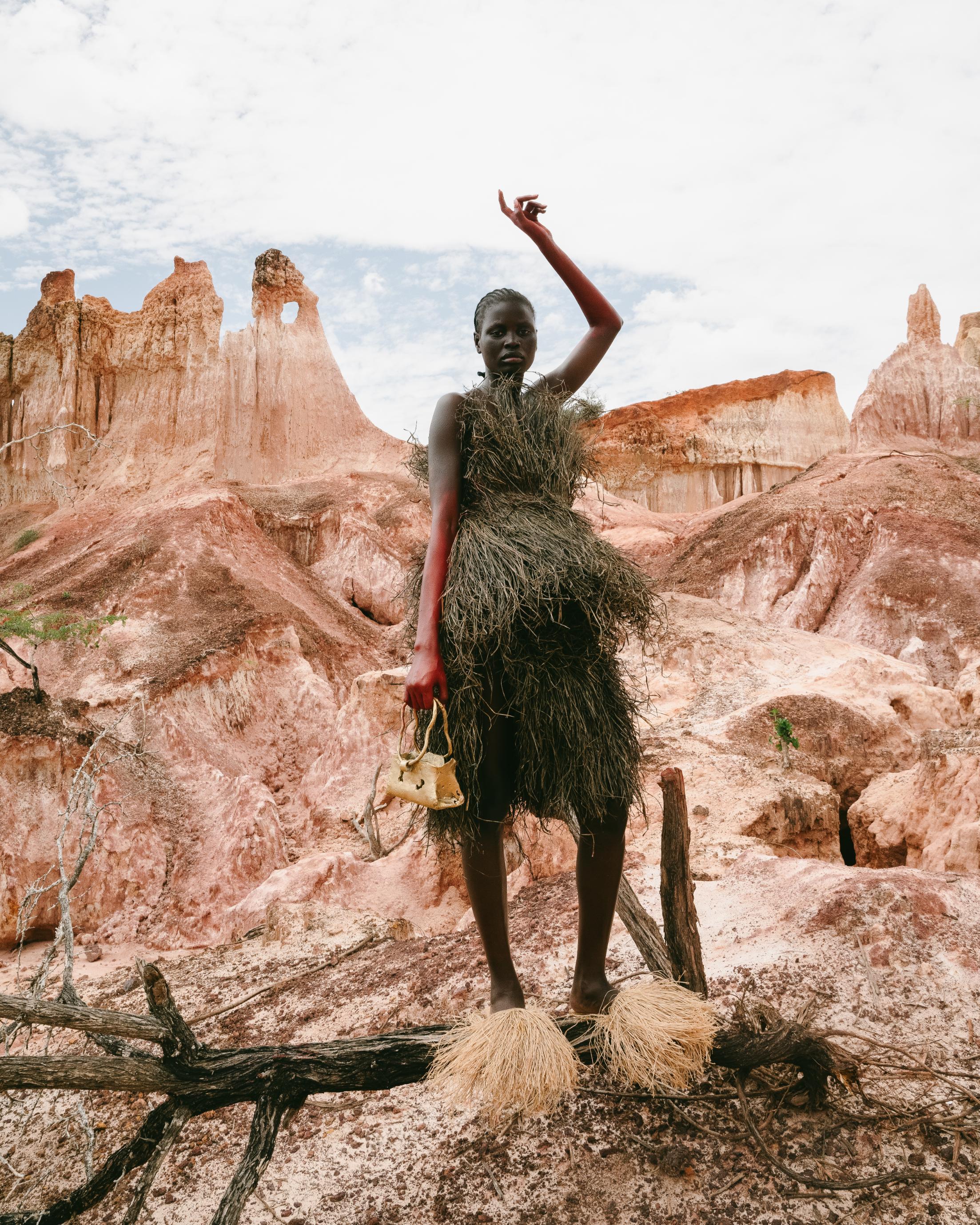
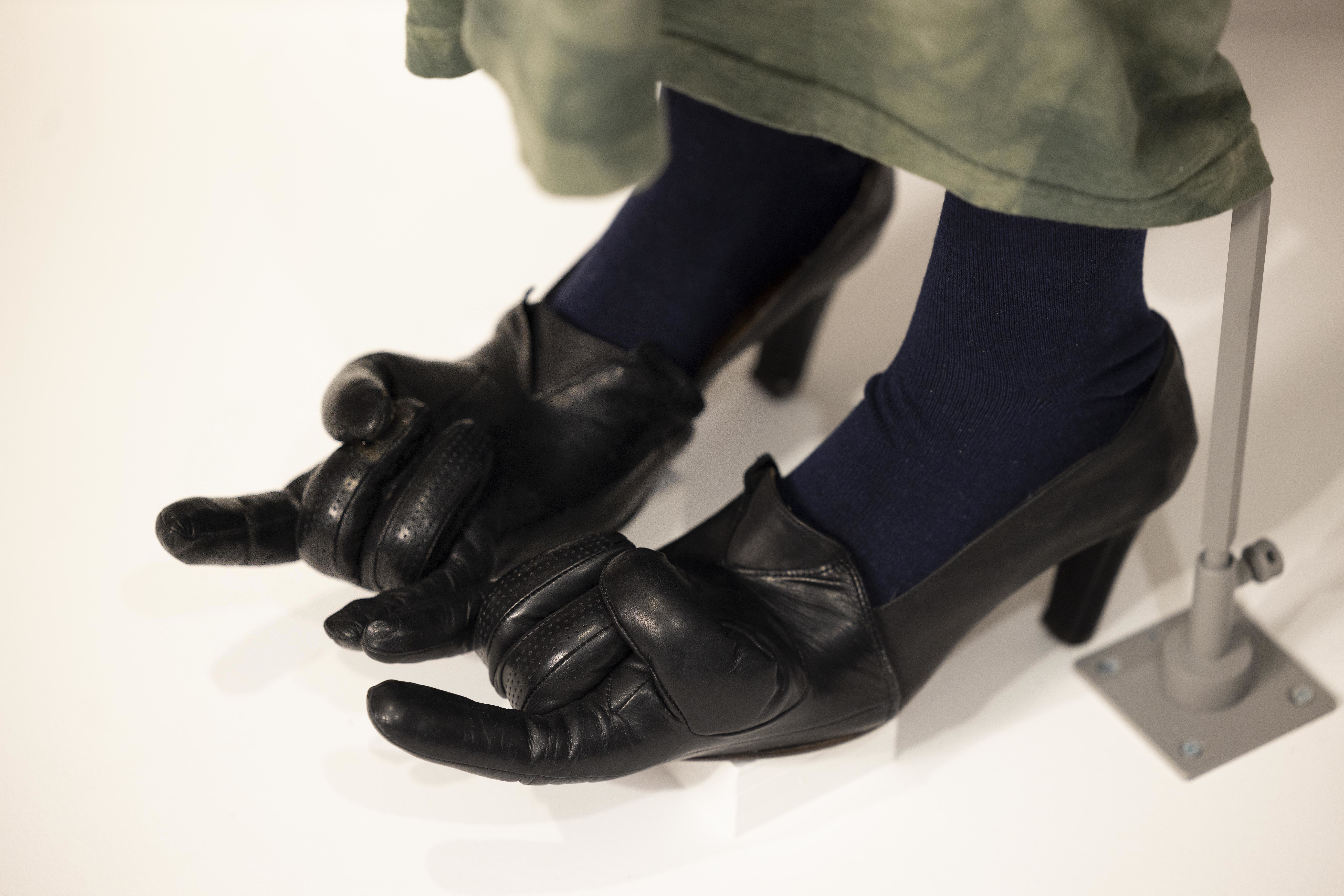
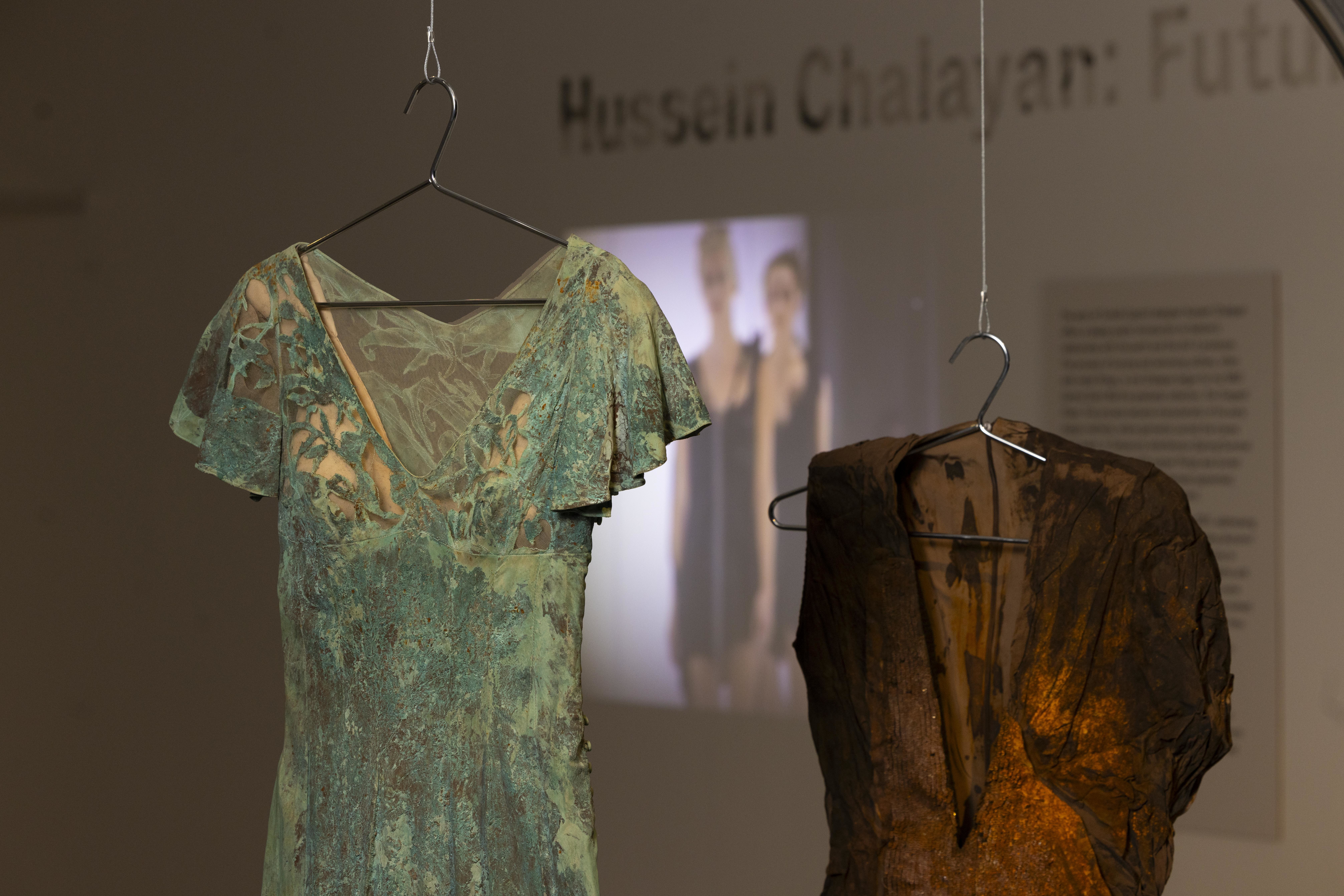
As much as these clothes speak to their past, many of them also foreshadow a fictional future. It’s easy to imagine some wide-eyed excavator, centuries from now, digging up Hussein Chalayan’s soiled garments on an archeological dig. The Turkish-Cypriot designer is a cornerstone of Dirty Looks. In 1993, he famously sent models down the runway in clothes that he’d buried in his friend’s back garden for six months. In the same soil, he’d also planted iron and copper filings, giving the pieces a crumbly, patinated exterior like the surface of Mars. It was a new process, to say the least, and one Chalayan returned to several times throughout his career, notably in his AW01 collection Map Reading, in which a soft chiffon dress came to resemble petrified wood and another metamorphosed into something snake-like and ancient. “No one was doing what I was doing then. The aim was always to create a form of future archeology – that what we own now would [eventually] become an archeology of that time,” he says. For Chalayan, dirt is about transformation.
A similar idea animates emerging Copenhagen-based brand Solitude Studios, who also feature in the exhibition. Their grunge “bog looks” – arranged in an erotic, model-less formation titled After the Orgy – were made by submerging rolls of fabrics in a nearby morass to mutate its colours and the structure of its fibres. This draws on the Iron Age practice of using bogs as sites of good fortune and fertility (you throw a coin in a bog the same you would a fountain). Equally, bogs are considered sites of danger, dark lacunas from which nothing returns. There’s a feminist undertow to this, says Van Godstenshoven: “The idea of the swamp and things resurfacing from a swamp are often related to symbols of untamed femininity.”


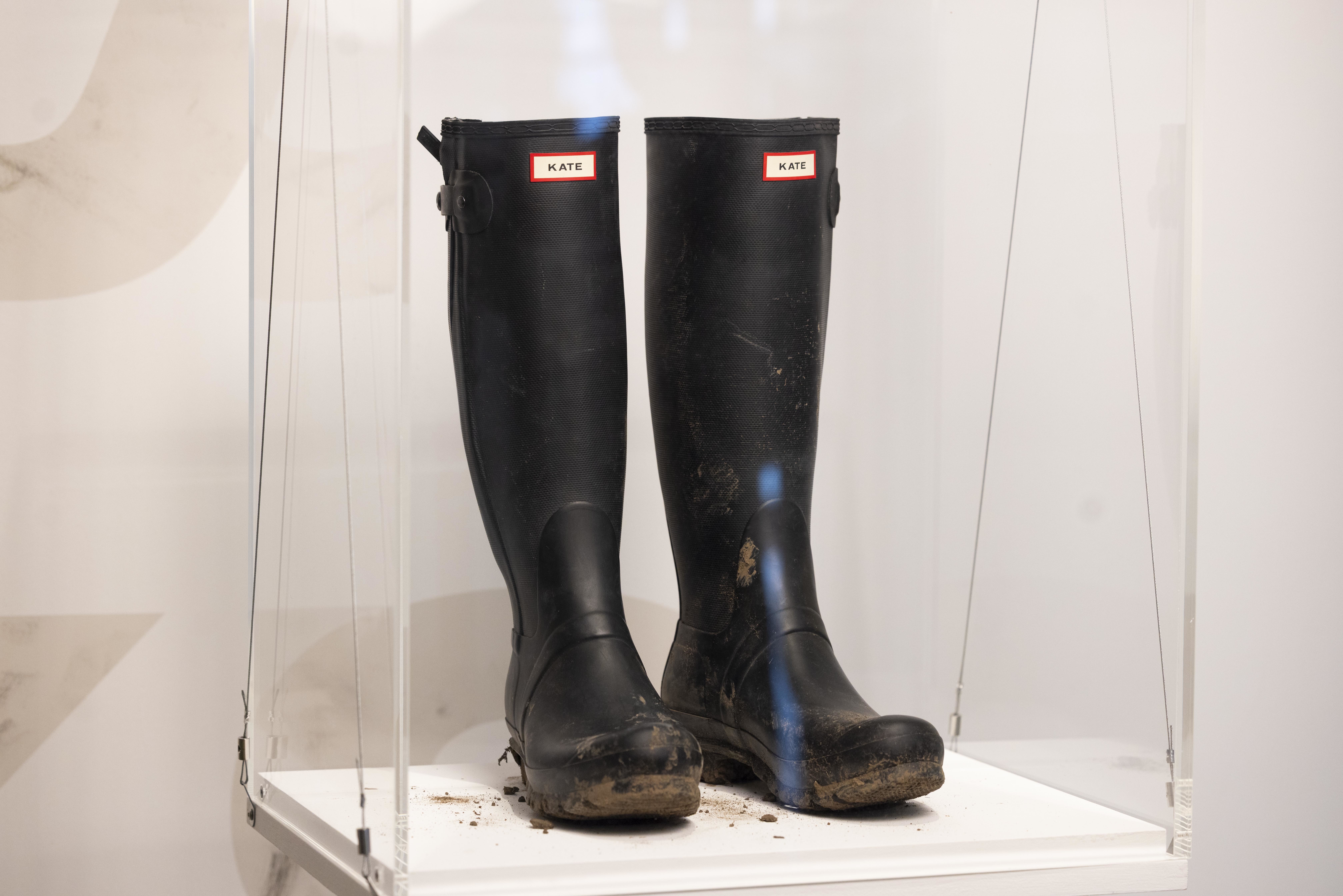
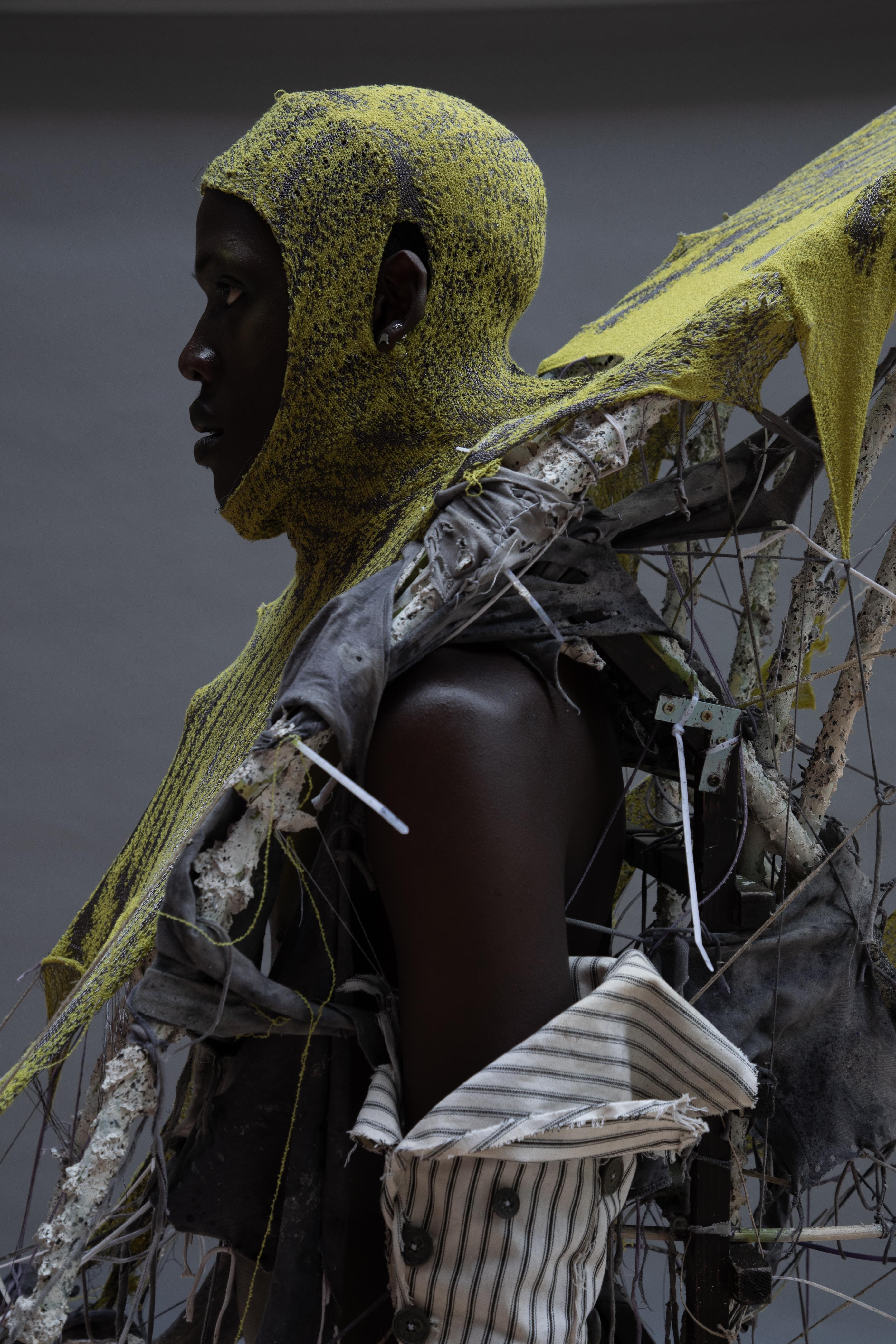
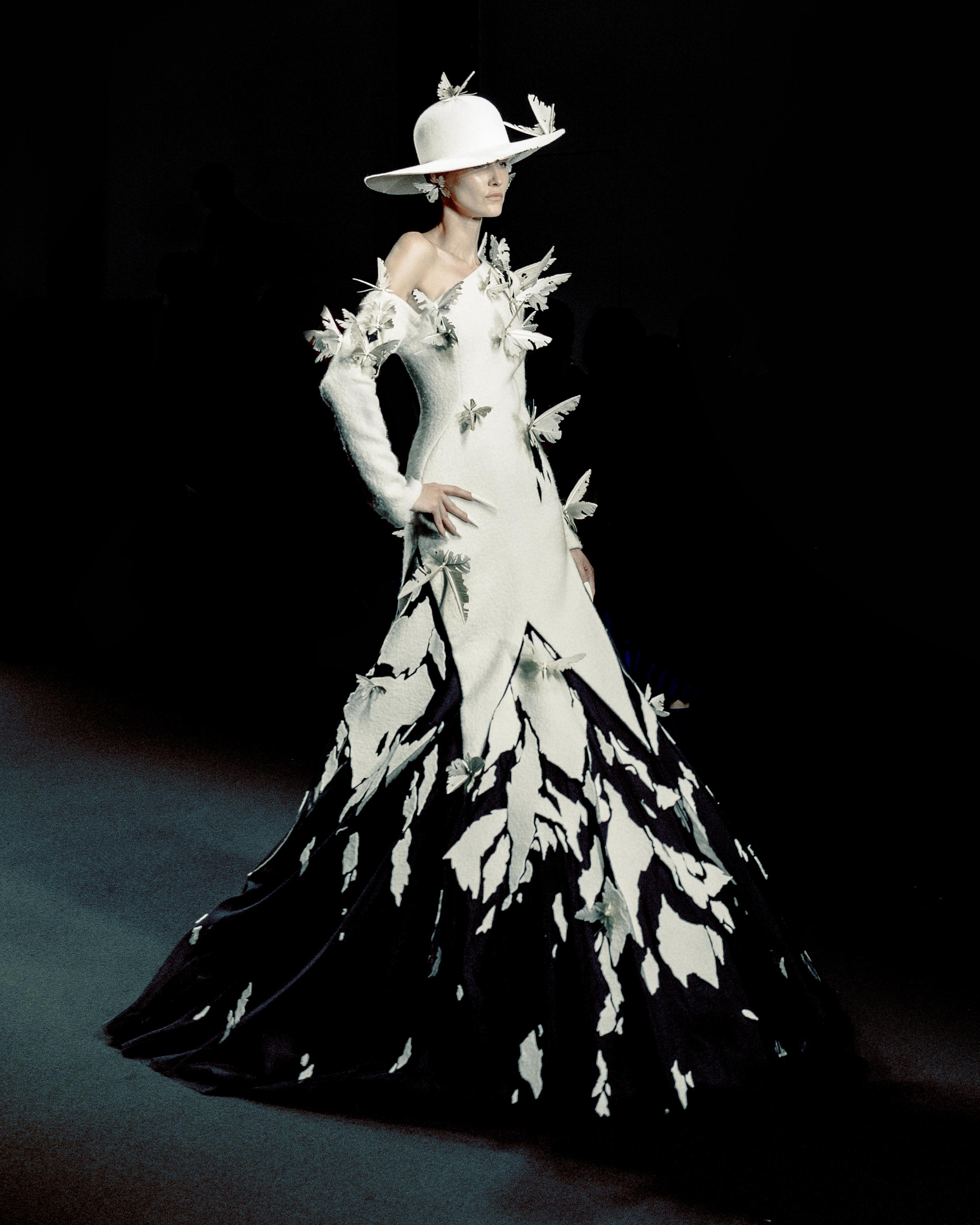
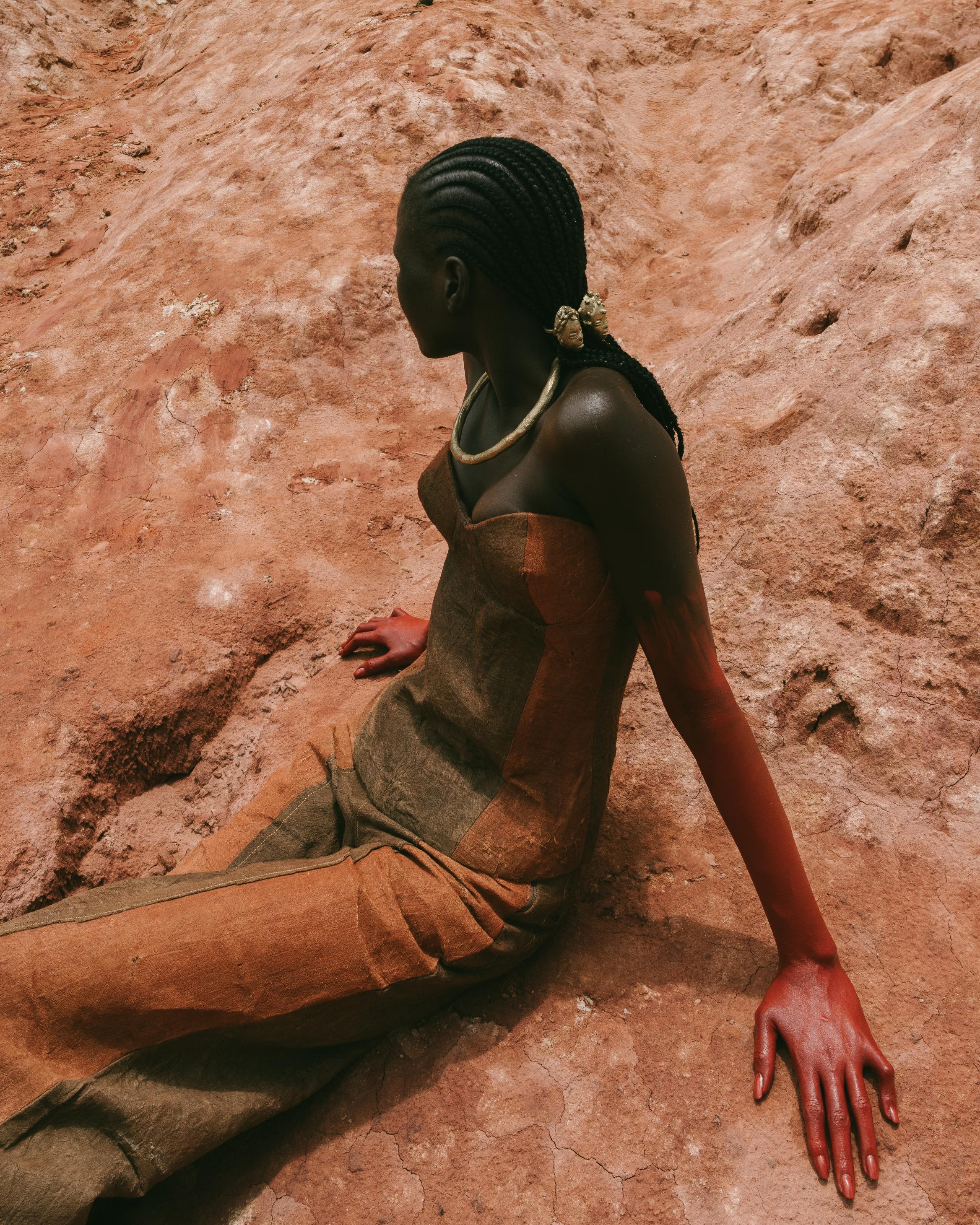
Like Martin Margiela, who in 1997 artificially aged clothes by growing mould and bacteria on them, many of these designers are expediting the aging process to create an artificial form of ruin that sits at odds with the fashion industry’s breakneck pace. Dirty Looks visitors can find a “live-action replay of decay” from emerging London designer Yaz XL commissioned especially for the exhibition. Titled Corrosion Perversion, it consists of a steel armour suit in a box filled with water. Over the next three months, that slick, shiny steel will rust and transform into something else entirely. “If something is seen as grotesque or ugly, I love finding a way to make that desirable,” Yaz says.
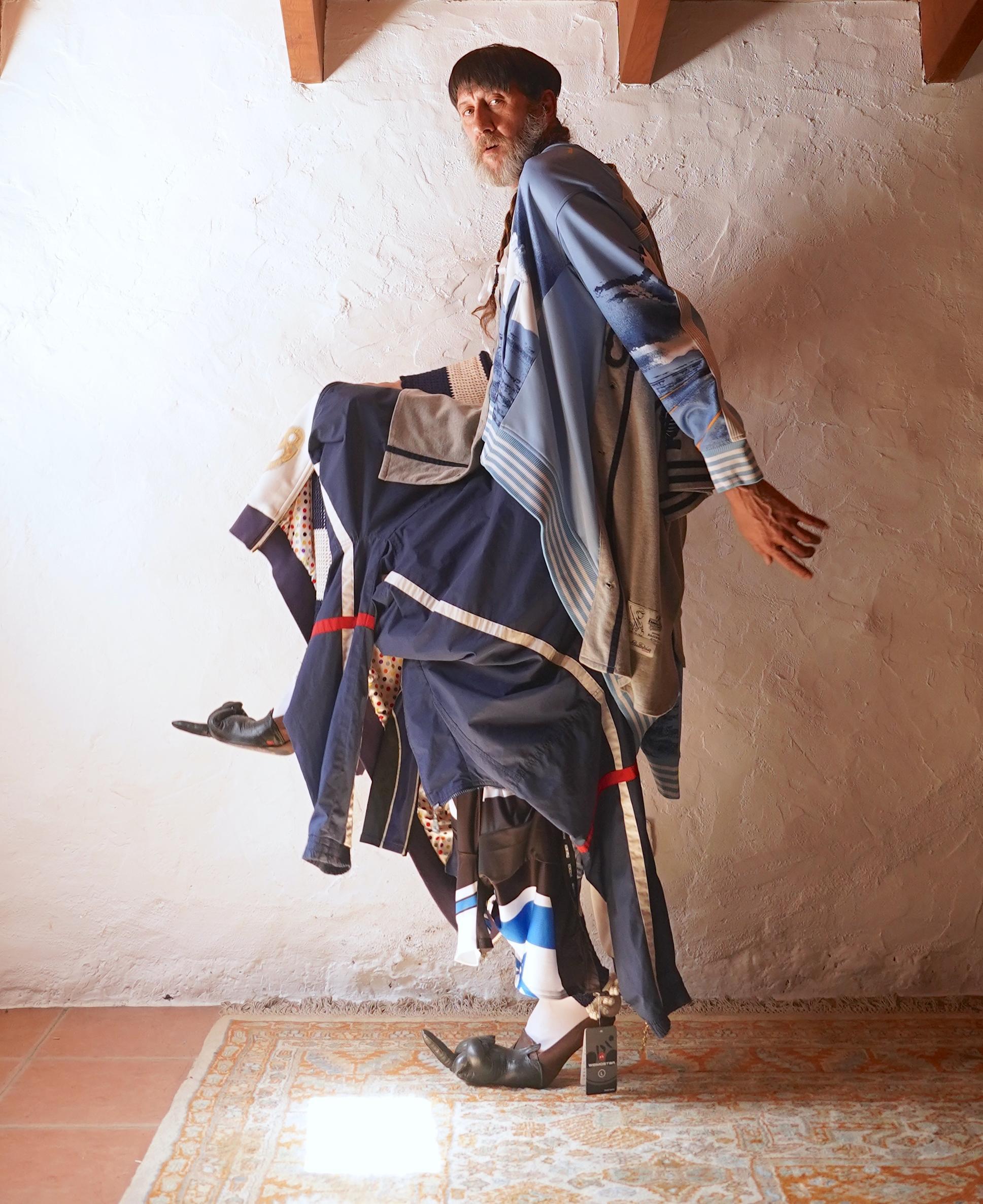
Also on display: Helmut Lang’s “Painter” Jeans, first released as part of his SS98 collection and copied ad nauseum thereafter. Emulating an artist’s studio look, the paint-splattered jeans are a sign of “false labour”, according to Van Godstenshoven. “It’s the accumulation of time and effort that goes into a garment that makes it valuable, and so a stain – like the paint – becomes a decoration.” Japanese designers such as Junya Watanabe and Yohji Yamamoto take this to new heights. A patchwork jacket by Watanabe, for example, reflects the boro technique in which fishermen’s jackets are used to make new kimonos. “With Western designers, it’s more a way of creating and experimenting with materials and effects, but for Japanese designers, it’s really a deeper embrace of value and things that have had a life,” Van Godstenshoven says.
Elsewhere, a capacious, crimson Vivienne Westwood dress looks as though it was attacked by a kid with scissors. These gashes call back to a Tudor-era practice known as “slashing”, in which Henry VIII’s garment-makers would strategically cut away material to reveal something underneath – often a more luxurious, embroidered fabric.
And so “dirty” fashion continues to have us in its thrall. It is the opposite to the likes of The Row and Hermès; a mud-slinging retort to quiet luxury and the infamous, ubiquitous clean girl. “It’s a way of reconsidering what is luxurious,” Van Godstenshoven says. “The accumulation of time and effort that goes into a garment, or even our human connection [to it], is what makes it valuable. These clothes are the opposite of a status symbol that is just financial.” In an attention deficit-riddled world, what could be more valuable and desirable than time? Or even an imitation of it?
Our fixation on filth will never subside, according to Van Godstenshoven. “Those cultural ideas are ever-evolving, as we have seen with torn jeans becoming the norm. Our attitudes will shift towards vintage and repurposed materials, and our own bodily functions.” Sooner or later, piss jeans will be old news, and fashion will be searching for its next rule to break.

