
The man who would be king

Dave wears jacket, trousers and shoes BURBERRY, top stylist’s own and jewellery SERGE DENIMES
Since breaking through at the age of 16, Dave has filled arenas, headlined festivals and conquered the charts. With the release of his third album The Boy Who Played The Harp, THE FACE finds an artist who’s proudly unwilling to compromise.
Music
Words: Amel Mukhtar
Photography: Gabriel Moses
Styling: Gerry O’Kane
Taken from the winter 25 issue of THE FACE. Get your copy here.
Do you think this album is selfish?” asks Dave, brows furrowed. “Or a risk?” It’s the week before the release of his new album, The Boy Who Played the Harp. To call it highly anticipated would be something of an undersell: there has not been a more feverishly awaited album to come out of the UK this year. It has been four years since Dave’s last album, We’re All Alone In This Together, replicated his Brit-and Mercury Prize-winning debut Psychodrama (2019) by going straight to number one. His most recent release, 2023’s Split Decision EP with Central Cee, featured the inescapable summer smash Sprinter, which spent a record-breaking 10 weeks at the top of the UK singles chart – the longest-running No.1 of any UK rap song.
And Sprinter was no outlier. Back in 2017, clubbers would drag their friends to the floor to rap every word of the J Hus collab Samantha. If you caught an Uber in London the following year, you were highly likely to hear his and Fredo’s ice-cold chart-topper Funky Friday on the radio. Even when Dave delved into the darkness of his mind for Psychodrama, the album included ubiquitous bop Location.
But his lyrics can also bring you to tears, shift your perspective on difficult social issues and make you feel a sense of awe at the scale of his multi-character narratives and his world-building. Dave albums are not a pack of singles with a bit of filler. They have messages. They take you places. In the UK, they are massive cultural moments.
So, yeah: there’s a lot riding on this album. And The Boy Who Played the Harp is the 27-year-old’s most introspective and uncompromising release yet.

When I meet Dave, in a state of-the-art Northwest London recording studio on an overcast October afternoon, it seems like a record is playing. Then I notice the hooded figure at the piano. When he stands up, the music stops. He’s nursing a recent shoulder injury, so his left arm is clutched to his chest against a white tee and unzipped dove grey Corteiz tracksuit. Unsmiling, he shakes hands, and leads me to the room next door, full of hi-tech boards with hundreds of dials.
Dave can be hard to read. Chivalrous but initially guarded – his smooth, symmetrical features form a tight poker face that feels as though it’s wielded as a shield between him and the world. There’s a sadness, or a heavy air, surrounding him, like a cloud that darkens the room. It’s almost as if the emotions he’s keeping back are finding other ways to seep through.
In news to no-one: Dave is a deep thinker. Everything about The Boy Who Played the Harp has been meticulously considered. There are no singles, so that full focus is given to the album in toto. The 10 tracks have a narrative, which his fans will study forensically, and he envisions it as the third chapter in the trilogy of his albums – one, he explains, that completes a wider character arc.
He wrestled with which songs would make the cut. The album “could’ve been 11 tracks, or 12. It was never going to be 13. It could’ve been nine.” Every track that made it through had to pass thorough tests; poked and probed by him and his tight inner circle for the purity of its intent. “You wanna know the reason it’s taken me four years? /It’s not ’cause I’m surrounded by yes-men and sycophants,” he raps on My 27th Birthday.
“I think the mood, in comparison to other albums of mine, feels, actually, a lot brighter,” Dave suggests. “I don’t know if it felt brighter to you?” He tends to avoid eye contact until he suddenly looks at you for a reaction. Even when he isn’t looking directly, it feels like he’s aware of everything. If I open and close my mouth a little, readying for the right moment to jump in, he stops speaking and asks what I was going to say.
“This is a demanding album. It demands focus. It demands a greater respect for concept, and story”
I tell him that I’d felt the exact opposite. With songs that journey through feelings of hypocrisy, guilt, shame and repentance, it feels like his weightiest album yet.
“It’s funny, someone else said the same. That it felt heavier,” he says with a small smile. He contemplates the idea of levity in music. “Is something light because it doesn’t have as serious topics as other tracks? Or because the music has got an African beat behind it? I think I’ve made trap songs that are dark but maybe because people react to them outside, it feels light to them.”
His two previous albums, he concedes, included more tracks you can play “outside with your friends” and on repeat. Even when Dave’s in more straightforward braggadocio mode – hot girls, big money, fast cars, drug deals, etc – he’s still delivering it with clever wordplay. Nevertheless, he feels those tracks make you think a little bit less. “Not this record,” he asserts. “It’s a demanding album. It demands focus. It demands a greater respect for concept and story.” That story is there from the start, in the title: The Boy Who Played the Harp is a reference to the biblical King David, who as a young shepherd played the harp to soothe King Saul when he was troubled by evil spirits. “It’s more biblical than it is religious,” he clarifies, “To show the parallels between two people. The purpose of being named something, and living up to your purpose.”
The outro of Psychodrama culminated in a voice message comparing Dave to King David, spoken by his elder brother Christopher. In both the biblical tale and the new album, David is the unassuming youngest son. Both Davids are excellent musicians who have their talent called upon to soothe other peoples’ troubles. Their gifts cause them to be chosen by forces beyond themselves as leaders. After David becomes king in the Bible, he grapples with his responsibility when a plague hits his people. He’s overwhelmed by remorse for his lack of action when his daughter, Tamar, is raped. He feels guilt over his adultery, begging, in Psalm 51: “Create in me a pure heart, O God.”
In this album, our own King David is years into his reign at a similar inflection point: struggling with the sins of his infidelities, the role he plays in the plight of women he loves, and what he sees as the ever-growing plagues of his people. On History, the album’s James Blake-assisted opening track, he repurposes an old Skepta line: “My mum told me what my name really means and the powers just kicked in.”


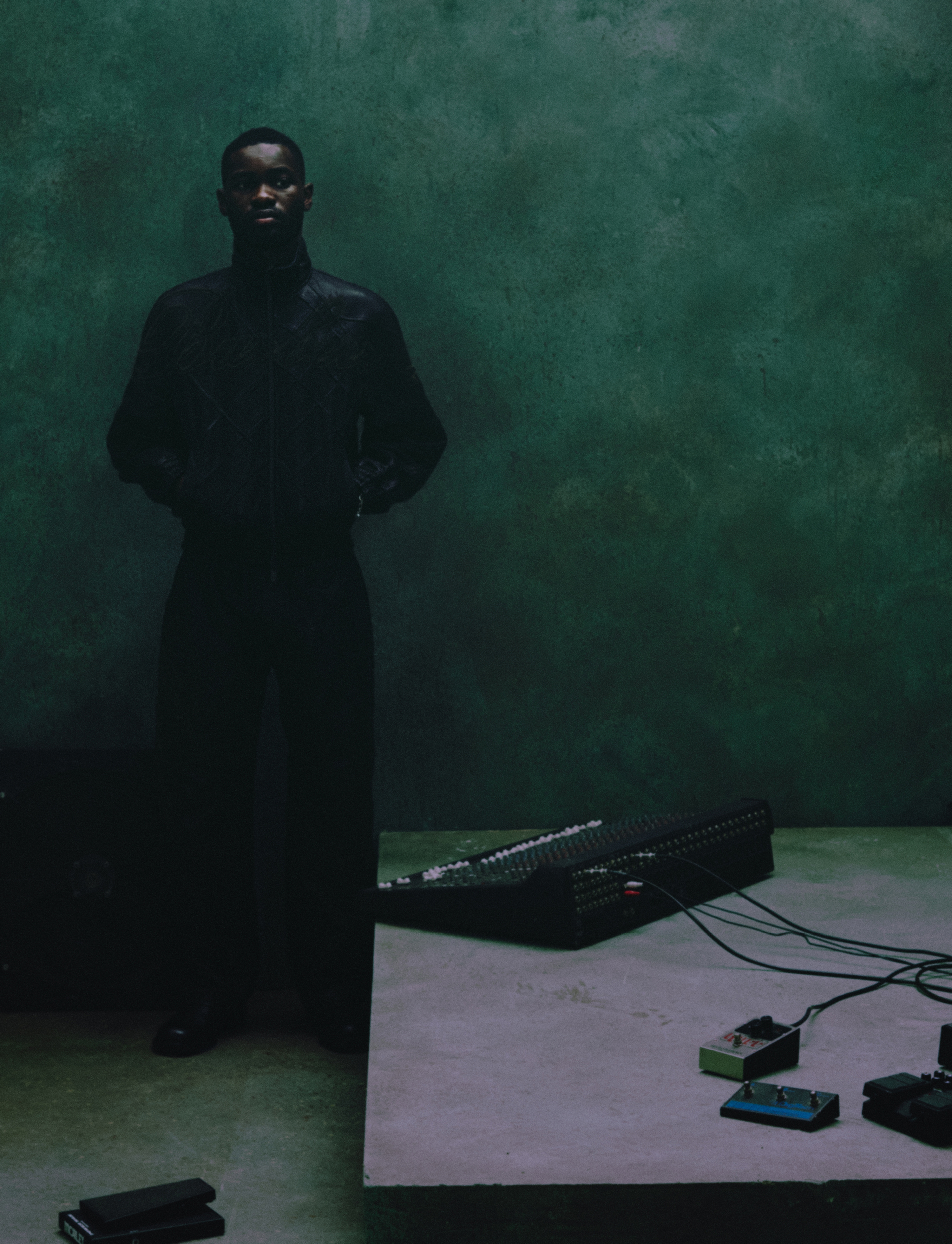
Dave wears jacket, trousers and shoes BURBERRY
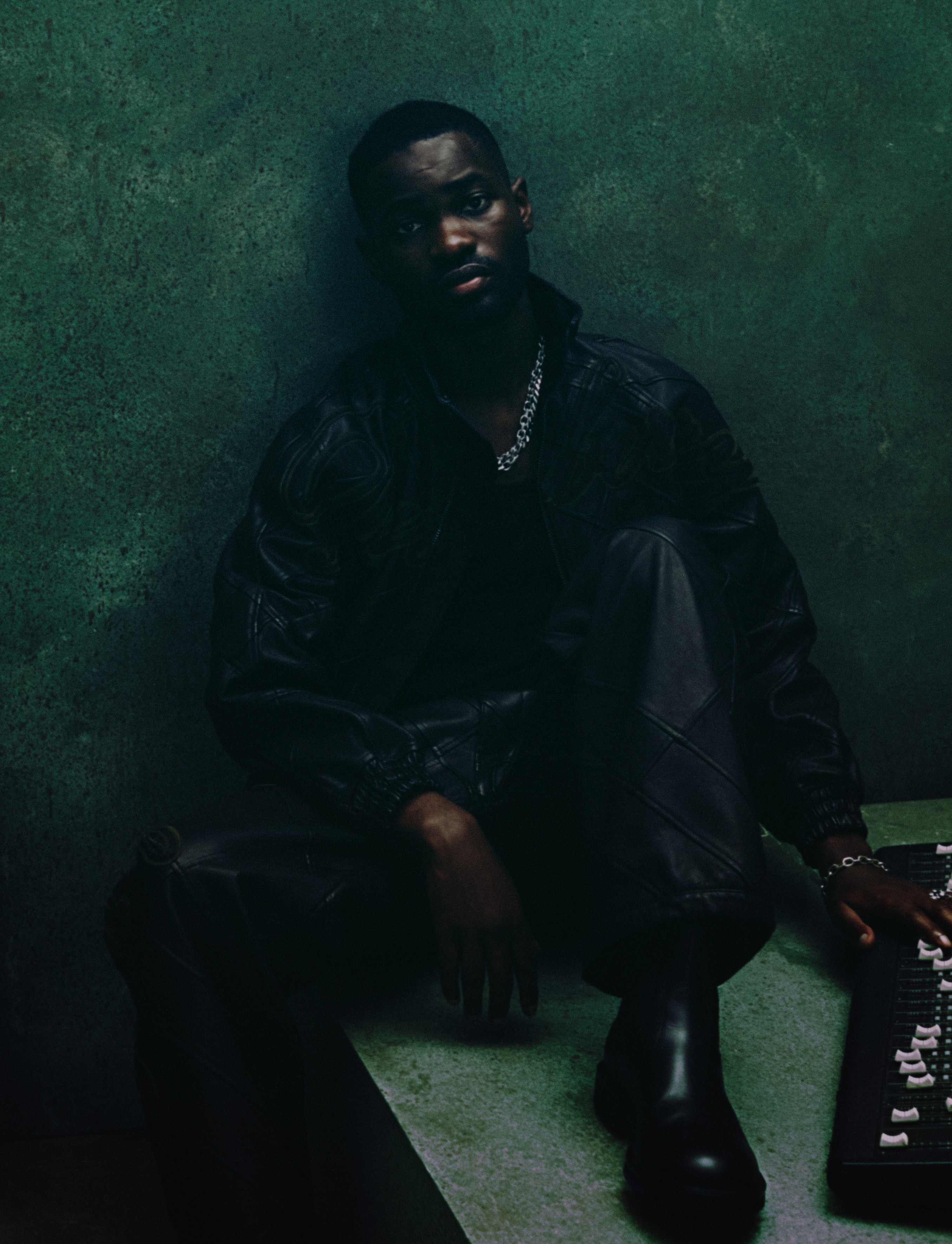
Dave wears jacket, trousers and shoes BURBERRY
Dave exploded onto the scene in 2015 as a 16-year-old wunderkind, rapping about his two brothers’ incarcerations and a system stacked against them growing up in Streatham, South London (an early YouTube video on London’s Bl@ckbox freestyle series now has 17 million views). By 2016, he was touted as one of the most promising MCs in the UK’s re-energised rap scene. He was a teenager penning bars about Palestine, arms dealing and the UK’s complicity in the world’s destabilisation. At 20, he was performing ballads about Blackness and the immigrant experience. In 2020, he made headlines by calling then Prime Minister Boris Johnson a “real racist”.
Since then, a lot of the issues Dave tackled have gotten profoundly worse. In the last two years, more than 69,000 Palestinians have been killed in Gaza, while the UK has continued to sell fighter jet parts used by Israel. Social media billionaires have turned hate filters off, so that racist venom is ever present on our screens, supported by armies of bots, creeps and sheep. Anti-immigration sentiment has skyrocketed. Nigel Farage – God help us – is being increasingly positioned as a prime-minister-in-waiting. As Dave raps on the new album’s title track: “I get that sinkin’ feelin’ /That good ain’t defeatin’ evil”.
Across the album, Dave reckons with the paradox of having amassed so much power, but feeling powerless to change much about the world. “It has been a difficult two or three years to know what to say,” he admits, staring into the distance. “You get to a point you just think to yourself, ‘Right, well, what have I really done? What songs have I made that really shifted the dial? What performances?’ You could say you’ve done a lot. You earn a lot. Changed a lot of lives. But what did you really do?”
The thing is, finding the thing to say is not as easy as he might occasionally make it look. “Some people think that I have a button that I can turn on, to get my opinion across about the state of the world… [But] when things are at their worst, as a musician, it does not strike me to go out and turn this into a song. The trauma of the world is not my playground or muse.”
We’re speaking just weeks after the UK’s flag-bearing anti-immigration protests reached a terrifying new peak, and the conversation inevitably moves that way. “They talk about [how] ‘I’m doing this because I love my country’ – I don’t even believe that,” he frowns. “There’s big issues going on with your country that you’re not speaking about. This country will be privately owned from top to bottom in no time… I’m not even going to sink to the level of arguing with people that aren’t willing to read. Like, this is a fucking hype.” (When it comes to politics, Dave has been opting for long back-and-forths on local issues with London’s mayor via X DMs instead: “I’m telling him: ‘Yo, this is what I think is going on,’” he says. “Not everyone’s going to have a direct line to Sadiq Khan – but you can put a message out to your MP.”)
On title track The Boy Who Played the Harp, Dave seems to battle with guilt over whether he could do more. “Afraid to speak cah I don’t wanna risk it, my occupation /We got kids under occupation,” he raps about Palestine over a restless piano loop. “Can’t speak out on illegal settlers, now I’m afraid of a shadow ban.” But, ultimately, he realises he can’t let the glitter and gold distract him from his purpose: “How can you be king, don’t speak for the people?”


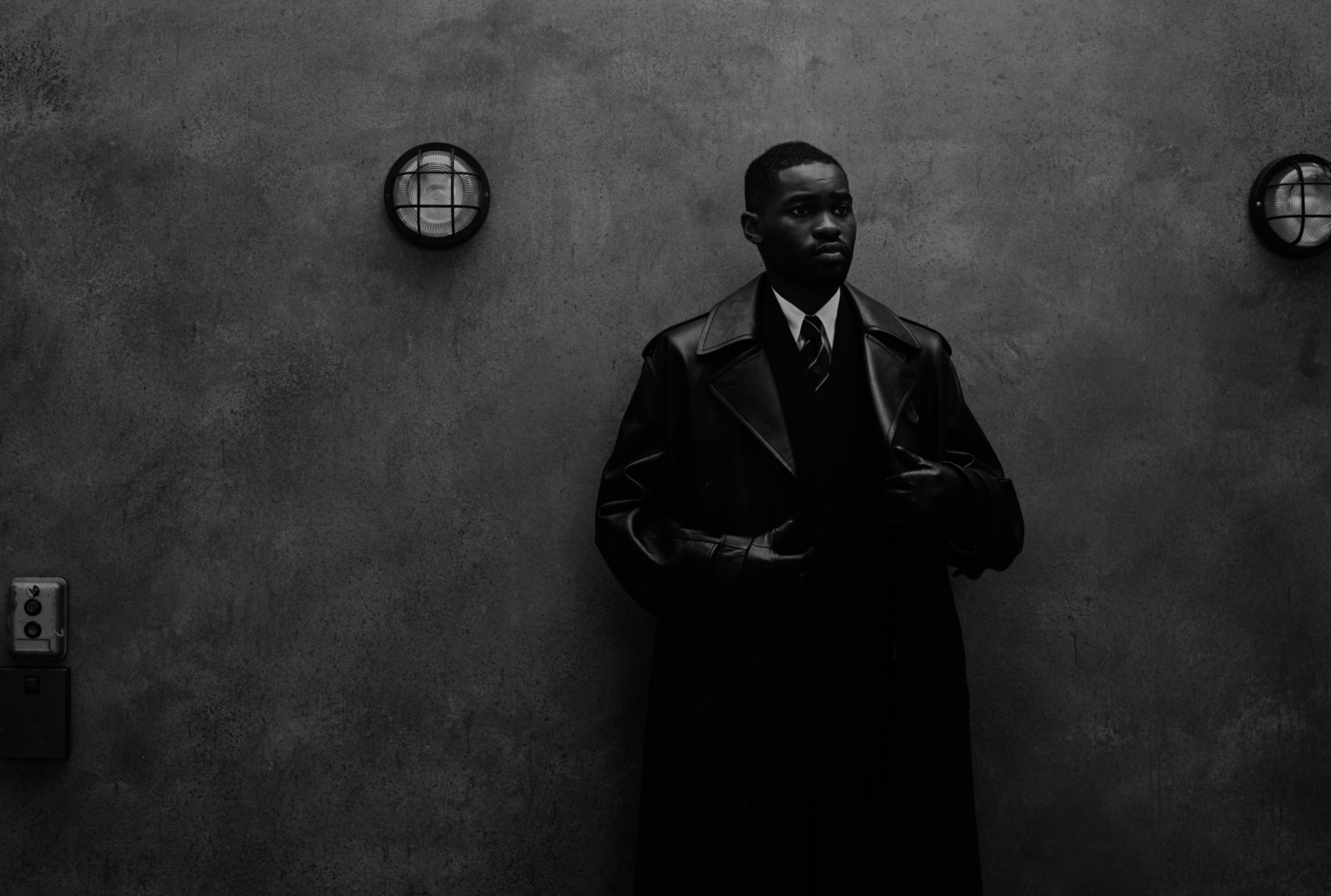
Dave wears coat FERRAGAMO, jacket (worn underneath), shirt, trousers and tie DUNHILL and gloves McQUEEN
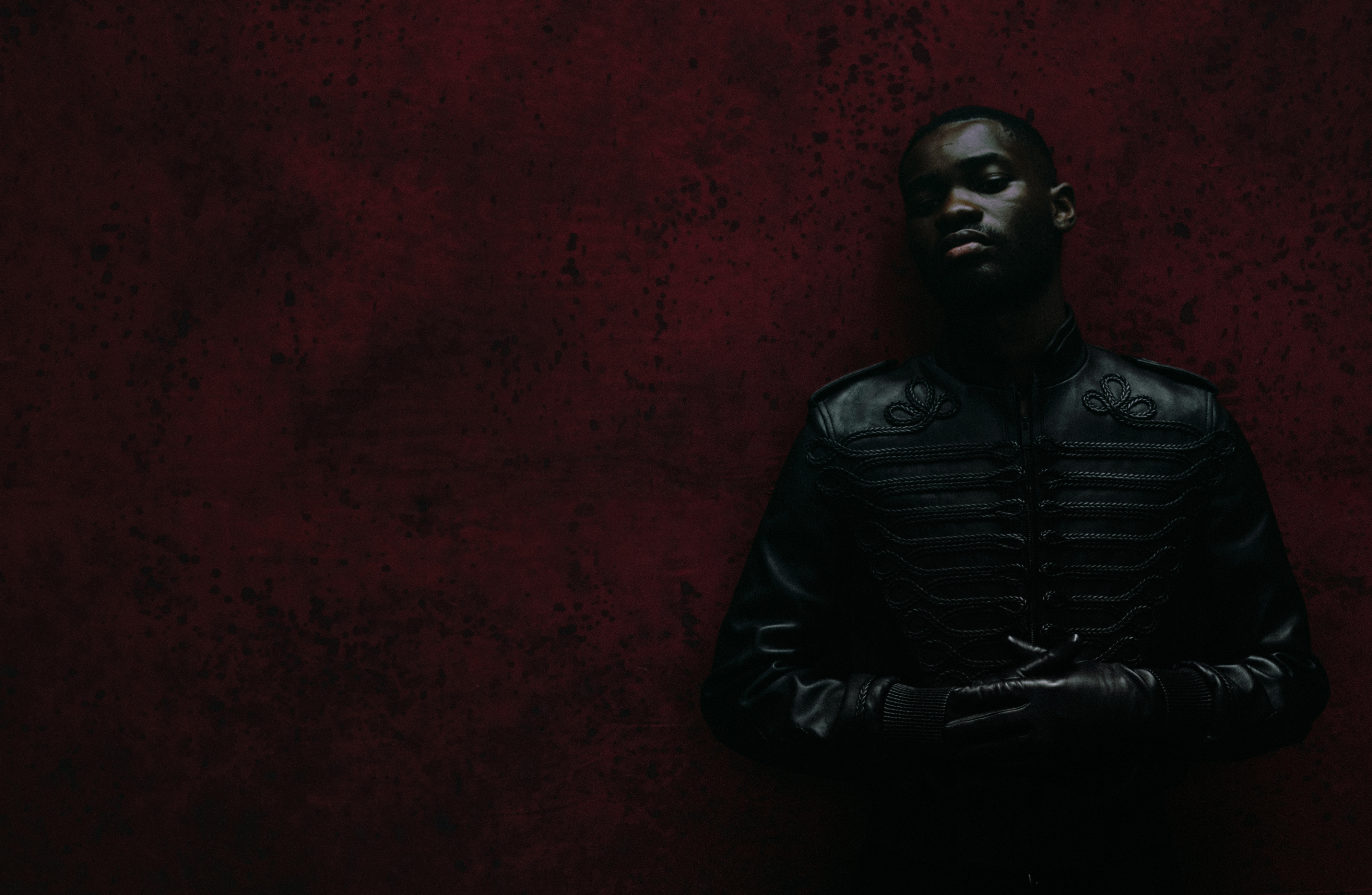
Dave wears jacket, trousers and gloves McQUEEN
Since the 2021 release of We’re All Alone In This Together, the UK rap scene has changed massively, with a new surge of energy in the underground. But few UK rap stars who blew up during the commercial golden era of the mid-to-late 2010s are still able to top the charts and fill arenas. So when The Boy Who Played the Harp was announced, fans held their breath for the long-hoped-for return of the scene’s saviour. “The most important thing is the fans,” he says. “They’ve had a long few years. It’s been tough.”
It didn’t take four years because he was slacking off. “Common misconception: people think I chill. I’m in the studio every single day,” he says intently. “There’s not a day that I’ve been out since God knows when.” He explains that the album’s lack of radio-tailored material was deliberate. “I got a lot of obvious hit records that we’ve left off,” he says, explaining he didn’t want to crowbar in tracks which felt “a little bit random”.
Plus, he’s going off the idea of making party music anyway. For example, he’d prefer Raindance, the Tems-featuring song named after an iconic Boodles diamond ring, to be someone’s wedding song one day. Sure, he feels a reflexive pressure to deliver songs that’ll light up the clubs. But then “you think about all of the scenarios in which a song would go off in a club, all of the songs that do go off in a club, and all of the things that make a club a club. And you think: ‘Where is it that I want my music played?’” Not bottle service bars, full of stush sections and irrational flexes of wealth. “If I make music specifically to fit into that vibration, what’s it going to take from the music?”
“I want to help women. What is a big issue for women? Men. What am I? A man. What do I have to do? I have to take men and what men do apart. To take men apart, what do I have to do? The first person I have to take apart is myself”
Dave feels some discomfort when listening back to some of his music made in this mould, namely the “songs where it is very ostentatious, or borders on being ignorant or super misogynistic”. He indicts the scene, challenging both his peers and himself by asking: “How are you rapping about women? Like people? Or have you got lyrics that make them sound not even human? And are those lyrics even a true reflection of how you feel? Or are they what you feel like you’re meant to say?”
On the chilling, near-six-minute Fairchild, a two-part parable about sexual harassment, Dave reckons with toxic masculinity. The story, recounted with breathless intensity by Nicole Blakk, is the story of a friend, Tamah, on a night out. An over-friendly taxi driver drops her at a no-phone party, where the men keep theirs. Afterwards, she’s drunk, her friends are gone, and she makes her way home alone – then has to fend off an attempted rape on the street. The song illustrates predatory behaviour from different groups of men, from creepy dentists to the guy making sinister jokes in the lads’ group chat. Scrolling through the numbered audio files on his notes app, he tells me there were at least 41 versions of Fairchild, plus dozens of “different variants” titled Unfairchild.
“There are some terrible things about men. Like, it’s just true. It’s just true,” Dave emphasises, his eyes closing with certitude. “Too often women have to be the people that start that conversation, and men aren’t even listening. “I want to help women,” he says of his decision to write Fairchild. “What is a big issue for women? Men. What am I? A man. What do I have to do? I have to take men and what men do apart. To take men apart, what do I have to do? The first person I have to take apart is myself.”


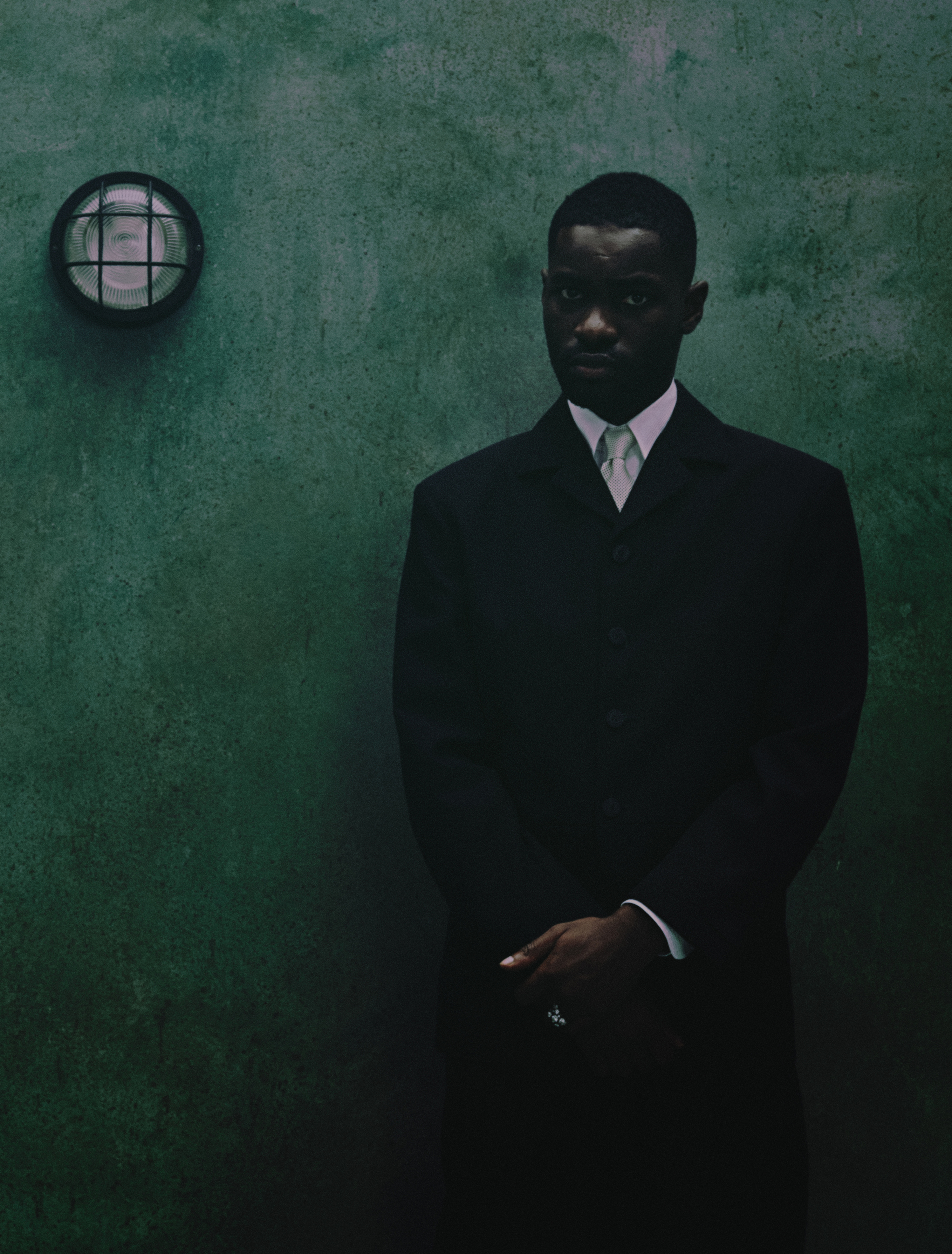
Dave wears jacket, shirt and trousers JACQUEMUS, tie PAUL SMITH and ring talent’s own
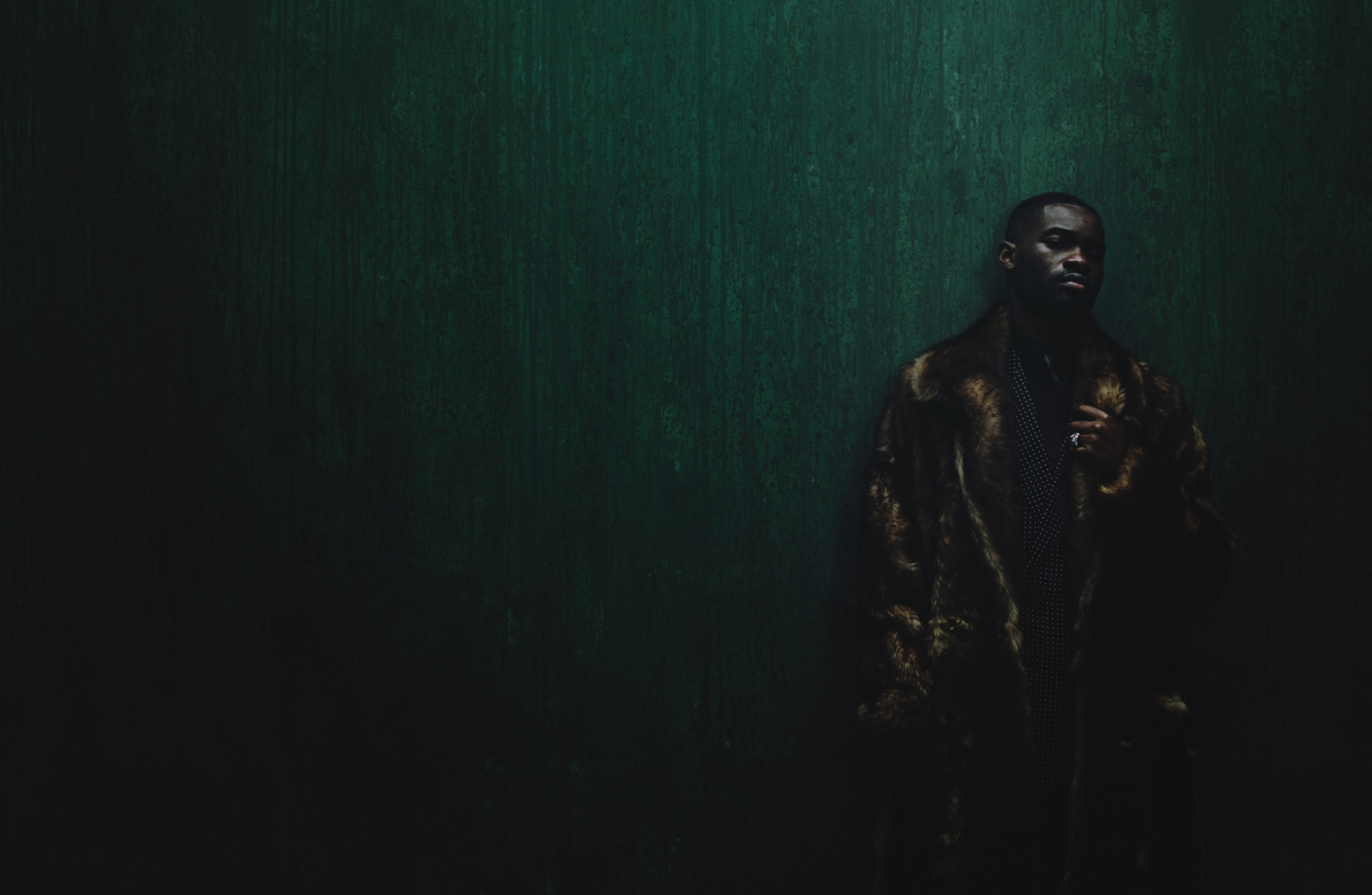
Dave wears coat DOLCE & GABBANA and jacket, shirt, trousers and tie TOM FORD
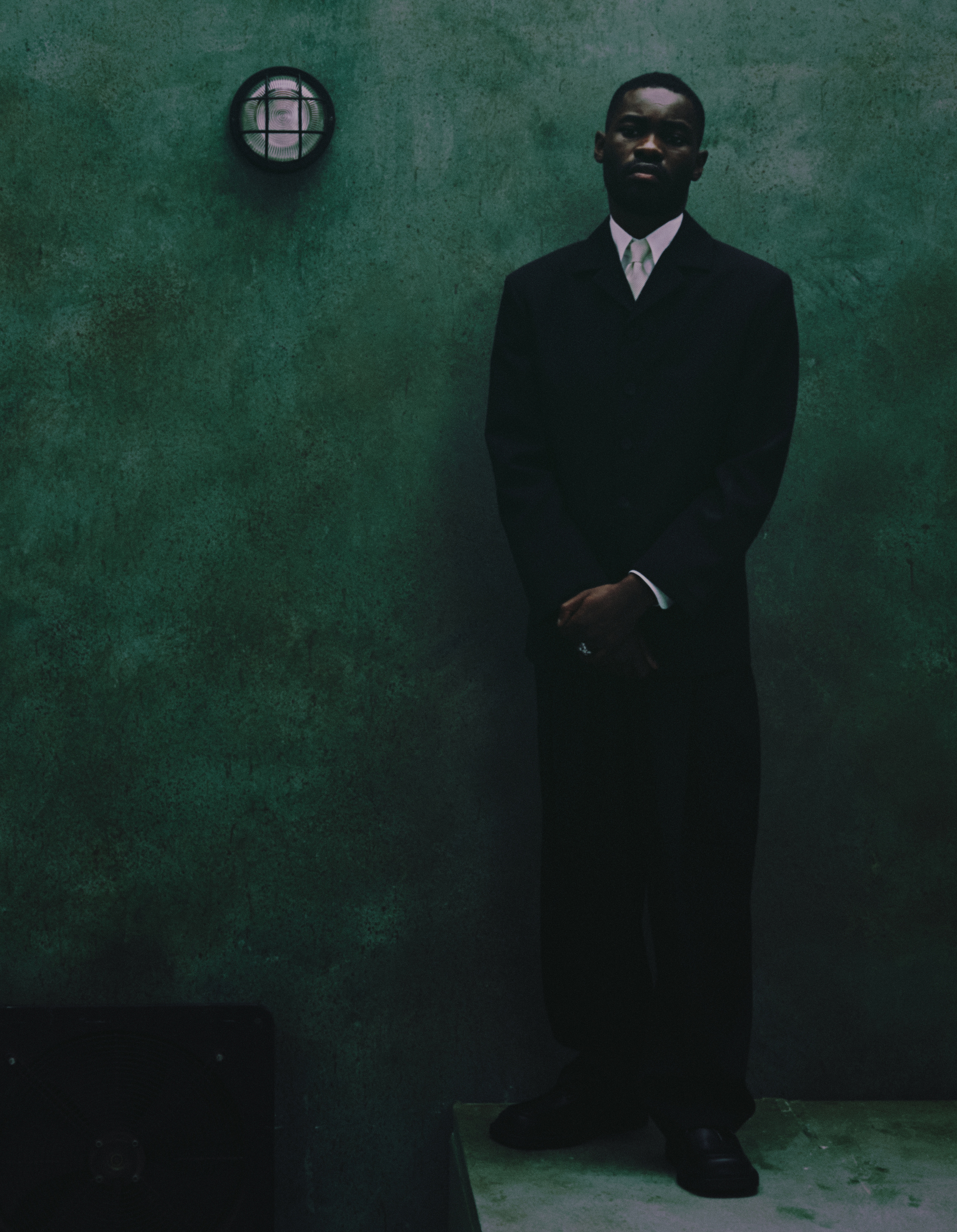
Dave wears jacket, shirt and trousers JACQUEMUS, tie PAUL SMITH, shoes BOTTEGA VENETA and ring talent’s own
Very weakly, he whistles – a low, blustery fizzle. “I’m trying to get into stand-up comedy and one of my sketches is that I don’t know how to whistle,” he reveals, deadly serious. “I’m inherently shy and introverted. You’re probably thinking, ‘What does that have to do with anything?’ But there’s things I talk about at the end of the track, like catcalling. I couldn’t even have the confidence to shout from a car, or whistle at a woman when she’s walking by. There’s certain things that I’ve never done in my life. But that’s the conversation from every guy: ‘I’m a good guy – these wrong ’uns, get them out of society.’ It’s like, yo, there is something – whether it be small, or lyrics that are slightly crude, or whatever – where you can do better.”
In several songs on this album, he applies a similar self-examination to his relationships. In My 27th Birthday, he reflects on past infidelities, asking: “How do I explain that my mechanic is a chick? /Or why she callin’ me when I don’t even own a whip.” A track earlier, he unpacks the damage done in the spiralling Selfish: “I’m ashamed for the days that I said that I changed, I’m a cheat /Sat in a therapist chair cryin’ like a baby in the middle of a Harley Street.” He tells me: “Now we’re at a certain age, I need to start addressing certain parts of myself… Constantly having love and losing it because of the things that I’ve done in the past. To hold myself accountable if I do certain things that are unbecoming. Adultery is not who I want to be.”
Has the fame – and the thousands of women who desire him as a result – made loyalty in relationships difficult? “I don’t think it’s because I’m famous. I think I found it difficult because of myself.” There’s a part of him that worries about determinism. “Are you destined to follow the stories that have come before you?” he ponders. “Obviously, my mum’s a single mum, so you can make of that what you will.”
“If I don’t lead at this point in my life – if I don’t walk forward with some level of bravery or shift the paradigm just a little bit, when will I?”


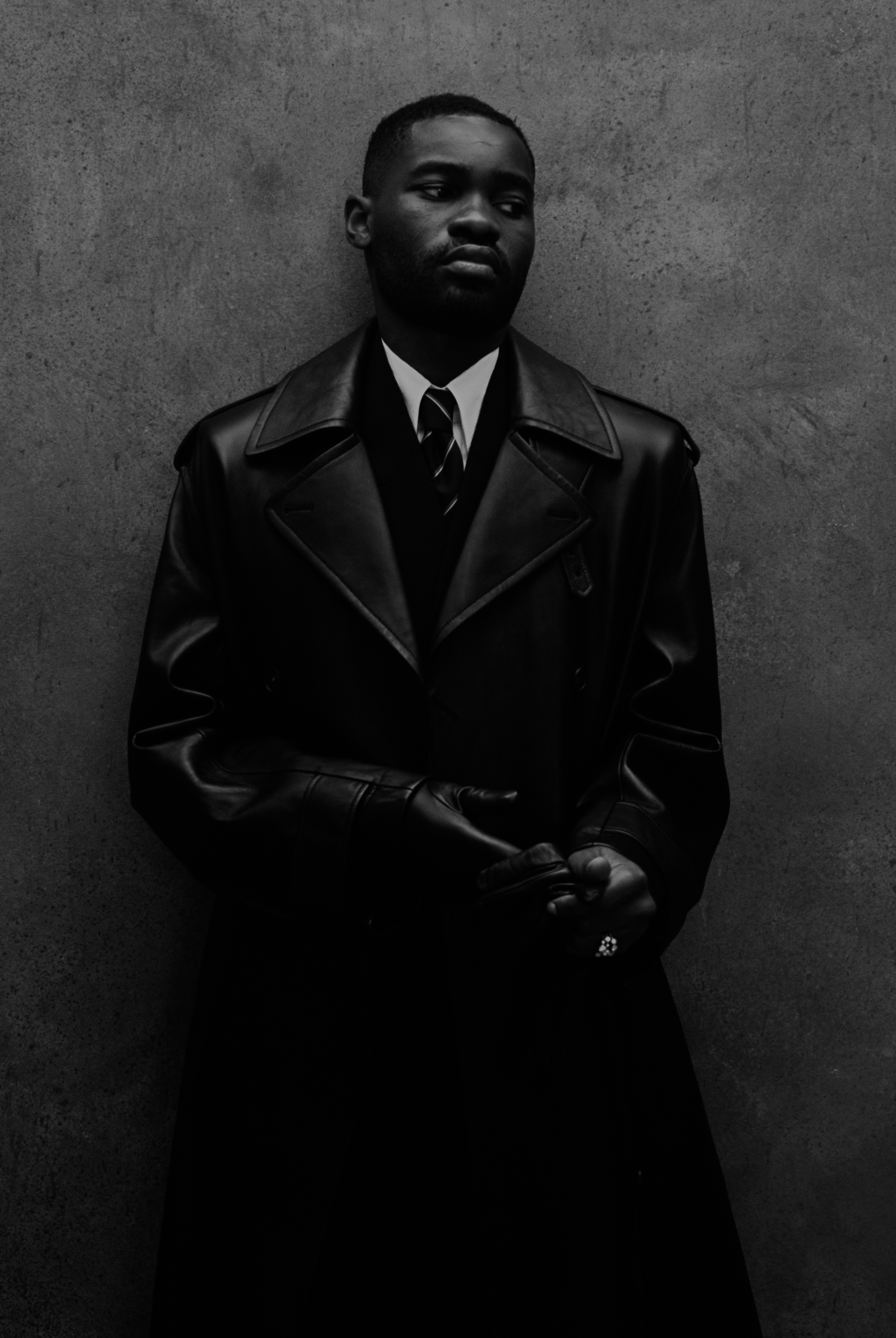
Dave wears coat FERRAGAMO, jacket (worn underneath), shirt, trousers and tie DUNHILL, gloves McQUEEN and ring talent’s own
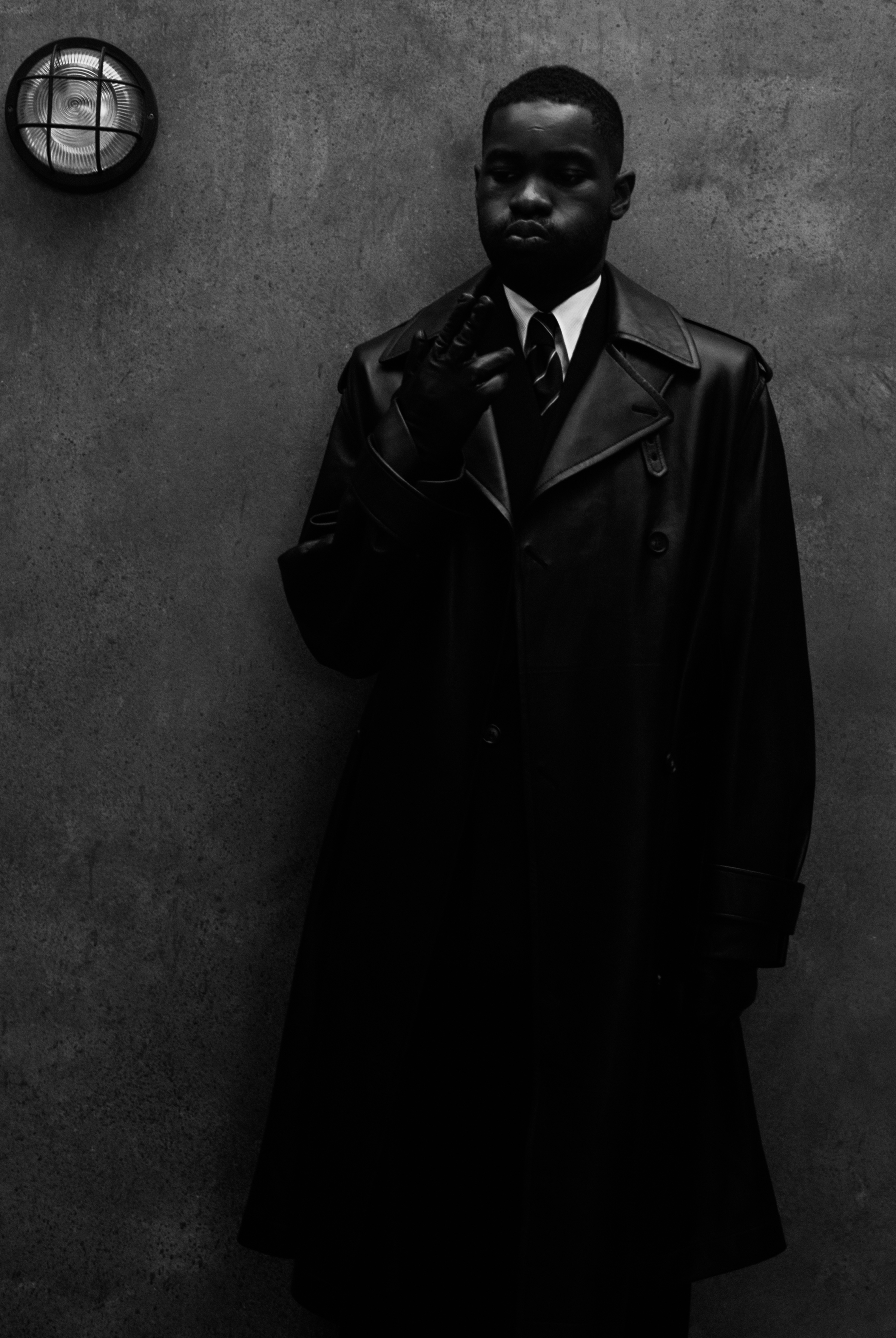
Dave wears coat FERRAGAMO, jacket (worn underneath), shirt, trousers and tie DUNHILL, gloves McQUEEN and ring talent’s own
On this particular October day, Dave does not yet know that The Boy Who Played the Harp will receive critical acclaim, top the charts, sell approximately 74,000 in its first week, and make him the first UK rap artist to debut three albums at No.1.
Or that he’ll have to cancel in-store appearances for safety reasons after thousands of fans show up. But he wards off any residual anxieties about its reception – it doesn’t really matter when, all things considered, he’s got more clarity on where he stands and what he cares about than ever before.
“If I don’t lead at this point in my life – if I don’t walk forward with some level of bravery or shift the paradigm just a little bit, when will I?” he says. “When will I ever have enough money? Enough songs in the club? Enough people around me that could affirm me of my position to feel confident enough to say: ‘Here it is and I hope you like it’?” Dave sits tall in his seat; the cloud lifted some time ago. “That’s the thing I’m the most proud of with this project: that I can turn around and say we stuck to what we believed in and stood on it,” he concludes, letting out a rare full smile. “Hopefully, with this album, you can listen and say: ‘Do you know what? He’s being the change that he wants to see in the world… From track one to track 10: he’s trying to be a better person.’”
CREDITS
GROOMING Mata Marielle at The Wall Group SET DESIGNER Julia Dias PRODUCTION Concrete PHOTOGRAPHER’S ASSISTANTS Darren Karl-Smith and Kiran Mane STYLING ASSISTANTS Anna Sweasey and Aoife Giblin GROOMING ASSISTANT Tahiyah Ali SET ASSISTANTS Toby Broughton, Nicholas Rogers, Jeremy Rwakasiisi, Louis Toledo and Aurélie Simon

